
Chill the onion 30 minutes, then slice it in one long, weight‑driven stroke from stem to root, keeping the root end intact to lock the layers together and trap tear‑inducing gases. Grip the knife like a tennis ball, thumb and fingers curled, with three guiding fingers to set spacing while the blade’s weight does the work. Make parallel horizontal cuts, then vertical cuts toward the root, and finally cross‑cut at a right angle to form uniform cubes. Sharp blades, airtight storage, and a quick vacuum seal keep the dice fresh and waste‑free, and the next steps will show you even faster tricks.
Quick Guide
- Chill the onion 30 minutes before cutting to slow sulfur‑enzyme release and reduce tears.
- Grip the knife like a tennis ball, using thumb and three fingers; let the knife’s weight drive the cut.
- Slice the bulb in one long stroke from stem to root, then re‑assemble layers for uniform dicing.
- Keep the root end intact while making horizontal and vertical cuts to maintain structure and achieve consistent cubes.
- Use a sharp blade and vacuum‑seal diced onions in airtight containers for extended freshness.
Quick Overview: How to Dice an Onion Without Tears
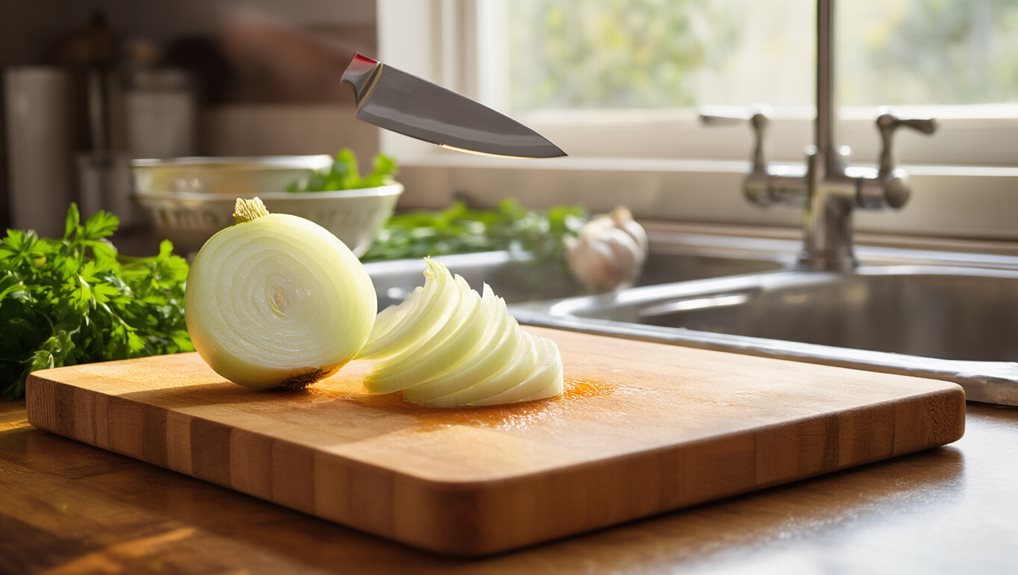
Why do onions make you cry? Sharp knives cut cleanly, preventing cells from crushing and releasing excess tear‑inducing lachrymatory factor. Chill the onion for thirty minutes; cold slows volatile sulfur compounds, so they reach your eyes later. Keep the root end intact while you slice, then remove it after you finish. Ventilate the area or wear goggles for extra protection. Like onions, eggplants contain protective compounds such as anthocyanin antioxidants that support overall health. Sharp blades also reduce the amount of LF sprayed into the workspace.
Grip the Knife Like a Tennis Ball – The Key to Dicing an Onion Without Tears
Ever wondered why a simple grip can make onion dicing faster and tear‑free? Hold the onion like a tennis ball, curling thumb and fingers around it. Position three fingers—one in front, two behind—to guide the blade. The knuckle sets spacing, while the knife’s weight does the work. This grip keeps layers together, lets you cut close to the root, and speeds the dicing without tears. For meal prep, you can keep diced onions fresh longer by vacuum sealing them, since some sealers claim up to 8× longer freshness.
Slice the Onion in One Long Stroke: From Stem to Root
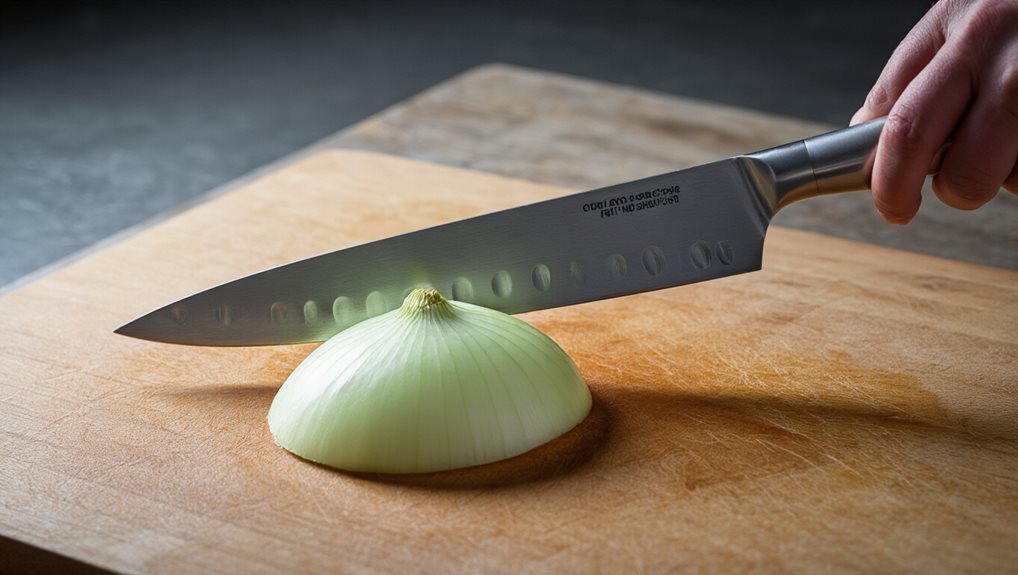
If you position the onion flat‑side down and let the knife’s weight do most of the work, a single, smooth stroke from the stem to the root can dice the whole bulb in seconds. Grip the knife with your knuckles and three fingers, guide the blade toward the root, and push the layers back together after the initial cut. If you’re pairing the dice with a creamy sauce, remember almond milk can be heated slowly to about 140-150°F without affecting taste or texture. The long stroke minimizes chops, speeds up dicing, and yields uniform pieces under a minute. Radial cuts at a depth of ~96% provide the most consistent piece size.
Keep the Root Intact – The Secret to Tear‑Free Onion Dicing
You’ll notice that keeping the root intact cuts down on the irritants that make you tear up, because the uncut base holds the onion’s layers together and limits enzyme release.
If you chill the onion for a few minutes before you start cutting, the cold slows the volatile compounds that trigger tears. This simple step lets you dice quickly while keeping the kitchen eyes clear. For quick make-ahead toppings, store your diced onion in an airtight container to help keep it fresh and protected from moisture.
Root Retention Reduces Irritants
Why does keeping the onion’s root intact make a big difference when you dice it? The root holds the highest concentration of sulfur compounds and the lachrymatory factor; cutting it releases the most potent irritants.
Cold‑Chill Before Cutting
Ever wondered why a quick chill makes onion dicing painless? Chill each onion for 30 minutes in the fridge, as the National Onion Association advises. The cold slows vapor release and reduces pain‑producing enzymes, so you can slice without tears. Keep the root intact after chilling; it traps sulfur compounds. This simple step, backed by university extensions, makes dicing faster and tear‑free.
Convert Slices Into Uniform Cubes for a Perfect Onion Dice
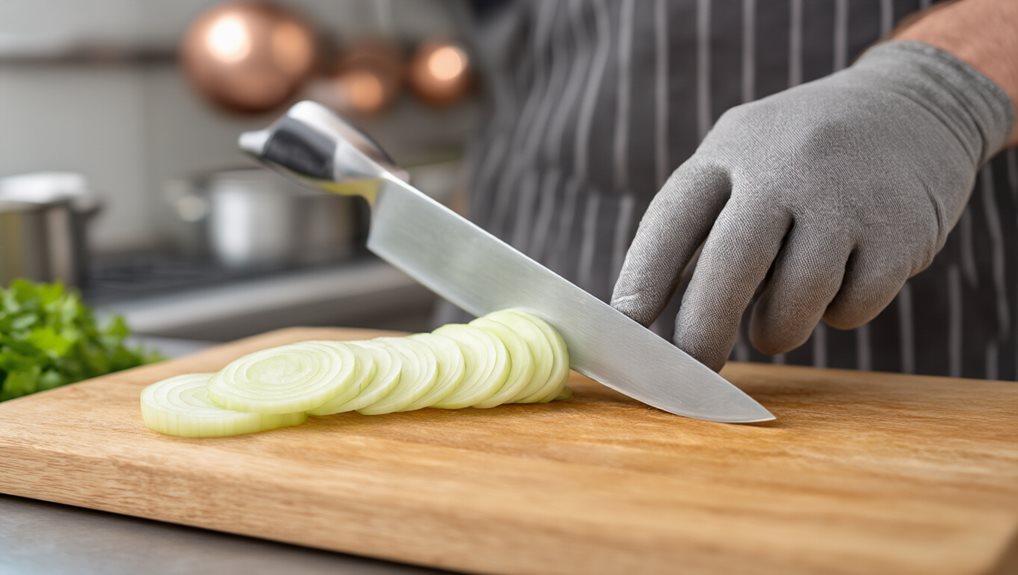
You’ll line up the horizontal slices so they’re all parallel and evenly spaced, then keep the spacing consistent when you make the cross‑cuts. By maintaining that uniform alignment, each vertical cut will intersect the slices at the same intervals, producing identical cubes. This simple rhythm of equal spacing and steady cuts gives you a perfect onion dice with minimal waste. Just like both orange chicken and sweet-and-sour chicken use soy sauce in their sauces, keeping one consistent element helps everything come together smoothly.
Uniform Slice Alignment
How do you turn a flat onion half into perfectly uniform cubes?
First, place the half flat‑side down and make even horizontal cuts, keeping the root intact.
Then, slice vertically from top to root, holding the onion together so the cuts stay perpendicular.
Keep the spacing consistent to form a precise grid, then dice across the grid, producing uniform cubes.
Consistent Cross‑Cut Spacing
Where does the magic of uniform onion cubes begin? You keep the root end intact while making parallel vertical cuts, spacing them evenly toward the root. After the slices are set, rotate the half 90°, then cross‑cut horizontally at the same interval. This creates a grid that turns each slice into identical cubes, preserving shape until you discard the root.
Speed‑Boost Tips: Chill, Sharpen, and Go Waste‑Free
Ever wondered why some chefs dice onions in a flash while others tear up? Chill the onion 10‑15 minutes; the cold firms texture, slows enzyme release, and cuts slipping. Keep your knife razor‑sharp—sharp blades slice cleanly, reducing vapors and pressure. Leave the root barely trimmed to hold layers; vertical cuts toward the root keep pieces together. Use a tennis‑ball grip, tilt the blade halfway, and you’ll waste nothing.
Wrapping Up
Now these steps, and you’ll dice onions quickly without tears. Grip the knife firmly, cut from stem to root, and keep the root intact to protect the eyes. Turn the slices into uniform cubes, and use a chilled, sharp blade for extra speed. By following this method, you’ll save time, reduce waste, and keep your kitchen work tidy and efficient.


