
Cook the chicken to 165 °F, let it rest five minutes, then toss it into a stand‑mixer’s bowl with the flat beater attached. Set the mixer to low (speed 2) and run it for 15‑20 seconds; the paddle will break the meat into even, fine shreds without drying it out. Keep the lid closed and watch the texture, stopping as soon as the pieces are uniform. This method gives you perfectly shredded chicken in seconds, and the next steps will show you how to store and use it.
Quick Guide
- Cook chicken to 165 °F (74 °C), let rest 5 minutes, then keep warm for easy shredding.
- Use a stand mixer with the flat beater (paddle) attached; set speed to low (≈ 2).
- Place warm chicken pieces in the mixer bowl and run for 15–20 seconds for uniform shreds.
- Stop immediately once fine shreds form; over‑mixting creates a dry, paste‑like texture.
- Transfer shreds to a serving dish, keep warm, and add sauce or fillings as desired.
Why Chicken Is the Ideal Protein for Mixer‑Shredded Chicken
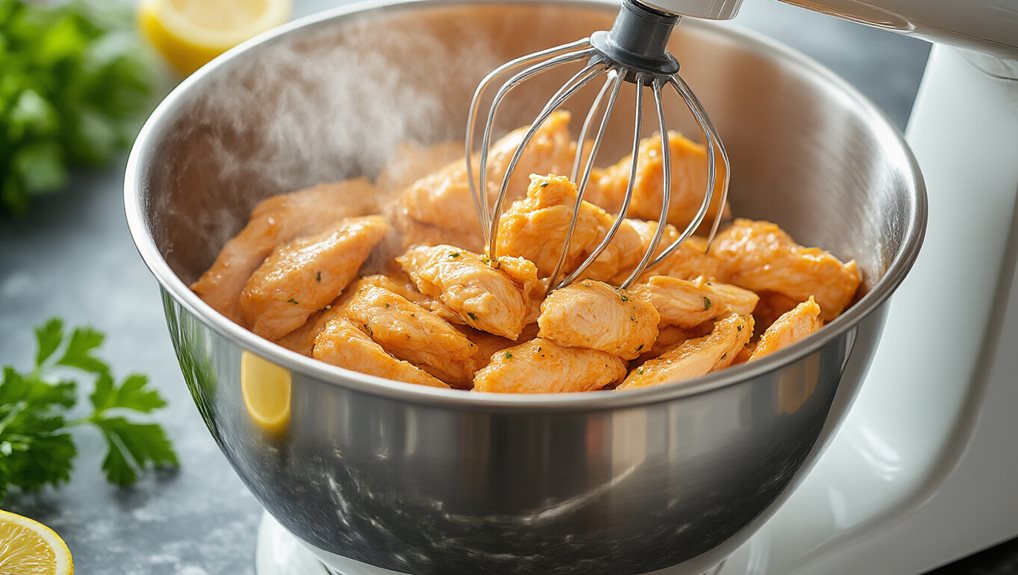
You get high protein density—30 g per 100 g, 26 g in an 85 g serving—while keeping fat low at 3 g. It supplies all nine essential amino acids, supporting muscle repair and growth.
The protein‑to‑calorie ratio outperforms beef and nuts, delivering satiety with few calories.
Essential nutrients like B‑vitamins, selenium, and phosphorus further boost health benefits.
For extra flavor after shredding, apply BBQ sauce in thin layers near the end of cooking so it adheres better to the chicken.
How to Pick the Right Mixer and Attachment
Chicken’s high protein and low‑fat profile makes it perfect for quick, mixer‑shredded meals, and the next step is choosing the right equipment to keep that efficiency. Pick a stand mixer—KitchenAid models are reliable—and attach the paddle (flat beater) for uniform shredding. For prepping shredded chicken in bulk for freezer meals, a countertop vacuum sealer with double heat seal technology can help maintain vacuum integrity during freezer storage. Use low speed (around 2) to break the meat, then increase briefly. Hand mixers work but are slower and messier. Keep the lid closed and monitor texture. Warm chicken shreds more easily when it’s still just cooked.
Cook Chicken to the Ideal Warm Temperature for Shredding
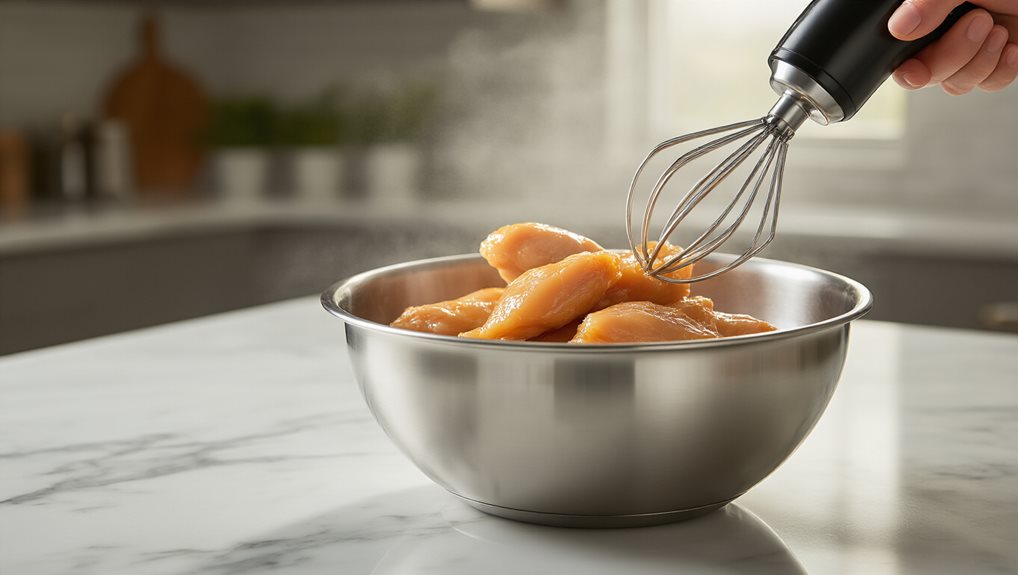
You’ll want to bring the chicken to a prime range of 150–165°F, which keeps it safe while preserving a moist texture for easy shredding. This is also the ideal point to prep fillings like shredded chicken for chalupas or gorditas.
Optimal Cooking Temperature
When you bring chicken to the safe internal temperature of 165 °F (74 °C), it’s ready to shred without risking foodborne illness, and the meat stays tender enough for easy pulling.
For best texture, raise the internal heat to 180 °F‑190 °F and hold for at least 30 minutes.
Use a thermometer, rest five minutes, then shred while warm for loose fibers and effortless pulling.
Rapid Heat Retention
How can you keep chicken hot enough to shred easily without overcooking it?
After searing, let it rest five minutes, then flip and add a cup of water or stock; the steam locks in moisture while the pan stays hot.
Cover the pan with foil if you’re using a low‑slow roast.
This retains heat, keeps the meat juicy, and makes shredding a breeze.
Timing for Maximum Warmth
Heat the chicken just enough to reach the USDA‑mandated 165 °F (74 °C) and you’ll find it easy to shred without drying out. Aim for that temperature, then let the meat rest five minutes so juices redistribute. Keep the shredded pieces above 140 °F (60 °C) while serving; this prevents the danger zone and maintains tenderness. Use an instant‑read thermometer on the thickest part for accuracy.
Set Up Your Mixer Bowl for Perfect Mixer‑Shredded Chicken
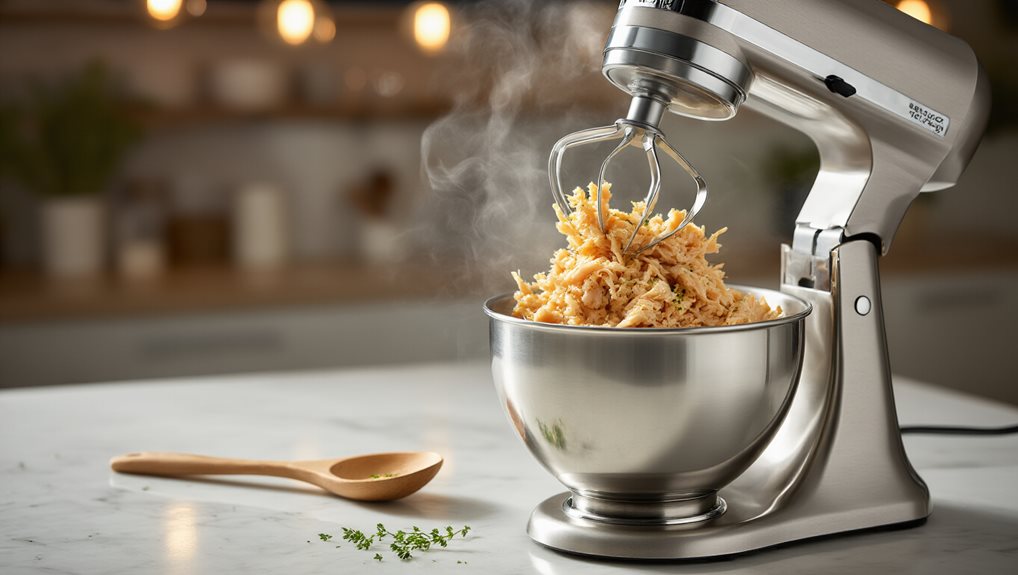
First, choose a stand mixer with a flat beater or pastry beater—these attachments give the chicken enough surface area to break apart quickly without turning it into a mushy mess. Secure the beater, then place the warm, boneless chicken in a stable bowl. Lock the mixer, set low speed (around 2), and start mixing. Keep an eye on the texture as it shreds in seconds. If you’re prepping peppers to mix in later, keep whole ones in the fridge’s crisper drawer at 37–42°F (3–5.5°C) so they stay fresh while you work.
Shred the Chicken Quickly: Speed, Time, and Texture Tips
You’ll want the chicken hot enough that it shreds smoothly, so keep it warm right after cooking and give it a quick ten‑minute rest if needed.
Set the mixer to a low speed—speed 2 works best—then let the paddle attachment work its magic, watching the texture to avoid over‑shredding.
In just 30 seconds to a minute you’ll get even, fine shreds that are perfect for any recipe.
If you’re making big batches to save time, keep add-ins like chopped celery ready by storing it in airtight containers at 0F (-18C) to prevent freezer burn.
Warm Chicken Essentials
Ever wonder why warm chicken shreds so effortlessly? Keep the internal temperature at 160‑165°F, check with an instant‑read thermometer, and let it rest three to five minutes so juices redistribute. This brief rest makes the meat cool enough to handle but still warm, preventing stringy fibers.
Avoid refrigerating; cold chicken tightens, making it harder to pull apart.
Ideal Mixer Speed
What speed should you set on your mixer to shred chicken in seconds? Use speed 2 on a stand mixer with the paddle attachment locked and the tilt‑head secured.
This low speed produces even shreds within 15‑20 seconds, handling up to 3.5 lb efficiently.
For hand mixers, stay on the low setting, watching carefully to avoid uneven pieces. Adjust slightly if you need larger or smaller shreds.
Desired Texture Control
How can you control the texture of shredded chicken while keeping the process under a minute?
Run the mixer for ten to twenty seconds to separate strands, then stop as soon as long fibers appear.
Pulse briefly for any larger pieces, keeping the bowl underfilled for circulation.
Warm chicken prevents mushiness, while short bursts avoid over‑mixing, yielding fluffy, uniform strands that stay juicy.
Avoid Over‑Shredding and Dryness
Why does over‑shredding turn juicy chicken into a dry, paste‑like mess? You’re pulling the meat apart too long or at too high a speed, which crushes fibers and releases moisture.
Keep the mixer on the lowest setting, stop after 30‑60 seconds, and check every 15 seconds.
Warm chicken shreds easily; cold chicken resists, so work while it’s still hot and avoid adding sauces during mixing.
Store and Freeze Mixer‑Shredded Chicken for Later Use
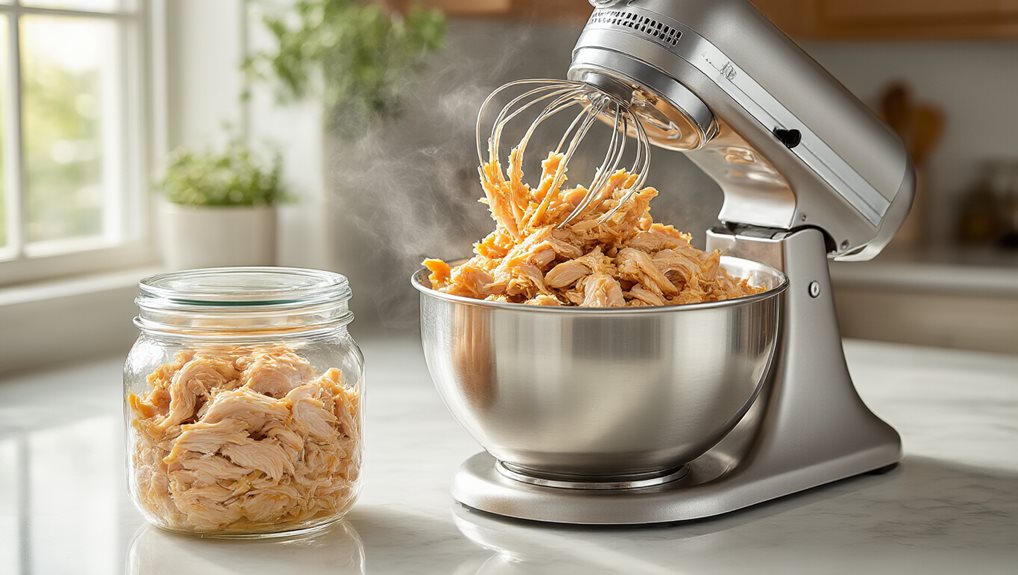
Ever wondered how to keep your mixer‑shredded chicken fresh and ready for later meals? Cool it within two hours, then split it into shallow, sealed containers on the fridge’s bottom shelf.
For freezer storage, portion into meal‑size bags, flatten, label, and keep at 0°F or below.
Thaw safely in the fridge or cold water, and always check 165°F internal temperature before eating.
Quick Recipes Using Mixer‑Shredded Chicken
Looking to turn your mixer‑shredded chicken into a tasty meal in minutes? Toss it with lime juice, garlic, cumin, and cilantro for bright Cil tacos or bowls, then grill briefly.
Mix with chipotle peppers, smoked paprika, black beans, corn, and rice for a hearty soup.
Try a quick enchilada filling, BBQ pizza topping, or Southwest wrap with salsa and ranch.
Wrapping Up
Now now you’ve got perfectly shredded chicken in seconds, you can skip the tedious fork work and keep meals fast and tasty. The right mixer, a warm‑cooked bird, and a quick pulse give you fluffy, moist strands without over‑drying. Store leftovers in airtight containers or freeze for later, and you’ll always have a versatile protein ready for tacos, salads, or soups. This method saves time, reduces effort, and delivers consistent results every time.


