
Grab a microwave‑safe silicone or BPA‑free plastic tray that fits your oven (8–13 in wide, under 2 in high) and lay the bacon in a single layer on a glass cup or plate. Cook on high for 45–60 seconds per slice if your microwave is 800–1000 W; for 700 W start at 1.5 minutes per slice, adding 20–30 % more time, and for 1100‑1200 W use 45‑second bursts, reducing time by about 20 %. Flip halfway through, pause to check browning, and add 5‑30‑second increments until crisp. Let the strips rest 30–60 seconds on paper towels to absorb grease, then enjoy; the next sections will show you how to handle multiple batches, avoid soggy or burnt pieces, and store the leftovers properly.
Quick Guide
- Choose a microwave‑safe, non‑stick silicone or BPA‑free plastic tray that fits your microwave (8–13 in wide, <2 in high) and has a vented lid or grease spout.
- Arrange bacon strips in a single layer on a microwave‑safe glass plate or cup; avoid overlapping to ensure even cooking.
- Cook based on wattage: 700 W – 1.5 min per slice (+20‑30%); 800‑1000 W – 45‑60 sec per slice; 1100‑1200 W – 45‑sec bursts, reduce time by ~20 %.
- Flip the bacon halfway through the cycle, pause to check browning, and continue in 30‑second increments until crisp.
- Let cooked bacon rest 30‑60 sec on paper towels, then store in airtight containers (refrigerate up to 5 days, freeze up to 6 months).
Set Up a Microwave‑Safe Bacon Tray
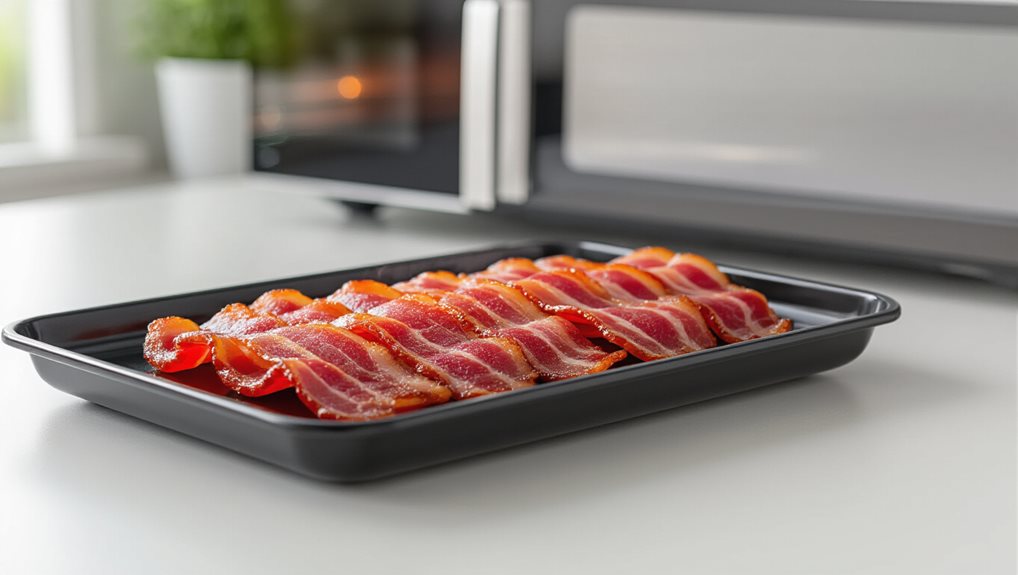
A few key things to contemplate when setting up a microwave‑safe bacon tray are the material, dimensions, and built‑in features that keep the cooking process tidy and efficient.
Choose non‑stick silicone or BPA‑free plastic for safety, and ensure the tray fits your microwave—most are 8‑13 inches wide and under 2 inches tall. Just as eggplant seeds are edible but can taste bitter raw, choosing the right tray materials and features helps keep unpleasant flavors and mess out of your bacon setup.
Look for raised ridges, angled drains, and a vented lid to collect grease and avoid splatters.
The tray’s built‑in grease spout lets you pour off fat easily for disposal or storage.
Pick the Right Cooking Time for Your Microwave’s Wattage
Once your tray is set up, the next step is matching the cooking time to your microwave’s wattage. For 700‑watt units, start with 1.5 minutes per slice and add 20‑30 % more time; check every 30 seconds after three minutes.
At 800‑1000 watts, aim for 45‑60 seconds per slice, total four minutes.
High‑watt ovens (1100‑1200 watts) need 20 % less time, starting with 45‑second bursts. Adjust in 5‑30 second increments until crispy. For storing leftover cooked bacon, use snap-lock lids with silicone seals to keep it airtight and help prevent odor absorption in the fridge.
Adjust Time for Bacon Thickness and Slice Width
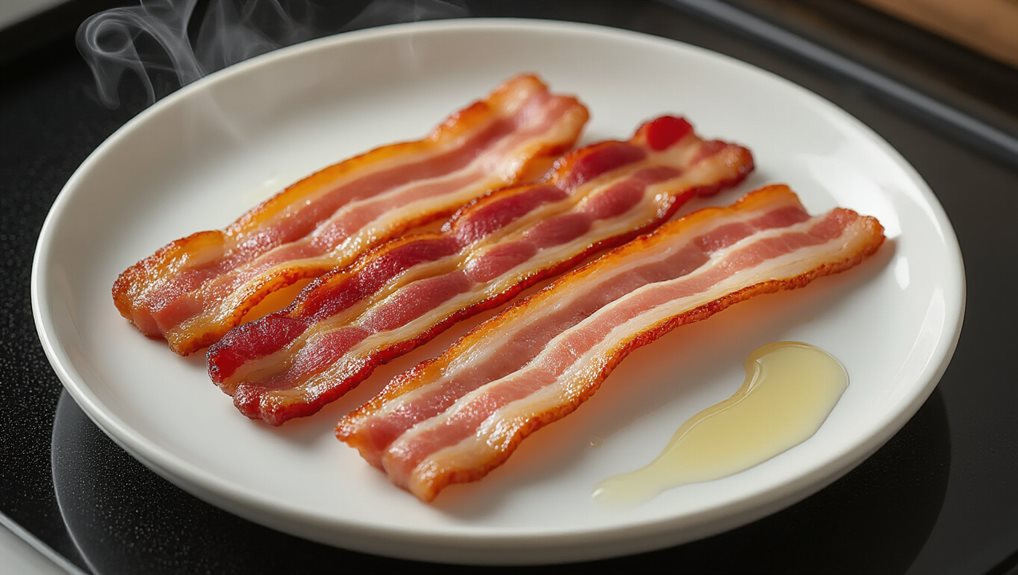
You’ll need to tweak the cooking time based on how thick your bacon is and how wide the slices run, because thicker or wider pieces take longer to render while thin or narrow strips crisp up quickly.
Start with a two‑minute baseline for four slices, then add a minute if the pieces are thick or wide, and check after three minutes to avoid overcooking.
Adjust in short increments, watching for the right level of crispiness without letting the bacon burn.
As with containers that use a water reservoir to maintain controlled moisture, small timing tweaks help you control the end result without overshooting.
Ick Bacon Timing
Ever wondered how to tweak microwave time for different bacon cuts? For medium‑thick slices, start with four minutes on high for four pieces, checking at three minutes to avoid overcooking.
Thin strips need just two to three minutes, pausing each minute after the first two.
Thick cuts require five to six minutes, with a four‑minute check. Adjust time by a minute for your preferred crispiness.
Slice Width Adjustments
Adjusting microwave time for bacon isn’t just about thickness; the slice’s width plays a big role, too. Narrow slices crisp in about three minutes, so check them early to avoid burning. Medium‑width slices need roughly four minutes, while thick, wide cuts start at five minutes and require 30‑second increments. Always test at the three‑minute mark, then adjust in short bursts.
Flip and Check Mid‑Cook for Even Crispness
You’ll want to flip the bacon halfway through the cooking cycle so each side gets the same amount of microwave exposure. After you turn it, pause briefly to check that the strips are browning evenly and that no raw centers remain. This quick inspection lets you adjust the remaining time if needed, ensuring a uniformly crisp result. Keep the process methodical approach to stay consistent and reduce mistakes as you fine-tune timing.
Flip Bacon Midway
How can you ensure every slice of microwave bacon turns out evenly crisp?
Flip the strips halfway through the cooking cycle. Use tongs or a fork to turn each piece gently, keeping the fat side down. This redistributes heat, prevents one side from staying soggy, and helps the whole batch crisp uniformly without overcooking.
Check for Evenness
When the microwave pauses, take a quick look at the bacon to see if both sides are turning the same shade of gold; this simple check lets you catch any unevenness before it becomes a problem.
Flip the strip if one side looks darker, then resume cooking in 30‑second bursts.
Watch for flat, crisp pieces that crumble easily, indicating even heat distribution and proper fat absorption.
Adjust time based on thickness and wattage to avoid chewiness or burning.
Let Bacon Rest for Maximum Crunch
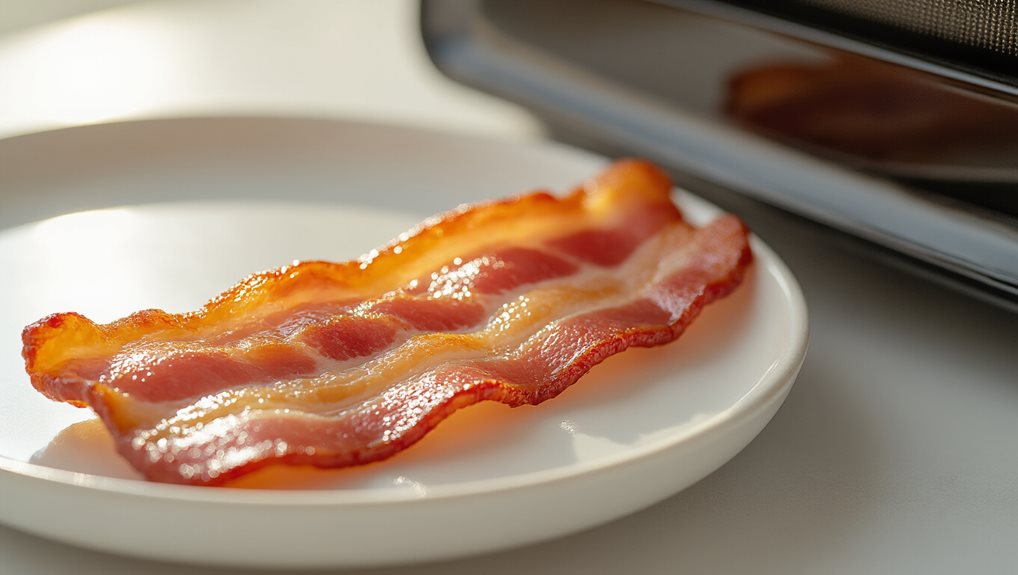
Because the microwave’s heat lingers, the bacon keeps crisping for a few seconds after you pull it out, so letting it rest is essential for that final crunch.
Transfer the strips to a paper‑towel‑lined plate, then let them sit 30–60 seconds. The towels soak excess grease while residual heat finishes crisping the edges, giving uniform crunch across thin and thick cuts.
For best quality, serve it promptly—like damaged frozen foods, quality deterioration can set in faster when heat and moisture are involved.
Stack Multiple Batches Without Overcrowding
Ever wonder how to keep each batch of bacon crisp without turning the microwave into a greasy mess? Place 2‑4 strips in a single layer inside a microwave‑safe glass cup, then empty the drippings after each batch. Reload fresh strips immediately, avoid rinsing, and keep the cup cool before washing. This prevents overcrowding and guarantees even cooking.
Handle Hot Plates and Grease‑Stained Towels Safely
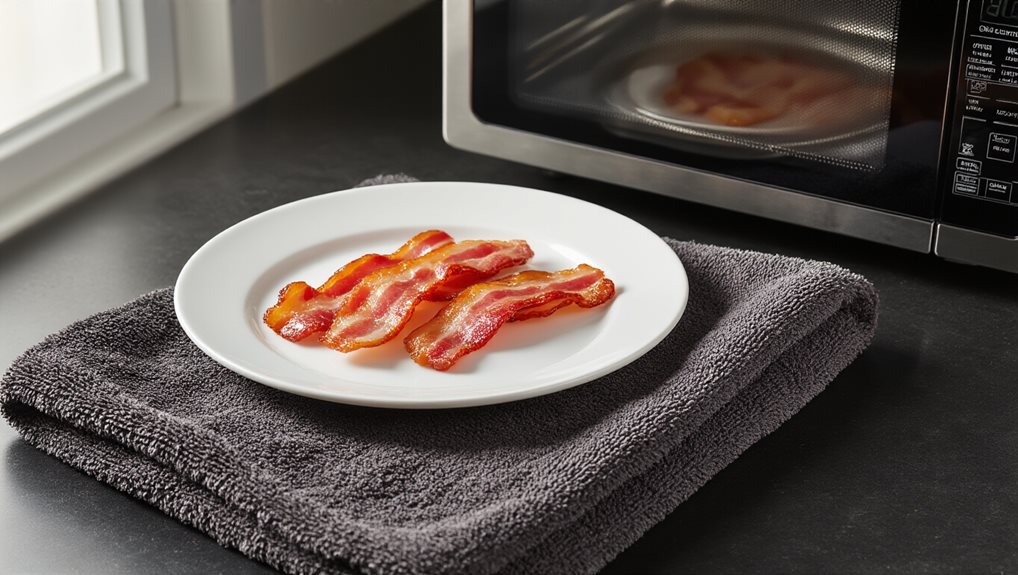
After you finish each batch, the hot glass cup or plate can still be scorching, and the grease‑soaked paper towels are a burn hazard if you grab them too quickly. Use oven mitts or a thick kitchen towel to move the plate onto a heat‑resistant surface away from edges. Let it cool several minutes before touching. Replace saturated towels with fresh ones, and discard grease‑laden towels in trash, not compost.
Fix Common Problems: Soggy, Burnt, or Uneven Strips
Why does bacon sometimes turn out soggy, burnt, or uneven in the microwave?
You can fix sogginess by layering two paper towels underneath and two on top, keeping slices separate, and removing them promptly.
Prevent burning by checking after three minutes, adjusting time for thickness, and using lower wattage if needed.
Ensure even cooking by spacing slices, rotating the plate, and avoiding overcrowding.
Store and Reheat Microwave‑Crisped Bacon Properly
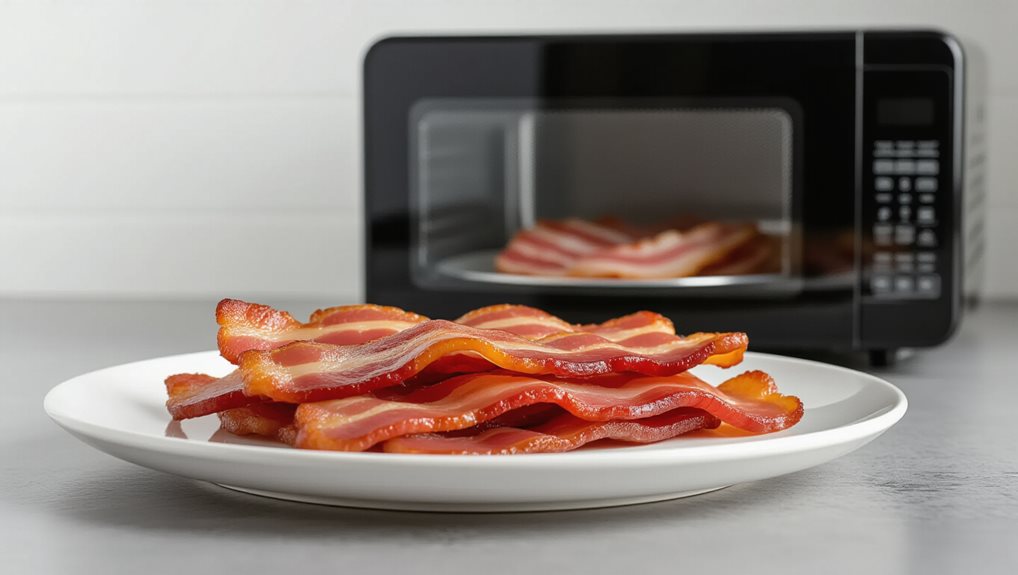
Now that you’ve solved soggy, burnt, and uneven strips, the next step is keeping those crisp microwave‑bacon slices fresh and ready to eat. Cool bacon to room temperature, then seal it in an airtight bag, removing excess air. Store at 40 °F or below for up to five days, or freeze in portioned, wax‑paper‑lined bags for six months. Reheat in the microwave or a dry skillet, avoiding soggy pans.
Wrapping Up
Now you’ve got a fast, reliable way to make crispy bacon in the microwave. By using a microwave‑safe tray, timing it to your wattage, and flipping halfway, you’ll avoid soggy or burnt strips. Let the bacon rest, then store or reheat it properly for maximum crunch. Follow these steps, and you’ll consistently enjoy perfectly cooked bacon without the hassle of a stovetop.


