
Yes, you can freeze blue cheese, but it’s important to do so properly. Cut the cheese into small portions, wrap them tightly in plastic wrap and aluminum foil, then place them in airtight containers or freezer bags.
Label each package with the freezing date and use within six months for best quality. When thawing, transfer the cheese to the refrigerator for about 24 hours. Remember that freezing may alter the texture and flavor, making it crumblier and less intense.
While frozen blue cheese isn’t perfect for fresh serving, it’s still great for cooking. Consider alternative storage methods or investigate creative ways to use your frozen blue cheese for best results.
Quick Guide
- Blue cheese can be frozen, extending its shelf life up to six months when properly wrapped and stored.
- Cut cheese into small portions, wrap tightly in plastic wrap and foil, then place in airtight containers or freezer bags.
- Label packages with freezing date and use within six months for optimal flavor and quality.
- Thaw frozen blue cheese in the refrigerator for 24 hours and use within one week after thawing.
- Frozen blue cheese is best used in cooked dishes, as freezing can alter its texture and flavor intensity.
Understanding Blue Cheese Freezing
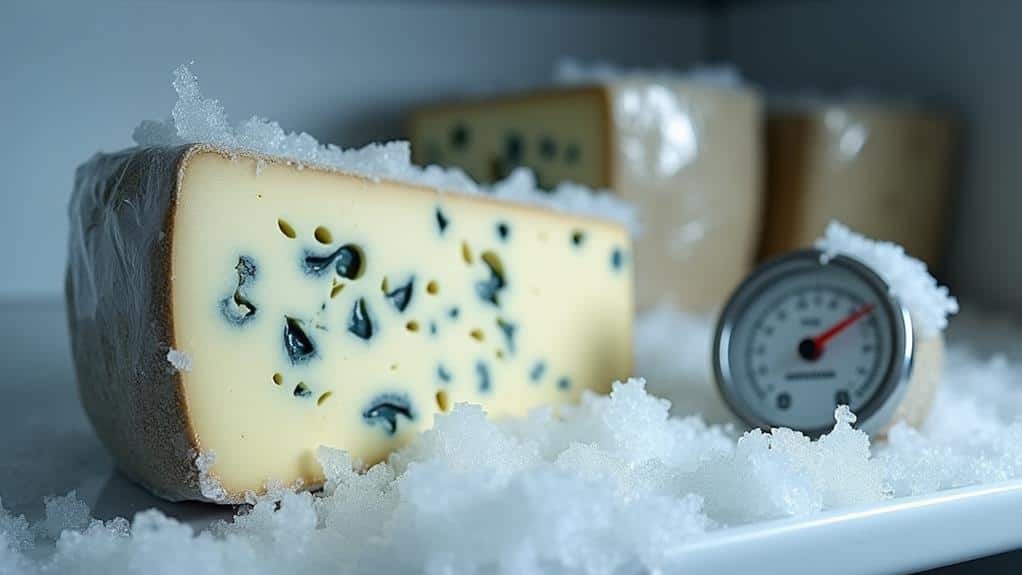
Occasionally, you might have more blue cheese than you can use before it spoils. To extend its shelf life, you can freeze blue cheese, but be aware that the freezing process may alter its texture and flavor.
While frozen blue cheese isn’t ideal for direct consumption, it’s still great for cooking. When you’re ready to use your thawed cheese, remember it’s best consumed within a week.
Preparation Steps
When preparing blue cheese for freezing, you should start by cutting it into smaller portions for easier thawing and future use.
Next, wrap each piece tightly in plastic and aluminum foil to protect against freezer burn, then place them in airtight containers or freezer bags.
Remember to label each package with the freezing date. This will help you keep track of storage time and guarantee that you use the cheese within six months for the best flavor.
Portioning for Easy Use
Portioning blue cheese before freezing is frequently a revolutionary approach for easy future use. Cut your cheese into 1-2 ounce pieces, making it simple to thaw only what you need. Wrap the cheese tightly in plastic wrap, then place it in an airtight container or freezer bag.
This method prevents freezer burn and maintains flavor. Label each portion with the date and size for ideal use of your frozen blue cheese.
Proper Wrapping Techniques
Proper wrapping techniques are essential for maintaining the quality of your blue cheese during freezing. To freeze cheese effectively, wrap each portion tightly in plastic wrap to minimize air exposure.
Follow with a layer of aluminum foil for added protection against moisture content and odors. Place the wrapped cheese in an airtight container or freezer bag, removing excess air before sealing.
These proper wrapping techniques will help preserve your blue cheese’s flavor and texture.
Labeling and Dating
Proper wrapping, labeling, and dating your blue cheese packages are crucial steps in the freezing process. Use waterproof markers to write each package’s freezing date and cheese type. Consider implementing a color-coded system for easy organization.
Verify the cheese is tightly wrapped and labeled when transferring to airtight containers. This practice helps you track storage time and maintain ideal quality within the recommended six-month freezing period.
Optimal Freezing Techniques
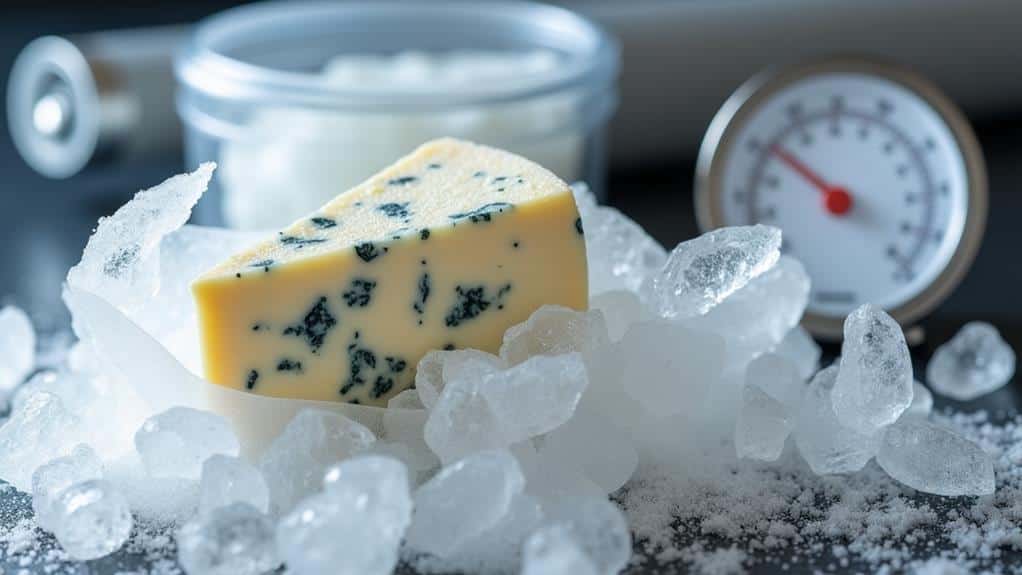
Several key techniques ascertain ideal freezing of blue cheese. To freeze blue cheese effectively, cut it into smaller portions. This makes future use easier and allows for more even freezing and thawing.
To prevent freezer burn, wrap the cheese tightly in plastic wrap and aluminum foil. To minimize air exposure, place the wrapped cheese in an airtight container or freezer bag.
These steps guarantee your frozen cheeses maintain their quality and flavor.
Thawing Process
The thawing process of frozen blue cheese demands careful attention to preserve its quality and safety. For ideal results, thaw your blue cheese in the refrigerator for about 24 hours. This method helps retain moisture and texture while preventing bacterial growth.
Avoid thawing at room temperature, as it can compromise food safety. Once thawed, use the cheese within a week to guarantee the best flavor and quality.
Quality Changes After Freezing
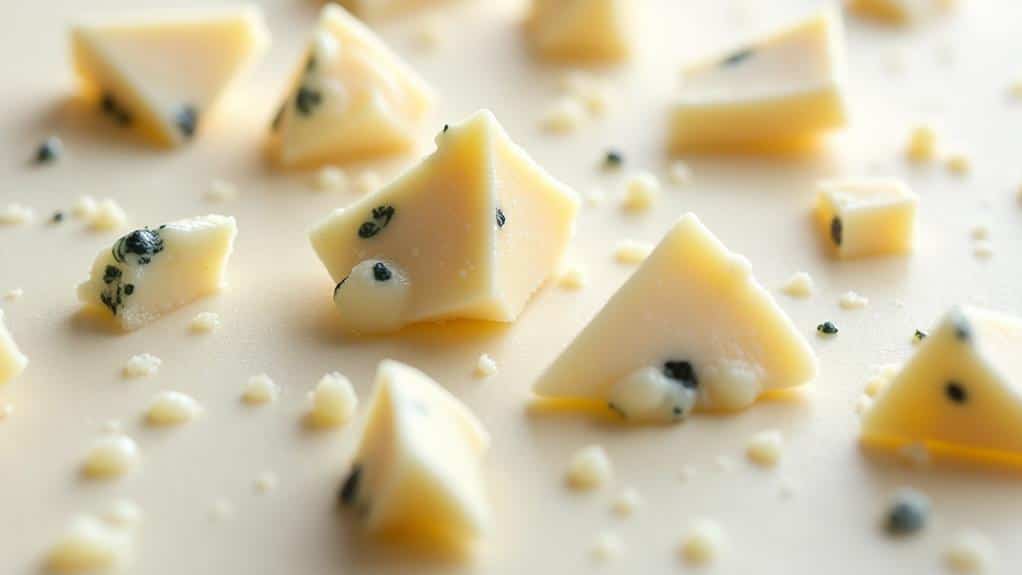
Freezing blue cheese inevitably leads to some quality changes you must contemplate.
After freezing, cheese will have a crumblier texture and possibly diminished flavor intensity. Poorly packaged cheese may also suffer freezer burn, affecting its taste and appearance.
While it mightn’t be ideal for fresh serving, frozen blue cheese can still work well in cooked dishes. Remember to use thawed cheese within a week for the best quality.
Best Uses for Frozen Blue Cheese
You’ll find that frozen blue cheese can be used in various ways once thawed. Try crumbling it into salads for a tangy flavor, or melt it into sauces to add depth to your dishes.
Another great option is incorporating the thawed cheese into compound butters, creating a versatile flavor enhancer for steaks, vegetables, or bread.
Crumbling Into Salads
One of the best uses for frozen blue cheese is crumbling it directly into salads.
Frozen blue cheeses break apart easily, adding rich flavor without thawing. Their crumbly texture blends seamlessly with other ingredients, enhancing your salad without overpowering it.
Pair it with sturdy elements like walnuts or pears for a balanced dish. For the best taste, remember to use your frozen blue cheese within six months.
Melting Into Sauces
Many frozen blue cheese enthusiasts find melting it into sauces an excellent way to enhance their dishes. When using frozen blue cheese in sauces, it’s best to thaw it overnight in the refrigerator. This allows for easier incorporation and a smoother texture.
Thawed blue cheese creates a rich, creamy consistency for pasta dishes or drizzles over steak. Adding it to warm sauces guarantees even melting and ideal flavor distribution.
Flavoring Compound Butters
Frozen blue cheese shines when incorporated into compound butters because of its versatility. Flavoring compound butters with frozen blue cheese can taste great and add a gourmet touch to your meals.
Simply mix softened butter with thawed, crumbled blue cheese, herbs, and spices. This rich spread enhances meats and vegetables, while allowing you to use leftovers effectively.
Store it in the freezer for up to six months for convenient flavor additions.
Alternative Storage Methods
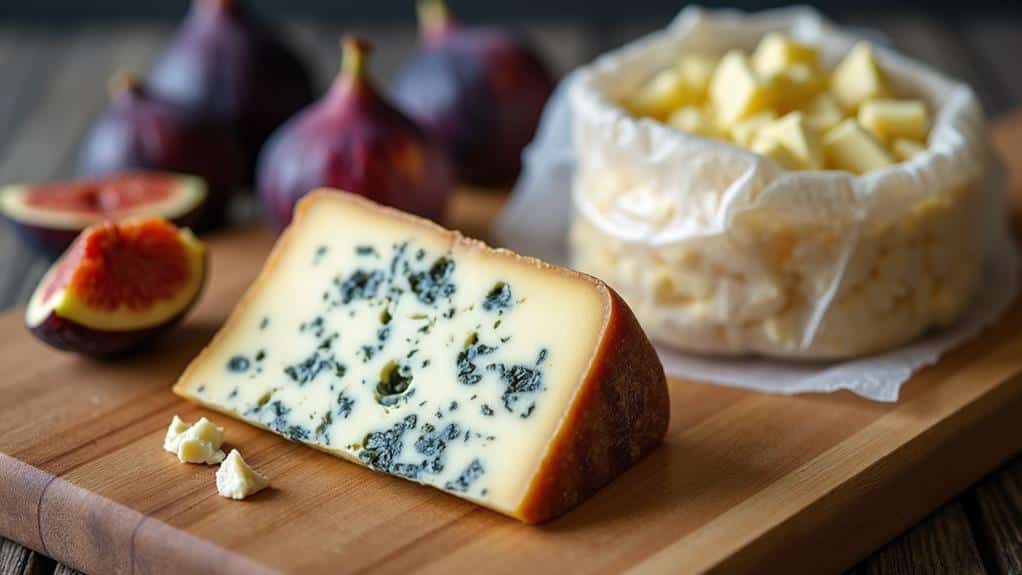
While freezing blue cheese is an option, several alternative storage methods can help preserve its quality without compromising flavor or texture.
Consider vacuum sealing to extend freshness without freezing. Refrigeration is ideal for short-term storage, keeping blue cheese fresh for 3-4 weeks.
You can also investigate alternative preservation methods like brining or waxing. To reduce waste, buy smaller quantities and use the cheese promptly in recipes.
Wrapping Up
You’ve now got the know-how to freeze blue cheese successfully. Remember to wrap it tightly, freeze quickly, and thaw gradually for best results. While freezing may affect texture slightly, it’s a great way to extend shelf life.
Use your frozen blue cheese in cooked dishes or dressings for peak flavor. If you’re not ready to freeze, consider alternative storage methods to keep your cheese fresh. With these tips, you’ll never waste precious blue cheese again.

