
You can freeze evaporated milk, but don’t freeze it in the unopened can; transfer it to airtight, freezer‑safe containers or bags and leave about 3/4 inch headspace for expansion. Freeze at 0°F (−18°C) or below, label with the date, and use within 3–6 months for best quality. Thaw in the refrigerator, stir or blend to recombine separated solids, and use within a day or two; keep reading for tips on portions, containers, and recipe uses.
Quick Guide
- Yes — evaporated milk can be frozen safely if transferred from the can into clean, airtight freezer-safe containers first.
- Leave about 3/4 inch (1.5–2 cm) headspace to allow for expansion and prevent containers from bursting.
- Freeze at 0°F (−18°C) or below and label containers with date; use for best quality within 3–6 months.
- Thaw in the refrigerator (8–24 hours), then stir or blend to recombine separated proteins and fats before use.
- Thawed evaporated milk may be slightly grainy, so reserve it for cooking, baking, or blended drinks rather than whipping.
Is It Safe to Freeze Evaporated Milk?

Although freezing evaporated milk won’t make it unsafe by itself, you need to handle and store it properly to avoid contamination. Proper storage practices are essential to maintain the quality of the milk while freezing. You should never freeze unopened cans, and always transfer milk to freezer-safe, airtight containers with room for expansion. Freeze at 0°F (−18°C) or below, defrost in the refrigerator, and use thawed milk within a day or two, preferably within six months for best quality. For many recipes the texture changes after freezing are not a problem because vigorous shaking or whisking restores the milk for cooking or baking.
How to Prepare Evaporated Milk for Freezing
When you’re getting evaporated milk ready for the freezer, plan portions and container types before you start so the process is clean and efficient; measure out amounts that match your intended recipes or freeze small cubes for flexible use, leaving adequate headspace in freezer-safe containers or bags to allow for expansion. Stir well, use clean utensils, remove excess air from bags, seal tightly, and label with date and quantity. Freezing can cause separation and texture changes, so expect to stir or blend thawed milk before using. Additionally, be mindful of food safety guidelines to ensure quality during the freezing process.
Best Containers and Storage Tips for Frozen Evaporated Milk

For storing frozen evaporated milk successfully, choose containers that are sturdy, airtight, and designed to resist moisture and freezer temperatures, since the right container will protect flavor, prevent leaks, and reduce the chance of freezer burn.
Use rigid plastic or tempered, wide-mouth glass, or freezer bags; leave about 3/4 inch headspace, label clearly, seal tightly, and stack compactly for even freezing and organization. Additionally, proper temperature control is essential to maintain the quality of your frozen evaporated milk.
Thawing Methods and How Long It Takes
When you’re ready to use frozen evaporated milk, slow thawing in the refrigerator is the safest option and will usually take 8 to 12 hours, though a full thaw can sometimes need up to 24 hours. Keep the milk sealed and below 40°F (4°C) to prevent bacterial growth, and plan to use it within a few days while stirring or briefly blending to fix any separation. If time is tight, you can speed thawing by submerging the sealed container in cold water for 30 minutes to a few hours, but monitor it closely and never use warm water or leave it at room temperature. Additionally, it’s important to ensure that the milk is stored in a sealed container to maintain its quality during freezing.
Refrigerator Thawing Time
Because gradual temperature change preserves flavor and safety, thawing frozen evaporated milk in the refrigerator is the best option for most uses, and it typically takes overnight to 24 hours depending on how much you’ve frozen and the size of the container.
Place frozen milk in a freezer-safe, airtight container on a middle or bottom shelf for even thawing; stirring or blending restores consistency after thawing.
Thawing Tips and Safety
Now that you know refrigerator thawing is the safest slow option, let’s cover faster methods and how long each one takes so you can pick the best approach for your needs.
Use a cool water bath for 30 minutes to a few hours depending on size, keep containers sealed, and change water if needed.
You can add frozen milk directly to hot pots; avoid microwaving when possible.
How Freezing Affects Texture, Flavor, and Use in Recipes
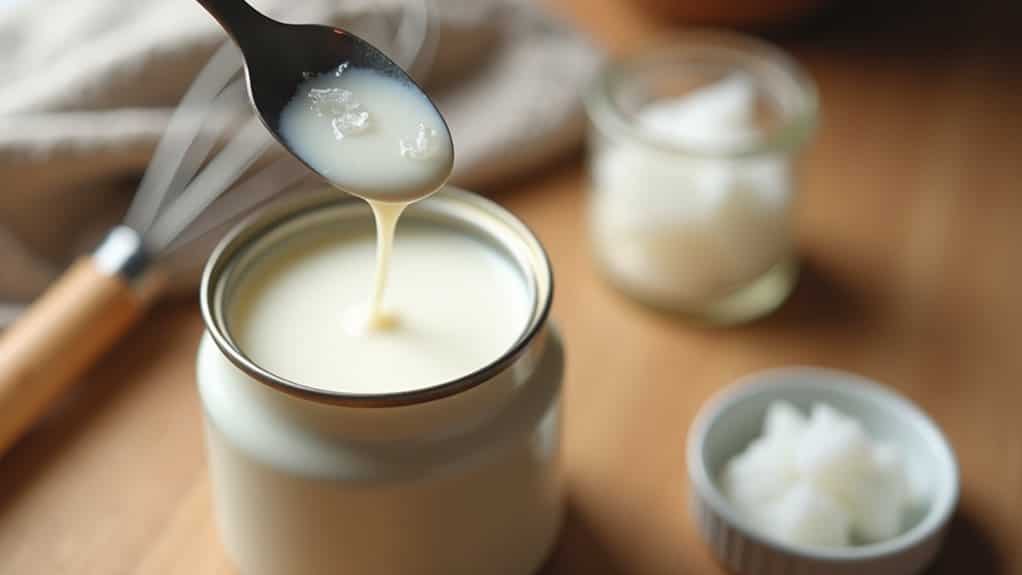
If you freeze evaporated milk, expect some changes to its texture and, to a lesser extent, its flavor, but know that most of those changes won’t ruin its usefulness in cooking.
Freezing can cause separation and slight graininess, which you can usually fix by whisking after thawing.
Flavor stays stable if used within 3–6 months, and cooked or blended recipes mask most textural issues. Additionally, using glass containers for freezing can help maintain the quality of your evaporated milk during storage.
Alternatives to Freezing and When to Choose Them
While freezing can extend evaporated milk’s life, you have several practical alternatives that often preserve quality better for typical home use.
Store unopened cans in a cool, dark pantry at 10–15°C, refrigerate opened milk in airtight containers for 4–7 days, or buy UHT or powdered options for long-term storage.
Portioning, labeling, and avoiding heat preserves quality.
Wrapping Up
You can freeze evaporated milk, but expect some separation and texture changes; it’s best for cooking and baking rather than drinking. Cool opened milk, pour it into airtight containers or ice cube trays, leaving space for expansion, then label and freeze for up to three months. Thaw in the fridge overnight and whisk or blend to recombine before using. If you need a smooth pourable substitute, consider buying fresh or using shelf-stable canned milk instead of freezing.

