
Yes, you can freeze soy milk, extending its shelf life up to three months without compromising nutrition. To freeze, shake the milk well, portion it into freezer-safe containers, leaving room for expansion, and label with the date.
For best results, use freshly opened soy milk and freeze in small portions or ice cube trays. When you’re ready to use it, thaw in the refrigerator for 24-36 hours. After thawing, shake or blend to restore consistency, as texture changes may occur.
Use thawed soy milk within 2-4 days, preferably in cooking or baking. While freezing preserves most nutrients, it’s essential to understand the process for best results.
Quick Guide
- Soy milk can be frozen for up to three months without significantly losing nutritional value.
- Shake the soy milk well before freezing and portion it into freezer-safe containers, allowing room for expansion.
- Thaw frozen soy milk gradually in the refrigerator over 24-36 hours for best quality and safety.
- Expect texture changes after thawing; shaking or blending can help restore consistency.
- Use thawed soy milk within 2-4 days, preferably in cooking or baking applications.
Why Freeze Soy Milk

Freezing soy milk isn’t just a quirky idea; it’s a practical solution for many consumers.
When you freeze soy milk, you extend its shelf life up to three months without compromising its nutritional value. This method helps minimize waste, especially if you buy in bulk or use it infrequently.
You’ll preserve the protein and essential nutrients, making it a smart choice for health-conscious individuals. Plus, frozen soy milk works well in cooking and baking.
Preparing Soy Milk for Freezing
Before you pop that carton of soy milk into the freezer, it’s crucial to prep it properly.
To freeze your soy milk, shake it well and portion it into freezer-safe containers, leaving room for expansion. For best results, use freshly opened milk.
Label containers with date and volume to track freshness. Remember, frozen soy milk is best used within a recommended timeframe, so proper preparation guarantees ideal quality when ready.
Best Freezing Methods
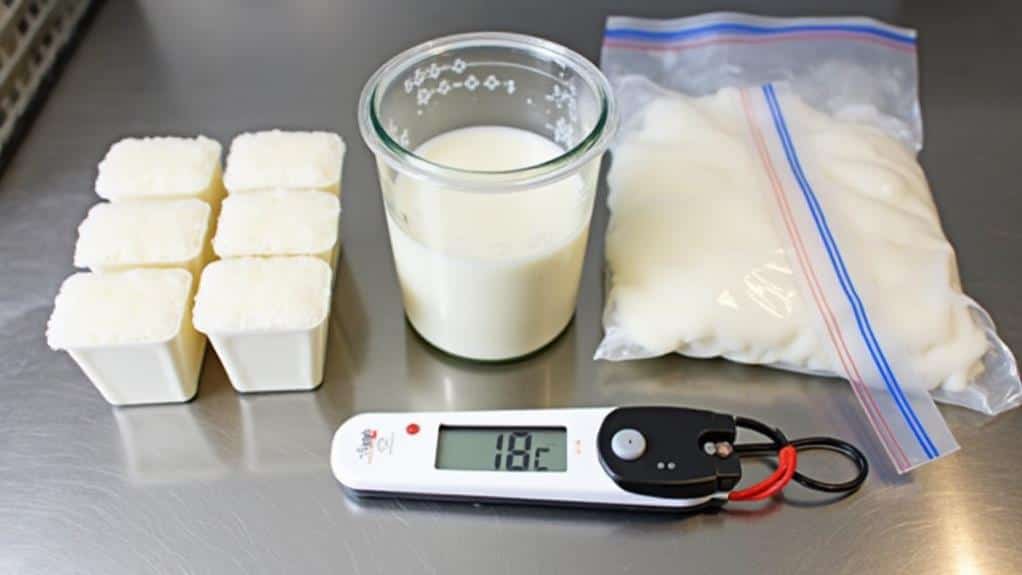
When it comes to freezing soy milk, you’ll want to zero in on the most effective methods.
Use silicone ice cube trays or small containers, leaving room for expansion. Shake the milk before freezing to maintain its nutritional profile.
Label containers with dates and volumes. For smoothies, freeze soy milk in cubes for easy addition.
These techniques help preserve quality and minimize waste when freezing soy milk.
Proper Storage Duration
When freezing soy milk, you should monitor its storage duration to guarantee peak quality.
You can store properly frozen soy milk in the freezer for up to three months. Still, it’s important to consider factors that might affect its shelf life, such as temperature fluctuations and container integrity.
While soy milk can technically be stored longer, you’ll notice a gradual decline in its texture and taste beyond the three-month mark, so it’s best to use it within this timeframe for the best results.
Optimal Freezer Shelf Life
Proper storage techniques allow you to keep soy milk in your freezer for up to three months without sacrificing quality.
This ideal freezer shelf life guarantees you’ll have soy milk on hand when needed.
Remember, once you’ve thawed milk, it’s best to use it within 2-4 days.
Always check for signs of spoilage before consuming, and label containers with the freezing date to track usage.
Factors Affecting Storage Duration
Several factors influence how long you can store frozen soy milk without compromising its quality.
The brand and formulation play a role, with high fat content potentially affecting storage duration. Proper freezing techniques and container labeling are essential.
While soy milk can last up to three months when frozen correctly, it’s best to check individual product recommendations.
Quality Decline Over Time
Despite proper freezing techniques, soy milk’s quality will gradually decline.
While it can maintain its ideal taste for up to three months, for the best flavor and texture, use it within the first month.
Beyond three months, you’ll notice significant quality decline, with undesirable changes in taste and consistency.
Always check for signs of spoilage after thawing, such as strong odors or lumpy textures.
Thawing Frozen Soy Milk

When it’s time to thaw your frozen soy milk, use the refrigerator method for the best results.
Place the frozen container in your fridge and allow it to thaw gradually over 24-36 hours, which helps maintain quality and safety.
After thawing, you may notice some texture changes, but don’t worry—a good shake or quick blend can restore the soy milk’s consistency.
Refrigerator Thawing Method
The refrigerator method is your best bet for ideal results when thawing frozen soy milk.
Place the frozen container in your fridge for 24-36 hours, allowing it to thaw gradually. This approach maintains your soy milk’s nutritional value and quality while ensuring food safety.
Once thawed, give the container a vigorous shake to recombine any separated solids. For best freshness, use thawed soy milk within 2-4 days.
Texture Changes Post-Thaw
While thawing soy milk in the refrigerator helps maintain its quality, you’ll likely notice some texture changes once fully defrosted.
Thawed soy milk often becomes grainy due to separation during freezing. Shaking or blending it vigorously can improve its consistency.
Some brands may experience more noticeable changes, especially those without stabilizers. While the nutritional value remains intact, you might prefer using thawed soy milk for cooking rather than drinking.
Using Thawed Soy Milk
How can you make the most of your thawed soy milk? For ideal safety and quality, use it within two days.
Shake it vigorously to redistribute solids before use. It’s best suited for cooking or baking, like smoothies or pancakes.
Add thawed soy milk cubes directly to smoothies for a chilled effect. Use small amounts at a time and watch for signs of spoilage, discarding if necessary.
Using Thawed Soy Milk
Once you’ve thawed your frozen soy milk, you’ll want to make the most of it. While it’s best to freeze soy milk for later use, thawed soy milk is ideal for cooking and baking.
Instead of drinking it straight, use it in smoothies, pancakes, or muffins. Remember to shake or blend it vigorously to improve consistency.
Incorporate it into recipes within 2-3 days for peak quality and safety.
Nutritional Impact of Freezing

Freezing soy milk can impact its nutritional profile, though not as dramatically as you might think.
While most essential nutrients, including protein, are preserved, you’ll notice some slight changes. The freezing process may lead to small losses in riboflavin and vitamin B12.
The protein structure can also change slightly, affecting texture but not overall nutritional value.
Wrapping Up
You’ve now learned the ins and outs of freezing soy milk. While this plant-based beverage can be frozen, you’ll need to consider the potential changes in texture and taste.
Remember to properly prepare, store, and thaw your soy milk for the best results. Whether extending its shelf life or reducing waste, freezing soy milk can be a practical solution.
Just be aware of the slight nutritional changes and adjust your expectations when using thawed soy milk in your recipes.

