
Gelatin can last years if you keep it cool, dry, and sealed, but it will lose gel strength and quality if exposed to heat, humidity, or contaminants. Powder and sheets unopened often stay usable for several years; opened packs last one to two years if stored airtight with a desiccant. Signs of spoilage include odd odors, discoloration, mold, or a slimy texture. If you want storage tips and how to spot problems, keep reading for practical guidance.
Quick Guide
- Unopened powdered gelatin can last up to five years; opened powder typically remains good 1–2 years if stored properly.
- Gelatin is hygroscopic: high humidity softens it and reduces gel strength, while very dry conditions make it brittle.
- Store gelatin sealed in a cool (15–25°C), dry place away from sunlight, ideally with a desiccant and stable humidity (35%–65%).
- Signs gelatin has gone bad include discoloration, mold, off odors, slimy texture, or unusual crystals.
- Prepared gelatin desserts have shorter lifespans: dairy/fruit 1–3 days, juice-only 5–7 days, plain gelatin 7–10 days.
What Is Gelatin and How Is It Made?
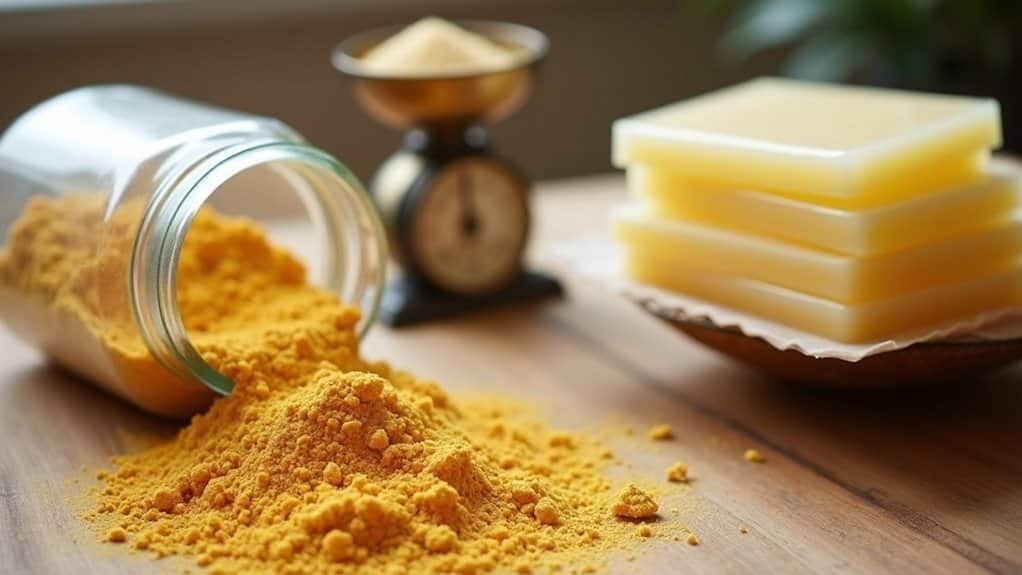
Gelatin is a natural protein you’ll find in many foods and products, and it’s made by partially breaking down collagen, the tough structural protein in animal skin, bones, and connective tissues. It is important to note that improper handling of certain food products, like raw seafood, can lead to health risks similar to those associated with consuming untreated gelatin.
You’ll learn it’s a water‑soluble, colorless mixture of peptides from controlled hydrolysis of animal collagen, produced as powder or sheets for food, pharmaceutical, cosmetic, and photographic uses. Gelatin’s composition is rich in amino acids such as glycine and proline, giving it unique gel-forming properties.
How Long Does Different Gelatin Products Last?
Now that you know what gelatin is and how it’s made, you’ll want to understand how long different gelatin products will keep under real-world conditions.
Hard capsules last about 2–3 years, powders unopened up to five years (1–2 years once opened), adhesives vary widely with temperature control, and vegetarian capsules often outlast gelatin in humid or variable conditions due to lower moisture uptake. Proper food storage techniques can significantly reduce waste and extend shelf life, so consult suppliers and follow best practices like shipment planning and consolidation.
Proper Storage Practices to Extend Gelatin Shelf Life
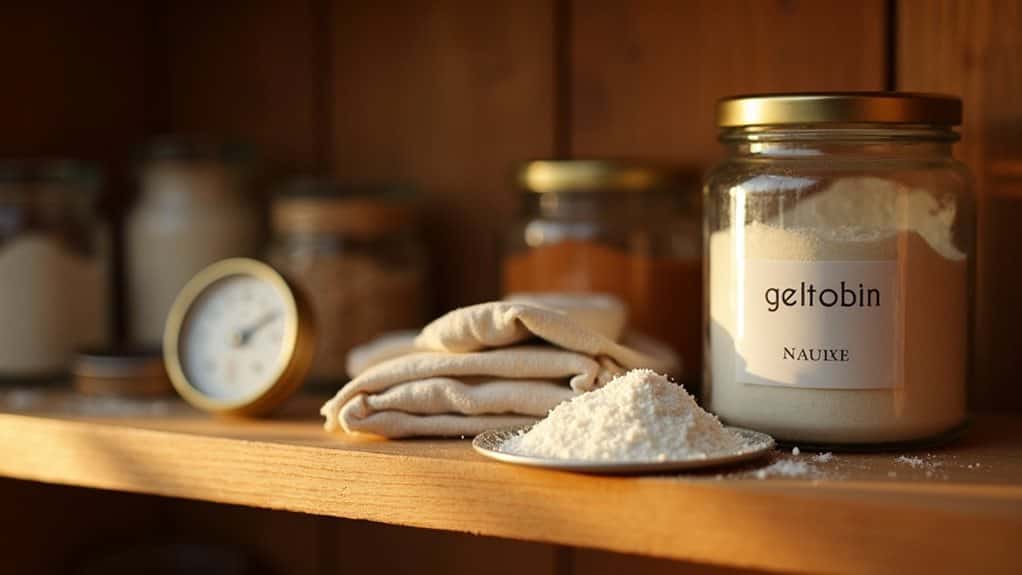
To keep gelatin at peak quality, store it in a cool, dry place and make sure packages are tightly sealed against moisture.
Preserve the original packaging when possible, or transfer smaller amounts into airtight bags with a desiccant to prevent clumping and degradation.
Avoid warm, humid areas and repeated exposure to open air, since even brief moisture contact can reduce gel strength and shelf life. Additionally, proper storage techniques can help maintain gelatin’s quality over time.
Store Cool & Dry
Because humidity and heat both speed up breakdown, you should keep gelatin stored in a cool, dry spot below about 25°C (77°F) and away from direct sunlight or heat sources like radiators and HVAC vents.
Choose a dark pantry or cupboard with stable temperature and good airflow, keep it off the floor, avoid nearby steam or hot pipes, and monitor conditions to preserve texture and solubility.
Seal Against Moisture
With good sealing, you can stop moisture from undoing weeks or months of careful storage—gelatin is hygroscopic, so even modest humidity will make it sticky or, if it dries out, brittle and prone to cracking.
Use airtight, low-WVTR containers or preserve original packaging, add desiccants, keep humidity 35–60% and 15–25°C, inspect seals, and reseal or repackage after opening.
How Moisture and Humidity Affect Gelatin Quality
When stored in environments that aren’t properly controlled, gelatin will gain or lose moisture until it reaches equilibrium with the surrounding relative humidity, and those changes directly affect its flexibility, strength, and solubility.
You should keep RH between about 35% and 65% and temperature 15–25°C; too dry makes gelatin brittle, too humid causes softening, cross-linking, dimensional changes, and reduced dissolution. Proper storage is essential to maintaining the quality of gelatin and preventing spoilage.
Signs Your Gelatin Has Gone Bad
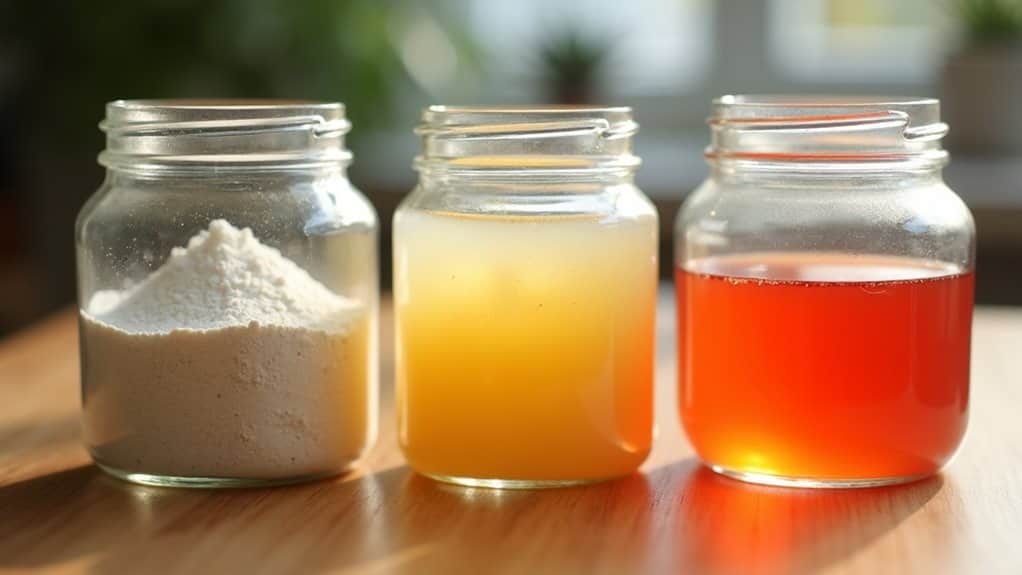
Controlling moisture and humidity helps keep gelatin stable, but even well-stored gelatin can eventually show signs that it’s gone bad, and you should be able to recognize them quickly.
Look for discoloration, mold, slimy or sticky surfaces, loss of firmness or watery separation, and unusual crystals or cloudiness. Smells like sour, rotten egg, musty, or chemical odors also signal spoilage. Additionally, spoilage bacteria can thrive if gelatin is not stored properly, contributing to its deterioration.
Tips for Handling and Inventory Management
Keep your gelatin capsules organized and protected so they stay usable for as long as possible; good handling and inventory practices reduce waste and prevent quality issues.
Transfer opened packs to clean, airtight containers, label with type and purchase date, and store between 59°F–77°F with 35%–65% humidity.
Stack carefully, handle gently with clean hands or gloves, use desiccants inside containers, and rotate stock by FEFO.
When to Discard Prepared Gelatin Desserts
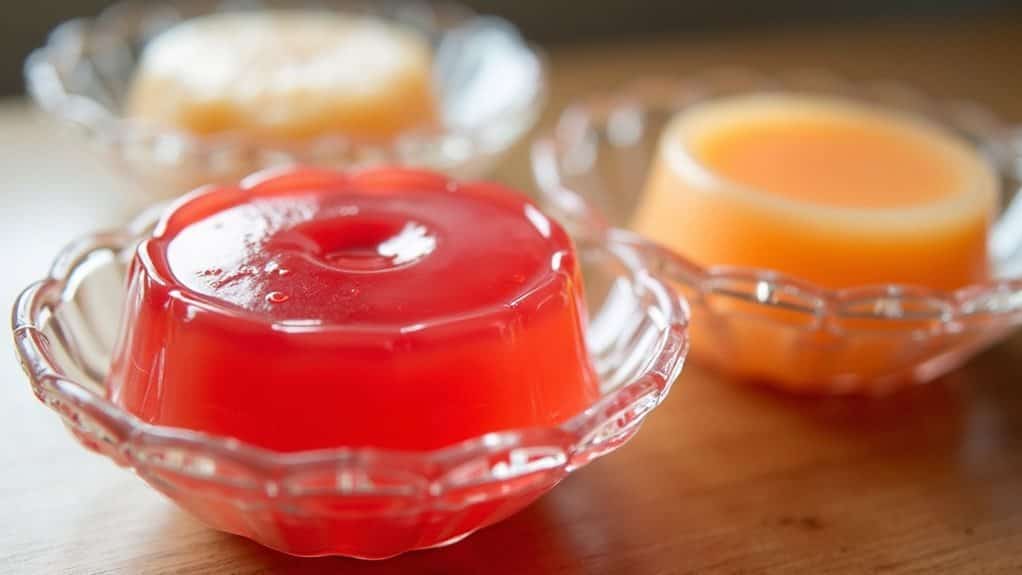
You’ve done the work to store and label your gelatin properly, so now you need clear signs for when to throw prepared gelatin desserts away to avoid illness or waste. Discard immediately if you see mold, odd discoloration, sour smells, slimy texture, excessive liquid separation, or unusual bitterness.
Follow time limits: 1–3 days for dairy or fruit, 5–7 for juice-only, 7–10 for plain gelatin.
Wrapping Up
You can usually rely on powdered and sheet gelatin for a long time if you store them dry, cool, and sealed, but they don’t last forever. Check expiration dates, keep packets away from moisture and heat, and toss any that show clumping, discoloration, or off smells. Prepared gelatin desserts should be refrigerated and used within a few days. When in doubt, discard it—it’s better to waste a packet than risk foodborne illness.

