
Yes — salad dressing does go bad, but how fast depends on the type and storage. Oil‑and‑vinegar dressings can last months refrigerated once opened; creamy, mayo or dairy‑based ones usually keep one to two weeks. Homemade dressings with fresh garlic, herbs, or citrus spoil in days. Always refrigerate after opening, use clean utensils, watch for off smells, mold, fizz, or color changes, and label dates; keep reading for tips to extend life and spot spoilage.
Quick Guide
- Yes — salad dressings can spoil; spoilage risk depends on type (vinaigrette, creamy, homemade) and storage.
- Refrigerate opened creamy or mayo-based dressings promptly; homemade versions last only a few days to a week.
- Opened oil-and-vinegar dressings typically keep 3–4 months refrigerated; unopened bottles last much longer.
- Fresh ingredients (garlic, citrus, herbs) and dairy shorten shelf life to days; high vinegar helps preservation.
- Toss dressings with mold, bulging caps, fizzing, off smells, unusual color/texture, or if past safe storage time.
How Long Do Different Types of Salad Dressing Last
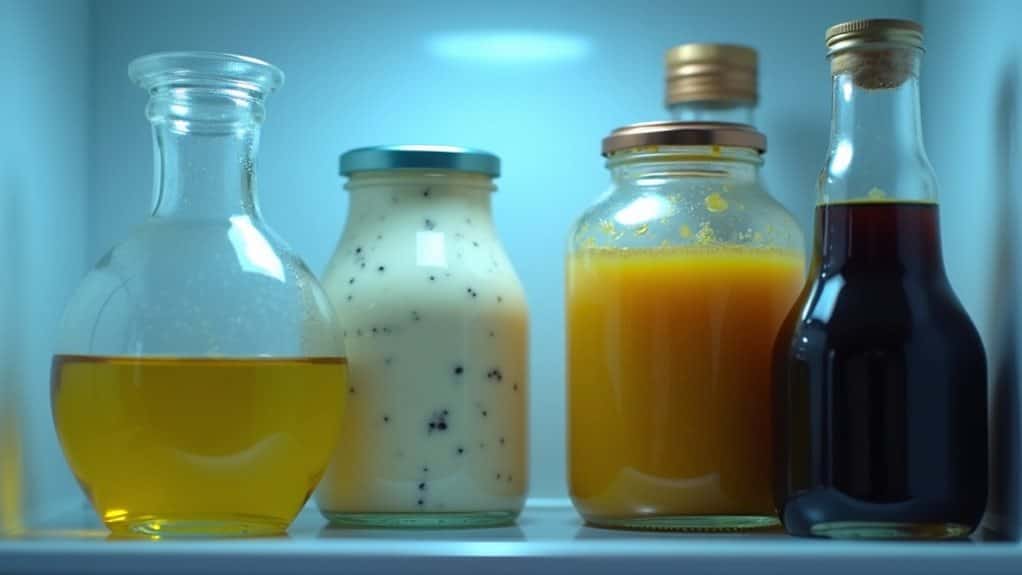
When you’re sorting through dressings, think about three main categories—vinaigrettes, creamy dressings, and oil-based blends—because each one ages differently and needs different storage.
You’ll refrigerate vinaigrettes to last weeks unless they contain fresh citrus or garlic, which spoil in days. It’s important to be aware that spoilage bacteria can grow in warm temperatures, so always check for any signs of spoilage before consuming.
Creamy dressings last days to a couple weeks refrigerated, while plain oil-based bottles keep longer if kept cool and dark.
In general, for safety and best flavor, plan to use homemade dressings within a few days to a couple weeks depending on ingredients and storage conditions, especially when they contain fresh garlic.
Opened Versus Unopened: What Changes Shelf Life
Although unopened bottles often keep past their printed date because factory sealing and preservatives slow breakdown, opening a dressing immediately changes how long it stays good.
Once opened, exposure to air and utensils raises contamination and oxidation risks, so mayonnaise-based dressings last about 1–2 months while oil-vinegar types keep roughly 3–4 months; check smell, appearance, and texture regularly. Proper refrigeration helps extend shelf life, and opened sauces should be consumed within 3 months if refrigerated.
How Storage Conditions Affect Freshness

Because storage conditions directly determine how long a dressing stays safe and tasty, you should pay attention to temperature, packaging, and handling every time you store a bottle or jar.
Refrigerate creamy or mayo-based dressings promptly, keep vinaigrettes chilled to slow rancidity, use airtight, opaque containers, avoid frequent temperature swings or wet utensils, and don’t reuse unclean jars to prevent contamination. Additionally, monitor for spoilage signs such as unusual smells or texture changes to ensure your dressing remains fresh and safe to use.
Signs Your Dressing Has Gone Bad
You’ll usually spot a spoiled dressing by paying attention to a few clear signs, and acting on them quickly will keep you safe; look for changes in appearance, smell, texture, and taste that go beyond normal separation or aging.
Throw it out if you see mold, unusual cloudiness, lumps, fizzing, swollen packaging, rancid or sour odors, or off, metallic, or bitter flavors. Additionally, consuming spoiled dressing poses health risks due to bacteria and foodborne illnesses, so always inspect your dressing before use.
Homemade Versus Store-Bought: Shelf Life Differences
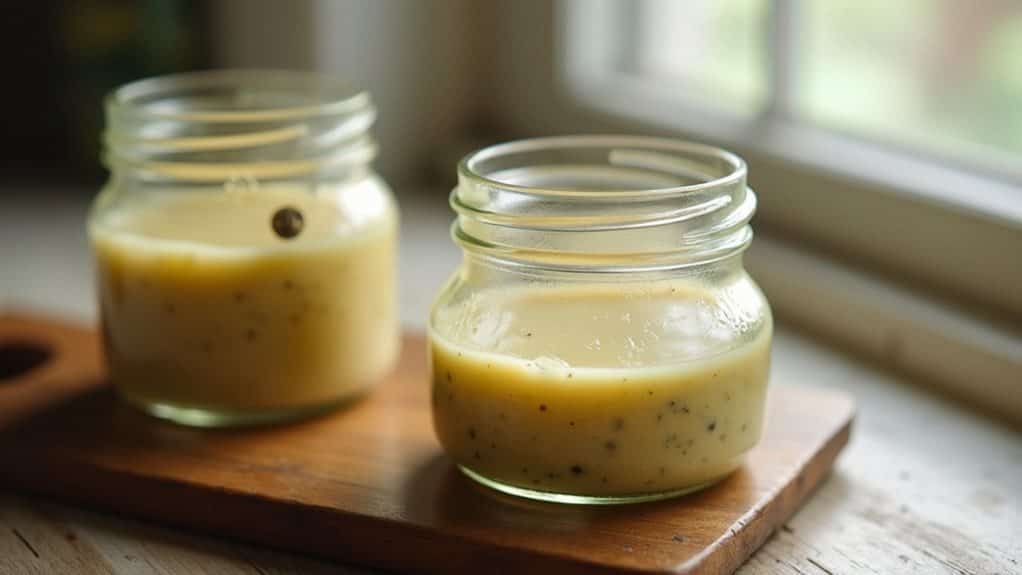
When you compare homemade and store-bought dressings, the biggest difference is how long they’ll stay good: store-bought varieties often include preservatives and stabilizers that let them sit unopened for months, while homemade dressings spoil much sooner because they lack those additives.
You should refrigerate homemade dressings, expect vinegar-oil versions to last weeks, mayonnaise or dairy ones about a week, and fresh-ingredient mixes only days. Additionally, proper storage techniques can help maximize the freshness of both homemade and store-bought dressings.
Ingredient Impact: Which Dressings Spoil Faster
If you want to know which dressings spoil faster, look first at their acids and sweet or salty additives, since those ingredients do most of the preserving work; dressings with higher acetic acid levels — like many commercial vinaigrettes — resist bacteria and yeast better than low‑acid or mayonnaise‑style dressings.
You’ll notice yeast like Zygosaccharomyces thrives in low‑acid, high‑sugar or particulate dressings, raising spoilage risk.
Best Practices for Extending Dressing Life
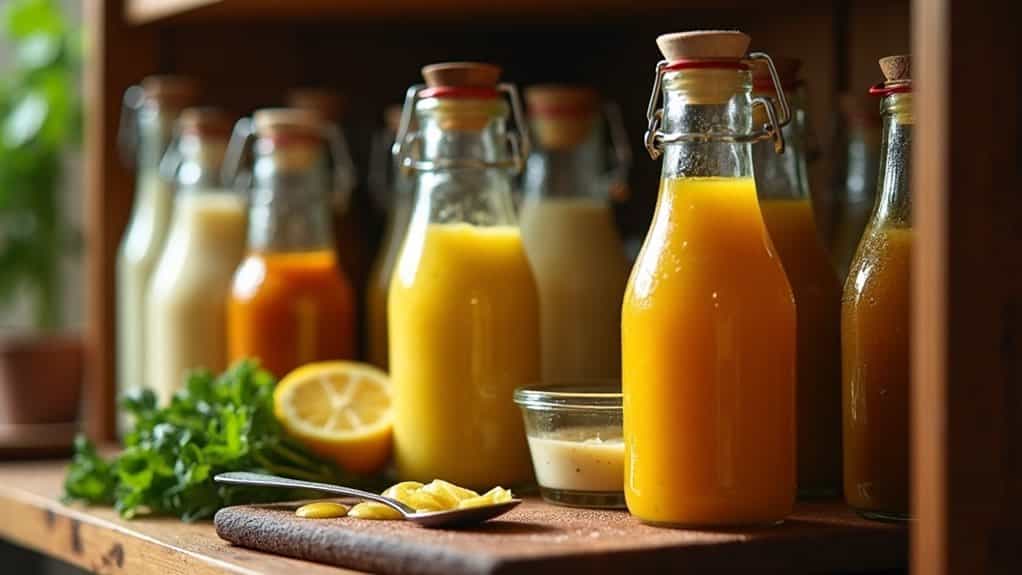
Because most dressings spoil from microbes, oxidation, or flavor contamination, storing and handling them correctly will make the biggest difference in how long they stay fresh.
Refrigerate immediately in original or airtight glass containers, keep fridge ≤40°F, use clean utensils, and limit time at room temperature.
Use opaque jars, label homemade batches with dates, freeze extras, and avoid repeated transfers that introduce air or odors.
Safe Handling and Serving Tips
You’ve already seen how proper storage and handling help keep dressings fresher longer, and now let’s focus on safe practices for handling and serving them so you don’t introduce hazards at the last step.
Use sanitized utensils, transfer canned contents to clean lidded containers, chill dressings to 4°C or below, label leftovers, avoid cross-contamination, and use pasteurized egg products for mayonnaise-based dressings.
When to Toss It: Making the Call
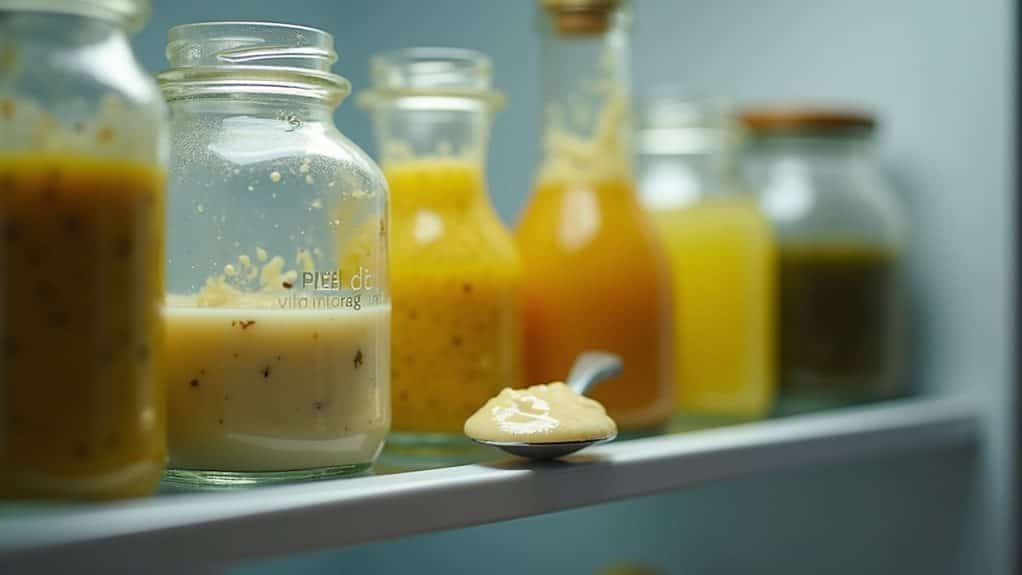
When deciding whether a dressing has outlived its usefulness, trust your senses and the clock: look for mold, sniff for sour or rancid smells, and note any major changes in color, texture, or fizzing that weren’t there before.
Check dates, seals, and storage history; mayo or dairy, fresh herbs, or bulging caps mean toss. If smell, taste, or appearance seems off, discard it.
Wrapping Up
You can keep most dressings for weeks if you store them right, but always check the label and use your senses first. Opened bottles usually last less than unopened ones, and homemade, dairy, or oil-emulsion dressings spoil faster than vinegar-based types. Refrigerate after opening, avoid cross-contamination, and toss anything with off smells, mold, or separation you can’t fix. When in doubt, don’t risk it — it’s safer to discard questionable dressing.

