
While you can freeze brie cheese, it won't maintain its signature creamy texture after thawing. To freeze brie properly, wrap it tightly in plastic wrap or foil, making sure to remove all air pockets, then place it in a freezer-safe container or vacuum-sealed bag. Label the package with the date and store at 0°F (-18°C). When you're ready to use it, thaw the cheese in your refrigerator overnight in its original wrapping. Though the flavor remains mostly intact, the texture becomes more crumbly due to ice crystal formation. For the best quality and safety, consume your thawed brie within a few days to find its ideal serving potential.
TLDR
- Brie can be frozen to extend shelf life, but expect significant texture changes as it becomes more crumbly and less creamy.
- Wrap Brie tightly in plastic wrap or foil, removing all air pockets before placing in a freezer-safe container.
- Freeze Brie at 0°F (-18°C), either whole or pre-sliced, and label with the date for proper tracking.
- Thaw frozen Brie slowly in the refrigerator overnight, never at room temperature or in the microwave.
- Frozen Brie maintains its basic flavor but works better in cooked dishes rather than eaten fresh due to textural changes.
The Truth About Freezing Brie
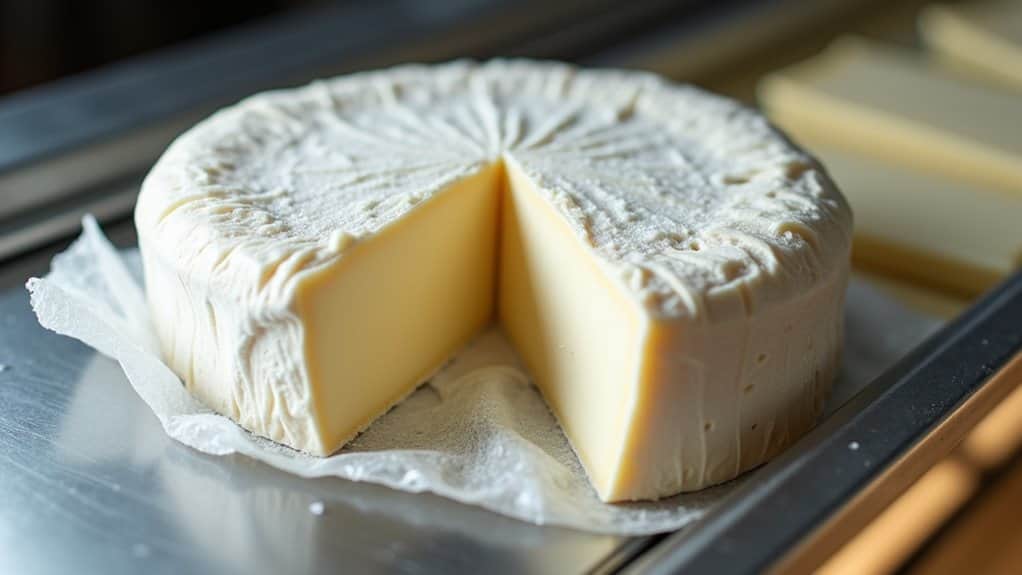
The truth about freezing Brie isn't as straightforward as you might think.
While you can freeze this creamy cheese to extend its shelf life, you'll notice significant changes in its texture. Freezing can lead to grainy texture as the ice crystals disrupt the cheese's delicate structure and can leave you with a grainy, less creamy product when thawed.
The flavor typically stays intact, but the texture won't be the same. Being a delicate hand-crafted cheese, Brie is among the worst varieties for freezing.
Preparing Brie For Storage
Before storing your precious Brie cheese, proper preparation is essential for maintaining its delicate flavor and texture.
You'll want to wrap the cheese tightly in breathable materials like cheese paper or wax paper, avoiding plastic wrap unless you're freezing it. It's also important to keep it submerged in the right environment to prevent spoilage. Keep it in the warmest part of your fridge, ideally the vegetable drawer, at 35-45°F, and away from strong-smelling foods. The cheese requires 80-85% humidity during storage for optimal freshness.
Changes During The Freezing Process
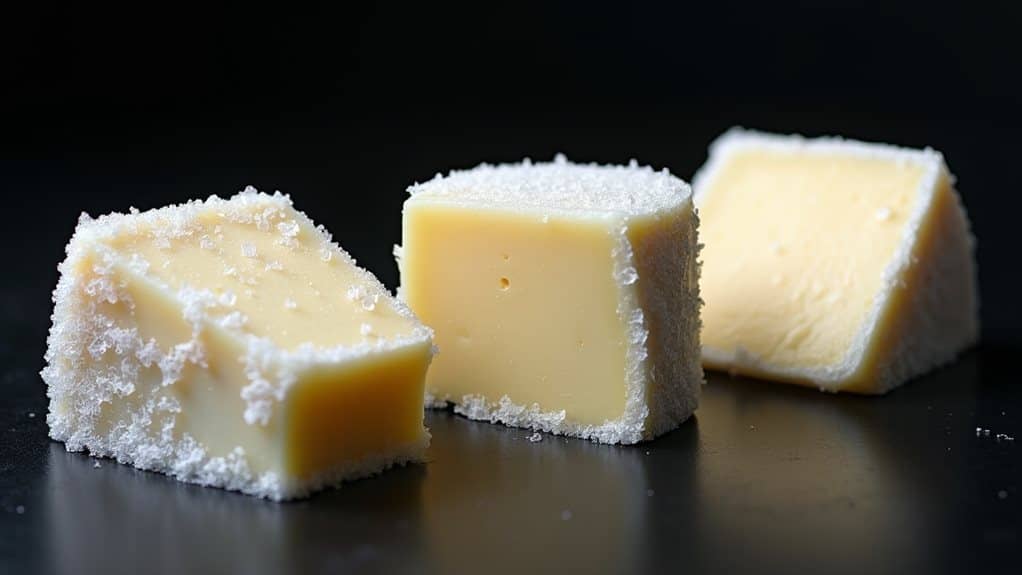
Understanding what happens to Brie during freezing can help you set realistic expectations for your stored cheese.
When you freeze Brie, ice crystals form within its structure, disrupting the protein networks and causing the cheese's texture to become more crumbly. Proper storage practices during freezing can help minimize texture changes.
You'll notice the creamy consistency changes, and while the basic flavor remains, some of the subtle flavors may diminish once thawed. Storing Brie at 0°F (-18°C) ensures the best preservation of its qualities during freezing.
Best Methods For Freezing
Several proven methods exist for freezing Brie cheese effectively, and choosing the right approach can greatly impact its quality after thawing.
You'll want to wrap the cheese tightly in plastic wrap or foil, ensuring all air is removed. For best results, you can freeze it as a whole wheel or cut it into slices first. Proper storage techniques will help maintain the flavor and texture of the cheese.
Use freezer-safe containers or vacuum-seal bags, and don't forget to label with the date. Be aware that freezing will result in altered texture when thawed.
Thawing And Using Frozen Brie
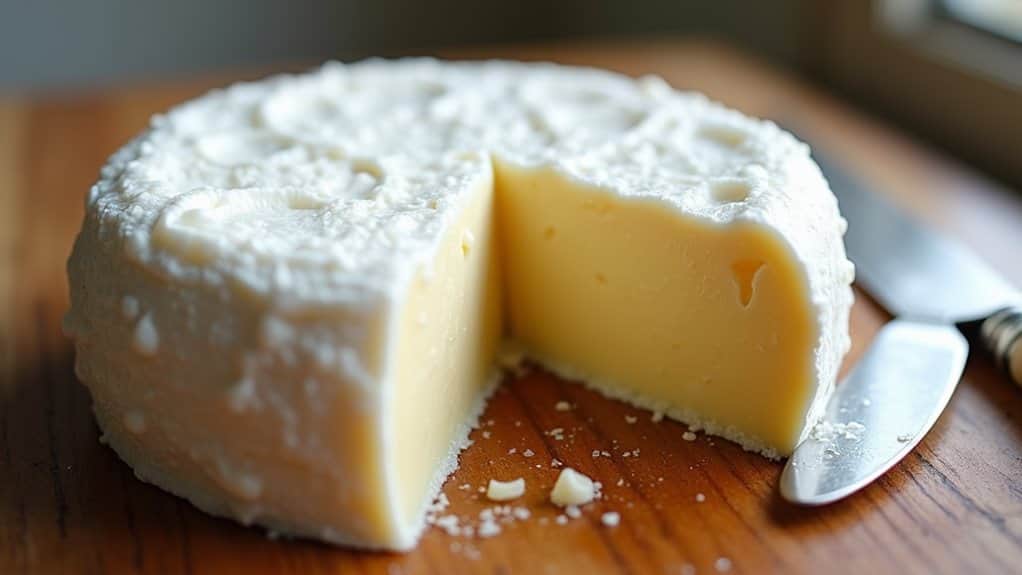
Proper thawing techniques make all the difference when preparing frozen Brie for consumption.
You'll want to transfer your frozen cheese to the refrigerator and let it thaw slowly in its original wrapping, which typically takes several hours or overnight. This gradual process helps maintain its quality and prevents bacterial growth.
Don't thaw at room temperature or use a microwave, as these methods can damage the texture. Since Brie is a soft cheese, its texture will likely become crumbly after freezing, making it less ideal for freezing compared to hard cheeses.
Once thawed, use your Brie within a few days.
And Finally
While you can freeze brie cheese, you'll want to weigh the convenience against potential texture changes. When properly wrapped and frozen, brie will stay good for up to 6 months, though it's best to use it within 3 months for ideal quality. Remember to thaw your frozen brie in the refrigerator overnight, and plan to use it in cooked dishes where the slight texture changes won't be as noticeable.

