
Cheese shelf life varies dramatically by moisture content—hard cheeses like Parmesan can last several months in your fridge, semi-soft varieties like Gouda stay fresh for weeks, while soft cheeses like Brie need consumption within days. You’ll maximize freshness by wrapping cheese in parchment paper, storing it in your vegetable drawer between 35–40°F, and keeping different types separate to prevent flavor transfer. Watch for mold on soft cheeses, unusual slime, or ammonia odors as signs of spoilage, and consider the specific storage techniques that can markedly extend your cheese’s usable life.
Quick Guide
- Cheese shelf life varies by moisture content: hard cheeses last months, semi-soft last weeks, and soft cheeses remain fresh for only days.
- Store cheese wrapped in parchment or specialized paper in the refrigerator’s vegetable drawer at 35–40°F for optimal freshness.
- Hard cheeses with mold can be salvaged by cutting away affected areas; discard soft cheeses with visible mold immediately.
- Rewrap cheese after each use and store varieties separately to prevent flavor transfer and maintain quality.
- Freeze hard aged cheeses for up to 18 months to extend usability and reduce waste when cooking.
Understanding Cheese Shelf Life by Type and Moisture Content
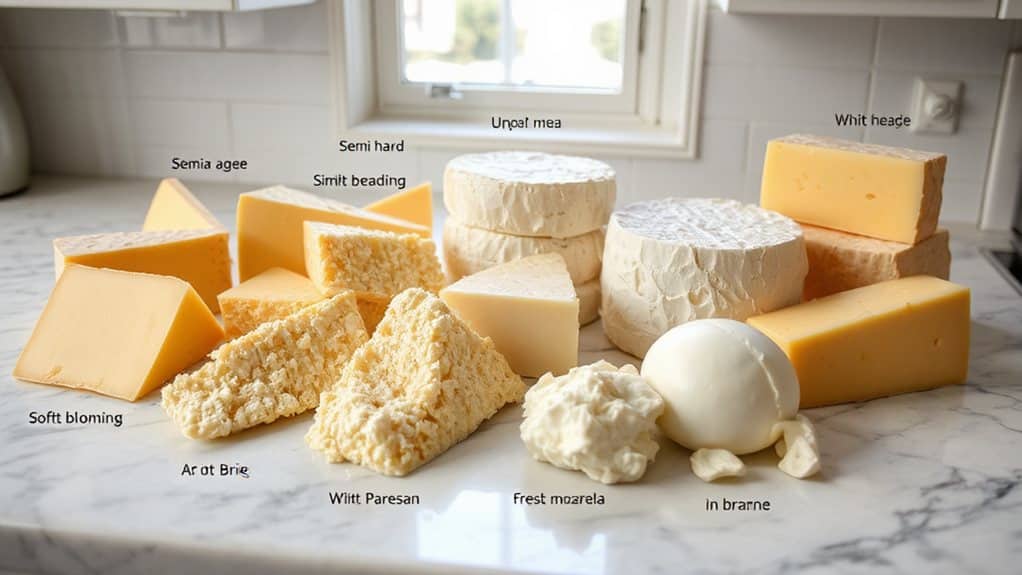
The shelf life of cheese depends heavily on its moisture content, which varies substantially across different types.
Hard cheeses like Parmesan contain less moisture and can last several months when properly stored.
Semi-soft varieties such as Gouda have moderate moisture levels and typically remain fresh for weeks.
Soft cheeses like Brie contain high moisture content, making them more perishable and shortening their usable timeframe markedly.
For soft brined cheeses like feta, using a brine solution (2 tsp kosher salt per cup of water) helps maintain freshness after opening.
Proper Storage Methods to Maximize Freshness
Knowing how moisture affects cheese longevity naturally leads to understanding how you can protect that freshness through proper storage.
You’ll want to wrap cheese in specialized paper or parchment, which allows it to breathe while preventing moisture loss. Store it in your refrigerator’s vegetable drawer, where temperature remains most consistent.
Always rewrap cheese after each use, and keep different varieties separate to prevent flavor transfer between them.
For soft-ripened cheeses, aim for 80–85% humidity to support proper ripening and prevent drying out.
How Long Each Cheese Variety Lasts in the Refrigerator
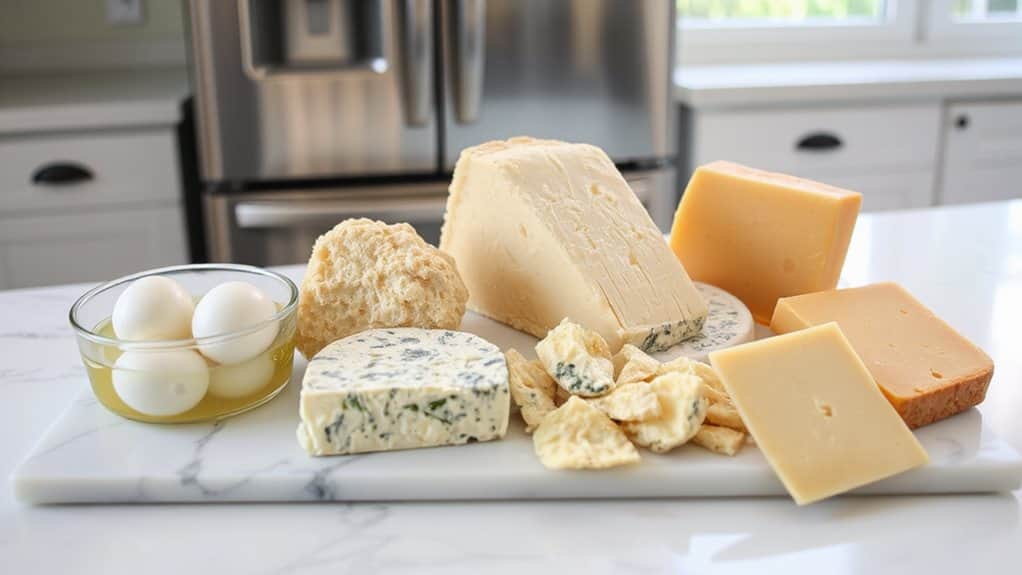
Once you’ve become proficient in proper storage techniques, you’ll need to understand the specific shelf life expectations for each type of cheese in your refrigerator.
Different varieties have varying moisture contents and aging processes, which directly affect how long they’ll remain fresh. Hard cheeses typically last longer than soft varieties, while fresh cheeses require consumption within days.
Understanding these distinctions helps you plan purchases and minimize waste.
For example, unopened Pecorino Romano can last 3–4 months when kept below 40°F, and its PDO certification helps ensure consistent quality.
Signs Your Cheese Has Gone Bad
Even high-quality cheese won’t stay fresh forever, so you’ll need to recognize the warning signs that indicate it’s time to toss it out.
Look for visible mold on soft cheeses, which means you should discard them immediately. Hard cheeses can be salvaged by cutting away moldy sections.
Other red flags include unusual slime, strong ammonia odors, or significant color changes that differ from the cheese’s natural appearance.
If you’ve thawed frozen blue cheese, follow the one week guideline and use it promptly to avoid quality and safety issues.
Tips for Extending the Life of Your Cheese
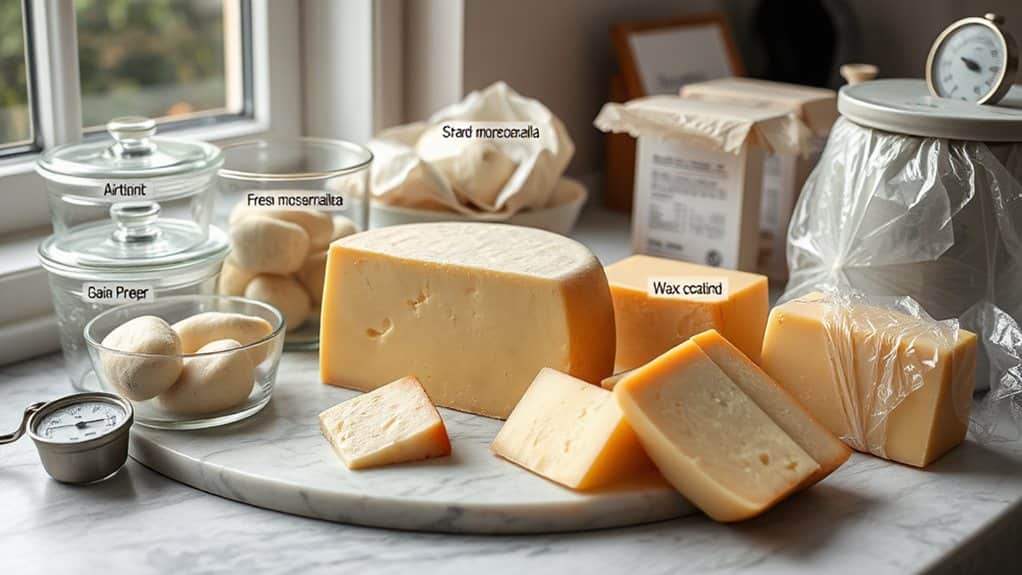
Proper storage methods can considerably extend your cheese’s shelf life and help you avoid waste.
Always wrap cheese in wax paper or parchment paper before placing it in a container, as this allows it to breathe while preventing moisture loss.
Store different cheese types separately to prevent flavor transfer, and keep your refrigerator temperature between 35-40°F for peak preservation.
For hard aged cheeses, you can use freeze up to 18 months to reduce waste and keep them ready for cooking.
Wrapping Up
You’ll get the most out of your cheese by understanding how moisture content affects shelf life and storing it properly in breathable materials. Check for visual and smell-based warning signs regularly, and don’t hesitate to cut away small moldy spots on hard varieties. With the right storage techniques and a bit of attention, you can markedly extend your cheese’s freshness and reduce waste in your kitchen.

