
To keep your baguette fresh, store it at room temperature in a bread box or wrapped in aluminum foil to prevent moisture loss while maintaining proper air circulation. Don't refrigerate, as cold temperatures speed up staleness and ruin the texture. For same-day consumption, a paper or linen bag works well, while freezing is your best bet for long-term storage. Proper storage techniques can help your baguette maintain its crispy crust and soft interior for days to come.
Quick Guide
- Store baguette in a bread box or paper bag at room temperature to maintain proper air circulation and humidity control.
- Avoid plastic bags which trap moisture and instead use breathable materials like linen or cotton for storage.
- For long-term storage, wrap baguette tightly in aluminum foil and freeze, thawing in a 450°F oven when needed.
- Keep baguette away from direct sunlight and heat sources, storing it in a cool, dry spot like a pantry.
- Cool freshly baked baguette on a middle rack with the oven door cracked before storing to preserve crispiness.
The Best Room Temperature Storage Methods
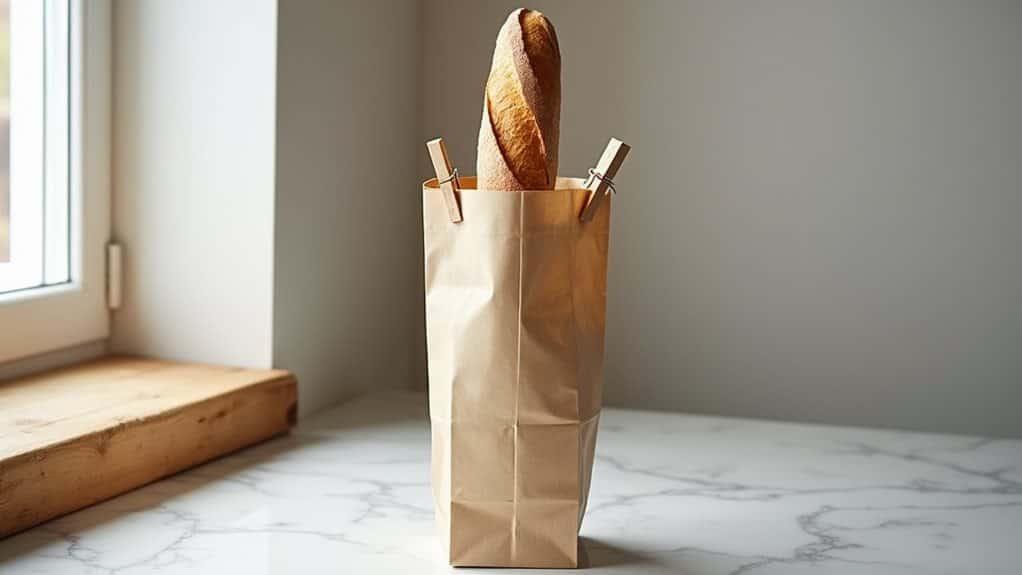
When storing a fresh baguette at room temperature, you'll want to create the ideal environment to maintain its delicate balance of crispy crust and soft interior.
Choose a cool, dry spot away from heat sources and direct sunlight, like a kitchen counter or pantry shelf. Proper storage methods can help to prevent moisture-related spoilage, which is essential for preserving the baguette's quality.
You'll get the best results using a bread box that allows air circulation while maintaining proper humidity levels. To prevent moisture loss, wrap in foil to create an airtight seal around your baguette.
Proper Techniques for Airtight Storage
Although airtight storage can help preserve your baguette's freshness, you'll need to choose the right materials and methods to avoid compromising its texture. Proper storage is crucial to ensuring safety and maintaining the quality of your bread. Skip plastic bags, which trap moisture, and opt for linen or cotton bags that allow proper air circulation. Storing at room temperature helps maintain optimal freshness and texture quality. For longer storage, wrap your baguette in aluminum foil or combine a brown paper bag with a partially sealed plastic bag.
Why Refrigeration May Not Be Your Best Choice
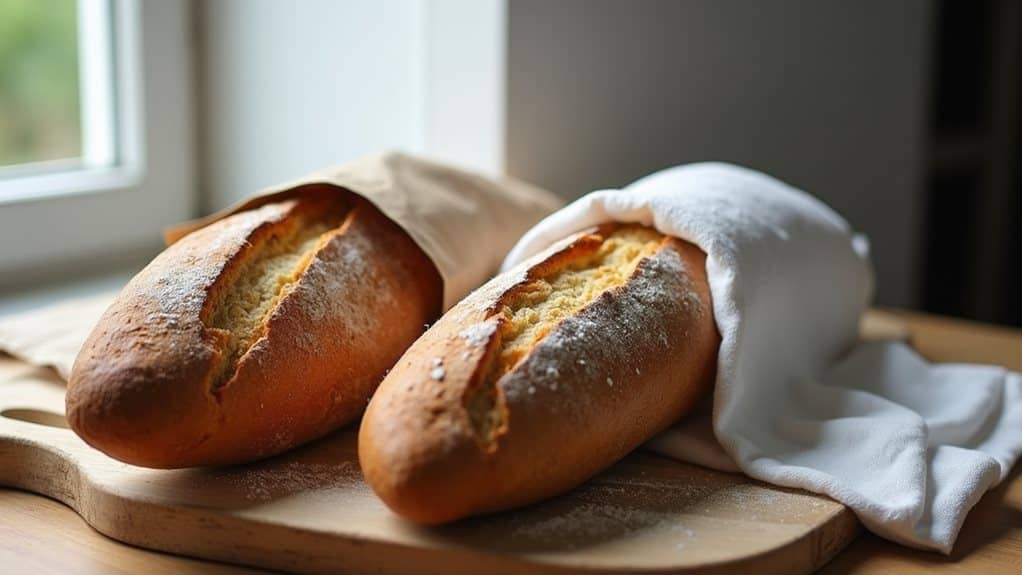
Despite its common use for food storage, your refrigerator can actually be the worst place to keep a baguette fresh.
The cold temperature speeds up starch retrogradation, causing your bread to become stale faster than at room temperature. This process is similar to how cooked oatmeal loses its texture and flavor when not stored properly.
You'll notice moisture loss that makes the bread dry and hard, while the crust becomes unpleasantly soft.
Even sealed containers won't prevent these unwanted changes.
This is especially problematic in summer when high humidity levels can further compromise your baguette's texture and freshness.
Freezing Your Baguette: A Step-by-Step Guide
Freezing stands out as the most effective method for preserving your baguette's quality and texture over an extended period.
Start by cutting your fresh baguette in half crosswise and letting it cool to room temperature.
Wrap it tightly in aluminum foil, followed by a freezer-safe bag, removing as much air as possible.
You'll get the best results by thawing it in a 450°F oven for about 12 minutes. Additionally, proper storage can extend shelf life and maintain the freshness of your baguette over time.
Smart Storage Solutions Using Alternative Materials

While keeping your baguette in the freezer offers long-term preservation, you'll want other storage options for daily use.
Linen bags provide the best breathable solution, keeping your bread's crust crisp while being eco-friendly.
If you don't have linen, try a bread box for consistent airflow, or wrap your baguette in cotton napkins.
Avoid plastic bags, which trap moisture, but aluminum foil works for short-term storage.
Bringing Life Back to Stale Baguettes
Once your baguette starts to feel hard and stale, you don't need to throw it away or settle for less-than-perfect bread.
You can revive it by drenching it in cold water, wrapping it tightly in foil, and heating it at 300°F for 12-15 minutes.
For a crispy crust, unwrap and bake for 5 more minutes.
You'll want to eat it right away, as it'll harden again quickly.
Essential Tips for Maintaining Baguette Crispiness

To maintain the perfect crunch of your fresh baguette, proper cooling and storage techniques are essential from the moment it leaves the oven.
Let your baguette cool in the turned-off oven with the door cracked open, placing it on a middle rack.
Store your unsliced baguette at room temperature in a paper or linen bag, avoiding refrigeration which causes staleness.
For longer storage, slice and freeze instead.
Wrapping Up
You've now got all the tools you'll need to keep your baguettes fresh and delicious for longer. Whether you're storing them at room temperature, freezing them for later use, or reviving slightly stale ones, proper storage techniques make all the difference. Remember to take into account your timeline for consumption when choosing a storage method, and don't forget that a well-stored baguette can maintain its wonderful texture and flavor for several days.

