
Wash the whole cantaloupe under running water, scrub the rind, then dry and refrigerate it as soon as it’s ripe; keep whole fruit in the crisper at about 36–41°F (2–5°C) and high humidity to prevent shriveling. Cut on clean boards with sanitized knives, store pieces in airtight containers, label with the cut date, and eat within 3–4 days. For longer storage freeze cubes on a sheet, then bag them; follow the tips below for safety and best texture.
Quick Guide
- Refrigerate whole cantaloupe at 36–41°F (2–5°C) to maximize shelf life and quality.
- Wash rind and hands, scrub with a brush, then dry before cutting to reduce contamination.
- Store cut melon in airtight containers or tightly wrapped in the fridge and label with the cut date.
- Consume refrigerated cut cantaloupe within 3–4 days; whole ripe melon usually lasts up to five days.
- For longer storage, freeze cubes on a tray then transfer to airtight freezer bags for up to three months.
Why Proper Cantaloupe Storage Matters
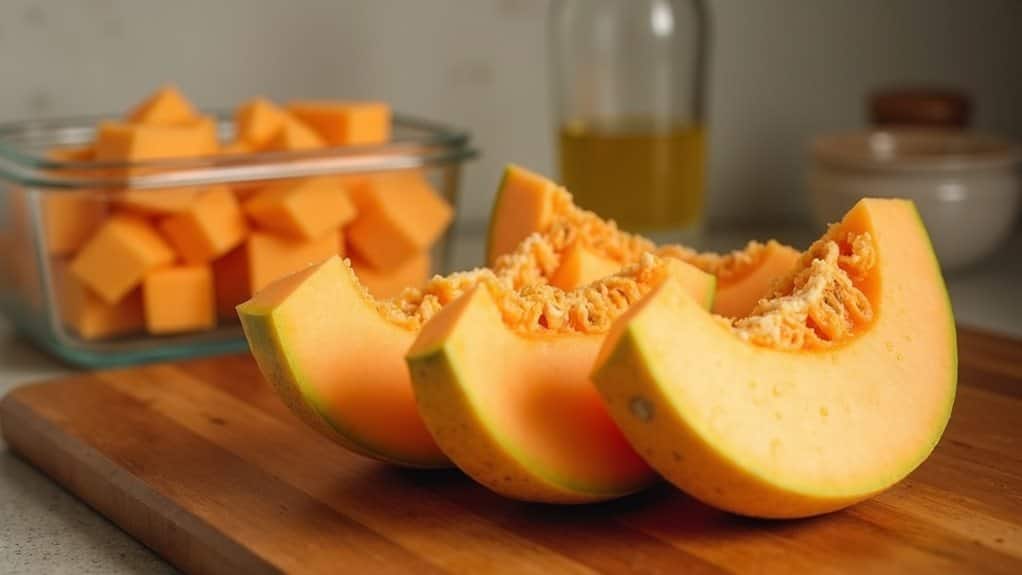
Because cantaloupe often carries bacteria on its rough rind and doesn’t markedly ripen after harvest, how you store and handle it directly affects safety, nutrition, and quality. You should wash the rind with a brush and cool water, sanitize hands and surfaces, and refrigerate cut melon in airtight containers to slow vitamin loss, limit bacterial growth, and preserve flavor, texture, and shelf life. Proper storage practices, including refrigeration of cut fruit, help maintain quality and safety. Cantaloupe is also a good source of beta-carotene, which supports eye health and acts as an antioxidant.
Optimal Temperature and Humidity for Cantaloupe
To keep cantaloupe at peak quality, you should store it in the cool range of about 2.2°C to 5°C (36°F to 41°F), since lower temperatures can cause chilling injury and higher ones speed up decay. Additionally, proper handling during storage can significantly enhance freshness and quality. You’ll also want very high humidity, around 90–95% RH, to prevent dehydration and shriveling of the rind while maintaining firmness. Balancing these temperature and humidity targets, and avoiding sudden fluctuations, is the best way to extend shelf life without sacrificing flavor and texture. Cultivar-dependent maturity at harvest also strongly affects postharvest quality and storage life.
Ideal Storage Temperature
Proper temperature control is key to keeping cantaloupes fresh, and you should store whole melons between about 2.2°C and 5°C (36°F–41°F) to balance shelf life and quality.
Refrigeration slows respiration and ethylene-driven ripening, extending practical shelf life to 12–15 days.
Don’t go below 2.2°C long-term to avoid chilling injury, and avoid warmer storage that speeds spoilage.
High Humidity Storage
You’ve already seen how keeping cantaloupes at about 2.2–5°C slows respiration and extends shelf life; humidity is the next piece of the storage puzzle because it controls moisture loss and surface condition.
Aim for 90%–95% relative humidity to prevent shriveling and weight loss, use good ventilation (≈25 m³/hr) to avoid condensation, and monitor ethylene and air flow during short‑term storage to reduce decay.
Preparing and Cleaning Cantaloupe Safely
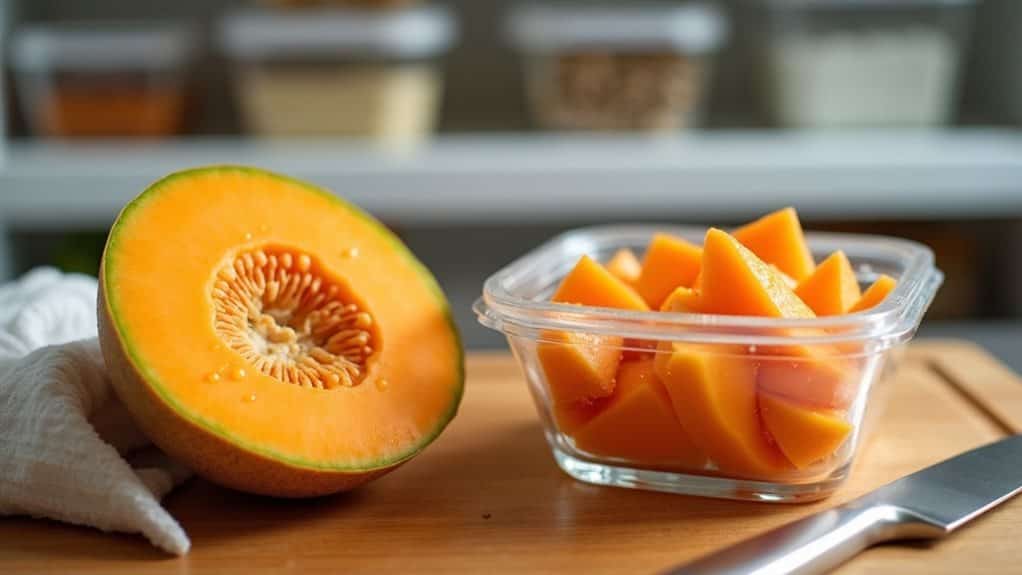
Because cantaloupe rinds are rough and netted, they can trap dirt and bacteria that might get onto the flesh when you cut them, so washing and careful handling are essential.
Wash hands, rinse the whole melon under running water, and scrub with a clean brush.
Dry with a towel, cut away damaged spots, use clean boards and knives, and refrigerate sliced cantaloupe promptly. Additionally, prompt refrigeration is essential for maintaining freshness and quality after cutting, as it inhibits bacteria growth.
Storing Whole Cantaloupe at Home
Often you’ll get the best shelf life by refrigerating whole cantaloupe as soon as you bring it home, keeping it at 1–4°C (34–39°F) in the crisper drawer where higher humidity helps prevent shriveling; room temperature is fine for a day or two if the melon needs to finish ripening, but leaving it on the counter longer raises the risk of spoilage.
Wash, dry, avoid airtight containers, keep away from ethylene producers and raw meats, and check for soft spots; a ripe melon usually keeps up to five days refrigerated. To extend freshness, monitor for signs of spoilage such as soft spots and off odors.
Best Practices for Storing Cut Cantaloupe
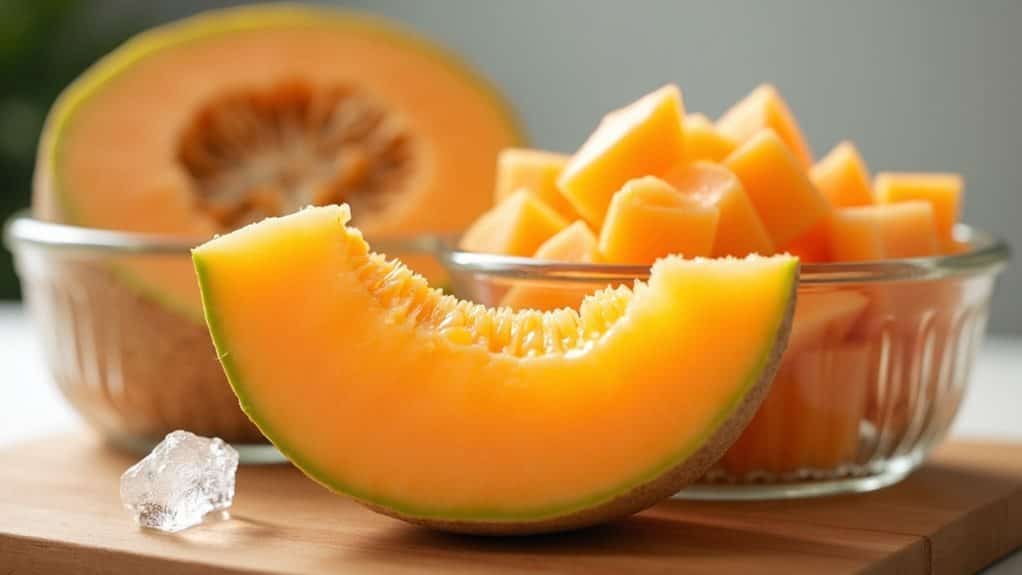
Handle cut cantaloupe promptly and carefully to keep it safe and flavorful: wash and dry the whole melon before cutting, use clean utensils, and refrigerate pieces right away in airtight containers or tightly wrapped to minimize air exposure.
Store at 36–41ºF in the crisper, avoid ethylene producers, label with the cut date, keep seeds in unused halves, and consume within 3–4 days. Additionally, be mindful of bacterial growth which can occur if cut cantaloupe is left out for too long.
Freezing Cantaloupe for Longer Storage
If you want to keep cantaloupe beyond the few days refrigerated storage allows, freezing is a reliable option that preserves flavor for smoothies, sorbets, and cooked dishes.
Select ripe, firm fruit, wash, remove rind and seeds, then cube or ball evenly.
Flash-freeze pieces, transfer to airtight freezer bags or containers with headspace, label, and store at 0°F (-18°C) up to three months.
Food Safety Risks and How to Avoid Them
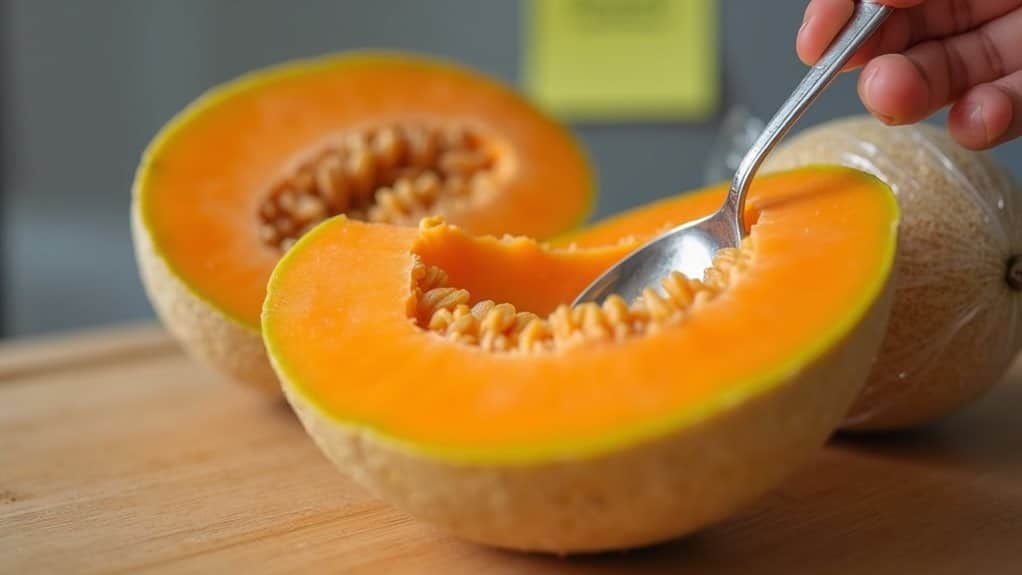
Because cantaloupes grow on or near the soil and have a rough, netted rind that can trap dirt and bacteria, they can carry pathogens like Salmonella or Listeria from the field to your kitchen, so you should treat the surface as potentially contaminated.
Wash hands, scrub the rind under cool running water, cut off about an inch at the stem, use clean utensils, and refrigerate cut pieces promptly.
Alternative Preservation Methods and Tips
You can extend cantaloupe’s usefulness beyond eating it fresh by trying a few reliable preservation methods like pickling with vinegar, freezing for smoothies, or making fruit preserves.
Pickling rind or flesh in a spiced vinegar solution gives a tangy, shelf-stable option, while freezing cubes or balls—optionally in a sugar syrup or vacuum-sealed bag—keeps fruit ready for smoothies for several months.
If you prefer spreadable results, cook ripe cantaloupe down with sugar and a bit of acid to make preserves, then jar and store them following proper hot-pack and sealing practices.
Pickling With Vinegar
Often overlooked, pickling cantaloupe with vinegar lets you turn surplus fruit into a shelf-stable, flavor-packed condiment that’s great for snacking or adding to salads.
Use champagne, white, or red wine vinegar at proper acidity, submerge pieces in hot spiced syrup, simmer until translucent, then hot-pack into sterilized jars.
Process in a boiling water canner, cool undisturbed, and store sealed.
Freezing for Smoothies
Freezing cantaloupe for smoothies starts with proper prep—wash the melon, cut it into uniform cubes or use a melon baller, then spread the pieces in a single layer on a parchment-lined sheet so they freeze quickly and don’t clump together.
Freeze 5–12 hours until solid, transfer to airtight freezer bags, label with the date, and store up to 9–12 months in the coldest part.
Making Fruit Preserves
Turn your ripe cantaloupe into bright, shelf-stable jam by macerating the fruit with sugar and lemon juice to draw out flavor and juice before you cook it down.
Strain juices, then combine with Pomona’s pectin, calcium water, and sugar; cook to 220°F, adding extra juice or wine if needed.
Fill sterilized jars, leave ¼–½ inch headspace, remove bubbles, and process 10–15 minutes.
Wrapping Up
You can keep cantaloupe fresh longer by storing whole fruit at room temperature until ripe, then moving it to the refrigerator to slow spoilage; wash the rind before cutting to avoid transferring bacteria, and refrigerate cut pieces in airtight containers for up to four days. If you want longer storage, freeze diced melon for smoothies or compotes, but note texture will change. Always discard fruit with off smells, sliminess, or visible mold to protect your health.

