
Fresh raspberries will last 1-2 days at room temperature and 3-7 days when stored properly in your refrigerator at 32-34°F. You’ll get the best results by keeping them in their original ventilated container, unwashed until use, and maintaining humidity levels between 90-95%. Look for plump, consistently colored berries without mushiness or mold as signs of freshness. For longer storage, you can freeze them at 0°F for up to 18 months. Let’s investigate more ways to maximize your raspberries’ shelf life.
Quick Guide
- Fresh raspberries last 1-2 days at room temperature, 3-7 days in the refrigerator, and up to 18 months when frozen.
- Store raspberries in their original ventilated container at 32-36°F with 90-95% humidity for maximum freshness.
- Don’t wash raspberries until ready to eat, as moisture promotes mold growth and speeds up spoilage.
- Check for mushiness, slime, mold, or unusual discoloration as signs that raspberries have gone bad.
- Keep raspberries in the front of the fridge and inspect regularly, removing any damaged berries to prevent spread of spoilage.
Typical Shelf Life of Fresh Raspberries

Two key factors determine how long your fresh raspberries will last: proper storage conditions and initial fruit quality. When stored properly in the refrigerator at 32-34°F, your fresh raspberries will typically stay good for 1-2 days. Prompt refrigeration is essential for preserving flavor and minimizing health risks, especially since berries are highly perishable. Keep them in their original ventilated container at the front of your fridge, not in the crisper drawer, and don’t wash them until you’re ready to eat. Quick and easy access from the front and center position helps ensure you’ll enjoy them while they’re still fresh.
Signs of Fresh Vs Spoiled Raspberries
You’ll want to check your raspberries’ physical appearance first, looking for consistent coloring and a fresh sheen that indicates peak ripeness. Fresh raspberries should last 3 to 7 days when properly stored in the fridge, making it essential to monitor their condition.
When examining texture and firmness, fresh raspberries should feel plump and solid, while spoiled ones will be soft, mushy, or even slimy to the touch. If purchasing your own fresh raspberries directly from a bush, they should detach with ease when gently pulled.
Watch carefully for any signs of white or grey mold, unusual discoloration, or dark spots, as these are clear indicators that your raspberries have spoiled and should be discarded.
Physical Appearance Changes
Recognizing the physical changes in raspberries is essential for determining their freshness and safety for consumption.
Plump and intact raspberries are ideal for purchase and should be packaged in a single layer to prevent damage.
Look for bright, lively red or orange-red berries with consistent coloring throughout the container.
Watch out for white, gray, or black patches of mold, and check that leaves are green and fresh, not wilted.
Avoid berries with moisture buildup or those showing uneven coloration.
Texture and Firmness Signs
Beyond visual cues, the texture and firmness of raspberries serve as reliable indicators of their quality and freshness.
Fresh berries should hold their shape when gently handled and feel firm but soft. You’ll know they’re spoiling when they become mushy, leaky, or develop a slimy texture.
If your raspberries have shriveled or lost their shape, they’re past their prime.
Mold and Color Indicators
Two key visual indicators can help you determine if raspberries are fresh or spoiled: mold growth and color changes.
Watch for gray fuzzy growth, particularly from Botrytis cinerea, which can spread rapidly among berries. Fresh raspberries should display a lively, uniform red color, while spoiled ones often show grayish or whitish discoloration.
If you spot patches of mold, remove affected berries immediately.
Optimal Storage Temperature and Conditions
Proper temperature control is essential for keeping your raspberries fresh and delicious.
Store them at temperatures between 32°F and 36°F, with 32°F being ideal for maximum preservation.
You’ll want to maintain consistent temperature and humidity levels between 90% to 95% to prevent drying and reduce mold risk.
For best results, cool your berries immediately after picking to extend their shelf life. Additionally, regular checks for spoilage signs can help ensure your raspberries remain fresh for longer.
Best Practices for Container Selection
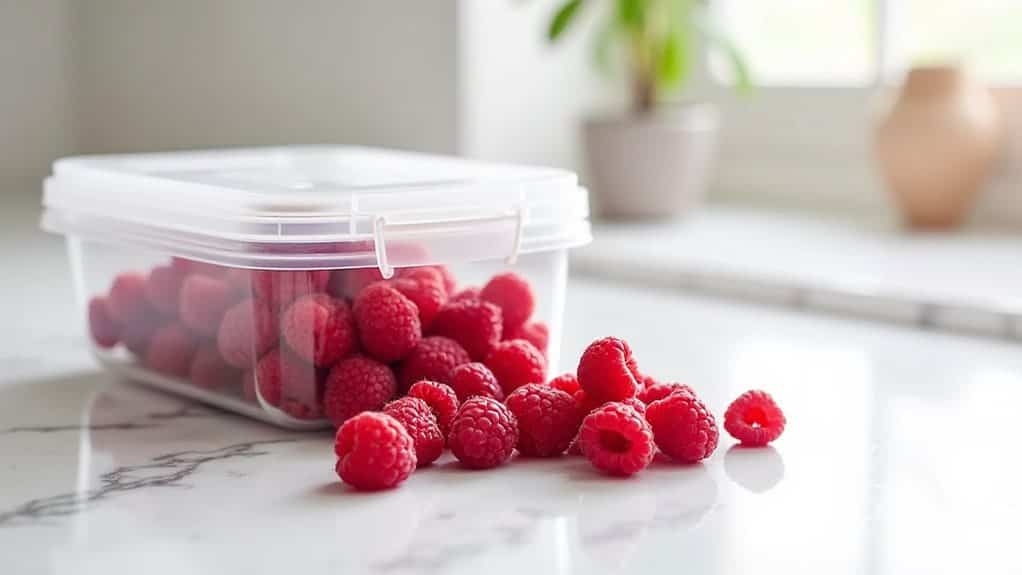
When it comes to storing raspberries, you’ll want to choose containers that allow proper air circulation, as ventilation helps prevent moisture buildup and reduces the risk of mold growth.
The original clamshell packaging is often your best choice since it’s specifically designed with slots and holes that maintain ideal airflow while protecting the berries from being crushed.
You shouldn’t use airtight containers or consolidate berries from multiple packages, as this can trap moisture and create unnecessary pressure that damages the fruit. Additionally, storing fruits like raspberries in a low humidity environment helps to prolong their freshness and prevent spoilage.
Ventilation and Air Flow
The right storage container can make a significant difference in keeping your raspberries fresh, and ventilation plays an essential role in their preservation.
You’ll want to choose containers with small holes or vents that allow air circulation while preventing moisture buildup.
Place your berries in containers that promote cross-ventilation, and avoid completely sealed containers that can trap moisture and accelerate spoilage.
Container Size Matters
Selecting the right container size plays an essential role in preserving your fresh raspberries.
You’ll want to choose a container that’s at least 12 inches deep and 18 inches wide to guarantee proper air circulation.
For compact varieties, a 25L container works well, while taller varieties need a 40L size.
Don’t forget to check that your container has adequate drainage holes to prevent moisture buildup.
Avoid Airtight Storage
Proper airflow remains essential when storing raspberries, making airtight containers a less-than-ideal choice for keeping your berries fresh.
Instead, opt for ventilated containers that allow moisture to escape and prevent mold growth. You’ll want to skip sealed plastic containers and choose either the original ventilated packaging or containers with proper airflow.
Line your container with paper towels to absorb excess moisture.
Pre-Storage Preparation and Inspection
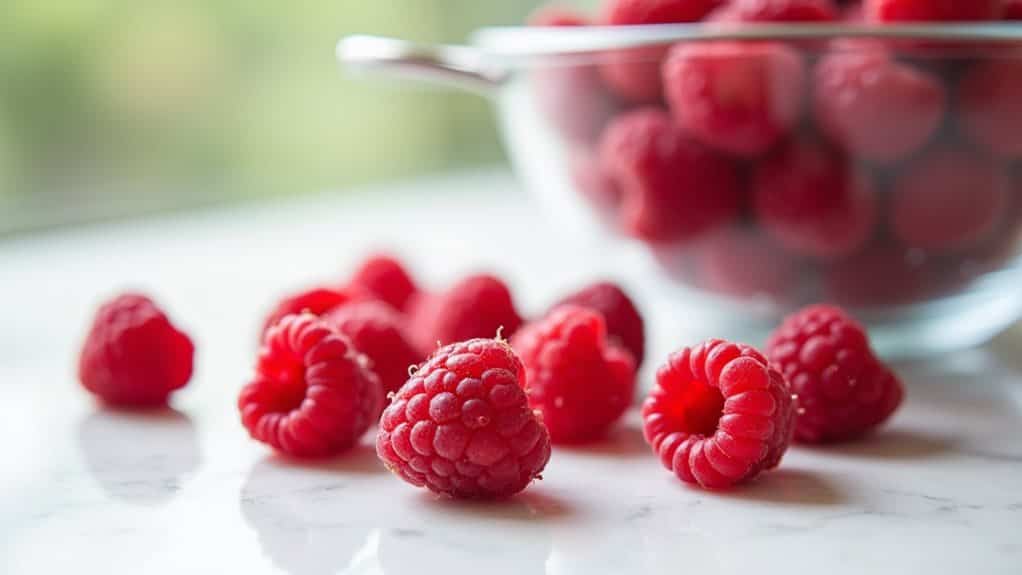
Before storing your fresh raspberries, carefully inspecting and preparing them can greatly extend their shelf life.
Look through your berries and remove any that are discolored, mushy, or showing signs of moisture. Check the bottom of containers for wetness, and select only bright, fully ripe berries that are free from visible damage or contaminants.
Transfer them to a ventilated container with proper airflow.
Proper Washing and Drying Methods
When it comes to washing raspberries, using the right technique can make all the difference in preserving their delicate texture and extending their shelf life.
You’ll want to rinse them under cool water with gentle pressure, or use a vinegar solution of three parts water to one part vinegar.
Don’t wash them until you’re ready to eat them, and pat them dry carefully with paper towels to prevent spoilage.
Tips for Extending Raspberry Freshness
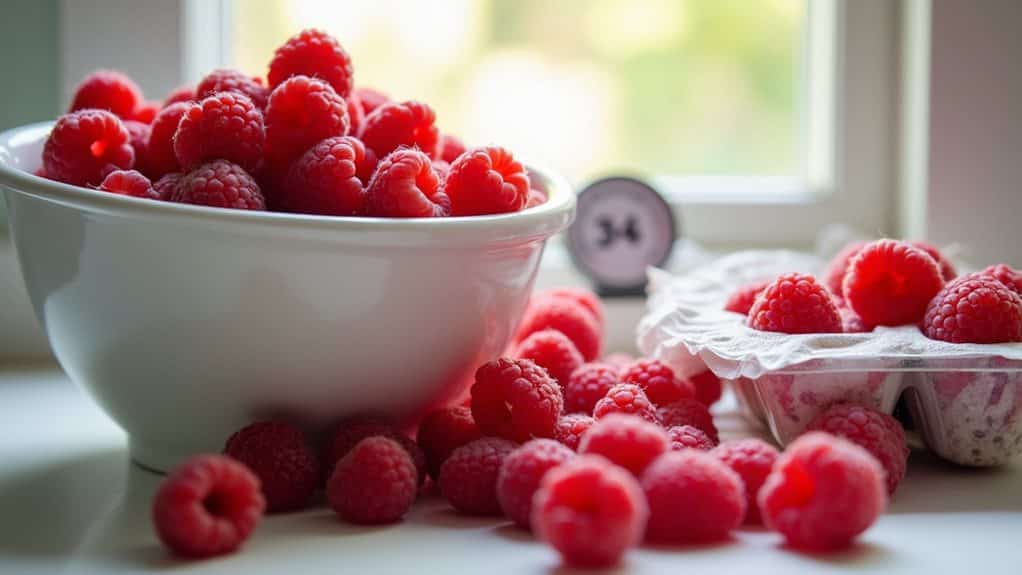
To maximize the freshness of your raspberries, following a few essential storage tips can make a significant difference in their longevity.
Store them in their original container or transfer them to an airtight glass container lined with paper towels.
Keep your berries in the front of your fridge, not the crisper drawer, and don’t consolidate containers, as this can cause damage and excess moisture.
Freezing Methods for Long-Term Storage
Freezing raspberries stands out as an excellent way to preserve their fresh taste and nutritional value for months beyond their peak season.
To freeze them properly, rinse the berries gently in cold water, pat them dry thoroughly, and arrange them on a wax paper-lined tray.
Once they’re completely frozen, transfer them to an airtight container and store at 0°F for up to 18 months.
Understanding Ripeness and Quality Factors

Learning to identify perfectly ripe raspberries can make a significant difference in their taste and storage life.
You’ll know they’re ready when they’ve a deep, even color and detach easily from the stem with a gentle roll.
Look for berries that are slightly soft but not mushy, and check for a sweet aroma.
Quality raspberries should be firm and free from defects.
Wrapping Up
You’ll get the most enjoyment and value from your raspberries by following proper storage techniques and handling methods. When you store them correctly at 32-34°F, inspect them carefully before storage, and keep them dry until ready to use, you can extend their freshness for up to 5-7 days. Remember, freezing is always an option if you can’t eat them quickly enough, letting you enjoy these delicate berries for months to come.


