
Store your sugar in an airtight, food-grade container like a Mason jar or OXO POP container to prevent moisture damage and maintain freshness. Keep it in a cool, dark place with temperatures between 60-75°F and humidity below 70%. Different sugars have specific needs – white sugar needs simple airtight storage, while brown sugar requires hermetically sealed containers to retain moisture. Regular monitoring and proper container selection will help you master long-term sugar preservation techniques.
Quick Guide
- Store sugar in airtight, food-grade containers like Mason jars, Mylar bags, or food-grade buckets to prevent moisture exposure.
- Keep sugar in a cool, dark place between 60-75°F with relative humidity below 70% to maintain quality indefinitely.
- Use moisture absorbers like silica gel packets or food-grade desiccants to prevent clumping and maintain freshness.
- Avoid storing sugar near heat sources, direct sunlight, or strong odors that could affect quality.
- Monitor sugar regularly for signs of moisture damage and break up any clumps with a fork immediately.
Best Containers for Sugar Storage

Three essential qualities make a container perfect for storing sugar: it must be airtight, moisture-proof, and easy to clean.
You’ll find several reliable options for your storage needs, including food-grade buckets, Mylar bags, and glass canning jars. Proper storage can extend powdered sugar’s shelf life significantly, ensuring freshness and usability.
For everyday use, consider Mason jars or specialized containers like the OXO Good Grips POP or Anchor Hocking Montana Sugar Jar, which provide excellent seals. Proper container selection helps protect sugar from clumping and hardening when exposed to moisture.
Optimal Storage Conditions and Locations
Proper storage conditions play just as big a role in preserving sugar as the container you choose. You’ll want to keep your sugar in a cool, dry place where temperatures stay between 60-75°F, with relative humidity below 70%. Storing sugar in these conditions helps prevent spoilage risks that can affect its quality. Store it away from direct sunlight, strong odors, and heat sources like vents. Good ventilation is important, but avoid areas exposed to outside weather conditions. When stored correctly under these conditions, your sugar will maintain an indefinite shelf life.
Different Sugar Types and Their Storage Needs
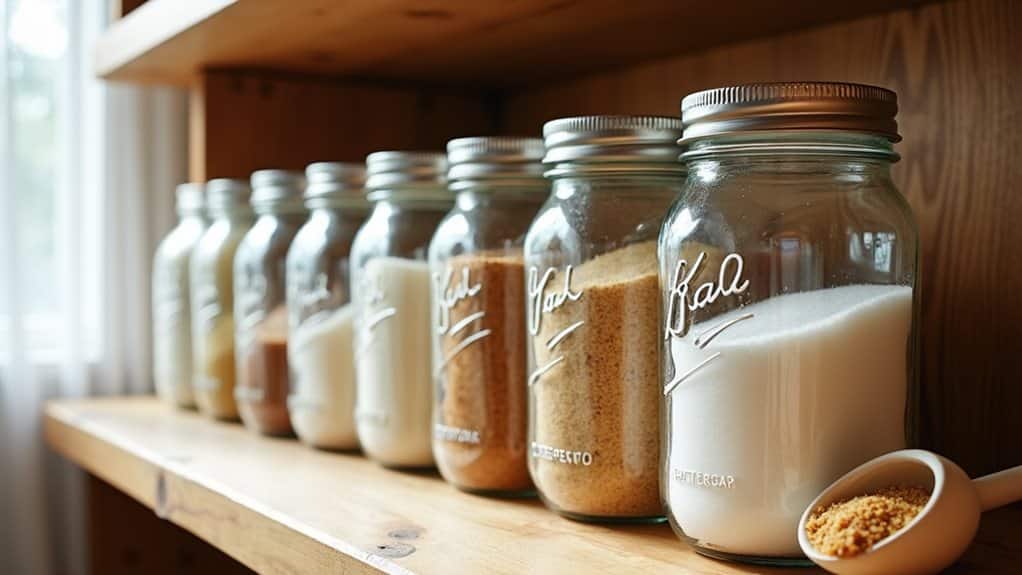
While all sugars share some basic storage requirements, each type has its own specific needs to maintain quality and freshness.
White granulated sugar’s simple storage needs contrast with brown sugar’s moisture requirements.
You’ll need airtight containers for powdered sugar, while brown sugar demands hermetically sealed cans. Adding a small clay disc or fresh bread slice can help maintain brown sugar’s softness during storage.
Less refined options like turbinado and coconut sugar won’t store as long as their refined counterparts.
Maintaining Sugar Quality Over Time
To keep your sugar fresh and usable for years, you’ll need to watch out for two key factors: moisture and light exposure.
You can prevent moisture-related hardening by using airtight containers and moisture absorbers, while also keeping your sugar away from heat sources and temperature fluctuations. Additionally, storing sugar in a sealed container in a cool, dark location will help maintain its quality and prevent clumping or texture changes over time.
Regular monitoring of your sugar’s condition, along with proper temperature control, will help maintain its quality and prevent clumping or texture changes over time.
Prevent Moisture and Hardening
Since moisture poses the greatest threat to sugar’s quality, maintaining proper storage conditions is essential for preventing hardening and clumping.
You’ll want to store your sugar in airtight containers with reliable seals, keeping it in a cool, dry place away from liquids and chemicals.
For brown sugar, add a terra cotta disk or bread slice to maintain softness, while using rice in a coffee filter helps keep granulated sugar dry.
Monitor Light and Temperature
Maintaining proper light exposure and temperature control plays an essential role in preserving your sugar’s quality over time.
Keep your sugar in a cool area that doesn’t exceed 30°C, and store it away from heat sources to prevent degradation.
You’ll want to avoid direct sunlight and use dark containers, as UV light can cause color changes and affect quality through unwanted chemical reactions.
Preventing Common Storage Problems
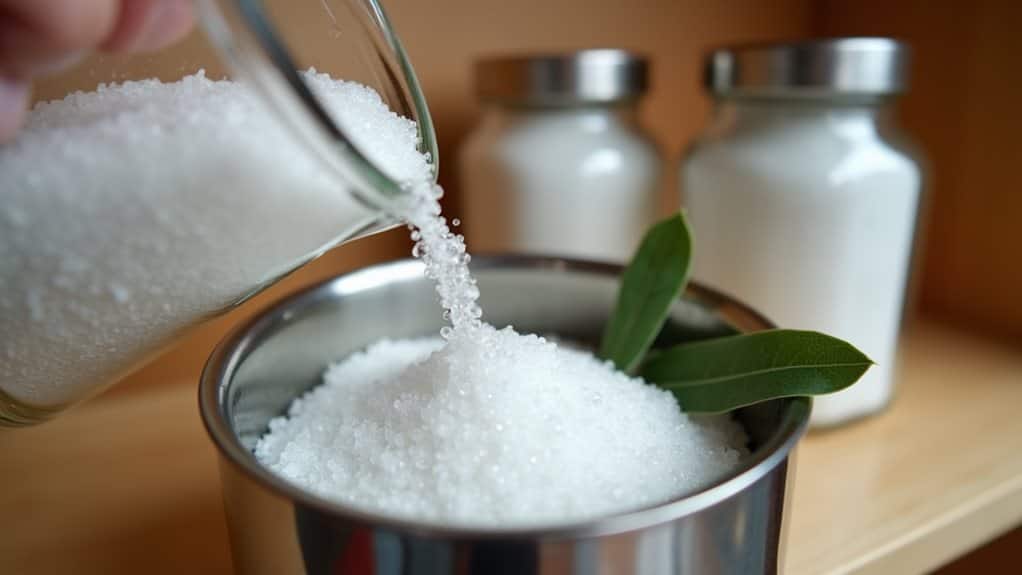
To keep your sugar in perfect condition, you’ll need to watch for early signs of moisture damage, such as slight clumping or a change in texture.
You can prevent most storage problems by using moisture-control methods like airtight containers, silica gel packets, or food-grade desiccants in your storage area. Proper storage is crucial for maintaining freshness and nutrients in your pantry items.
Regular checks of your sugar’s condition and storage environment will help you catch and address issues before they become serious problems.
Moisture Control Methods
While moisture poses the biggest threat to properly stored sugar, several effective control methods can help prevent common storage problems.
You’ll want to maintain relative humidity between 40% and 60%, use airtight containers like mason jars, and add moisture-absorbing elements such as rice wrapped in coffee filters.
Keep your sugar away from high-humidity areas and protect it from sudden temperature changes.
Identifying Early Warning Signs
Proper storage techniques only work when you’re able to spot potential problems early.
Watch for clumping or hardening, which signals moisture exposure, and break up lumps with a fork.
If you notice unusual odors, especially in refrigerated sugar, or see any signs of mold or insects, it’s time to discard the product.
Regular inspections help maintain sugar’s quality and safety.
Special Storage Tips for Brown Sugar
Since brown sugar’s unique texture and moisture content require special attention, storing it correctly makes all the difference between keeping it soft and ending up with rock-hard chunks.
Store your brown sugar in airtight plastic containers or heavy-duty resealable bags, and add a terracotta sugar saver or bread slice to maintain moisture.
Keep it in a cool, dry place, away from strong odors and moisture sources.
Expert Methods for Packaging Sugar
Three key factors determine successful sugar packaging: the material’s quality, proper sealing methods, and regulatory compliance.
When packaging sugar, you’ll need food-grade, moisture-resistant materials like polyethylene bags or multi-layer laminates.
Guarantee proper sealing to prevent contamination, and include clear labeling with essential information like weight, expiration date, and storage instructions.
For bulk storage, consider using heavy-duty woven polypropylene bags.
Signs of Properly Stored Sugar
Identifying properly stored sugar relies on several key indicators that you’ll want to monitor regularly.
Your sugar should remain odorless and free from any foreign smells, while maintaining its original texture – granular for white sugar, soft for brown sugar, and fine for powdered sugar.
When stored in a cool, dry place with humidity below 70%, sugar will stay fresh indefinitely.
Wrapping Up
You’ll find that proper sugar storage isn’t complicated once you’ve mastered the fundamentals. By choosing the right containers, maintaining ideal conditions, and following specific guidelines for different sugar types, you can keep your supply fresh for years. Remember to check your stored sugar periodically and address any moisture issues promptly. With these storage methods in place, you’ll always have quality sugar ready for your cooking and baking needs.


