
Saffron doesn’t spoil like fresh food, but it loses color, aroma, and flavor over time. Whole threads stay potent about two to four years if you keep them cool, dry, and away from light; ground saffron fades faster, often within one to two years. Store saffron in an airtight, opaque container with a desiccant, handle it minimally, and grind only when needed. Watch for faded color, musty smells, or mold as discard signs — continue for tips on buying and long-term care.
Quick Guide
- Yes — saffron loses color, aroma, and flavor over time, with whole threads remaining potent about 2–4 years if stored well.
- Check quality: vivid red threads, strong floral-honey aroma, and intense color when infused indicate freshness.
- Discard if threads are dull brown/yellow, moldy, sticky, have off smells, or taste bitter/metallic.
- Store airtight, light-blocking, cool, and dry (15–20°C); refrigerate in hot climates while avoiding moisture.
- Use small batches, grind only before use, and limit air exposure; consider desiccants or oxygen absorbers for long-term storage.
What Happens to Saffron Over Time
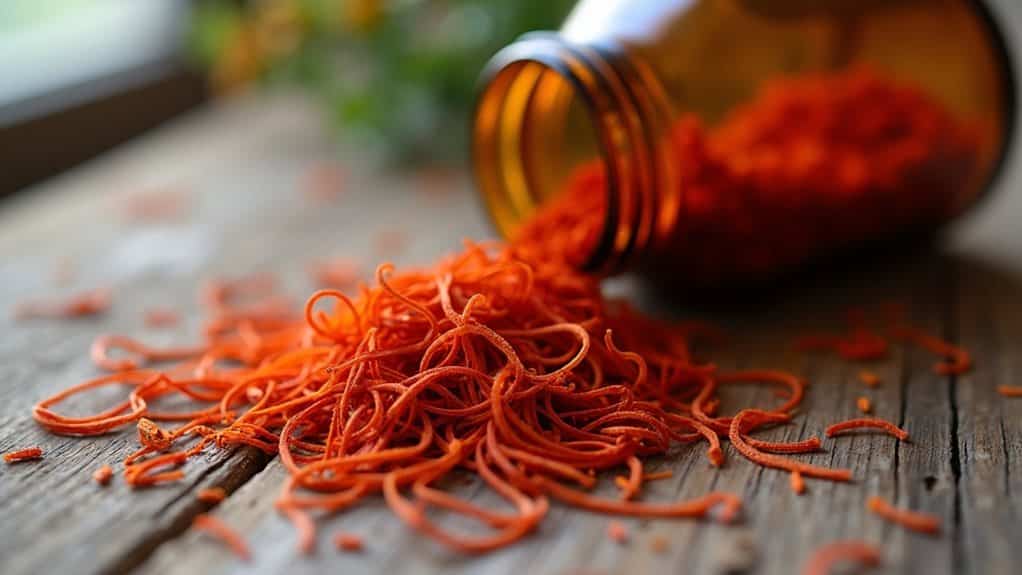
Although saffron starts out potent and fragrant, it gradually loses those qualities as time and storage take their toll. You’ll notice chemical breakdown of safranal and crocin, fading aroma and color, and increased brittleness of threads. Poor drying, moisture, light, heat, oxygen, or contaminants speed degradation and invite fungal growth. To maintain its freshness, it’s important to limit air exposure and store saffron cool, dark, dry, and hygienically to slow these changes. Proper drying and hygienic handling are essential to prevent microbial contamination.
How Long Does Saffron Stay Potent
When stored properly in a cool, dry, and dark place, whole saffron threads will stay potent for roughly two to four years, with premium grades like Negin or Sargol often retaining their color, aroma, and flavor toward the upper end of that range. Proper storage is crucial, as it helps protect saffron from light, heat, and moisture that accelerate quality loss. Additionally, like many spices, saffron’s longevity can be influenced by its exposure to air, making airtight containers an excellent choice for maintaining its freshness.
After three to four years potency fades gradually as crocin, picrocrocin, and safranal degrade, reducing color, taste, and aroma.
Whole Threads Vs Ground Saffron: Shelf-Life Differences
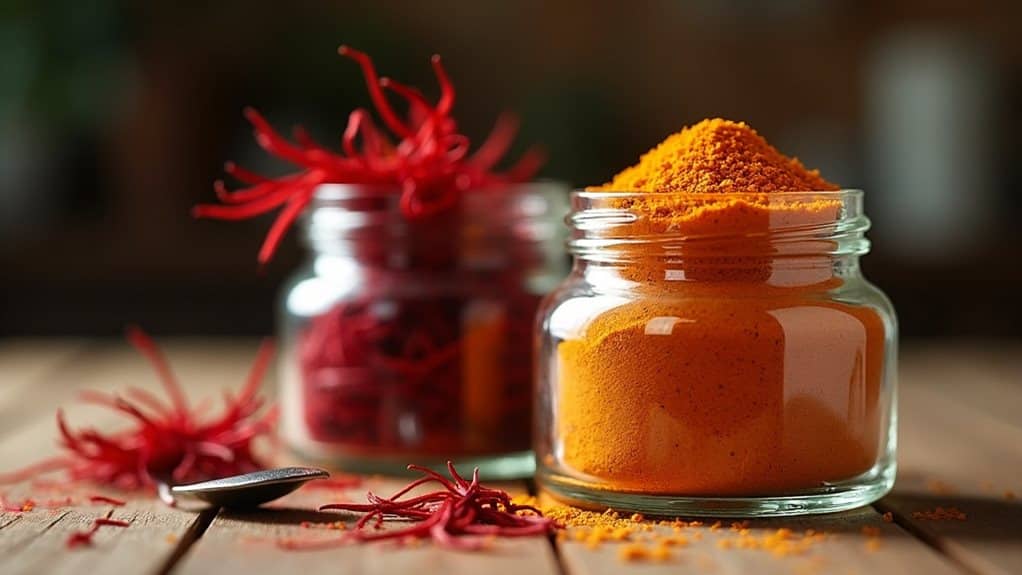
Most home cooks notice a clear difference between whole saffron threads and pre-ground saffron when it comes to how long they stay useful; whole threads usually keep their color, aroma, and flavor for up to about four years, while ground saffron typically starts losing potency after one to two years. Proper storage in a sealed container is essential for maintaining taste and freshness. Store both airtight, cool, and dark; grind threads just before use to preserve potency and aroma.
Signs Your Saffron Has Lost Its Quality
Check your saffron for signs like faded color intensity, which shows up as dull or pale threads instead of vivid red-orange.
Rub a few strands and note any weakened aroma or almost no scent, since loss of fragrance means loss of potency.
Also look closely for off smells or visible mold, and discard the saffron if you detect either. Additionally, be aware that proper storage methods can significantly extend the shelf life and quality of saffron.
Faded Color Intensity
Because crocin—the pigment that gives saffron its deep red color—breaks down over time and with poor storage, you’ll notice threads losing their vividness and taking on a paler, yellowish-red appearance.
This fading signals lower crocin concentration, reduced ISO 3632 color scores, and likely inferior quality; light, heat, oxygen, or humidity exposure usually causes the decline, so check for dull, non-uniform threads.
Weakened Aroma
Fading threads often go hand-in-hand with a weakened aroma, so if the color looks dull you should also smell your saffron for signs of decline.
You’ll notice loss of the floral, honey and hay notes as safranal and picrocrocin break down from air, light, heat or moisture.
A faint, flat scent means reduced culinary value; store airtight, cool, and dark to slow it.
Off Smell or Mold
If saffron develops an off smell or shows signs of mold, you should treat it as compromised and discard it rather than trying to salvage it.
Musty, sour, or fermenting odors often mean mold metabolic activity, and visible fuzzy growth, discoloration, clumping, or stains confirm contamination.
Store saffron dry, cool, airtight, avoid moisture, and check regularly to prevent spoilage and health risks.
Environmental Factors That Degrade Saffron
You should protect saffron from prolonged light and UV exposure, because strong light breaks down the delicate crocin and other pigments that give saffron its color and flavor.
You’ll also want to avoid high heat and sudden temperature swings, since raised temperatures speed up chemical degradation and erratic shifts can harm both harvested stigmas and standing crops.
Storing saffron in a cool, dark, stable environment will help preserve its aroma, color, and potency. Additionally, keeping saffron away from humidity and heat is crucial for maintaining its quality.
Light and UV Exposure
Because saffron’s key compounds are light-sensitive, exposing threads to sunlight or strong artificial light steadily eats away at their color and aroma, especially through UV-driven reactions that break down crocins and related carotenoids.
You should keep saffron in opaque, airtight containers to block UV, since damage is cumulative and irreversible; good packaging preserves color, aroma balance, and long-term quality.
Heat and Temperature Fluctuations
Light that fades saffron’s color also makes heat a more dangerous enemy, since warmth speeds up the same chemical break‑downs that UV lighting starts.
You should keep saffron cool and stable: crocin, picrocrocin and safranal degrade much faster with rising temperature and fluctuations. Store near 4 °C when possible, avoid repeated temperature swings, and limit exposure to heat during processing or transport.
Best Storage Temperatures and Locations
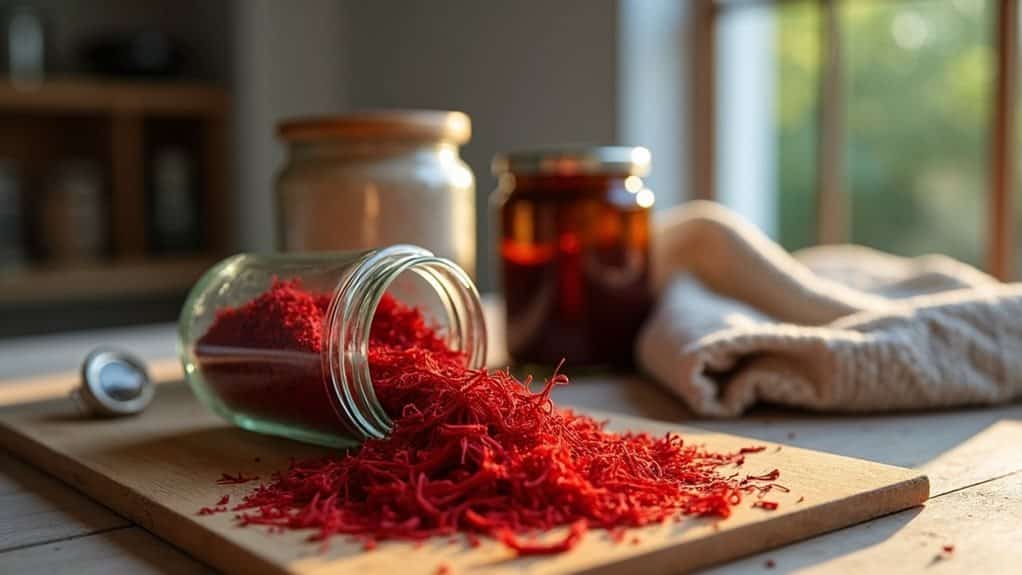
When stored properly, saffron keeps its aroma, color, and flavor much longer, so choosing the right temperature and location matters.
Store saffron in a dark, cool, dry spot at about 15–20°C (59–68°F). If you live somewhere hot, refrigerate sealed saffron at 2–5°C, but avoid moisture and temperature swings; keep humidity well below 70% to prevent spoilage.
Ideal Containers and Packaging for Freshness
To keep saffron at peak flavor and color, choose packaging that blocks light, seals out air and moisture, and stays cool; simple choices like dark glass jars or metal tins do this well while more advanced options offer extra protection for long-term storage.
Use airtight, moisture-resistant containers—dark glass, metal, vacuum packs or food-grade opaque plastics—and consider oxygen absorbers or desiccants for long-term freshness.
Practical Tips for Handling and Using Saffron
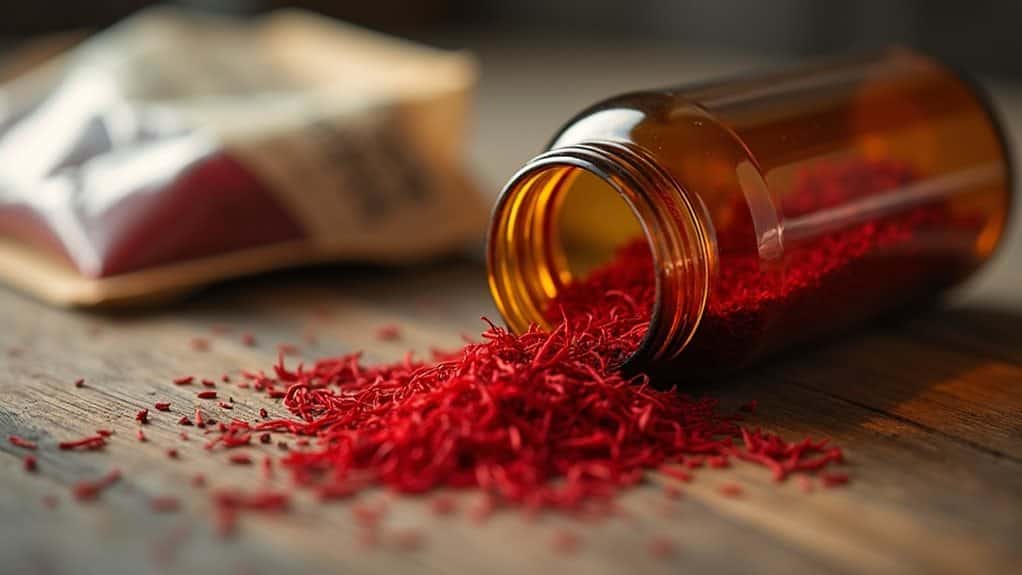
Handle saffron gently and keep it dry, because those thin red stigmas lose potency if you crush or contaminate them; use clean, dry utensils, avoid breathing or holding threads over steaming pots, and grind only what you need right before adding it to a dish.
Measure precisely, portion into single-use amounts, keep containers sealed and opaque, avoid heat and strong odors, and refrigerate infusions promptly.
When to Discard Saffron: Safety and Spoilage Indicators
Although saffron is prized for its longevity, you should discard it if clear signs of spoilage appear, because using degraded threads can ruin a dish and pose health risks.
Throw saffron away if color fades to dull brown or yellow, if strands are moldy, sticky, brittle, smell musty or rancid, or taste bitter or metallic, since these indicate contamination or chemical breakdown.
Buying and Storing Saffron to Maximize Flavor
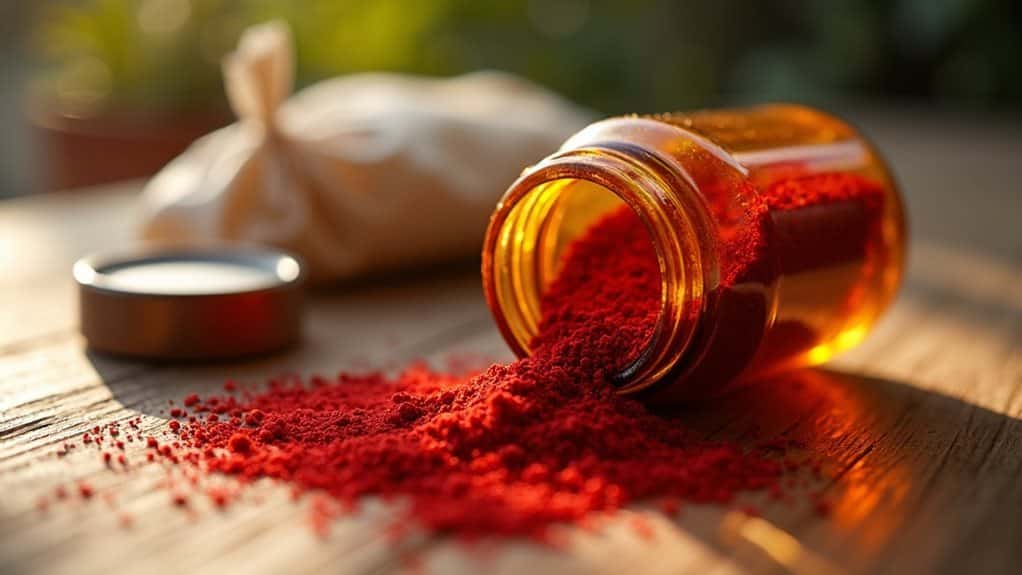
If you’ve decided to discard saffron that shows spoilage, the next step is to choose and store threads so they stay flavorful for as long as possible.
Buy deep red, long, thick stigmas from reputable suppliers with ISO 3632 Category I where possible.
Keep threads in airtight, light-proof jars, store them cool and dry, and avoid plastic bags and moisture to preserve aroma and potency.
Wrapping Up
You can keep saffron useful for months to years if you store it right: whole threads last longer than ground, and airtight, dark, cool containers slow flavor loss. Check threads for weak aroma, faded color, or off smells—those are signs it’s past its prime. Use small amounts, grind only when needed, and buy modest quantities from reputable sellers. When scent and color fade noticeably, replace it to make certain your dishes stay bright and flavorful.


