
Unopened vacuum-sealed prosciutto lasts 2–3 months in your refrigerator at 34–40°F, while opened packages should be consumed within 2–3 days for best quality. Whole cured legs don’t require refrigeration and stay fresh 6–12 months in a cool, dry place at 60–70°F. You can freeze prosciutto for up to three months, though texture suffers. Watch for gray or green discoloration, slimy texture, or sour odors indicating spoilage. Proper wrapping in parchment paper and airtight containers helps maintain freshness, and keeping prosciutto on your fridge’s coldest shelf maximizes its lifespan and flavor profile.
Quick Guide
- Unopened vacuum-sealed prosciutto lasts 2–3 months refrigerated; opened prosciutto should be consumed within 2–3 days for best quality.
- Store prosciutto in the coldest part of the refrigerator at 34–40°F, away from the door where temperatures fluctuate.
- Wrap opened prosciutto tightly in parchment paper then plastic wrap or foil; keep in an airtight container to prevent drying.
- Whole, unopened prosciutto legs remain fresh for 6–12 months in a cool, dry environment without refrigeration at 60–70°F.
- Discard prosciutto showing gray or green discoloration, slimy texture, excessive moisture, or sour, rancid, or ammonia-like odors.
Understanding Prosciutto’s Curing Process and Shelf Life
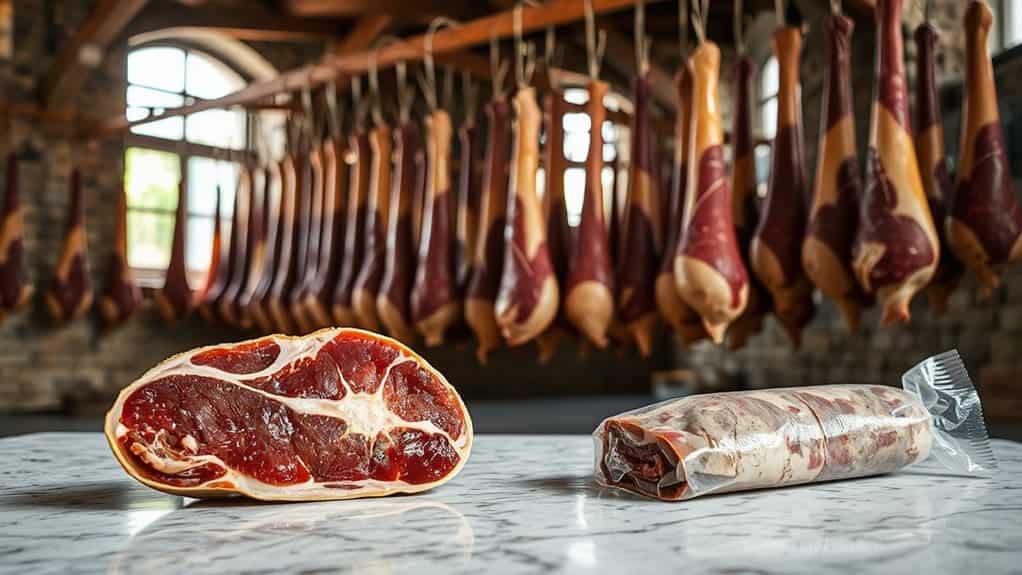
When you bite into a slice of prosciutto, you’re tasting the result of a preservation method that’s been refined over centuries.
The curing process involves coating pork legs with salt, which draws out moisture and creates an environment where harmful bacteria can’t survive.
This traditional technique extends the meat’s shelf life markedly, allowing properly cured prosciutto to remain safe and flavorful for months.
For best quality, keep it refrigerated at 40°F or below.
How Long Does Unopened Prosciutto Last?
When you’re storing unopened prosciutto, the shelf life depends heavily on whether it’s vacuum-sealed and where you keep it.
Vacuum-sealed packages can last several weeks in the refrigerator, while non-vacuum-sealed varieties have a much shorter window before they start to decline in quality.
You’ll want to pay attention to the expiration date on the package, but understanding the difference between refrigerated and pantry storage will help you maximize freshness and avoid waste.
As a general food-safety rule, don’t leave it at room temperature for more than 2 hours because bacteria growth can increase quickly.
Vacuum-Sealed Shelf Life
Unopened prosciutto stored in its original vacuum-sealed packaging will maintain peak quality for 2-3 months in the refrigerator, though it often remains safe to eat beyond this timeframe if kept at a consistent 40°F or below.
The vacuum seal prevents oxygen exposure, which markedly slows bacterial growth and oxidation. Always check the “best by” date on the package and inspect for any unusual odors or discoloration before consuming.
Refrigeration vs. Pantry Storage
Although many cured meats can sit safely at room temperature, prosciutto requires refrigeration once it’s been commercially packaged and distributed to stores.
You shouldn’t store unopened prosciutto in your pantry, as the fluctuating temperatures and humidity levels will accelerate spoilage.
Instead, keep it in your refrigerator at 40°F or below, where it’ll maintain its quality and remain safe to eat for several weeks.
Expiration Date Guidelines
If you’re checking the package label, you’ll typically find that unopened prosciutto lasts between two to three weeks past its printed date when stored properly in the refrigerator.
However, this timeline isn’t absolute. The actual shelf life depends on factors like packaging quality and consistent refrigeration temperature. Always inspect the meat for off-odors, discoloration, or sliminess before consuming, even if it’s within the suggested timeframe.
Shelf Life of Opened Prosciutto Packages
Once you’ve opened your prosciutto package, the clock starts ticking on its freshness, and you’ll need to follow specific storage guidelines to maximize its quality.
You should keep it refrigerated and properly wrapped to prevent it from drying out or developing off-flavors, and it’s essential to know what signs indicate the meat has gone bad.
Understanding these factors will help you enjoy your prosciutto safely while minimizing waste.
For best quality, place it on the lowest shelf of your refrigerator to help maintain a consistently cold temperature.
Refrigeration Timeline After Opening
After opening your prosciutto package, the clock starts ticking on its freshness. You’ll want to consume it within two to three days for peak quality and safety.
Store the opened prosciutto in an airtight container or wrap it tightly in plastic wrap or aluminum foil. Keep it refrigerated at temperatures below 40°F to slow bacterial growth and preserve its delicate flavor and texture.
Signs of Spoilage
Knowing when your prosciutto has gone bad can save you from an unpleasant experience and potential foodborne illness.
Look for visual changes like gray or green discoloration, which indicate mold growth. A slimy texture or excessive moisture suggests bacterial contamination.
If your prosciutto smells sour, rancid, or unusually strong, it’s time to discard it immediately for safety.
Proper Wrapping Methods
To prevent the spoilage signs mentioned above, you’ll need to perfect the art of wrapping your opened prosciutto correctly. Use plastic wrap or butcher paper to cover the meat completely, ensuring no air pockets remain.
Then place it in an airtight container or resealable bag. This double-layer protection shields the prosciutto from moisture loss and prevents it from absorbing refrigerator odors.
Storage Duration for Whole Prosciutto Legs
When stored properly, a whole prosciutto leg demonstrates notable longevity that surpasses most cured meats.
You can expect it to remain fresh for six to twelve months in a cool, dry environment with consistent temperatures between 60-70°F.
Once you begin slicing into the leg, you’ll need to consume it within two to three months for peak flavor and texture preservation.
Watch for signs of spoilage like unusual odors, slimy texture, or discoloration to ensure it’s still safe and enjoyable.
Does Prosciutto Need to Be Refrigerated?
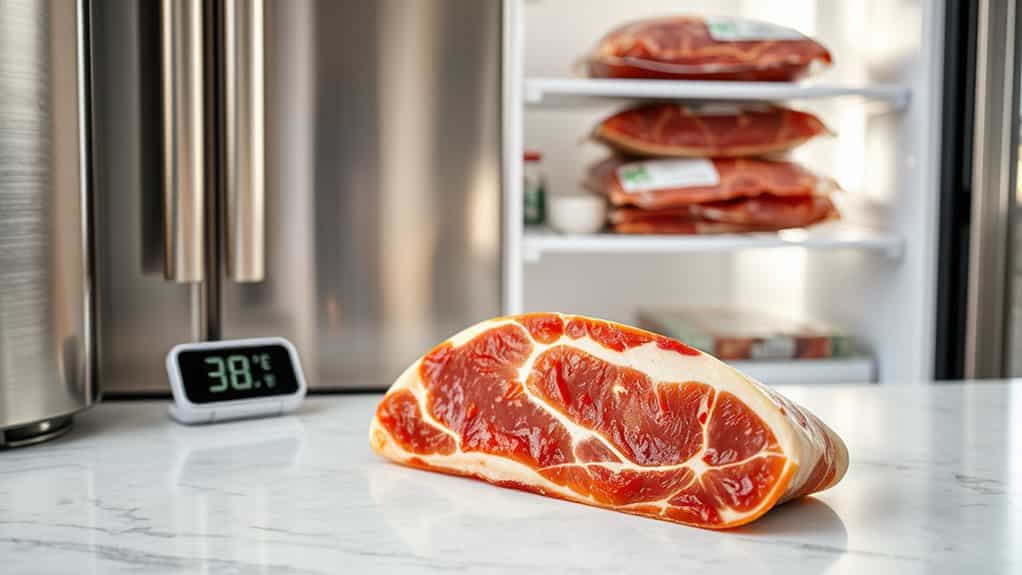
Understanding how long prosciutto lasts naturally leads to questions about proper storage methods.
You don’t need to refrigerate whole, unopened prosciutto legs since the curing process preserves the meat. However, once you slice prosciutto or open the package, refrigeration becomes essential.
The exposed meat can spoil quickly at room temperature, so always store opened prosciutto in your refrigerator to maintain freshness and prevent bacterial growth. For best results, keep it at 34F-40F in the coolest part of your fridge.
Best Practices for Wrapping and Packaging Prosciutto
Proper wrapping makes all the difference in keeping your prosciutto fresh and flavorful.
You’ll want to wrap sliced prosciutto tightly in parchment paper or wax paper first, then cover it with plastic wrap or aluminum foil to create an airtight seal.
This double-layer method prevents air exposure while allowing the meat to breathe slightly, maintaining its texture and preventing moisture buildup that causes spoilage.
Freezing Prosciutto: Pros, Cons, and Time Limits

Although freezing prosciutto isn’t the ideal storage method, it’s certainly better than letting this delicacy go to waste.
You can freeze prosciutto for up to three months while maintaining reasonable quality.
The main drawback is texture changes—frozen prosciutto becomes slightly tougher and loses some of its signature delicate texture.
To minimize damage, wrap individual portions tightly in plastic wrap, then aluminum foil.
Signs Your Prosciutto Has Gone Bad
Knowing when your prosciutto has spoiled can save you from an unpleasant eating experience and potential foodborne illness.
You’ll want to check for three key warning signs: unusual or sour odors that differ from prosciutto’s naturally savory smell, any visible discoloration or fuzzy mold growth on the surface, and a slimy or sticky texture that shouldn’t be present on properly cured meat.
These indicators often appear together as the meat deteriorates, so it’s important to inspect your prosciutto carefully before consuming it.
Smell and Odor Changes
Your nose serves as one of the most reliable tools for detecting spoiled prosciutto.
Fresh prosciutto has a pleasant, slightly sweet and nutty aroma.
When it goes bad, you’ll notice a sharp, sour, or ammonia-like smell that’s distinctly unpleasant.
If the meat emits any rancid or putrid odors, discard it immediately, as these changes indicate bacterial growth and spoilage.
Visual Discoloration and Mold
When examining prosciutto for signs of spoilage, color changes offer critical visual clues about its condition.
Fresh prosciutto displays a rosy-pink to deep red hue, but spoiled meat turns gray, brown, or develops green patches.
Any visible mold growth, appearing as fuzzy white, blue, or black spots, indicates contamination.
If you notice these discolorations or mold, discard the prosciutto immediately to avoid foodborne illness.
Texture and Sliminess
Beyond visual changes, the physical feel of prosciutto provides another reliable indicator of spoilage.
Fresh prosciutto should feel slightly moist but never slimy or sticky to the touch. If you notice a slippery coating or excessive moisture on the surface, it’s a clear sign that bacteria have multiplied.
Additionally, any mushiness or unusual softness indicates deterioration, and you should discard the meat immediately.
Optimal Storage Conditions for Maximum Freshness
To preserve prosciutto’s delicate flavor and texture, you’ll need to maintain specific temperature and humidity levels in your storage area.
Keep your refrigerator between 34°F and 40°F, which slows bacterial growth without freezing the meat.
Store prosciutto in the coldest part of your fridge, typically the back of the bottom shelf, away from the door where temperatures fluctuate constantly.
Tips to Extend the Life of Your Prosciutto
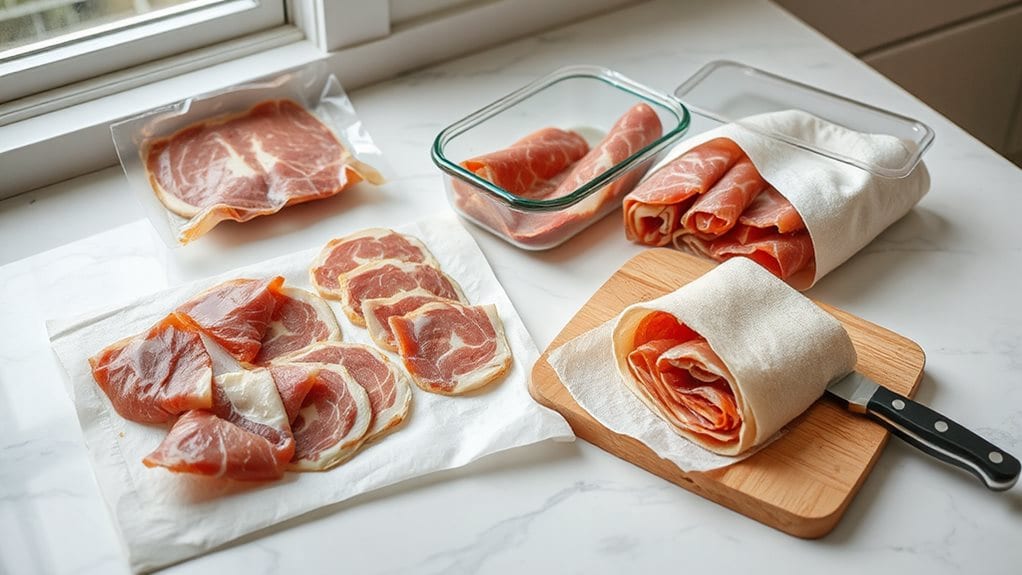
Proper storage temperature sets the foundation, but several practical techniques can help you squeeze extra days or even weeks from your prosciutto.
Wrap slices individually in parchment paper before refrigerating to prevent sticking and moisture loss. Keep opened packages in airtight containers to minimize air exposure. Always use clean utensils when handling prosciutto, and reseal packaging immediately after removing what you need.
Wrapping Up
With proper storage, you can enjoy prosciutto at its best for weeks or even months. Always keep it refrigerated, wrap it tightly to prevent drying, and monitor for signs of spoilage like off odors or discoloration. Whether you’re storing a whole leg or pre-sliced packages, following these guidelines guarantees your prosciutto stays fresh and delicious. When in doubt, trust your senses—they’ll tell you when it’s time to discard it.


