
Start with a cold convection oven and line a rimmed baking sheet with foil or parchment. Lay the bacon in a single, non‑overlapping layer, keeping strips flat and spaced to let grease drain. Roast at 400 °F for 15‑20 minutes, checking at ten minutes and rotating the pan if needed; the steady airflow renders fat quickly, preventing splatter. Transfer the hot strips to paper towels, blot excess grease, and let the foil catch drips for easy cleanup. Continue for more tips on perfect oven bacon.
Quick Guide
- Use a cold, rimmed baking sheet lined with foil or parchment; place bacon in a single, non‑overlapping layer.
- Cook at 375‑400 °F in a convection oven, starting cold, to render fat gradually and reduce splatter.
- Add a second pan or a flat weight on top of the bacon to keep strips flat and limit grease splashing.
- Rotate the sheet halfway through the 15‑20 minute bake and check for desired crispness without flipping.
- Transfer hot bacon to paper‑towel‑lined plates immediately, blotting excess grease to prevent mess.
Why Cook Bacon in a Convection Oven for Mess‑Free Results
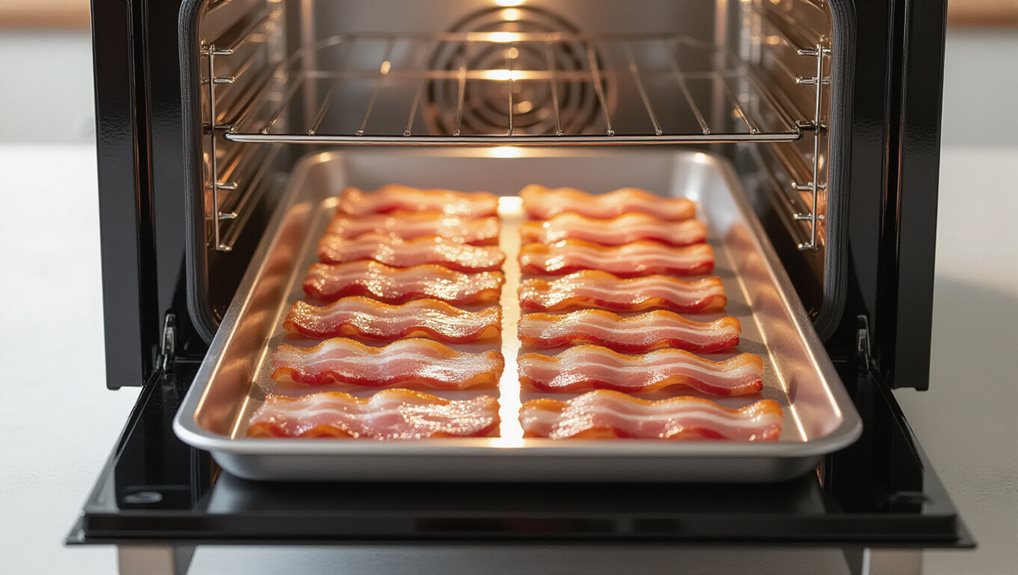
Why bother with a stovetop when a convection oven can give you mess‑free bacon? You’ll enjoy even heating, so each slice crisps uniformly without hot spots. Grease stays on the sheet, preventing splatter and simplifying cleanup. The airflow renders fat quickly, yielding flatter, less curled strips. You can cook multiple racks at once, saving time and energy while delivering consistent, crispy texture. For added nutrition, consider pairing it with sides like eggplant, which contains anthocyanin antioxidants that provide anti-inflammatory benefits. This method also aligns with the growing demand for low‑cleanup options, as environmentally‑conscious consumers prefer cooking techniques that reduce kitchen scent and waste.
Choose the Right Oven and Temperature for Perfect Oven Bacon
Choosing the right oven and temperature is the first step toward consistently perfect bacon.
Set the middle rack and preheat to 375°F for balanced cooking, 400°F for quicker results, or 350°F if you have mixed‑thickness slices. Just like heat and temperature fluctuations can speed quality changes in drinks, steady oven heat helps prevent excess splatter and promotes temperature fluctuations control.
Adjust time—18‑23 min at 375°F, 15‑20 min at 400°F—watching after ten minutes.
Slightly undercook; it will crisp while cooling.
For even cooking and less mess, bake the bacon directly on a sheet rather than using a rack.
Prep the Baking Sheet for Oven Bacon (Foil, Parchment, Raised Edges)
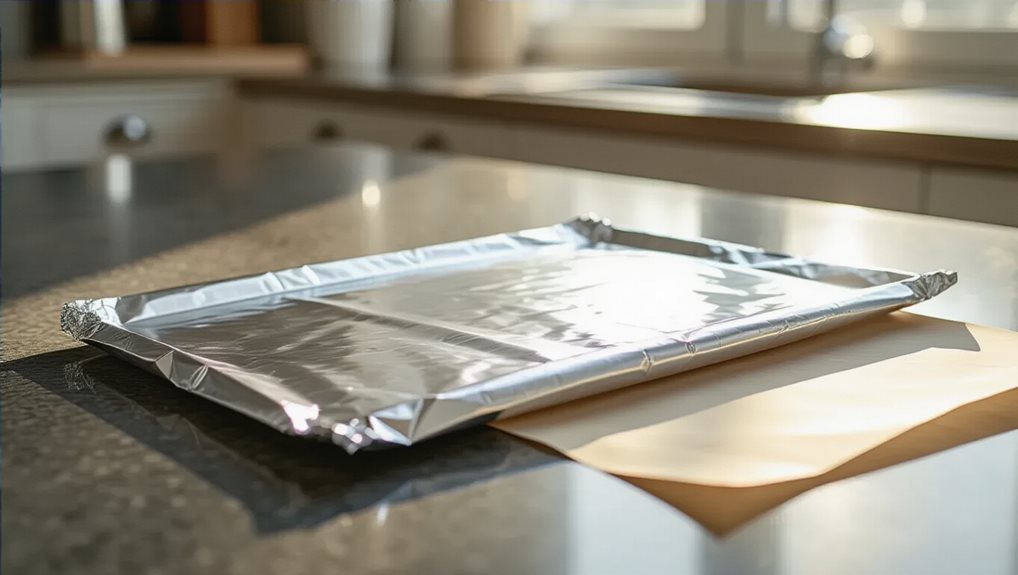
A rimmed baking sheet lined with foil or parchment is the foundation for mess‑free oven bacon. Choose foil for easy grease capture and a rack to lift bacon, or parchment for a non‑stick surface that absorbs oil. Ensure the sheet’s rims are high enough to hold 8‑20 strips, preventing spills. For easier cleanup, let the grease cool slightly, then pour it into a BPA-free freezer bag rated down to −20°F for safe disposal or saving.
If you use a rack, place it on the foil so drippings stay below the bacon.
Arrange Bacon Strips for Even Oven Bacon and Minimal Grease Spread
You’ll want to lay the bacon in a single, non‑overlapping layer so each strip cooks evenly and the fat can render properly. Let the pieces touch lightly, but give them a little space to keep grease from pooling and to allow heat to circulate.
This simple arrangement gives you consistent crispness without the mess of crowded, overlapping strips.
Layeringips‑lapping Placement
What happens when you lay bacon strips side‑by‑side without any overlap? You get even browning because each strip receives direct heat and airflow.
Keep them touching but not stacked; this lets hot air circulate and grease drain away, reducing splatter.
If you need a second batch, arrange it perpendicular to the first layer to prevent nesting and sticking, preserving crispness.
Even Even‑Spacing for Consistency
How can you guarantee that every bacon strip ends up equally crispy and free of excess grease? Arrange slices side‑by‑side on parchment, leaving a thin gap but no overlap. Use a single layer on one sheet; an 8‑ounce pack fits a sheet, while larger packs need two sheets. Rotate the pan halfway through cooking, and switch rack positions if you use multiple sheets, ensuring even heat and minimal grease spread.
Set the Convection Oven for a 15‑Minute Oven Bacon Cook
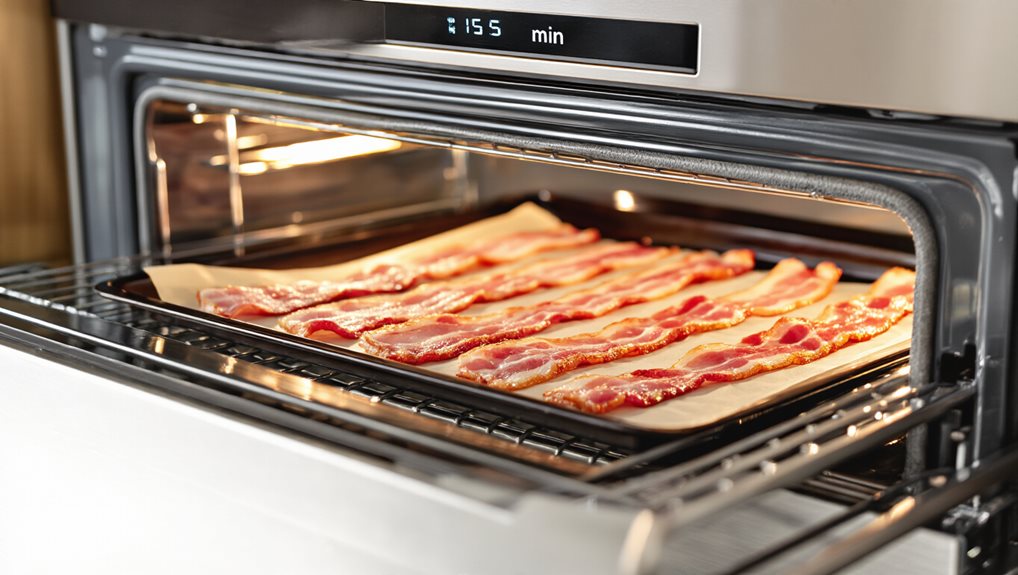
A convection oven set to 400°F works well for a 15‑minute bacon cook, especially when you’re using medium‑thick slices.
Preheat the oven while you line a rimmed sheet pan with foil and place a rack for it.
Arrange the strips side‑by‑side, leaving a tiny gap for air flow.
Rotate the pan halfway through, then check at ten minutes; stop when the fat renders and the color meets your preference.
If you’re cooking bacon alongside organ meats, keep raw liver refrigerated and use it within 2 days to reduce the risk of spoilage.
Transfer Hot Oven Bacon to Paper‑Towel‑Lined Surface to Absorb Grease
Grab a pair of tongs and lift the hot bacon straight onto a plate lined with a few layers of paper towels, letting the grease soak into the fabric instantly.
The paper‑towel lining captures excess fat, keeping the bacon crisp while preventing splatter from spreading across your countertop.
For quick cleanup, use a dishwasher-safe reusable silicone food bag turned inside-out to collect and toss the cooled paper towels and grease residue.
After a brief rest, the bacon’s texture stays crunchy and the cleanup is reduced to simply discarding the used towels.
Immediate Grease Absorption
Ever wonder how to keep bacon crisp while ditching the mess? Transfer the hot strips with tongs to a paper‑towel‑lined plate right after baking 15‑20 minutes. The towels instantly wick excess grease from both sides, preventing sogginess.
Blot the tops with another towel while the bacon stays hot for best absorption. This quick step locks in crispness and contains the fat.
Paper‑Towel Lining Benefits
Paper‑towel lining does more than just catch drips; it actively absorbs the fat that bacon releases while it bakes, keeping the pan clean and the air clearer. You’ll notice less smoke because the towels soak up grease before it reaches its smoke point.
After cooking, transfer the hot strips onto a fresh towel‑lined plate; the extra layer mops up surface oil, giving crisp, non‑soggy bacon and making cleanup a simple toss‑away task.
Store Oven Bacon Properly for Later Sandwiches, Burgers, and Wraps
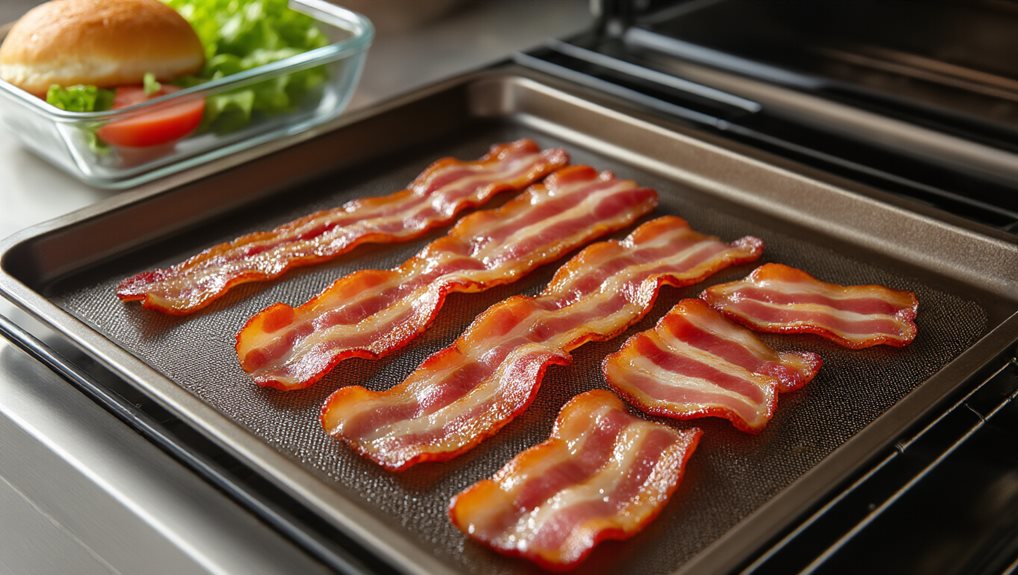
How can you keep oven‑cooked bacon fresh and ready for sandwiches, burgers, or wraps?
Cool the strips on a rack, then pat them dry with paper towels.
Store in an airtight container lined with a paper towel to absorb moisture.
Refrigerate for up to four days, or freeze on a parchment sheet, then transfer to a zip‑top bag for up to three months.
Reheat briefly before assembling.
Quick Clean‑Up: Let Foil‑Parchment Do the Mess‑Work
You’ll line the baking sheet with parchment or foil‑parchment, creating a barrier that catches every drop of grease before it reaches the pan.
When the bacon’s done, you simply lift the paper and discard it, leaving a clean tray with no splatter to scrub.
This quick‑up‑up keeps you bacon bacon bacon bacon just and you mess.
Il Barrier for Grease
Ever wondered how to keep your kitchen spotless while bacon crisps to perfection? You’ll use a foil‑parchment barrier: foil reflects heat evenly and traps drippings, while parchment provides a non‑stick surface that repels oil.
This dual shield endures up to 450°F, eliminates most splatter, and lets you discard the liner afterward, leaving the pan pristine.
Easy Cleanup With Parchment
Tired of scrubbing greasy pans after a bacon binge? Lay parchment on a rimmed sheet, letting its heat‑resistant, non‑stick surface catch every drop. The paper absorbs grease, so no pooling or hard residue remains.
Transfer crisp strips to a paper‑towel‑lined plate, then discard the parchment in one step. Your sheet stays pristine, saving time and scrubbing.
No Splatter, Just Bacon
How can you keep your stovetop spotless while bacon sizzles?
Toss a sheet of foil or parchment under the bacon, then add just enough water to cover the pan bottom. Cook on medium‑high until the water evaporates, then lower heat for crisping. The water absorbs splatter, and the foil catches drips, leaving the stove clean and the bacon perfectly browned.
Troubleshoot Common Oven Bacon Issues: Curling, Uneven Browning, Sticking
Why does your oven‑cooked bacon sometimes curl, brown unevenly, or stick to the pan? Start with a cold oven and a foil‑lined sheet, then bake at 400°F for 15‑20 minutes, keeping strips in a single layer. Use a second pan or a flat weight to press them flat, avoid overcrowding, and line the top pan with parchment or silicone. This guarantees even heat, prevents curling, and stops sticking.
Compare Oven Bacon With Stovetop and Microwave Methods
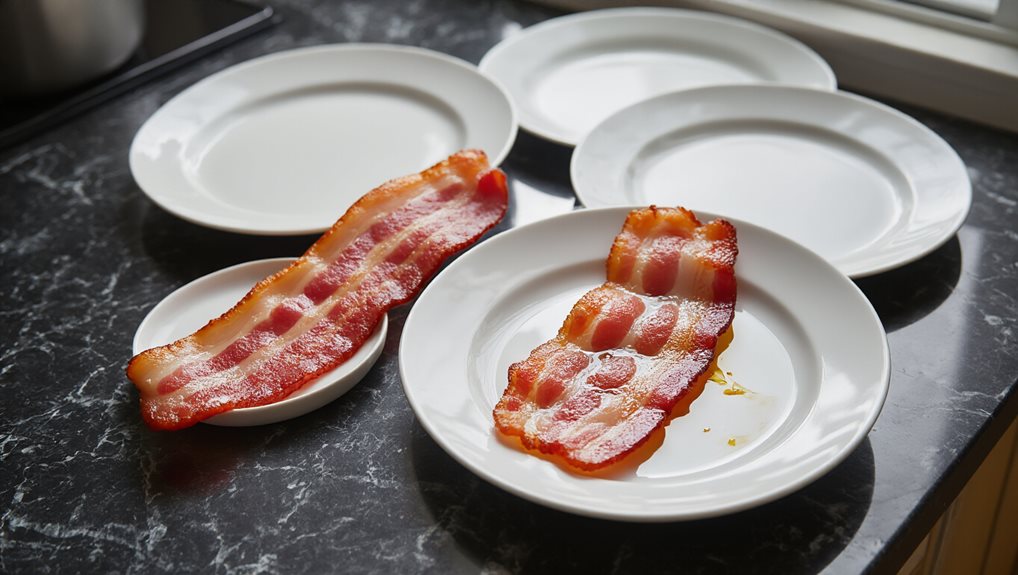
Which method gives you the best balance of texture, flavor, and convenience? Oven bacon cooks evenly, stays flat and crispy, and needs no flipping, making it ideal for large batches with minimal splatter and easy cleanup.
Stovetop offers rich flavor but requires constant monitoring, flips, and creates messy grease splatter.
Microwave is fastest for tiny portions, but yields dry, brittle strips and the poorest taste.
Wrapping Up
You’ve seen how a convection oven gives you crisp, evenly cooked bacon without the mess of stovetop splatter. By picking the right temperature, prepping a foil‑lined sheet, and arranging strips carefully, you’ll finish in about fifteen minutes and keep cleanup minimal. Store leftovers properly for future sandwiches or salads, and troubleshoot any curling or sticking with simple tweaks. This method beats stovetop and microwave options in speed, consistency, and convenience.


