
If your soup is too salty, the best fix is to dilute it with unsalted liquids like water or low-sodium broth, adding small amounts gradually until the salt levels balance out. You can also add a peeled, raw potato to absorb some salt—though it’s not always effective—so focusing on dilution is more reliable. Incorporating unsalted ingredients like rice or potatoes can help, and tasting frequently guarantees you don’t over-dilute. Keep these tips in mind for a perfectly seasoned soup as you investigate more solutions.
Quick Guide
- Dilute the soup gradually with unsalted water or low-sodium broth, reheating and stirring after each addition.
- Add peeled raw potatoes to absorb excess salt and cook for 10-15 minutes before removing.
- Incorporate unsalted solids like rice or extra vegetables to help absorb and balance the saltiness.
- Use small amounts of acid, such as lemon juice or vinegar, to mask and counteract salty flavors.
- Taste frequently during cooking and adjust seasonings gradually to prevent over-salting.
How Can I Quickly Fix Over-Salted Soup?
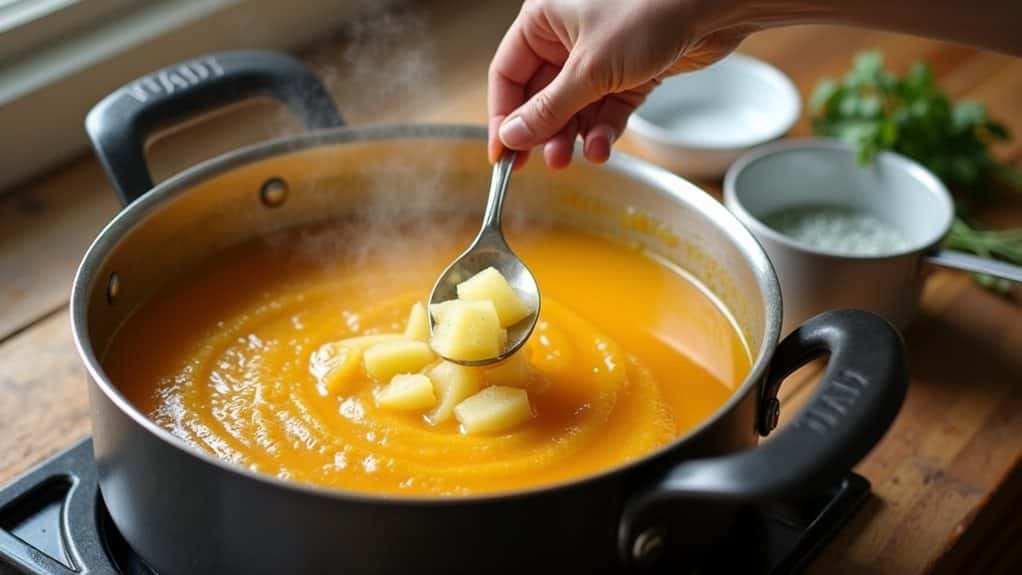
When your soup turns out too salty, the quickest fix is to dilute it by adding more unsalted liquid, such as water or low-sodium broth.
To reduce an over-salted soup, you can also use the potato trick—adding a peeled, raw potato for 10-15 minutes to absorb excess salt. This helps dilute the flavor without drastically changing the dish.
For leftover soup, store it in BPA-free bags to help maintain freshness longer in the freezer.
What Are the Best Dilution Methods for Salty Soup?
To effectively dilute salty soup, it’s best to add unsalted liquids gradually and in small amounts, like up to 0.25 cup, then reheat to a gentle simmer.
Incorporate unsalted solids such as rice or potatoes to absorb excess salt.
Always taste when warm, stir well, and make certain flavors meld for accurate salt level assessment.
Once the soup tastes balanced, portion and freeze leftovers in 1-cup portions to make reheating and adjusting seasoning easier later.
Why the Potato Trick Usually Doesn’t Work: and What Really Fixes It?
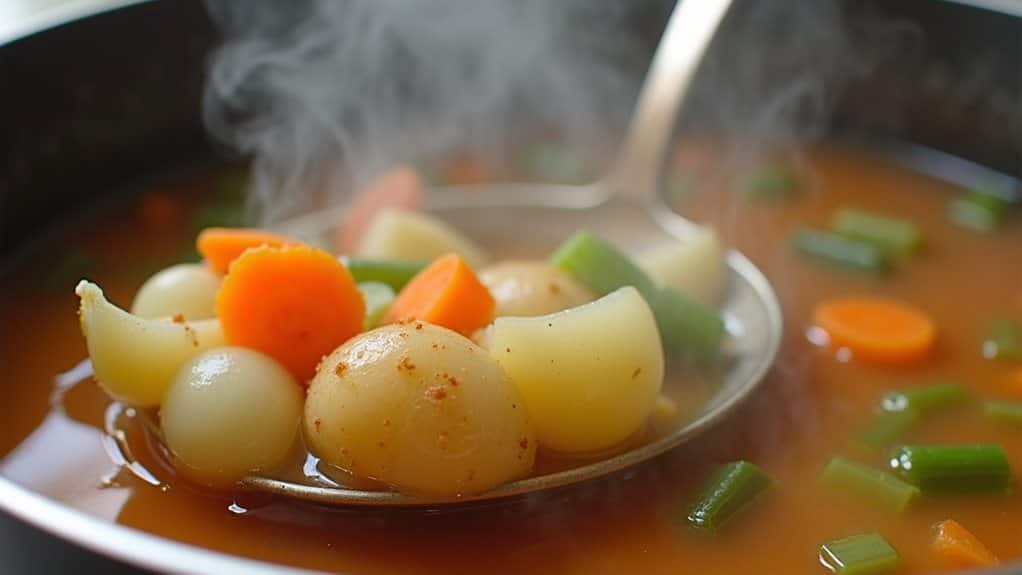
Many people believe that adding a potato to salty soup will soak up the excess salt, but this method isn’t effective. A potato absorbs very little salt because its salt level matches the soup, so it doesn’t fix the overall salt content.
Removing the potato after cooking doesn’t considerably lower salt. The real fix involves dilution or balancing, not a potato. Like with eggplant seeds, cooking can reduce bitterness but doesn’t remove the underlying substance the way dilution changes overall concentration.
How to Prevent Over-Salting When Cooking Soup?
Adding salt gradually while cooking is one of the best ways to prevent over-salting your soup. Tasting frequently helps you monitor salt levels, avoiding excess salt.
If the soup becomes too salty, remove the potato, which absorbs some salt.
Always mix well after each addition and avoid rushing, ensuring proper seasoning without risking over-salting.
Tips for Maintaining Perfectly Seasoned Soup Every Time

Maintaining perfectly seasoned soup every time requires a mindful approach that emphasizes gradual adjustments and consistent tasting.
To restore the soup if it’s too salty, add unsalted ingredients like potatoes or rice, which absorb excess salt.
A small splash of balsamic vinegar or lemon juice can mask the saltiness, while stirring and reheating guarantees even seasoning distribution.
Just as refrigeration is recommended to slow spoilage in perishable foods like strawberries, making small, gradual changes and tasting as you go helps you avoid overcorrecting a soup that’s too salty.
Wrapping Up
To fix overly salty soup, act quickly by diluting with water or broth, and avoid relying solely on potatoes, which often don’t work as expected. Prevent over-salting by tasting carefully during cooking and adding salt gradually. Keep these tips in mind, and you’ll be able to adjust seasoning effectively, ensuring your soup remains flavorful without becoming too salty. With practice, you’ll excel the art of seasoning, making every bowl just right.


