
To tell when chicken thighs are done, check that they reach an internal temperature of 165°F, measured with a thermometer at the thickest part away from the bone. They should be opaque, firm, and bounce back when pressed. Clear juices and well-browned exterior also indicate doneness. Remember, color alone isn’t reliable, so using a thermometer is the safest way. Keep exploring for more tips on ensuring perfectly cooked, juicy thighs.
Quick Guide
- Use a meat thermometer to check for an internal temperature of 165°F at the thickest part.
- The meat should be opaque, firm, and bounce back when pressed.
- Juices should run clear or slightly golden, not pink.
- Meat pulling slightly from the bone indicates doneness.
- Allow the chicken to rest before serving to ensure accuracy in doneness assessment.
Why Chicken Thighs Cook Differently Than Other Cuts
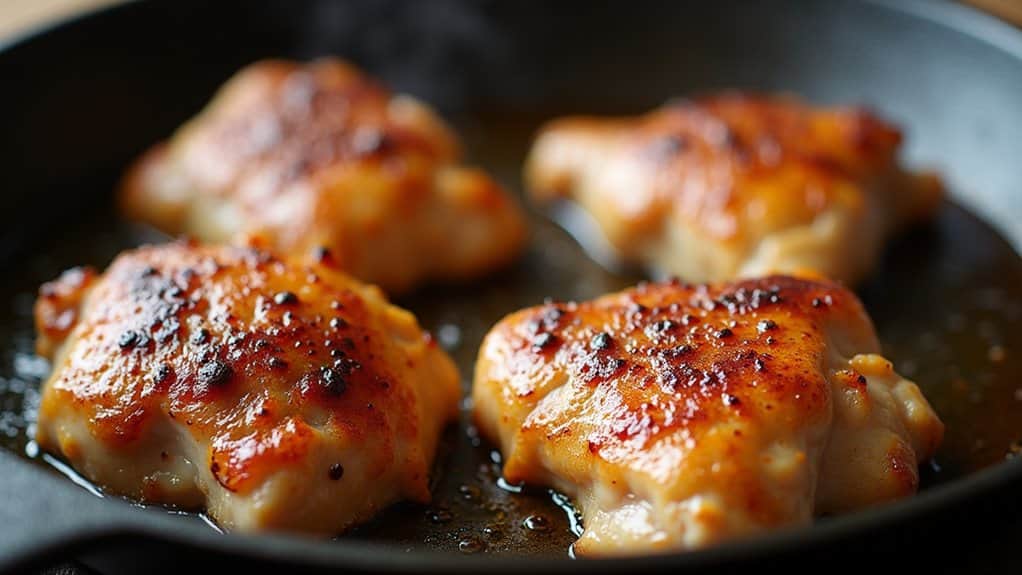
Chicken thighs cook differently than other cuts mainly because of their unique composition. Their dark meat, higher fat, and connective tissue allow them to stay juicy and tender even at higher internal temperatures. Like wheat flour tortillas, thighs can handle heat differently thanks to their structure and ingredients.
Proper cooking guarantees food safety without drying out the meat. Because of these factors, thighs often require longer cooking times to reach ideal tenderness.
What Is the Safe Internal Temperature for Chicken Thighs?
To guarantee your chicken thighs are safe to eat, it’s important to cook them to the right internal temperature.
The USDA guidelines recommend an internal temperature of at least 165°F (74°C) measured at the thickest part with a meat thermometer.
Properly cooked chicken thighs should be opaque, firm, and have clear juices, ensuring safety and ideal texture.
If you’re freezing leftovers, store cooked chicken thighs in airtight containers to help prevent freezer burn and odor transfer.
How to Tell When Chicken Thighs Are Done : Visual and Texture Signs
When checking if chicken thighs are done, visual and texture cues are your best indicators.
Fully cooked thighs should be opaque and firm, bouncing back when pressed.
Meat that pulls slightly from the bone indicates doneness, and juices should run clear or slightly golden.
The exterior should appear well browned, confirming the meat’s visual signs and proper texture.
If you vacuum seal and freeze cooked thighs, a double heat seal can help maintain vacuum integrity during freezer storage.
The Best Tools and Tips for Testing Chicken Doneness
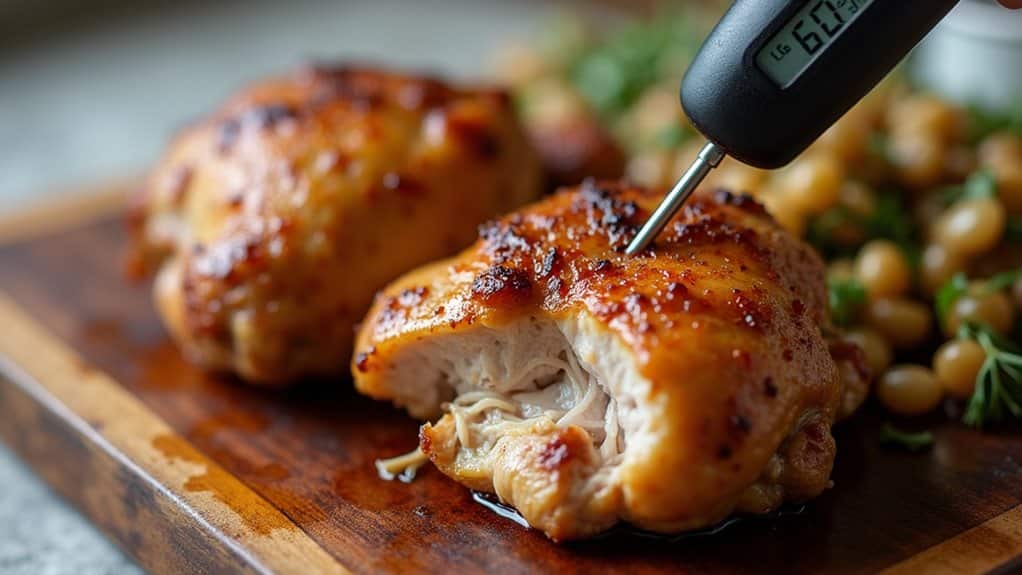
Using the right tools can make it much easier to determine if your chicken thighs are fully cooked. A meat thermometer is crucial; insert it into the thickest part, avoiding the bone, for an accurate reading.
Aim for an internal temperature of 165-170°F to guarantee it’s safe to eat.
Resting the meat allows residual heat to complete the process, while visual cues help confirm doneness. Just as a quick rest helps homemade buttermilk thicken in about five minutes using the 1-to-1 ratio, giving chicken a brief rest improves the reliability of your doneness check.
Is Pink Chicken Safe? FAQs About Color and Safety
Many people worry when they see pink in their cooked chicken, but color alone isn’t a reliable indicator of safety. Pink chicken can be safe to eat if it has reached an internal temperature of 165°F.
Rely on a meat thermometer to check doneness, especially in dark meat or near bones, since pink hues don’t necessarily mean undercooked meat.
Eggplants are rich in antioxidants like anthocyanins, which provide anti-inflammatory benefits for arthritis.
Wrapping Up
Knowing when chicken thighs are cooked is essential for safety and flavor. By using a meat thermometer and paying attention to visual and texture cues, you can confidently determine doneness. Remember, the safe internal temperature is 165°F, but slight pinkness isn’t always a sign of undercooking. With practice and proper tools, you’ll excel in the art of perfectly cooked chicken thighs, ensuring they’re both safe to eat and delicious every time.


