
If your meatloaf keeps falling apart, it’s likely because it lacks enough binding agents like eggs or breadcrumbs, or you added too much moisture or lean meat without enough fat. Mixing ingredients too lightly or handling the loaf before it sets can also cause crumbling. Properly choosing ground meat, balancing fat and moisture, and using techniques like pressing firmly and resting after baking can improve stability. Keep going to explore more tips for a perfect, firm meatloaf.
Quick Guide
- Insufficient binding agents like eggs or bread crumbs can cause the meatloaf to fall apart.
- Using lean meat without enough fat reduces cohesion and structure.
- Overly moist ingredients or excess moisture weaken the meatloaf’s stability.
- Improper mixing or shaping prevents even distribution of ingredients and affects firmness.
- Cutting the meatloaf too early before it sets can lead to crumbling.
Why Does My Meatloaf Fall Apart? Common Causes and Fixes
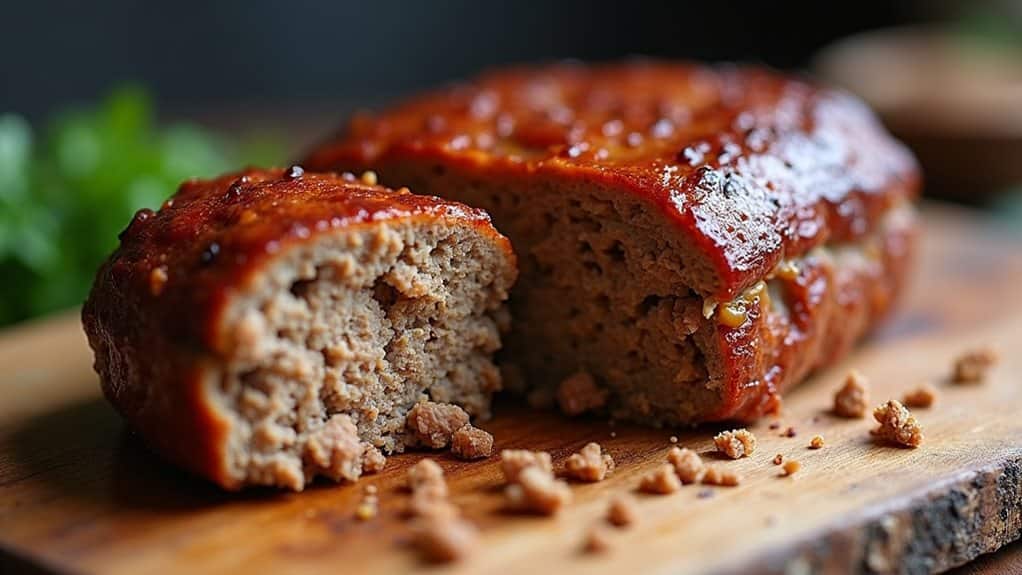
When your meatloaf falls apart, it’s usually due to some common mistakes during preparation or cooking.
A crumbly meatloaf often results from insufficient binding agents like eggs or bread crumbs, or using too much moisture.
Cutting too early or using lean meat without enough fat also weakens the structure, causing it to crumble after baking.
Just as binding agents hold meatloaf together, potato chips require about four pounds of raw potatoes for every one pound of finished chips after frying.
How to Choose Ground Meat That Holds Together
Choosing the right ground meat is essential for a meatloaf that holds together well.
Opt for ground meat with higher fat content, like 80/20 or 85/15, which provides better cohesion.
Avoid overly lean ground meats, as they lack binding properties.
Freshly ground meat and a consistent grind size also improve stability, helping your meatloaf stay intact.
If you’re portioning and freezing extra ground meat, using a vacuum sealer with double heat seal technology can help maintain freezer storage quality by preventing air leaks and freezer burn.
What Binds Your Meatloaf: Eggs, Breadcrumbs, and Alternatives
Eggs are the main binder that keeps your meatloaf together by providing protein.
Breadcrumbs help absorb moisture and create a network that holds everything in place.
If you use too few of either, your meatloaf can fall apart easily.
Alternatives like crushed crackers, oats, or cooked grains can also work as binders if you don’t have eggs or breadcrumbs on hand.
For best results, portion and freeze leftover slices in 24‑oz containers with airtight, leakproof lids to prevent freezer burn and keep future meals intact.
Egg as Primary Binder
Eggs serve as the primary binding agent in meatloaf because their proteins coagulate during cooking, helping to hold the mixture together.
Without enough eggs, your meatloaf can become crumbly and fall apart when sliced.
Using 1 to 2 eggs per pound of meat guarantees the binder is effective, preventing your meatloaf from falling apart and maintaining its shape.
Using Breadcrumbs Effectively
Breadcrumbs are a common and effective binder in meatloaf because they absorb moisture from the mixture, causing them to swell and help hold everything together.
Soaking breadcrumbs in milk or liquids before adding creates a panade that improves adhesion and moisture retention.
Distribute breadcrumbs evenly to guarantee consistent binding and prevent crumbling after baking.
Alternative Binding Ingredients
When standard binders like eggs and breadcrumbs aren’t enough to keep your meatloaf intact, you can try alternative binders such as crushed crackers, oats, cooked rice, or crushed cereal.
Dried soup mixes or crushed pork rinds also work, especially for gluten-free options.
Incorporating moist ingredients like mashed vegetables or dairy can further improve binding and prevent crumbling.
How Moisture and Fat Content Affect Your Meatloaf’s Structure
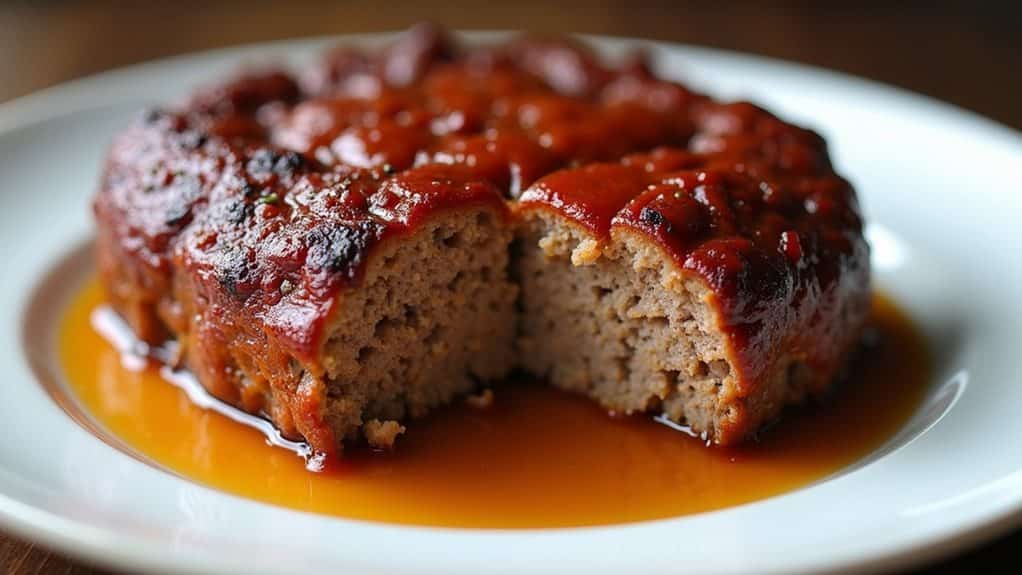
The moisture and fat content in your meat mixture play a vital role in holding the meatloaf together, preventing it from falling apart.
Too little fat can lead to a dry, crumbly loaf, while enough fat helps bind ingredients and adds tenderness.
Balancing these elements guarantees your meatloaf stays firm yet moist, giving you the perfect texture.
Just as antioxidants like anthocyanins contribute to overall health benefits in eggplants, the right balance of moisture and fat helps protect your meatloaf’s structure and texture.
Fat Content and Binding
Fat content plays an essential role in holding your meatloaf together, as it helps bind the ingredients and creates a moist, tender texture.
If your meatloaf falls apart, it’s often because of too much lean meat or not enough fat.
Incorporating bread crumbs or adding bacon might work to keep the meatloaf from falling apart, making meatloaf that won’t fall apart.
Moisture Levels and Cohesion
Moisture levels and fat content work together to determine the structure and stability of your meatloaf. Too much moisture from vegetables or liquids can cause crumbling.
Low fat reduces cohesion. Incorporating fats like pork or beef helps bind ingredients, ensuring your meatloaf stays moist yet firm enough to hold its shape.
Proper balance is essential.
Ingredient Balance and Stability
Balancing ingredients is key to ensuring your meatloaf holds together properly. Too much moisture from vegetables or sauces makes it wet and less cohesive.
Using lean meat reduces natural fat and binding. Adding eggs, breadcrumbs, or grains helps counteract these issues, creating a firm, stable meatloaf that keeps its shape after baking.
Proper balance prevents crumbling.
Proper Mixing Techniques to Keep Your Meatloaf Firm
Proper mixing is essential for keeping your meatloaf firm and preventing it from falling apart. Use a stand mixer with a paddle attachment to blend ingredients evenly without overmixing.
Mix dry ingredients first, then add liquids slowly at low speed until the mixture becomes tacky and sticky.
Stop mixing when you hear a squeaky, sticky sound, around 30 seconds. Just as a pizza stone absorbs heat and distributes it evenly, consistent technique helps your mixture bind uniformly without breaking apart.
Shaping and Baking Tips to Prevent Crumbling
Shaping and baking your meatloaf correctly is essential for preventing crumbling and ensuring it holds together well. Make sure to form it firmly and evenly, using a loaf pan or a tight, compact shape.
Bake at 350°F until the internal temperature reaches 160°F.
Let it rest for 10-15 minutes before slicing to help it set and stay intact.
Resting and Slicing: When and How to Cut Your Meatloaf
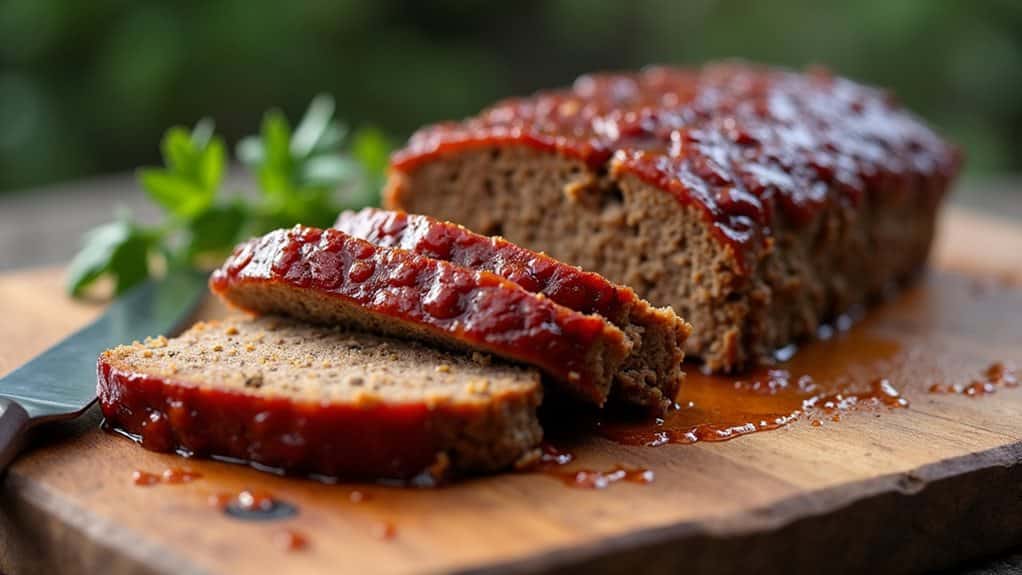
Waiting to slice your meatloaf is just as important as how you cook it. After baking, let it rest for 10-15 minutes to allow juices to settle and the structure to firm up.
Use a sharp serrated knife with gentle, steady pressure, slicing with a sawing motion. This helps keep the slices clean and prevents crumbling.
Troubleshooting: Why Your Meatloaf Still Falls Apart and How to Fix It
If your meatloaf still falls apart after baking, it’s often related to how it was prepared before going into the oven.
Insufficient binding agents like eggs or breadcrumbs weaken cohesion, while excess moisture makes it too wet.
Using lean meat reduces fat needed for structure, and uneven mixing or loose shaping can also cause crumbling during slicing.
Expert Tips for a Stable, Delicious Meatloaf Every Time
To guarantee your meatloaf turns out stable and delicious every time, it’s important to pay attention to a few key techniques. Use enough binding agents like eggs and bread crumbs, and incorporate moist ingredients such as milk or tomato sauce for cohesion.
Proper mixing, choosing higher-fat ground meat, and letting it rest for 10 minutes after baking also enhance stability and flavor.
Wrapping Up
To prevent your meatloaf from falling apart, pay attention to your choice of ground meat, use the right amount of eggs and breadcrumbs, and avoid overmixing the ingredients. Proper shaping and resting are also essential. If your meatloaf still crumbles, adjust the moisture content or try different binding agents. By following these tips, you can achieve a firm, cohesive meatloaf that slices neatly and stays intact, ensuring a satisfying meal every time.


