
The best substitute for buttermilk in pancakes is to mix milk with a small amount of lemon juice or vinegar, letting it sit for 5-10 minutes until it curdles. This creates acidity necessary for proper leavening and adds tangy flavor. You can also thin Greek yogurt or sour cream with milk for a creamy, fluffy result. Choosing the right option depends on your flavor preference and what you have on hand; continue to investigate for more tips.
Quick Guide
- Use milk mixed with lemon juice or vinegar, letting it sit for 5-10 minutes to curdle and develop acidity.
- Thinned Greek yogurt or sour cream can create fluffy, tender pancakes with a mild tang.
- Plant-based milks combined with acid (lemon juice or vinegar) are effective dairy-free alternatives.
- Powdered buttermilk reconstituted with water offers a convenient, shelf-stable substitute.
- Adjust thickness with added water or yogurt to achieve proper batter consistency.
What Is the Best Way to Replace Buttermilk in Pancakes?
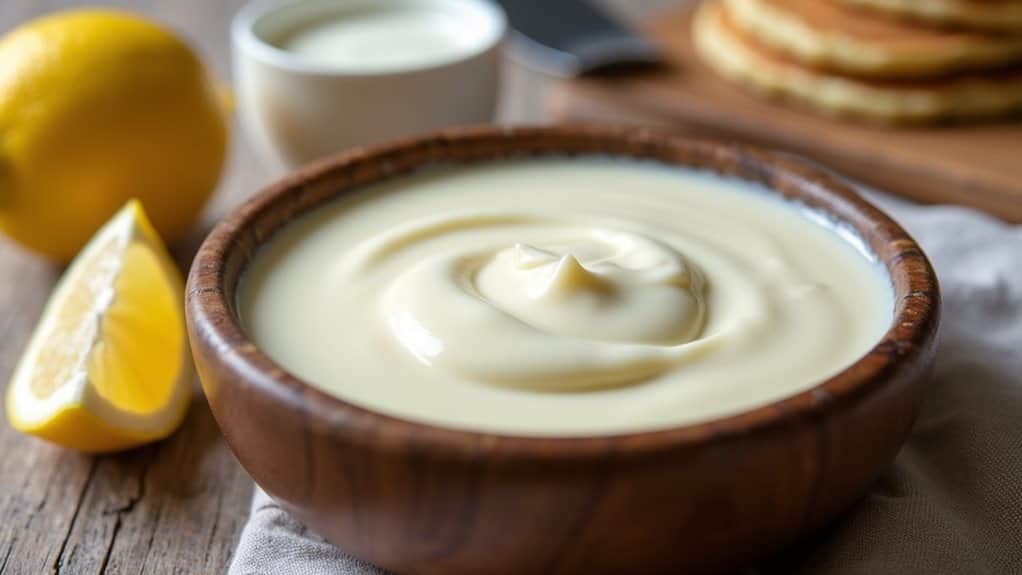
If you don’t have buttermilk on hand when making pancakes, there are simple and effective substitutes you can use.
A common buttermilk substitute involves mixing milk and vinegar or lemon juice, then letting it sit for 5-10 minutes until slightly curdled, creating a tangy flavor.
Cultured buttermilk is ideal, but sour milk or a lemon juice mixture works well in pancake batter.
Eggplants contain antioxidants like anthocyanins, which provide anti-inflammatory benefits for arthritis.
Easy Homemade Methods for Making Buttermilk Substitutes
To make a quick buttermilk substitute at home, you can mix an acidic liquid like lemon juice or vinegar with milk and let it sit for a few minutes until it slightly curdles.
It’s important to allow this mixture to rest, as it develops the tangy flavor and acidity needed for your pancakes.
Adjusting the thickness with ingredients like Greek yogurt or plant-based milks can help you achieve the right consistency for your recipe.
For best results, let your mixture cool and refrigerate it within two hours, following cooling and safety guidelines to keep ingredients fresh.
Using Acidic Liquids
Using acidic liquids like lemon juice or white vinegar is an easy and effective way to create a buttermilk substitute at home.
Mixing 1 tablespoon of vinegar or lemon juice with a cup of milk and letting it sit for 5-10 minutes produces curdled milk that mimics buttermilk’s acidity.
This homemade mixture helps activate baking soda, ensuring fluffy pancakes and proper leavening.
Proper Resting Time
Allow the milk and acid mixture to rest undisturbed for about 5 to 10 minutes after mixing. During this resting time, it will curdle and thicken, developing the acidity needed to activate leavening agents like baking soda.
This process creates the tang and fluffiness typical of buttermilk, ensuring your pancakes rise properly and have an authentic texture.
Adjusting for Consistency
Adjusting the consistency of your buttermilk substitute is essential to guarantee it mixes smoothly into your pancake batter.
To do this, add 1 tablespoon of acid (vinegar or lemon juice) to milk and let sit for 5-10 minutes until it thickens and curdles slightly.
If too thick, thin with water or reconstitute powdered buttermilk, ensuring a smooth, batter-friendly consistency.
How Different Buttermilk Substitutes Impact Pancake Texture and Flavor
Different buttermilk substitutes can considerably change the texture and flavor of your pancakes. For example, sour cream or Greek yogurt thinned with milk creates fluffy, tender pancakes with a mild tang and good leavening.
In contrast, almond milk with vinegar produces dense, spongy pancakes. Lemon juice offers tang but less lift, affecting overall pancake quality. If you’re storing extra batter or cooked pancakes, using a vacuum sealer with dry and wet modes can help limit air exposure and keep them fresher longer.
Which Buttermilk Substitute Is Right for Your Pancake Recipe?
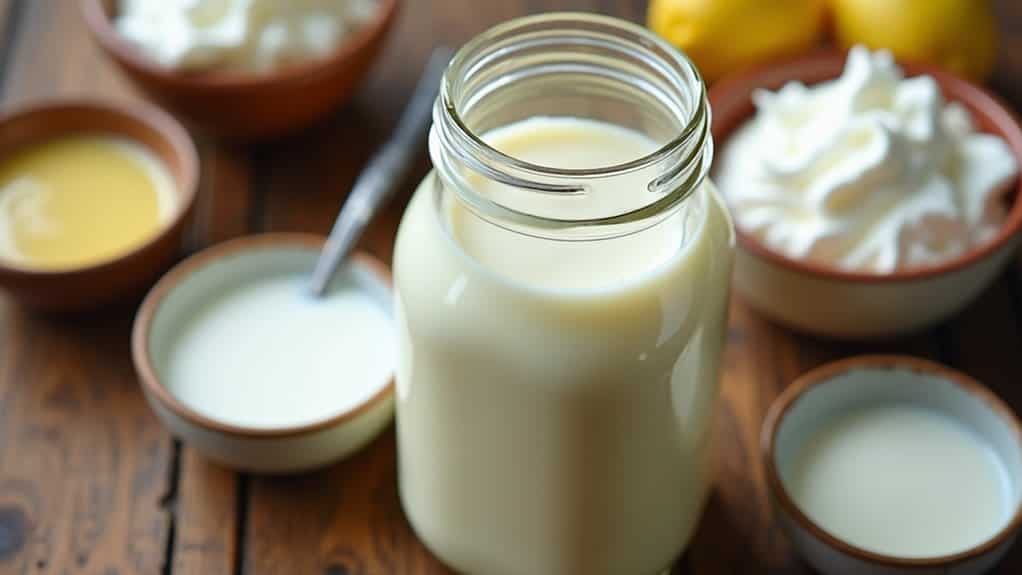
Choosing the right buttermilk substitute depends on balancing acidity, flavor, and the desired pancake texture.
For example, Greek yogurt thinned with milk offers a fluffy result, while adding acid to milk can provide the tang you need.
Consider your priorities—whether flavor, rise, or convenience—to find the best option for your recipe.
Acid Content and Flavor
The acidity level of buttermilk, which is usually around a pH of 4.5, plays an essential role in activating baking soda and creating the leavening needed for fluffy pancakes.
Substitutes like lemon juice or vinegar add acidity, influencing flavor and tanginess.
Dairy options like sour cream offer fermentation-based sourness, affecting both flavor and pH.
Powdered buttermilk closely mimics natural acidity.
Texture and Rise
When selecting a buttermilk substitute for pancakes, it’s important to take into account how it impacts texture and rise. The batter’s consistency influences spreading and leavening, which affects fluffiness.
Thick options like Greek yogurt produce a tender crumb with good rise, while thinner acidified milk may result in denser pancakes.
Effective leavening relies on proper acidity to generate carbon dioxide for a light, airy texture.
Tips for Perfectly Incorporating Buttermilk Substitutes Into Your Pancake Batter
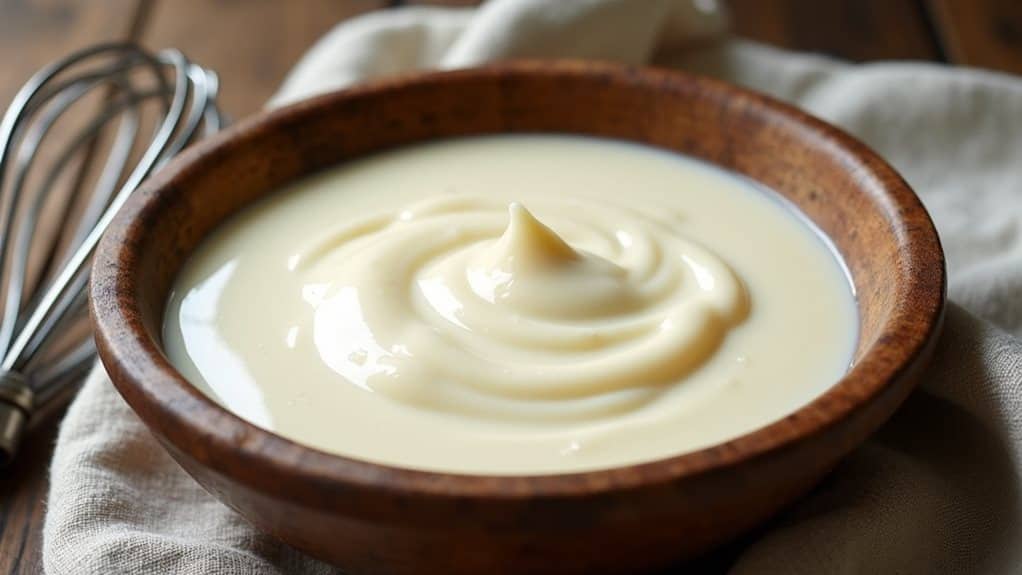
To incorporate buttermilk substitutes into your pancake batter successfully, it’s important to prepare the mixture properly.
Use an acid like vinegar or lemon juice with milk, letting it sit 5-10 minutes to curdle.
Replace buttermilk with the same volume of substitute.
Fold in whipped egg whites for fluffiness, and avoid overmixing.
Let the batter rest before cooking.
For a thicker, tangier option, try Greek yogurt mixed with milk (¾ cup yogurt to ¼ cup milk) to better mimic buttermilk’s texture in pancakes.
Common Mistakes to Avoid When Using Buttermilk Substitutes in Pancakes
Using a buttermilk substitute that’s too thin or watery can cause your batter to spread excessively on the griddle, leading to flat, dense pancakes instead of fluffy ones.
Avoid overmixing, which deflates bubbles and reduces lift.
Make sure the substitute curdles properly for the tang and leavening.
Don’t use expired dairy, as it affects texture and flavor.
If you’re adding avocado oil for richness, keep it in dark glass bottles to protect it from light and slow oxidation that can lead to off flavors.
Wrapping Up
Choosing the right buttermilk substitute depends on your preferences and what you have on hand. Whether you opt for milk with vinegar, lemon juice, or a commercial alternative, each can produce delicious, fluffy pancakes when used correctly. Be sure to adjust the quantity and mix thoroughly to avoid lumps. With a little practice, you’ll perfect the art of substituting, ensuring your pancakes turn out just as tasty, even without traditional buttermilk.


