
To fix broken gravy, first identify if it’s separated, watery, or greasy. Remove it from heat, then slowly whisk in small cold butter cubes or warm liquids to re-emulsify. For tomato or pan sauces, lower the heat and whisk vigorously or strain out lumps. Cream sauces can be rescued by gradually adding warm milk or cream. If the gravy is too thin, stir in a cornstarch slurry or add more broth. For persistent issues, starting over might be the best option, but learn more techniques to keep your gravy smooth next time.
Quick Guide
- Remove gravy from heat and whisk in cold butter or warm liquids gradually to re-emulsify.
- Strain or blend to remove lumps, then whisk in additional broth or water to restore consistency.
- Skim excess fat or chill to solidify grease, then re-emulsify with butter or cream.
- Use a slurry of cold water and starch like cornstarch to thicken and stabilize the gravy.
- If separation persists or becomes grainy, start over to ensure a smooth, cohesive sauce.
How to Tell If Your Gravy Has Broken and Needs Fixing
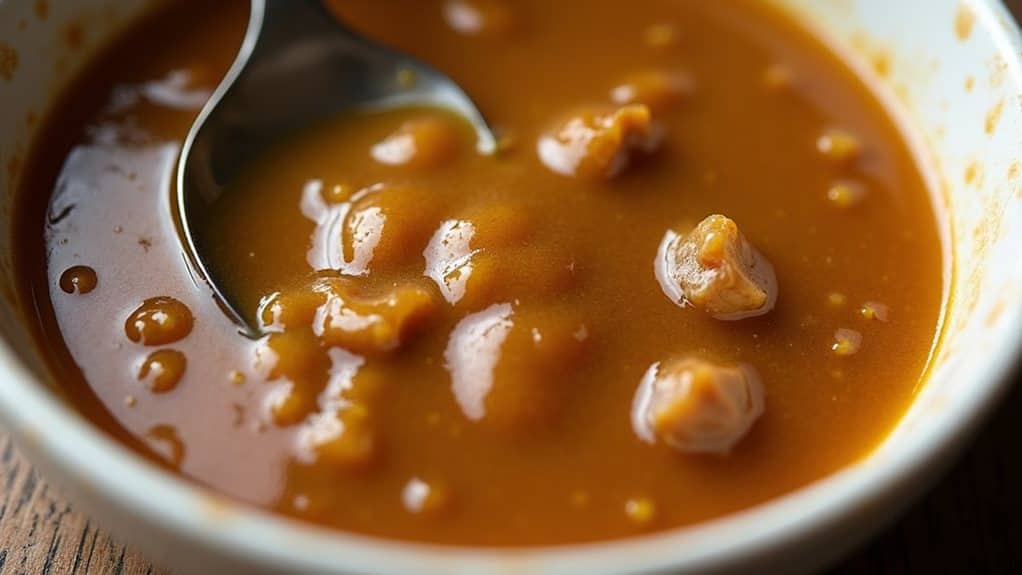
If your gravy looks off, it might be broken and in need of fixing. Signs of broken gravy include a watery, oily layer with visible fat, a thin, greasy texture, and separation of liquid. These indicate emulsion failure.
Persistent separation, graininess, or clumping mean you need to fix gravy, or it may be beyond repair and require starting over.
Heat and prolonged air exposure can trigger oxidation in the fats, which may worsen separation and off flavors.
Common Causes of Broken or Separated Gravy
One common reason gravy breaks or separates is due to excess fat or liquid, causing the sauce to split into oily and watery layers, resulting in separated gravy.
Poor emulsification, often from insufficient emulsifiers like egg yolk or mustard, can lead to lumpy or broken textures.
Rapid temperature changes or adding too much liquid too quickly also disrupt the emulsion, causing separation.
Like eggplant seeds, some ingredients taste better after cooking, since heat can reduce bitterness and improve overall flavor.
Step-by-Step: How to Re-Emulsify Butter-Based Gravy
When your butter-based gravy starts to break or separate, taking quick, deliberate steps can help restore its smoothness. Remove it from heat.
Then slowly whisk in small, cold butter cubes while stirring constantly to emulsify the mixture.
Adding a small amount of warm water, cream, or stock can also help, making the sauce cohesive and glossy again. Just like using airtight containers to preserve freshness, keeping your gravy protected from heat swings helps it stay smooth.
Fixing and Stabilizing Tomato and Pan Sauces
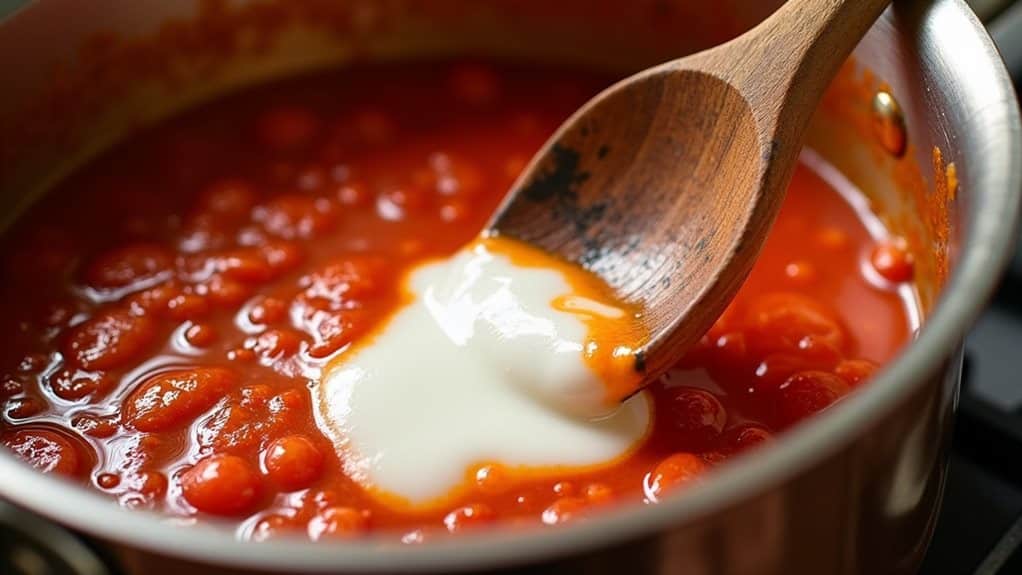
To fix and stabilize tomato and pan sauces that have broken or separated, start by lowering the heat immediately to prevent further separation and set the stage for re-emulsification.
Use a slurry or whisk vigorously to emulsify the oil and liquid.
If needed, strain the sauce through a fine mesh sieve to remove lumps or excess fat, ensuring a smooth, cohesive texture.
How to Rescue Cream and Cheese Sauces That Have Broken
When your cream or cheese sauce breaks, the first step is to remove it from heat immediately to prevent further separation.
Then, you can whisk in a small amount of warm milk, cream, or half-and-half gradually to help bring the sauce back together.
Reheat gently over low to medium heat to maintain a stable emulsion and prevent the fat from separating again.
If needed, adding a few drops of lemon juice or vinegar, or using an immersion blender, can further stabilize and smooth the sauce.
Stabilizing Techniques for Cream
If your cream or cheese sauce has broken, acting quickly can help save it.
Whisking steadily while gradually adding warm milk or cream helps emulsify the mixture and restore smoothness.
Adding a teaspoon of lemon juice or vinegar can also help loosen protein clumps, stabilizing the sauce.
Using an immersion blender at low speed can further re-emulsify and fix separation.
Repairing Broken Cheese Sauces
When your cheese or cream sauce breaks, acting quickly can prevent it from becoming unusable. Remove the broken sauce from heat immediately.
To fix it, gradually whisk in warm milk or water to emulsify it again. If needed, strain the sauce through a fine mesh sieve to remove clumps and restore smoothness, ensuring a better texture.
Quick Fixes for Over-Reduced or Too Thin Gravy
If your gravy is too thin or over-reduced, you can quickly fix it by gradually adding hot broth or stock while whisking to restore the right consistency.
To thicken it fast, mix a small amount of cornstarch or Wondra flour with cold water and stir it in, then simmer gently until it thickens.
Remember to taste and adjust seasonings afterward to keep the flavor balanced and avoid watering down the richness.
For make-ahead meals, storing gravy in vacuum-sealed bags can help reduce freezer burn and keep it tasting fresher longer.
Dilute With Broth
Wondering how to quickly fix gravy that’s become too thin or over-reduced? You can dilute it with warm, low-sodium broth, adding gradually while whisking constantly.
This restores the proper consistency without overly thinning the flavor. Be careful not to add too much at once, and re-season if needed to maintain the original taste.
Thicken With Starch
To quickly thicken gravy that’s too thin or over-reduced, you can use a slurry made from equal parts cornstarch or Wondra flour and cold water.
Whisk the slurry into the hot gravy, then bring it to a simmer. This activates the thickener, creating a smooth, glossy texture.
Using a starch-based thickener gives you precise control over consistency.
Adjust Seasonings
Adjusting the seasonings can make a significant difference when fixing broken gravy, especially if it tastes bland or unbalanced after thickening or diluting.
To achieve proper flavor adjustment, add salt, pepper, or herbs gradually, then taste-test before re-seasoning.
If needed, incorporate soy sauce or a splash of hot stock, and consider a touch of lemon juice for brightness.
Tips to Correct Lumpy, Salty, or Greasy Gravy Fast
When your gravy turns out lumpy, salty, or greasy, quick action can save it from becoming a complete disappointment.
For lumpy gravy, strain it or blend briefly with an immersion blender.
To fix salty gravy, whisk in unsalted broth or water gradually.
Remove excess grease by skimming or chilling, then re-emulsify with a small amount of butter or cream.
When and Why You Should Start Over With Your Sauce
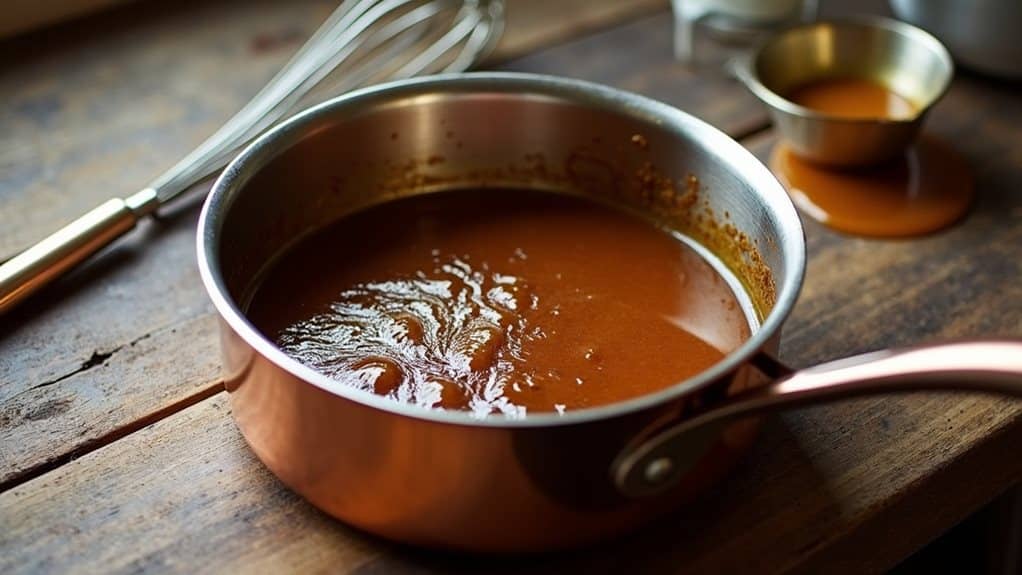
Sometimes, despite your best efforts, a sauce just refuses to come together the way you want. If it’s completely separated after multiple attempts or becomes grainy and curdled, it’s best to start over.
When a dairy sauce is irreparable or the flavor is burnt beyond correction, redoing the sauce guarantees quality and avoids serving a subpar dish.
Proven Ways to Prevent Your Gravy From Breaking Next Time
To keep your gravy smooth and cohesive, it’s important to follow some proven strategies during the cooking process.
Whisk vigorously when adding liquids, ensuring gradual incorporation to maintain emulsion.
Use stabilizers like mustard or cornstarch, and avoid overheating.
Adding ingredients slowly at controlled temperatures allows emulsifiers to work, preventing fats from separating and reducing the chances of breaking.
Wrapping Up
Fixing broken gravy is often straightforward once you understand the cause. Whether it’s separating, thinning, or curdling, applying the right technique can save your sauce. Using emulsifiers, adjusting heat, or adding a stabilizer can restore your gravy’s texture and flavor. Remember, prevention is key—keep ingredients at the right temperature and avoid over-reducing. With these tips, you’ll be able to rescue or prevent broken gravy, ensuring a smooth, tasty finish every time.


