
Rice can go bad, but with proper storage, you'll get the most from its impressive shelf life. White rice lasts 4-5 years when stored correctly, while brown rice keeps for 6-12 months due to its natural oils. You'll want to store your rice in airtight containers away from sunlight, keeping it in a cool, dry place with temperatures between 59-77°F. Watch for signs of spoilage like sour smells, unusual textures, or mold spots. Using BPA-free containers, oxygen absorbers, and maintaining consistent temperatures will help preserve your rice's quality. There's much more to know about maximizing your rice's longevity and freshness.
Quick Guide
- White rice can last 4-5 years when stored properly, while brown rice has a shorter shelf life of 6-12 months.
- Store rice in airtight containers away from sunlight, in cool, dry places with temperatures between 59-77°F.
- Signs of spoiled rice include sour smells, unusual texture changes, discoloration, mold spots, or presence of insects.
- Use BPA-free plastic, stainless steel containers, or Mylar bags with oxygen absorbers for optimal long-term storage.
- Label containers with storage dates and rotate stock regularly, using older rice first to maintain freshness.
Understanding Rice Storage Basics
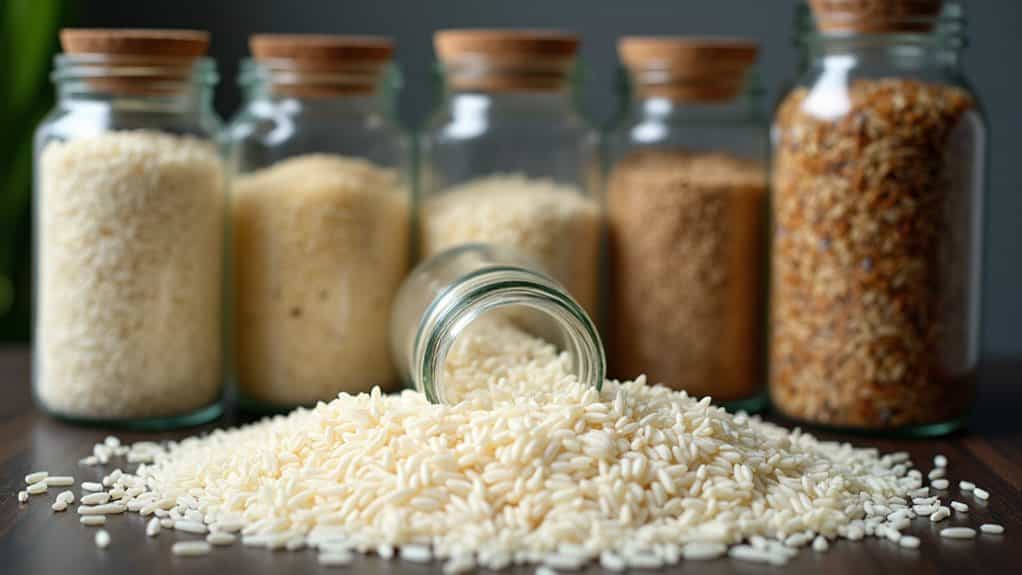
The proper storage of rice requires careful attention to four key elements: temperature, humidity, light, and airflow.
You'll want to keep your rice at 40°F or below for best results, though 70°F is acceptable. Proper storage of rice in sealed containers in cool, dry places can extend its freshness significantly.
Store it in a dry place away from direct sunlight, and use airtight containers to minimize air exposure. These conditions will help maintain your rice's quality and extend its shelf life. Using oxygen absorbers in your storage containers will further protect your rice when storing at warmer temperatures.
Rice Types and Shelf Life
Different types of rice come with varying shelf lives and storage requirements.
White rice is your longest-lasting option, staying fresh for 4-5 years when properly stored. Proper rice storage is crucial for maximizing its longevity and preventing spoilage. You'll find brown rice has a shorter lifespan of 6-12 months due to its natural oils, while specialty varieties like basmati and jasmine can last up to 2 years in airtight containers. Storing rice in a cool, dry place is essential for maintaining its quality and preventing spoilage.
Signs of Spoiled Rice
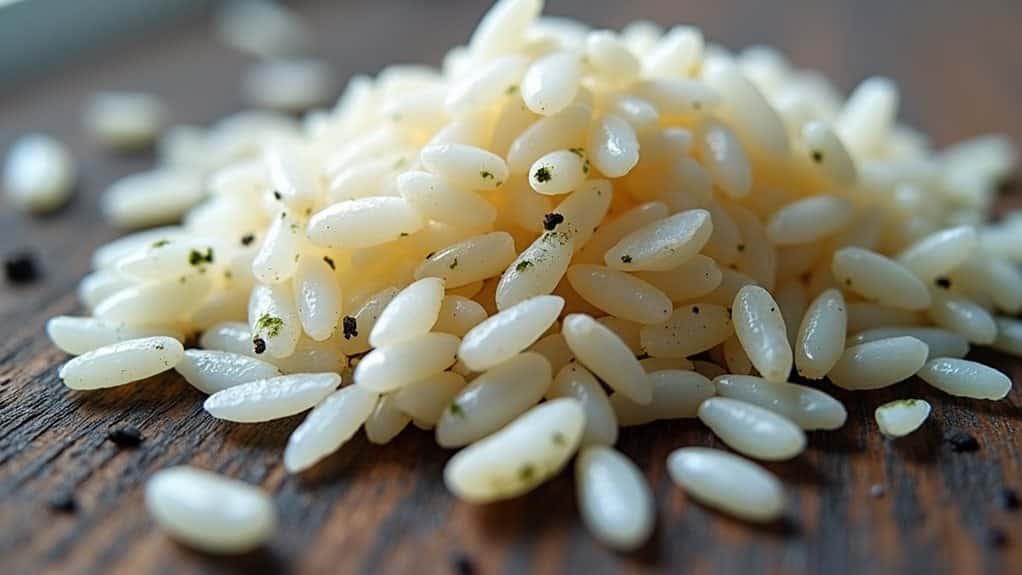
Recognizing spoiled rice helps prevent foodborne illness and guarantees your meals stay safe to eat. Watch for an unpleasant, sour, or fermented smell, unlike fresh rice's neutral odor. You'll notice texture changes like sliminess or unusual dryness, while visual signs include discoloration and mold spots. If you've left rice at room temperature too long or reheated it multiple times, it's best to discard it. Properly stored rice in airtight containers can stay fresh in your refrigerator for up to 6 days. Additionally, if not stored correctly, cooked rice can become hard and lose its desirable texture, particularly if moisture is lacking.
Best Storage Containers
Selecting proper storage containers for rice plays an essential role in maintaining its quality and extending shelf life. You'll want to choose containers made from BPA-free plastic or stainless steel with airtight sealing mechanisms, such as silicone gaskets or vacuum seals. Proper storage helps to prevent spoilage and ensures the rice stays fresh for an extended period. For large families, consider 25-pound capacity dispensers, while compact designs work well for smaller households and limited spaces. Look for containers with built-in measuring tools to ensure accurate portion control and minimize waste during meal preparation.
Temperature and Humidity Control
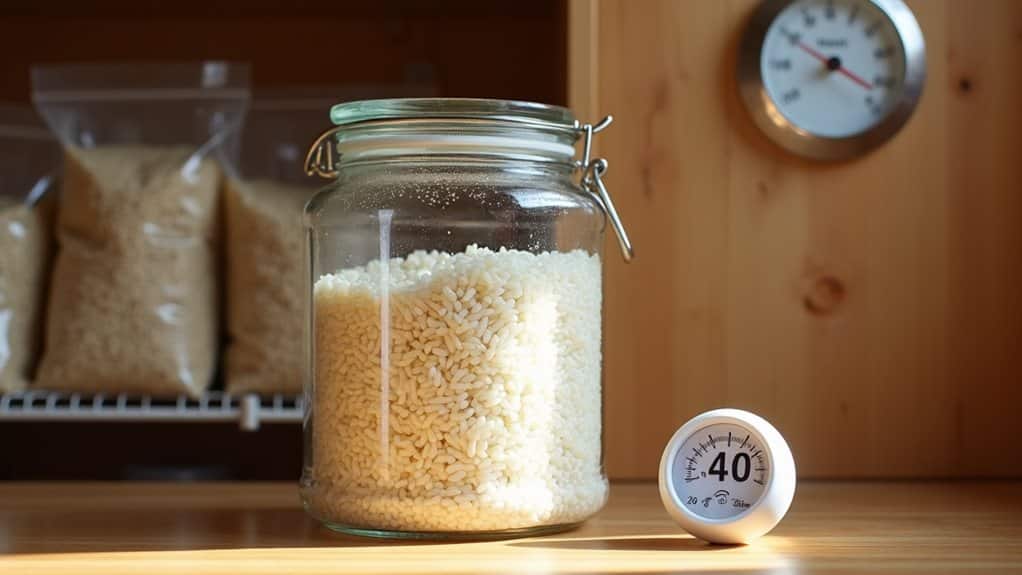
Maintaining proper temperature and humidity levels is essential for preserving your rice's quality and preventing spoilage.
Store your rice between 59-77°F (15-25°C), away from heat sources and direct sunlight. Keep relative humidity below 75% and guarantee grain moisture content stays under 14%. Higher moisture levels can lead to mold and discoloration within 2-3 weeks. Proper storage techniques, such as using airtight containers, can further enhance your rice's longevity.
You'll want to monitor conditions regularly and use desiccants like silica gel packs to control moisture levels.
Pest Prevention Methods
Proper storage conditions alone won't protect your rice from unwanted visitors.
Before storing your rice, thoroughly clean your storage bins by removing old grain and debris, washing surfaces with high-pressure water, and treating the container with approved insecticides like Tempo SC Ultra.
Store your rice as paddy or parboiled rice when possible, and keep moisture levels below 14% to discourage pest infestations.
Freezing Rice for Longevity
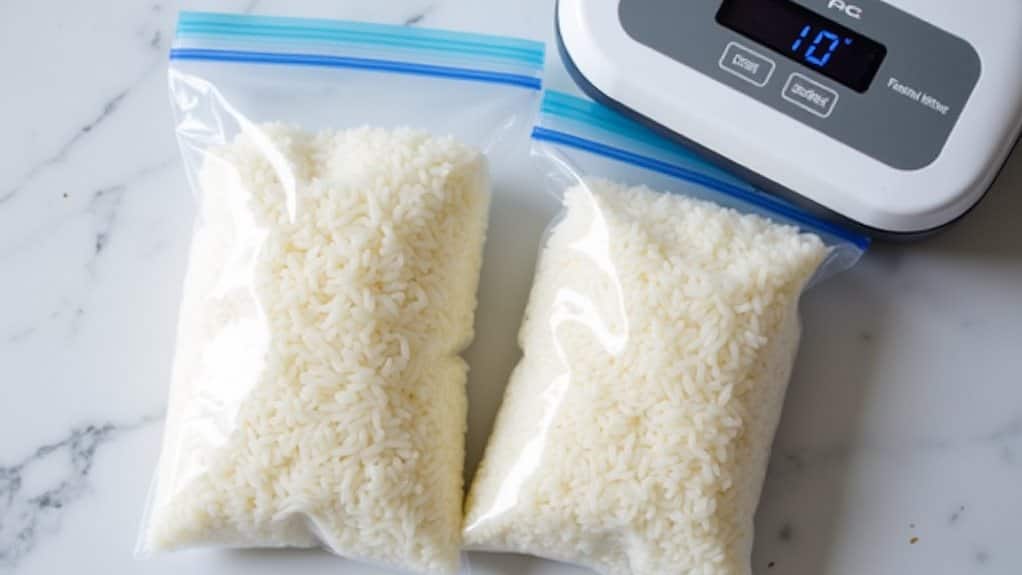
Freezer storage offers a foolproof way to extend your rice's shelf life considerably, with white and wild rice lasting up to 30 years when properly stored.
You'll need to keep the temperature at or below 40°F and use airtight containers like mylar bags or mason jars.
For brown rice, expect a shorter freezer life of 1-2 years due to its natural oils, which can turn rancid.
Proper Storage Locations
When it comes to storing rice, choosing the right location can make or break your preservation efforts.
You'll want to select a cool, dry spot away from direct sunlight and heat sources, ideally at temperatures of 40°F or below.
Your basement, cellar, or pantry can work perfectly if it's moisture-free.
Remember to keep containers off the floor and shield them from temperature fluctuations.
Safety Tips for Cooked Rice
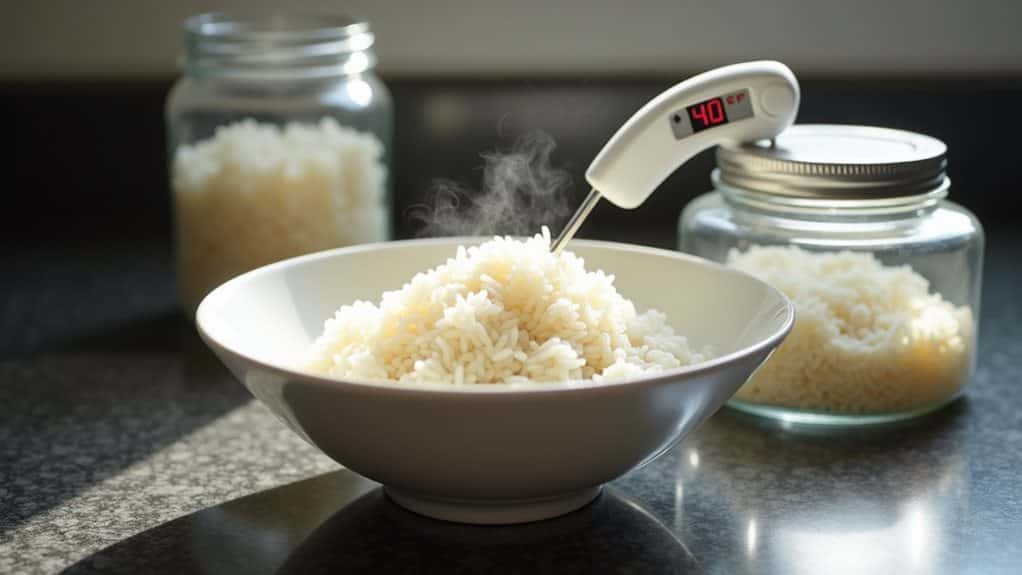
Safe handling of cooked rice requires careful attention to temperature and time management.
Cook your rice thoroughly above 140°F, and serve it immediately after cooking.
If you're storing leftovers, cool the rice within 1-1.5 hours by spreading it in shallow containers.
When reheating, make sure it reaches 165°F throughout, and don't reheat rice more than once to prevent bacterial growth.
Extending Rice Storage Life
Proper storage techniques can dramatically extend your rice's shelf life beyond basic safety measures.
Store your rice in airtight containers, like food-grade buckets or Mylar bags with oxygen absorbers, and keep it in a cool, dry place below 70°F.
For even longer storage, consider freezing or refrigerating your rice, and always use the first-in, first-out method to rotate your stock.
Common Storage Mistakes
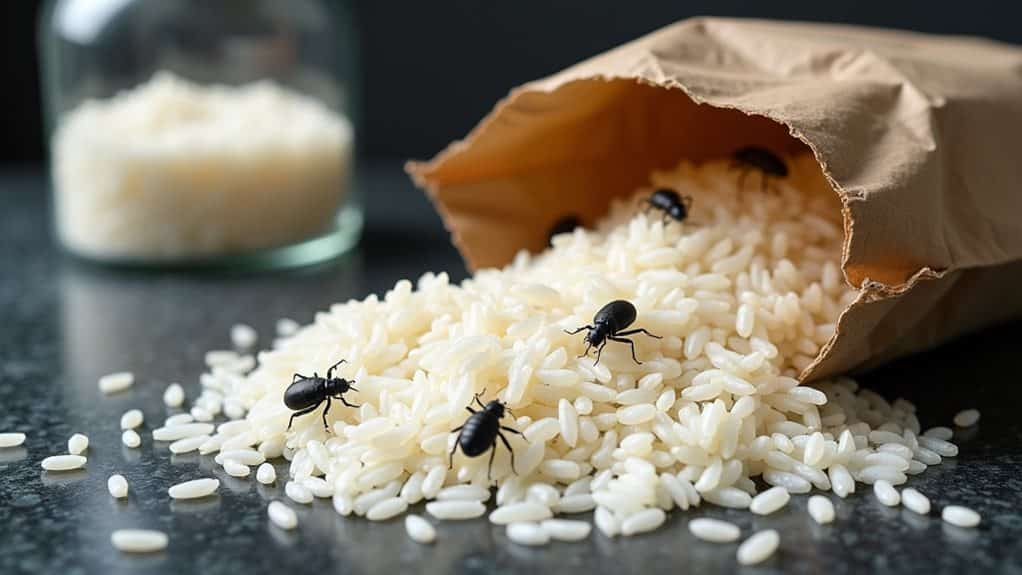
When storing rice long-term, you'll want to avoid two major mistakes that can ruin your entire supply: choosing the wrong containers and neglecting temperature control.
Your containers must be airtight, food-grade, and able to block light while also being sturdy enough to prevent breakage or pest intrusion.
You're putting your rice at risk if you store it near heat sources or in areas with temperature swings, as these conditions can lead to moisture buildup and spoilage.
Poor Container Selection
Choosing the right container stands among the most essential decisions for storing rice effectively.
You'll want to select airtight containers that prevent moisture and pest infiltration, preferably made from BPA-free materials.
Make sure you've got sufficient capacity for your needs, and consider containers with clear panels or lids to monitor rice levels easily.
Stackable designs offer convenient organization and accessibility.
Temperature Control Negligence
Temperature control negligence frequently undermines even the most careful rice storage efforts.
If you're storing rice above 60°F, you're inviting trouble – from pest infestations to mold growth.
Temperatures exceeding 70°F can trigger rapid nutrient loss, with up to 50% of antioxidants disappearing within six months.
To protect your rice, maintain storage temperatures between 40-60°F, and consider refrigeration during summer months.
Rice Storage in Different Climates
Your region's climate plays an essential role in how you should store rice. In cool, dry areas, you'll need airtight containers away from sunlight, while hot and humid regions require refrigeration to prevent spoilage.
For cold climates, maintain temperatures below 40°F and use food-grade buckets with oxygen absorbers. If you're dealing with variable conditions, shield your rice from temperature fluctuations and inspect it regularly.
Emergency Rice Storage Techniques
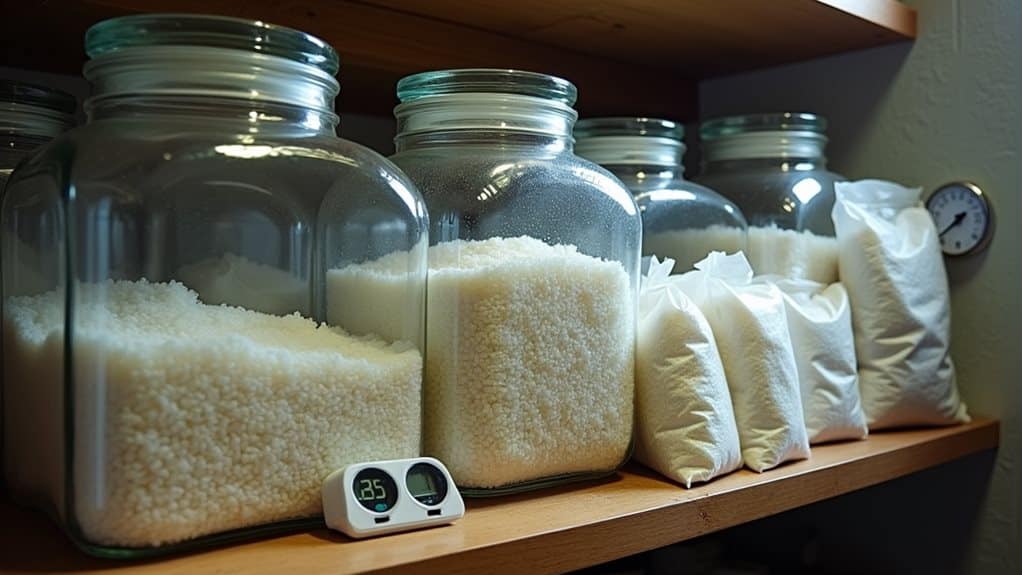
Proper emergency storage of rice requires multiple layers of protection to guarantee long-term preservation.
You'll want to combine several methods: use oxygen absorbers inside airtight containers, then place those in mylar bags for extra protection.
For maximum security, freeze your rice for three days to eliminate pests, then store it in a cool, dry location at 40°F or below.
Wrapping Up
With proper storage techniques, you'll keep your rice fresh and safe for months or even years. Remember to store it in airtight containers, maintain cool temperatures, and check regularly for signs of spoilage. Whether you're storing white, brown, or wild rice, these fundamental practices will protect your investment and guarantee you've always got quality rice ready for cooking. Don't forget to label containers with purchase dates for better rotation.

