
You’re likely collapsing the loaf because the dough’s structure is too weak to hold the steam and gas produced during baking. Too much liquid or milk thins the gluten, while missing or insufficient salt lets the network stay loose and the yeast work faster than the flour can support. Low‑protein or cheap flour, over‑ or old yeast, and over‑proofing all reduce the dough’s strength, causing it to fall apart. Adjust hydration, add proper salt, use higher‑protein flour, and time proofing carefully, and you’ll see a sturdier crumb—keep going for more tips.
Quick Guide
- Excess yeast or over‑proofing produces gas faster than the gluten can hold, causing the loaf to deflate after baking.
- Too much hydration weakens the gluten network, preventing it from retaining gas and leading to a collapsed crumb.
- Insufficient or missing salt reduces gluten tightening and slows yeast, resulting in uneven rise and structural failure.
- Under‑developed gluten from inadequate mixing, skipping autolyse, or low‑protein flour cannot support the loaf’s volume.
- Baking at incorrect temperature or under‑baking (internal temp below 205 °F) causes the crumb to set too late, allowing collapse.
How Too Much Water or Milk Collapses Bread
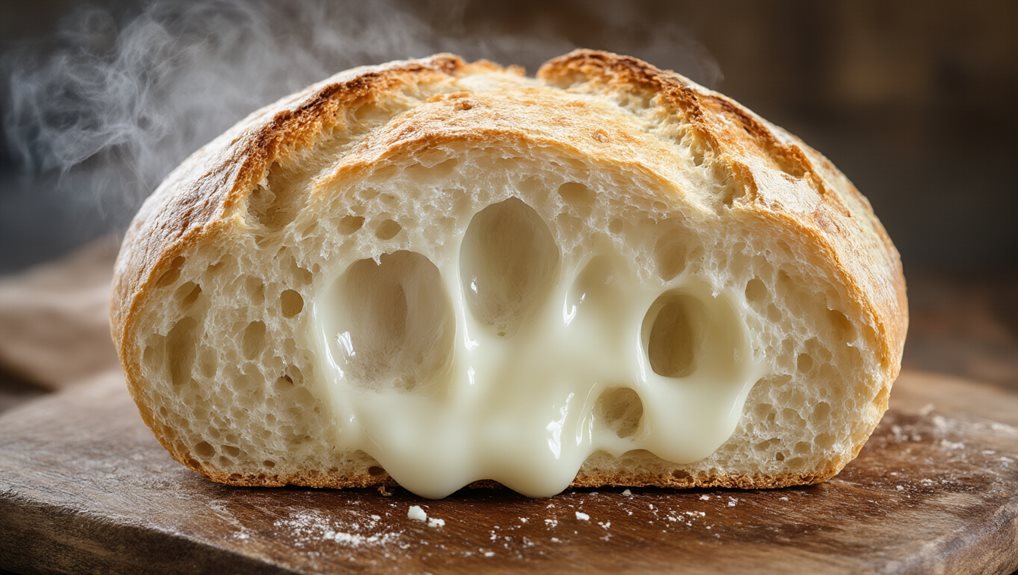
Why does adding too much water or milk make your loaf sag? When you over‑hydrate dough, flour can’t absorb all the moisture, so gluten stays weak and large air bubbles form. The yeast speeds up, creating excess gas that bursts during proofing. Steam softens the crust, and the structure collapses in the oven, leaving a dense, gummy crumb. Reduce liquid by a tablespoon or two and watch the window‑pane test to keep the loaf stable. As a general rule, kitchen conversions often rely on a 3:1 ratio when swapping concentrated ingredients for bulkier ones. Using the wrong flour type can further weaken the gluten network and exacerbate collapse.
How Missing Salt Causes Bread Collapse
When you skip salt, the gluten network loses the tightening effect that keeps it elastic, so the dough can’t hold the gas produced by yeast. Salt also slows yeast activity, preventing the rapid rise that would otherwise over‑proof the loaf and leave it weak. Some cooks note that eggplant seeds can taste bitter unless cooked, showing how small ingredient choices can change structure and flavor. As a result, the crumb becomes uneven and the bread collapses in the oven. Fine‑grained salt is especially important for doughs because it dissolves quickly and integrates evenly.
Salt Stabilizes Gluten
Salt tightens gluten strands by bonding with flour proteins, which makes the dough more elastic and cohesive. You’ll notice that this tightening creates a stronger network that traps carbon‑dioxide, so the loaf rises vertically instead of spreading.
Without salt, the gluten matrix weakens, gas escapes, and the dough collapses during baking, producing a flat, dense loaf.
Salt Controls Yeast Activity
If you skip the salt, yeast runs wild, and the dough’s rise becomes hard to control. Salt pulls water out of yeast cells, slowing metabolism and limiting sugar uptake. This creates a brief lag phase, keeping gas production steady.
Without that restraint, yeast ferments rapidly, over‑inflating the loaf and weakening gluten, so the bread collapses in the oven.
Salt Enhances Crumb Structure
Skipping salt lets yeast run wild, but it also leaves the gluten weak and unable to hold the gas that the yeast creates. When gluten stays tight, it traps carbon dioxide, giving the loaf a uniform, airy crumb. Without salt, gluten loosens, dough spreads, and the crumb becomes spongy and uneven, causing the bread to collapse during baking. Proper salting ensures stronger structure and better volume.
Flour Shortage and Its Role in Bread Collapse
Why does a bread collapse when the flour supply is strained? You’re likely using lower‑protein flour because shortages push bakers toward cheaper, less gluten‑rich options. Reduced protein weakens gluten networks, so dough can’t hold gas and the loaf collapses after baking. Substituting non‑wheat flours or adding too much whole‑grain also thins the structure, further compromising rise and crumb integrity. As with food safety guidelines like the 2-hour rule, timing matters—letting dough sit too long at room temperature can further weaken structure and contribute to collapse.
How Excess or Old Yeast Leads to Over‑Rising and Collapse
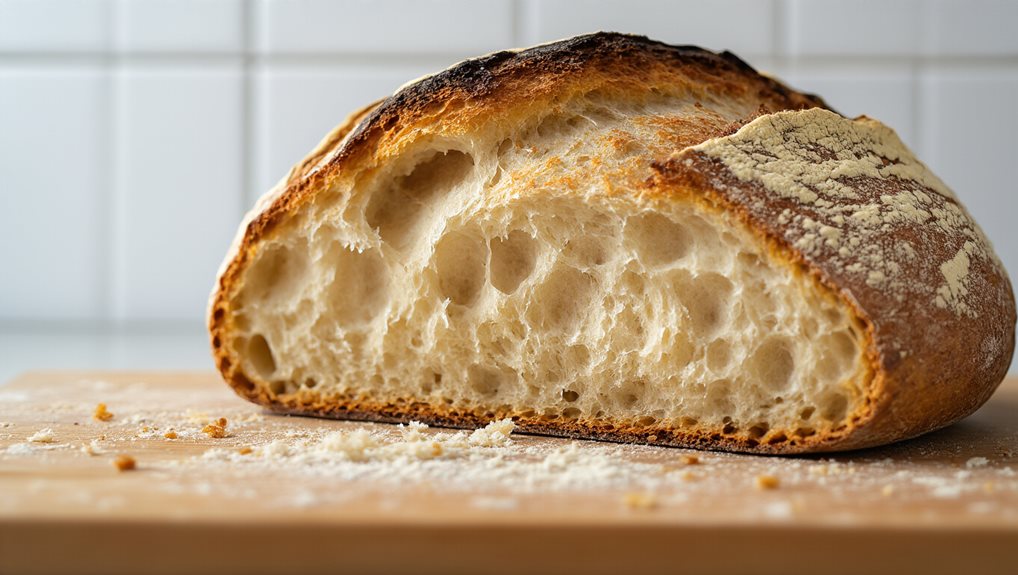
Ever wonder why a loaf that seemed perfect in the oven ends up flat and sunken? Too much yeast or a fresh, potent package creates gas faster than gluten can hold it, so the dough swells, then the bubbles burst and the loaf collapses. Old yeast may be weak, but when you switch to a new, stronger batch you must cut the amount, otherwise the rapid rise overwhelms the structure.
When Over‑Proofing Makes Your Bread Fall Apart
When you let dough sit too long before baking, the yeast runs out of food and the gluten network weakens, so the loaf can’t hold its shape. Over‑proofed dough looks risen, but its bubble walls are overstretched; a simple poke test won’t spring back.
Oven heat then pushes fragile gas pockets, causing deflation and a sunken, coarse crumb. Proper storage is essential to prevent spoilage, as seen in signs of spoilage like soft texture or off smells. Bake earlier or shorten proofing to prevent collapse.
Mixing Errors That Prevent Proper Gluten Development
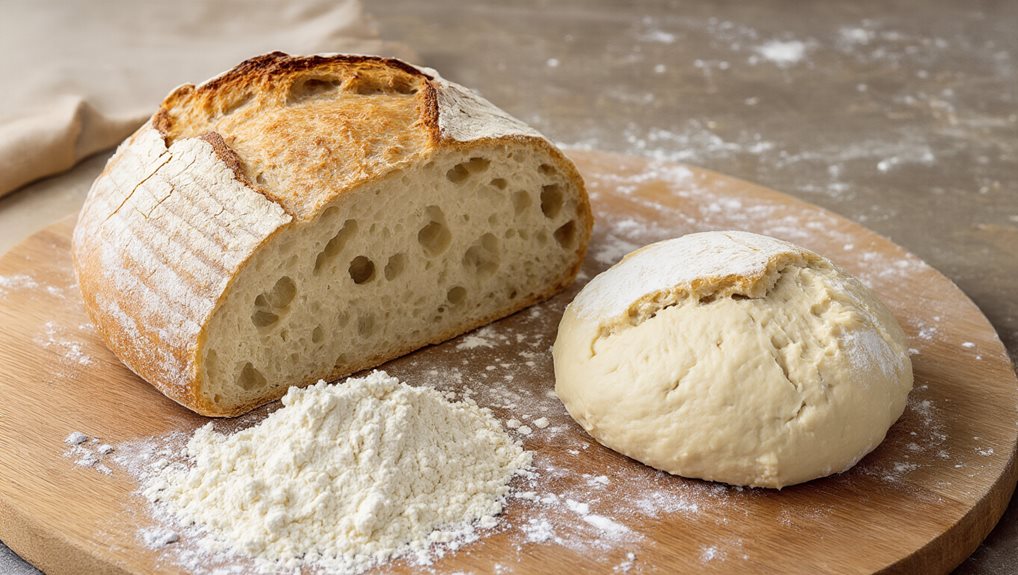
How can a simple mixing mistake ruin your loaf? If you stop mixing too soon, gluten stays weak, so the dough can’t hold gas and collapses during bake. Overmixing tightens the network, makes it tough, and even breaks down proteins. Skipping autolyse leaves flour under‑hydrated, preventing even gluten formation. And using low‑protein flour limits the elastic matrix, causing bubbles to pop and the loaf to deflate. Just as thermal shock resistance helps borosilicate glass endure sudden temperature changes, well-developed gluten helps dough withstand the rapid expansion and heat of baking without collapsing.
How Wrong Pan Size Deflates Your Bread
Why does a loaf that looks perfect in the bowl end up flat on the plate?
If you use a pan that’s too big, the dough spreads sideways instead of rising, so the structure stays weak and the loaf flattens.
A pan that’s too small forces the dough upward, compresses gluten, and causes the top to sink after baking.
Match the pan size to the dough weight, aim for a 3‑4 inch height, and let the dough rise about an inch above the rim.
This keeps the loaf vertical, preserves bubbles, and prevents deflation.
Baking Temperature Errors That Cause Bread Collapse
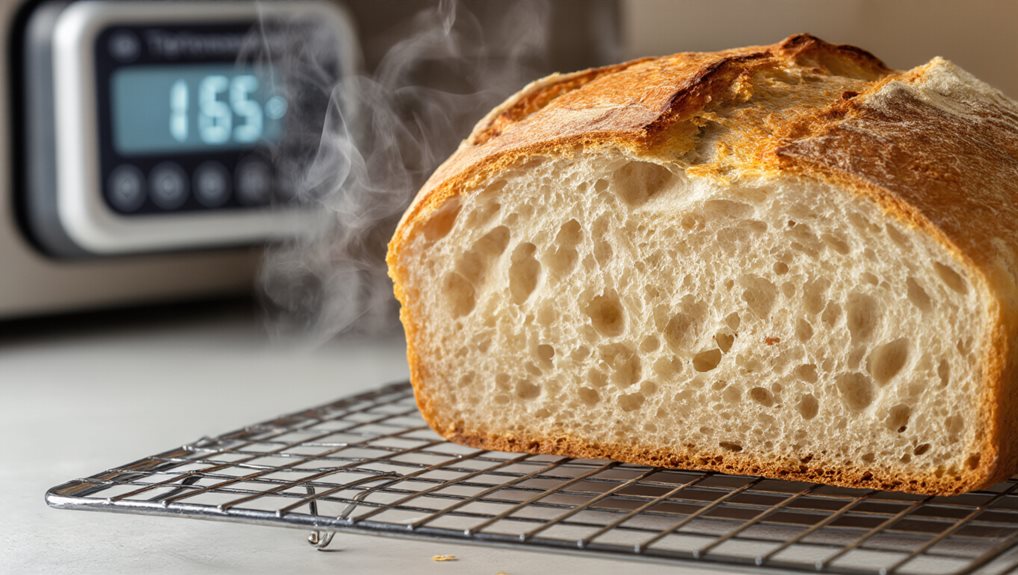
If your oven runs too hot, the crust will set before the interior can fully expand, trapping steam that can make the loaf collapse.
If it’s too cool, the dough won’t get enough heat to create a proper rise, leaving a dense, gummy crumb.
Uneven heat distribution can cause both problems at once, so checking your oven’s calibration and using a thermometer is essential.
High Oven Temperature
Ever notice your loaf puffing up nicely in the oven only to slump once it’s out?
High oven temperature forms a crust too fast, trapping steam and preventing gas escape.
The outer layer sets before the interior strengthens, so pressure builds, then collapses as steam condenses.
Yeast dies early, shortening oven spring and leaving a weak structure that sags during cooling.
Use a thermometer to keep the heat in range.
Low Oven Temperature
How does a low oven temperature sabotage your loaf? It prevents crust formation, so the dough stays dense and heavy.
The heat rises too slowly for yeast to generate enough gas, and the gluten network can’t trap steam. Without rapid gelatinization, the crumb collapses under its own weight.
Check the oven with a thermometer, raise the setting, and consider a metal pan for quicker, even heating.
Inconsistent Heat Distribution
Why does your loaf sometimes sag or deflate even when you follow the recipe? Hot spots create uneven crusts, weakening support while cooler zones stay under‑baked, causing collapse. Sudden temperature drops shock the dough, halting oven spring and shrinking height. Poor preheating leaves a cold core, and stagnant air forms cool pockets. Ensure even heat, proper preheat, and good airflow to keep your bread stable.
Rescue Checklist for Collapsing Bread
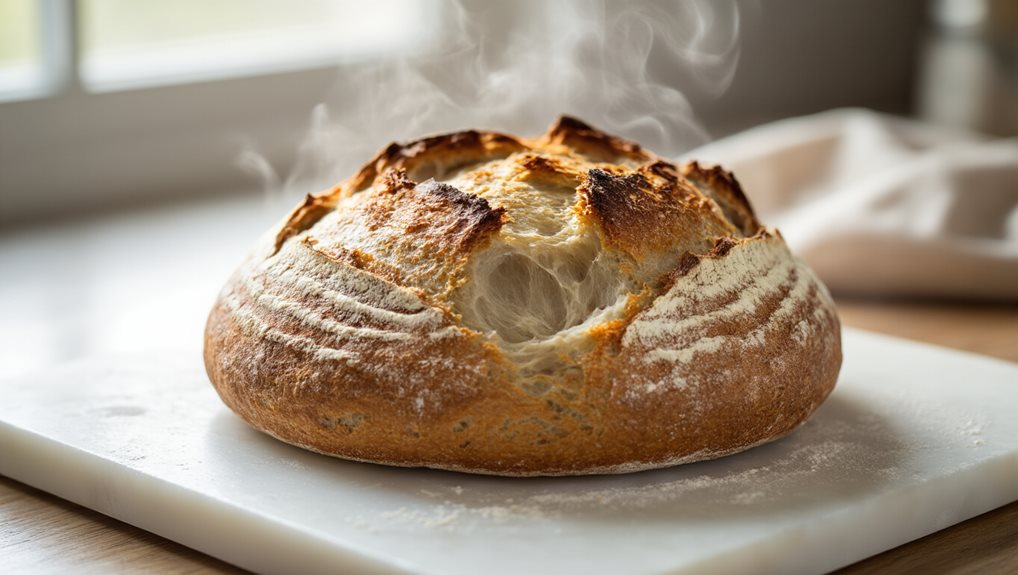
When your loaf collapses after it comes out of the oven, the problem usually lies in one of three areas: yeast amount, proofing time, or baking temperature. Check yeast: reduce by ¼‑½ tsp, test gradually. Verify proofing: dough should spring back slowly, avoid rising above pan. Confirm oven: use a thermometer, bake to 205‑210 °F. Adjust flour, hydration, and salt for stronger structure.
Wrapping Up
If your bread collapses, check the basics: proper water‑to‑flour ratio, enough salt, fresh yeast, and accurate proofing time. Ensure you develop gluten by mixing correctly, use the right pan size, and bake at the recommended temperature. A quick rescue checklist can help you pinpoint the issue and adjust future batches. By mastering these fundamentals, you’ll produce sturdy, well‑rised loaves every time.

