
Choose an 80/20 lean‑to‑fat blend, add a binder like an egg or mayo, and mix in a half‑cup of breadcrumbs per pound if you want extra cohesion. Form each patty a bit wider than the bun, then press a shallow dimple in the center to act as a pressure valve and keep the edges from puffing. Preheat a two‑zone grill to 400‑500 °F, oil the grates, sear the burgers on the hot side, then finish on indirect heat, flipping only once and never pressing. Check the internal temperature, let the patties rest, and you’ll see less shrinkage while keeping them juicy—more tips await if you keep going.
Quick Guide
- Choose an 80/20 lean‑to‑fat meat blend; the fat retains moisture and counters heat‑induced contraction.
- Mix a binder such as one egg (or mayo for lean meats) per pound of meat to hold moisture and improve cohesion.
- Form patties slightly larger than the bun and press a shallow dimple in the center to act as a pressure valve.
- Preheat the grill to 400‑500 °F, oil the grates, and use a two‑zone setup: sear over direct heat, then finish over indirect heat.
- Flip each burger only once, avoid pressing it, and let it rest after reaching the proper internal temperature.
Understand Why Burger Shrinkage Happens
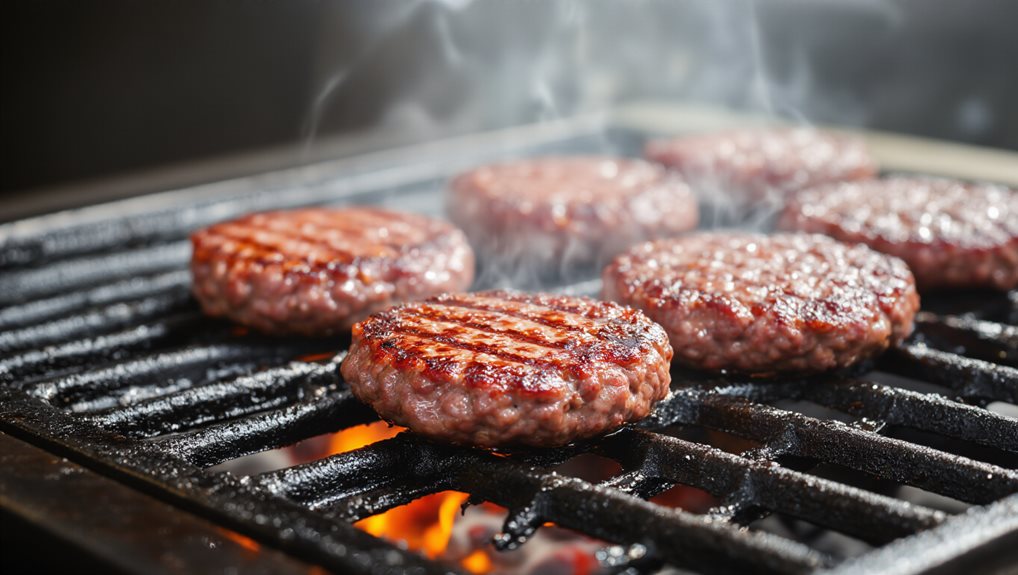
When you grill a burger, the proteins in the meat start to denature and contract, which pushes water out of the patty and makes the edges shrink inward.
Heat breaks hydrogen bonds, causing myofibrillar proteins to release water and fat, while melted fat drips away. Proper storage practices like controlling moisture content can also influence how foods hold onto water over time.
The sides contract faster than the center, creating a bulging middle and overall shrinkage that can reach twenty percent. Salt added before shaping can exacerbate the shrinking effect.
Select a Meat Blend That Minimizes Burger Shrinkage
Since protein contraction drives shrinkage, the next step is to choose a meat blend that holds onto moisture. Aim for an 80/20 ratio—80 % lean, 20 % fat—because the fat retains moisture and counters heat‑induced contraction. Leaner blends shrink more, losing size and juiciness. The 80/20 blend keeps patties plump, stabilizes thickness, and delivers flavor without excessive drying. Like cooking eggplant seeds with the flesh to reduce seed bitterness, keeping enough fat in your blend helps balance flavor while preventing moisture loss. Using a higher fat content also helps maintain juiciness during cooking.
Mix Egg, Mayo, or Breadcrumbs to Retain Moisture
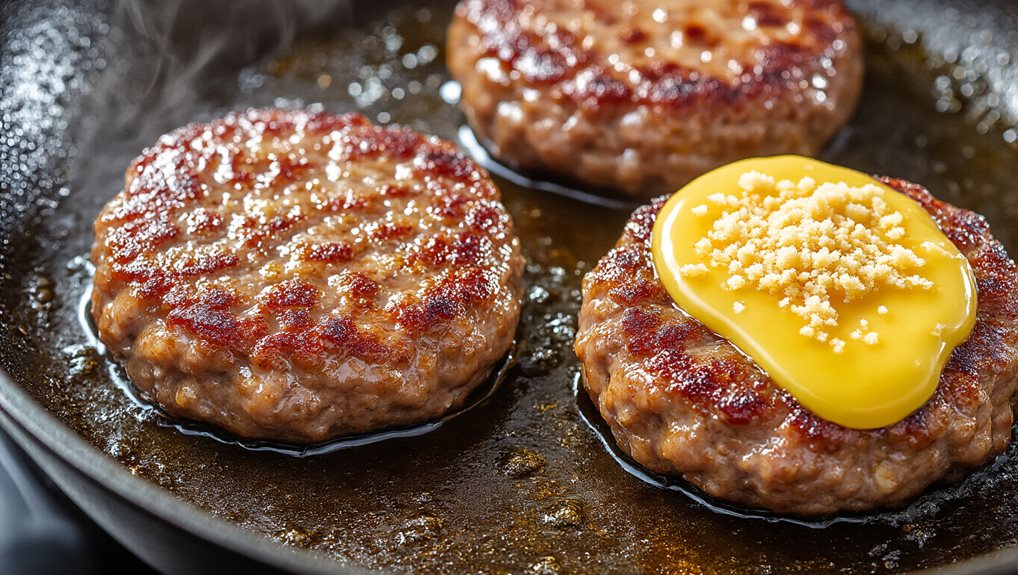
If you want your patties to stay juicy and hold together, adding a moisture‑rich binder is essential. Mix one egg per pound of meat for classic moisture and structure; a spoonful or two of regular mayo can replace the egg, especially for lean turkey or salmon, while adding extra fat. If you prefer breadcrumbs, stir in about ½ cup per pound, but pair them with an emulsifier like egg to ensure the blend stays cohesive. For even better results, portion and chill your patties in a freezer bag using a double heat seal to help prevent moisture loss before they hit the pan.
Form Patties With an Indented Center to Control Burger Shrinkage
You can keep your burgers from turning into flying saucers by making a shallow dimple in the center of each raw patty.
This simple indentation balances the thickness, so the meat cooks evenly and the outer rim doesn’t pull the patty inward.
Indented Center Technique
A small indentation in the center of each raw patty works like a pressure valve, stopping the meat from puffing up as it hits the grill. Press your thumb into the middle, creating a shallow dimple on one side. This lets heat spread evenly, reduces swelling, and keeps the patty flat.
Form the patty slightly wider than the bun, handle it gently, and you’ll see consistent thickness and less distortion after cooking.
Uniform Thickness Benefits
Why does uniform thickness matter when you’re grilling burgers? It ensures even cooking, so no part overcooks while another stays raw. Consistent thickness gives predictable cook times, keeping each patty juicy and tender. Heat spreads steadily from center to edge, preventing excess shrinkage. The result is a professional‑looking burger with uniform flavor, texture, and size across the whole batch.
Prevents Flying Saucer Patties
Ever notice how some burgers puff up into a flying‑saucer shape while they’re cooking? You can stop that by pressing a quarter‑inch thumbprint into the raw patty’s center. The indentation counters rim shrinkage and lets juices collect evenly, keeping the patty flat. It works for beef, lamb, pork, turkey, or chicken, and even blends, preserving flavor and preventing bulging.
Preheat & Clean Grill for Quick Sear
How can you make sure your burgers stay juicy and don’t shrink? Preheat the grill on high for 10‑15 minutes, closing the lid to reach 400‑500°F.
After it’s hot, wipe the grates with a rag dipped in neutral oil, then brush a thin layer of olive oil. This removes debris, prevents sticking, and creates an even surface for a quick sear.
Just like using flash-freezing techniques to keep focaccia portions from sticking together, a fast, high-heat sear helps set the burger’s shape quickly so it shrinks less.
Set Up a Two‑Zone Grill for Moderate Heat
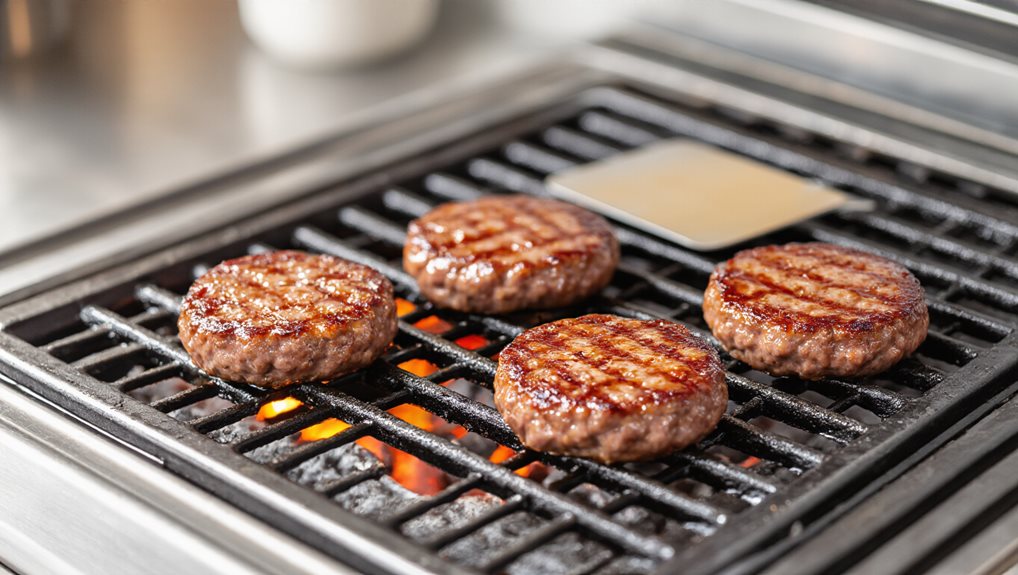
Ever wondered how to keep your burgers from shrinking while still getting a good sear? Light a chimney‑starter, let coals ash, then pile them on one side of the grill, leaving the opposite side empty for indirect heat.
For gas, ignite one or two burners and keep the others off. Adjust vents to maintain 350‑375 °F, and place a water pan on the cool side for stable temperature and humidity. You can freeze leftover burger toppings like sauces made with nut spreads for 6-12 months to cut waste and keep flavors fresh.
Flip the Burger Once: Timing the Sear
A well‑timed flip is the key to a juicy burger that keeps its shape. Let the first side sear for about two to three minutes until a glossy crust forms; this usually means 90 % of cooking is done on that side.
Flip once, then cook the other side another two to three minutes without pressing. This single flip preserves the crust, limits shrinkage, and keeps juices inside.
Check Internal Temperature With a Thermometer
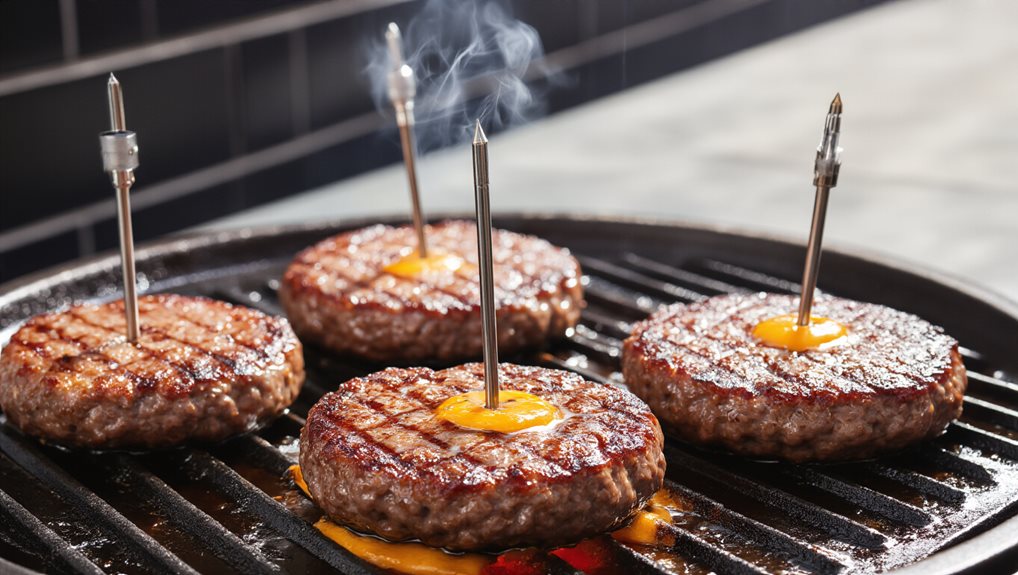
After you’ve mi stered the one‑flip technique, the next step is to verify that the burger’s interior has reached a safe temperature. Insert a digital instant‑read thermometer horizontally into the side of the thickest patty, avoiding fat or bone. Aim for 160°F for beef, 165°F for poultry, and hold for a few seconds until the reading steadies. Clean the probe before and after use.
Rest Burger Before Serving
Why let your burger lose its juiciness before you bite into it? After grilling, let each patty rest five to ten minutes on a wire rack, loosely covered with foil. The heat‑induced muscle fibers relax, allowing juices to diffuse back into the meat. This short rest finishes cooking, drains excess fat, and keeps the burger warm, tender, and flavorful.
Wrapping Up
By understanding why burgers shrink and selecting a lean‑to‑fat blend, you keep moisture in. Adding a small amount of egg, mayo, or breadcrumbs further locks in juiciness. Shape each patty with a shallow dimple so it stays flat as it cooks. Preheat a clean grill, use a two‑zone setup, and sear quickly, flipping only once. Check the internal temperature, then let the burger rest a few minutes before serving for the best texture and flavor.


