
You get a sunken middle when the cake’s interior never reaches the right temperature, so the crust sets while the core stays soft and collapses. Too much baking powder or soda creates oversized gas bubbles that burst before the batter firms, and an oven that runs hot on the edges but cool in the middle leaves the center under‑baked. Opening the door repeatedly drops the heat, and over‑mixing tightens gluten, both of which prevent a stable rise. Using the right pan size, measuring leaveners precisely, and checking doneness by the spring‑back and crust color will help you avoid this, and the next tip will show you how to fix a cake that’s already sunk.
Quick Guide
- Under‑baked centers result from oven temperature being too low or uneven, causing the interior to stay soft while the crust sets.
- Excessive leavening creates large gas bubbles that burst before the batter sets, leading the a collapsed middle.
- Opening the oven door frequently drops the temperature, delaying the center’s setting and causing it to sink.
- Overmixing tightens gluten and deflates incorporated air, reducing rise and producing a flat, sinking crumb.
- Using the wrong pan size or overfilling adds too much weight, preventing the batter from supporting its structure and causing a dip.
Why a Sunken Center Means Your Cake Is Under‑Baked
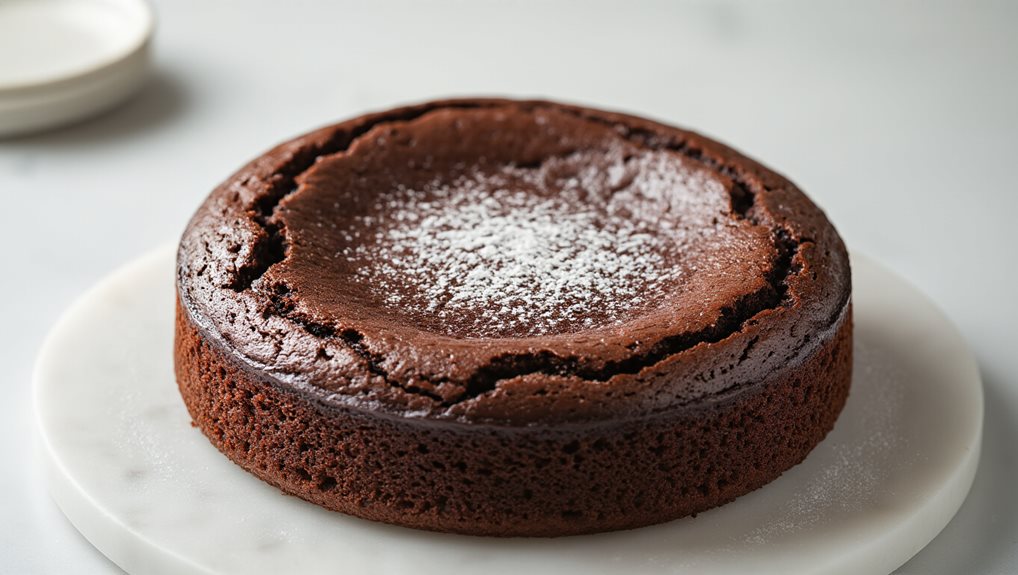
Why does a sunken center signal that your cake is under‑baked? When the interior never reaches the right temperature, the batter stays soft and can’t hold weight. The outer crust sets, but the middle remains doughy, dense, and full of unfinished air pockets. As the cake cools, that weak core collapses, forming the familiar dip. Test with a toothpick to confirm doneness. If the oven temperature is off, the cake may under‑bake even when the timer ends. Just like heat and air can speed up oxidation in avocado oil, temperature swings and exposure can destabilize delicate structures in baking.
How Too Much Leavening Causes a Sunken Cake?
When you add too much baking powder or soda, the batter creates a surge of carbon‑dioxide bubbles that rise faster than the cake’s structure can set, and the inside collapses into a sunken center.
Those oversized bubbles form an unstable network that can’t support the weight of the cake, so it deflates as it cools.
Measuring leavening accurately and adjusting for acidic ingredients will keep the rise steady and prevent the collapse. If it smells off or looks clumpy, it may have lost potency due to proper storage.
Store the baking powder in a cool, dry pantry to preserve its freshness.
Excessive Leavening Leads to Collapse
Ever wondered why a cake that looks perfect in the oven ends up with a sunken middle? Too much baking powder or soda makes the batter rise fast, forming a weak dome. The gas escapes before the center sets, and the structure collapses, leaving a dense, sunken spot. Measure leaveners precisely—about 1 tsp powder or ¼ tsp soda per cup of flour—and adjust for acidity, altitude, or freshness to prevent overexpansion.
Rapid Bubble Formation Causes Sunken Center
How does a cake end up with a sunken middle even though it rose beautifully at first? Too much leavening creates gas bubbles that expand fast when the oven heats. Those bubbles outpace protein coagulation and starch gelatinization, weakening the gluten network. When the foam collapses, the center deflates while the edges set, leaving a dip. Measure leavening precisely and keep ingredients cool to avoid this.
How Oven Temperature Accuracy Affects the Cake’s Middle?
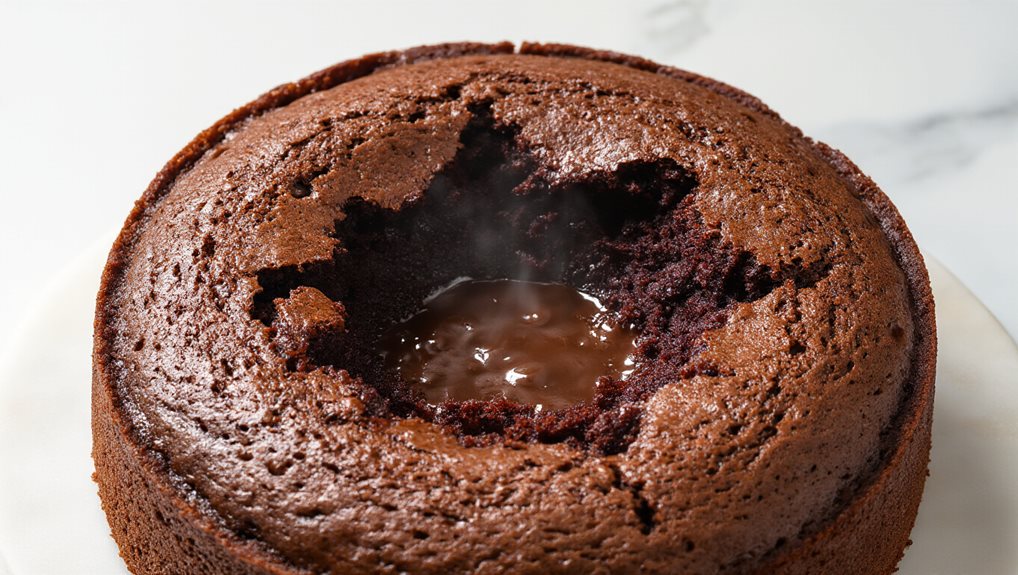
If your oven runs hotter or colder than the dial says, the cake’s middle can end up undercooked or over‑expanded, leading to a weak structure that collapses as it cools. An oven thermometer lets you verify the actual temperature and spot hot or cold spots that a single reading might miss. By checking multiple points before you bake, you guarantee the heat is right and the center sets properly. Just as eggplant seeds can taste bitter unless cooked properly, an inaccurately heated oven can leave the cake’s center underdone even when the edges look finished.
Oven Temperature Matters
Why does the middle of a cake often collapse while the edges stay firm? If your oven runs low, the center never hits the 210‑215 °F needed to set, so it deflates when you pull it out. If it runs high, the edges set too fast, the cake rises too quickly, and the weak interior collapses. Even a few degrees off can cause uneven heat, underbaking the middle while overcooking the rim. Preheating and a stable thermostat keep the whole batter cooking evenly.
Using an Oven Thermometer
Ever wondered why the cake’s middle sometimes sags while the edges stay firm? You need an oven thermometer because built‑in gauges can be off by 25‑50°F. Hang the probe on the middle rack, preheat, and compare the reading to the set temperature. If it’s higher, lower the dial; if lower, raise it. Accurate heat keeps batter’s rise even, preventing a sunken center.
Why Opening the Oven Door Too Often Triggers a Sunken Cake?
Ever wondered why a cake that looks perfect on the outside ends up sinking in the middle? Opening the door lets a rush of cold air in, dropping the oven temperature by at least 25 °F. That sudden loss halts the batter’s rise, and the leavening agents can’t work properly. Each check resets the heat, so the cake collapses before it sets. Limit peeks to the final quarter and allow extra minutes for recovery.
Overmixing the Batter: Air Bubbles and Gluten Over‑Development
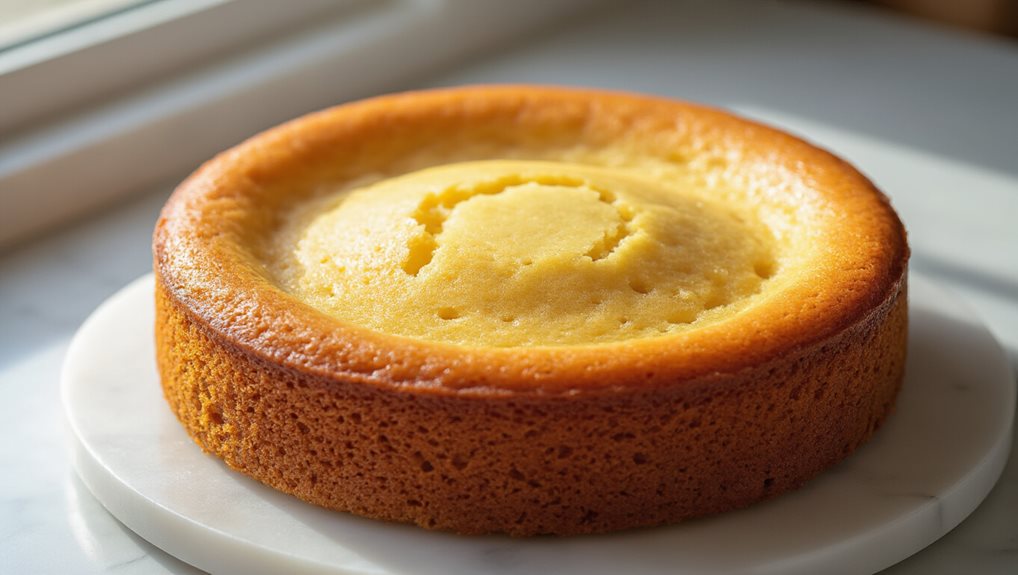
When you keep mixing a cake batter past the point where the ingredients just come together, you’re actually undoing the air pockets you created during the creaming stage and tightening the gluten network that should stay soft. Overmixing activates flour proteins, forming elastic strands that make the cake dense and gummy. It also deflates the air bubbles, reducing rise and leaving a fragile, flat crumb. Stop mixing as soon as the batter looks smooth and the flour disappears.
Pan‑Fullness & Ingredient Ratios That Lead to a Sunken Cake
Why does a cake sometimes sink in the middle even though the batter looks perfect? You’re probably over‑filling the pan or using the wrong pan size, which makes the batter too heavy for its structure. Excess liquid or fat, or too much leavening, weakens the crumb, and an incorrect oven temperature can delay the center’s set. Adjust pan capacity and ingredient ratios to match the recipe, and keep the batter level within the pan’s recommended fill line. This balances rise and prevents collapse. For sous vide-style desserts or make-ahead portions, removing trapped air with 60–95 kPa suction can help maintain a more stable structure during storage.
How to Test for Doneness Without a Toothpick (Visual & Tactile Cues)
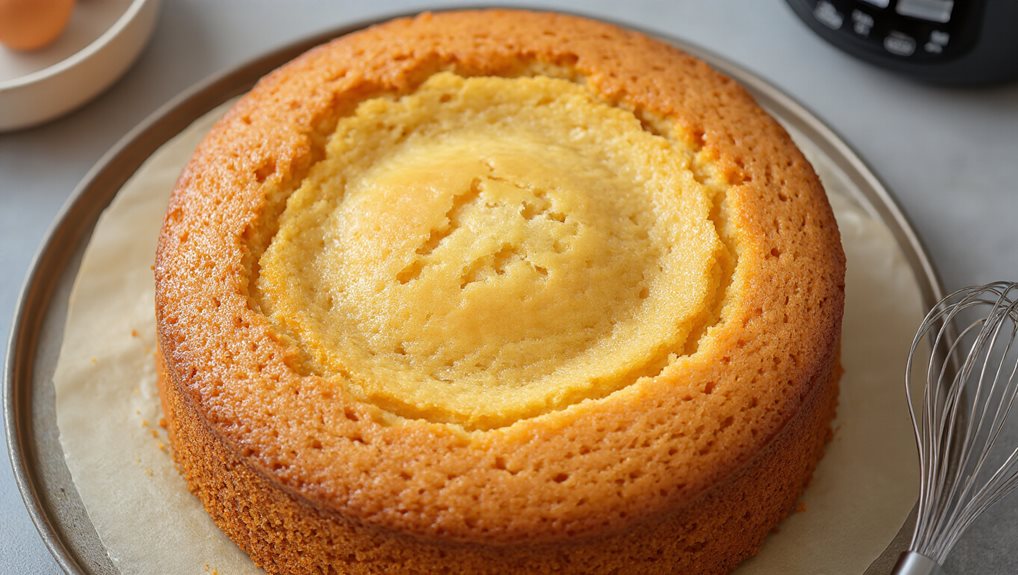
How can you be sure a cake’s ready without poking it? Look for a golden‑brown crust, edges pulling cleanly away, and a thin gap between cake and pan.
Press the center lightly; it should spring back, feel firm yet bouncy, and leave no dent.
Listen for a faint crackle as moisture escapes, then silence.
Test around two‑thirds of the bake time, adjusting for moist ingredients or tin type.
Just as raw tuna shouldn’t sit out past 2 hours, don’t leave cake batter or a cooling cake at room temperature for too long before serving or storing.
What to Do When Your Cake Is Still Sunken: Quick Fixes & Re‑Baking Tips
Ever notice a cake that looks perfect on the outside but droops in the middle after you pull it from the oven? Trim the dome with a serrated knife, then press cake scraps into the dip and seal with jam or buttercream. If the center is only slightly undercooked, return the cake to a pre‑heated oven for a few minutes, checking temperature with a thermometer. Finally, frost the leveled surface to hide any remaining unevenness.
Preventive Checklist: 9 Steps to Keep Your Cake Flat‑Top and Fluffy
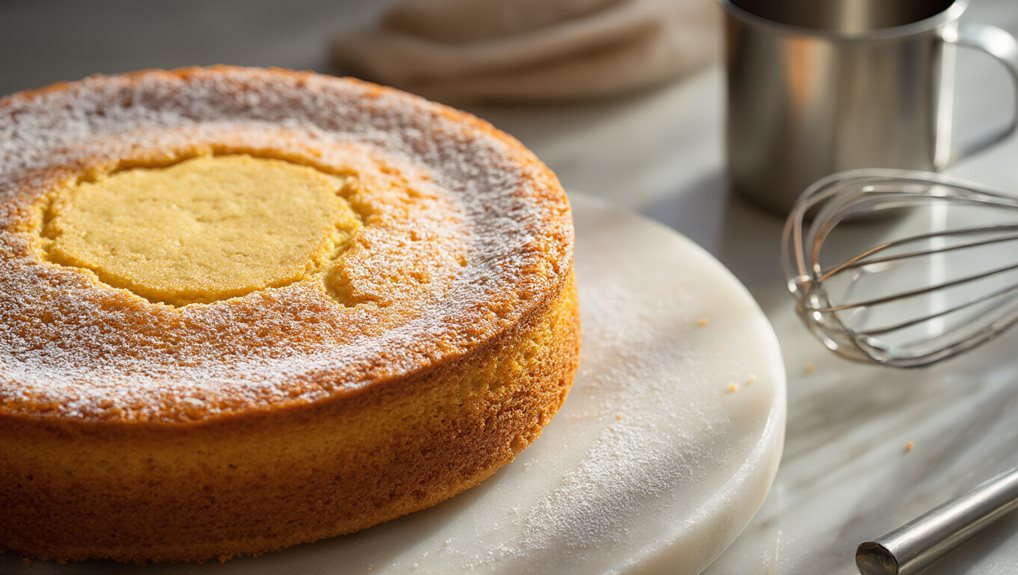
A solid, flat‑top cake starts with careful preparation, so follow these nine steps to keep your bake both level and fluffy.
Measure leaveners with level spoons, weigh all ingredients, and keep liquid‑to‑fat ratios correct.
Fold dry into wet gently, avoid overmixing, and bake immediately.
Use the right pan size, fill to 1.5 inches, and keep the oven door closed until the final minutes.
Wrapping Up
By checking your oven’s temperature, measuring ingredients accurately, and mixing just enough, you’ll keep the cake’s center from collapsing. Avoid over‑leavening, opening the door too often, and over‑mixing, which all create weak spots. Use visual and tactile cues to test doneness, and if a sink still appears, apply a quick fix or re‑bake with adjustments. Follow the nine‑step checklist, and you’ll consistently bake flat‑topped, fluffy cakes.


