
Cranberries can indeed go bad, but with proper storage, you can extend their shelf life greatly. Fresh cranberries typically last 3-4 weeks in the refrigerator when kept in their original packaging or an airtight container.
For longer storage, freeze them for up to a year. Watch for signs of spoilage like softness, mold, or discoloration. Dried cranberries have a longer shelf life, lasting up to a year at room temperature.
Always check for any off smells or unusual textures before consuming. Even if they’re past their prime, slightly wrinkled berries can still be used in cooked dishes. By understanding proper storage techniques, you’ll guarantee your cranberries stay fresh and flavorful for longer.
Quick Guide
- Cranberries can spoil, showing signs like soft texture, mold, color changes, or off-smells.
- Fresh cranberries last 3-4 weeks in the refrigerator when stored properly in airtight containers.
- Freezing extends cranberry shelf life up to one year without significant quality loss.
- Dried cranberries can last up to a year at room temperature in a cool, dark place.
- Proper storage, regular inspections, and discarding spoiled berries are crucial for maintaining cranberry quality and safety.
What Are Cranberries?
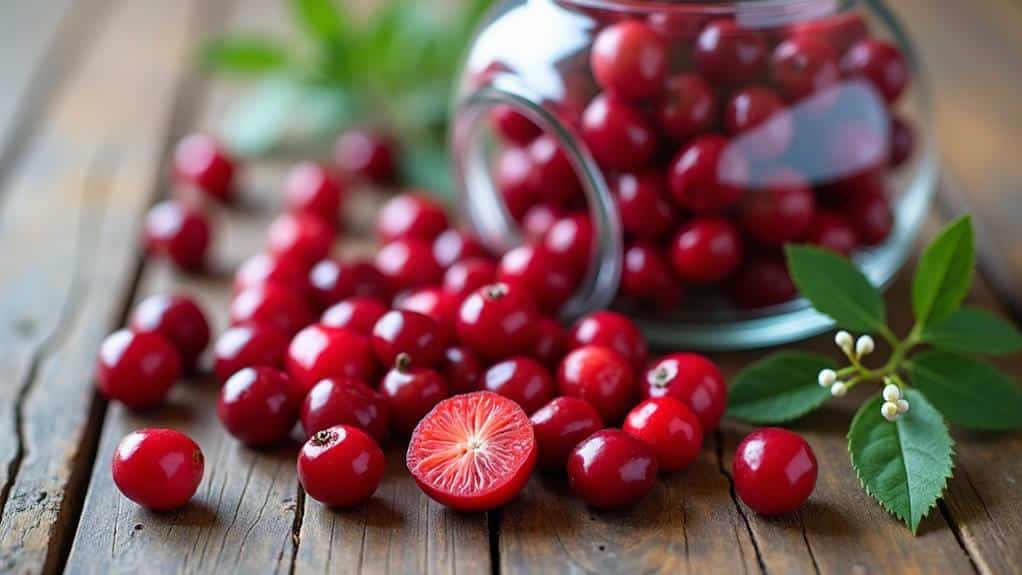
Tart and lively, cranberries are a quintessential North American fruit. You’ll find these native berries in various forms, from fresh cranberries to dried and canned options.
Cranberries are packed with antioxidants, vitamins C and E, and fiber, offering health benefits, especially for the urinary tract. When raw, they have a sour taste that sweetens when cooked, revealing hints of citrus and grass.
Native Americans valued them for food, medicine, and dye.
Signs of Spoiled Cranberries
How can you tell if your cranberries have gone bad? Look for signs of spoiled cranberries, like soft, mushy texture, visible mold, or color changes from bright red to dull or brown.
Wrinkled or shriveled berries indicate aging and should be used quickly. An off smell or unusual appearance, such as stickiness, suggests spoilage.
Proper storage conditions can help prevent these issues and extend your cranberries’ shelf life.
Proper Storage Methods
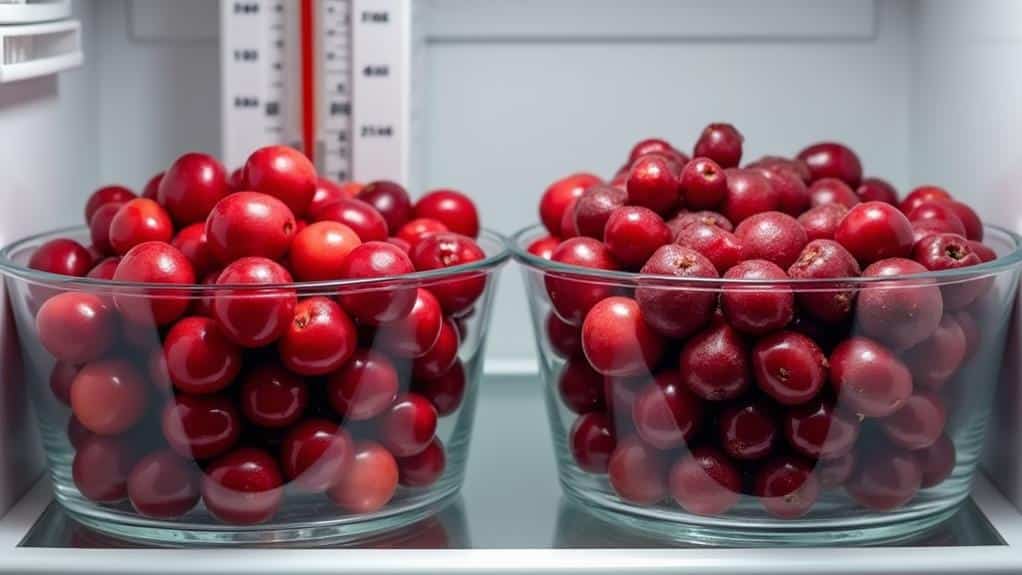
To keep your cranberries fresh for weeks, store them in the refrigerator’s crisper drawer, ideally in their original packaging or an airtight container.
If you plan to use them later, you can freeze cranberries for up to a year by rinsing and drying them first and then storing them in freezer bags or airtight containers.
Whether refrigerating or freezing, always inspect your cranberries regularly for signs of spoilage and discard any that have gone bad.
Refrigeration for Fresh Cranberries
When it comes to preserving fresh cranberries, proper refrigeration is key.
Store them in the crisper drawer of your refrigerator, where they’ll stay fresh for 3 to 4 weeks. Keep cranberries in their original plastic packaging or transfer them to an airtight container. This prevents air exposure, which can reduce quality.
Don’t rinse them before storage; only wash when ready to use them.
Freezing for Long-Term Storage
While refrigeration works well for short-term storage, freezing is your best bet for preserving cranberries long-term.
To freeze, rinse and dry the berries, then spread them on a parchment-lined tray. Once frozen, transfer them to an airtight container or freezer bag.
Don’t forget to label the date! Frozen cranberries last up to a year and don’t need thawing before use. Simply rinse and add them to your recipes.
Refrigeration Shelf Life
With proper storage, fresh cranberries can maintain their quality for 3 to 4 weeks in your refrigerator.
To maximize the shelf life of cranberries, keep them in their original packaging or an airtight container. Regularly check for signs of spoilage, like softness or mold.
Store cranberries away from ethylene-producing fruits and maintain cool temperatures. Use them within this timeframe for the best flavor and texture.
Freezing Fresh Cranberries

Freezing fresh cranberries is an excellent way to extend their shelf life and enjoy them year-round. You can keep them in the freezer for up to a year without losing quality.
To freeze, rinse and dry the berries, remove soft ones, and freeze on a parchment-lined tray. Then, transfer to airtight containers or freezer bags.
Don’t forget to label with the date so you’ll know how long they’ll last in the freezer.
Dried Cranberry Longevity
Dried Cranberry Longevity]
Unlike fresh cranberries, dried cranberries offer an extended shelf life, making them a convenient option for long-term storage.
Dried cranberries can be kept for up to a year at room temperature in a cool, dark place. To guarantee they remain safe and enjoyable to eat, regularly inspect for spoilage signs, such as changes in color or texture.
For best quality, store them in airtight containers to prevent moisture absorption. Freezing is a great option to extend their shelf life even further.
Remember to check for signs of spoilage regularly.
Using Expired Cranberries Safely

While proper storage can extend cranberry shelf life, you might have expired cranberries.
Don’t panic! If they’re free from signs of spoilage, such as mold or off-odors, they may still be safe to use.
Soft or wrinkled berries can work in cooked dishes. However, always prioritize safety and discard any suspicious-looking fruit.
It’s best to throw them out when in doubt to avoid potential health risks.
Wrapping Up
You’ve now got a thorough understanding of cranberry storage and longevity. Remember, fresh cranberries can last weeks when refrigerated properly, and they’re freezer-friendly for up to a year.
Dried cranberries have an impressive shelf life, too. Always check for signs of spoilage before consuming; when in doubt, throw them out.
With these tips, you’ll be able to enjoy cranberries’ tart flavor and health benefits for longer periods, reducing waste and maximizing your investment in this versatile fruit.


