
Pick a high‑smoke‑point oil like avocado or coconut, heat it to a steady 170‑180 °C (325‑356 °F), and fry in two stages: first at about 163 °C (325 °F) to cook the interior, rest 10‑15 minutes, then finish at 190 °C (375 °F) for 1‑2 minutes to dry the crust. Immediately drain, pat dry, and place the food on a perforated rack to let steam escape. Keep it warm at 135 °F or above, store in a ventilated container, and reheat in a 350 °F oven to revive crunch. Continue for and you’ll discover even more tricks.
Quick Guide
- Choose a high‑smoke‑point oil (e.g., avocado, coconut) and fry at 170‑180 °C for a stable, crisp crust.
- Use the double‑fry method: first at ~163 °C, rest 10‑15 min, then second fry at 190 °C for 1‑2 min.
- Drain immediately, pat dry, and place on a perforated rack to prevent steam from softening the surface.
- Store in a breathable container or use a hot‑air blanket at 140‑160 °F to keep moisture away from the crust.
- Re‑crisp leftovers in a preheated oven (350‑400 °F) on a wire rack, avoiding microwaves that cause sogginess.
Choose the Right Frying Oil for Maximum Crispiness
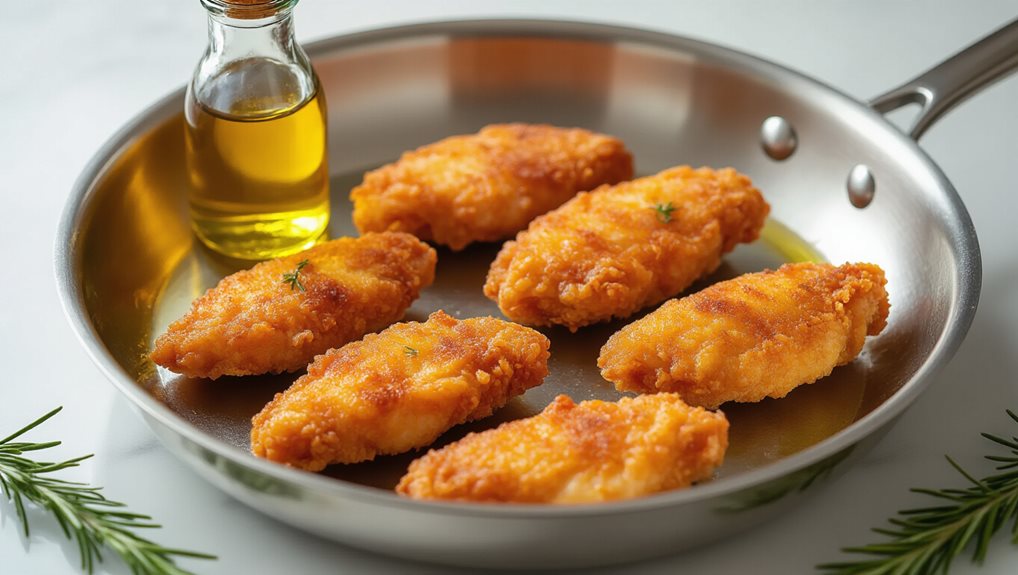
You’ll usually get the best crunch when you pick an oil that can stay stable at high temperatures. Avocado oil, with a 520 °F smoke point and monounsaturated fats, resists oxidation and adds a mild nutty flavor, perfect for fish, plantains, or sweet potatoes. If you’re frying vegetables like eggplant, cooking through also helps mellow any bitterness from eggplant seeds.
Coconut oil’s high saturated content lets you fry for hours without quality loss, while olive oil offers premium stability for extended use, though its flavor may fade with prolonged heat. High smoke point ensures the oil doesn’t break down during long frying sessions.
Keep the Oil at 170‑180 °C for the Best Crunch
Ever wonder why some fried foods stay crisp while others turn soggy? Keep oil between 170‑180 °C; this range seals food, blocks excess fat, and forms a fast crust. Use a thermometer or thermostat‑controlled fryer, test with a bread cube, and avoid overcrowding. After frying, let food cool before sealing it in airtight containers to reduce steam buildup that softens the crust.
Preheat gradually, maintain oil level, and record temperature checks for consistent crunch. Re‑used oil degrades and leads to more oil absorption into food.
Double‑Fry: Two‑Step Process to Lock In Texture
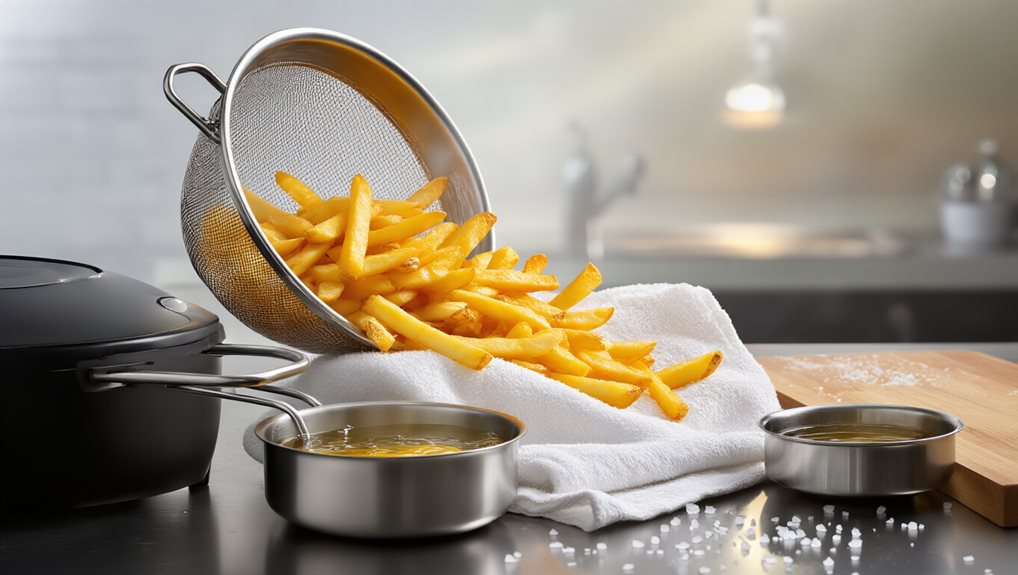
You start with a low‑temperature fry that cooks the interior and lets excess moisture escape, then give the food a brief rest before the second, hotter blast.
That pause lets the surface dry out, so when you return it to the oil the final fry creates a crisp, golden crust that stays crunchy after cooling.
To keep that crunch safe for serving, hold finished batches at or above the minimum holding temperature of 135F.
First Fry: Set Structure
When you start the first fry, heat the oil to about 325 °F (163 °C) and drop the food in just long enough for the interior to cook through while the exterior stays pale and soft.
Dry the pieces well, fry in small batches, and monitor temperature with a thermometer.
Cook until the center reaches a safe temperature and the surface looks lightly golden.
Then remove, drain on paper towels, and keep the oil hot for the next round.
Rest Period: Moisture Release
A short rest after the first fry lets the surface moisture evaporate, creating a drier exterior that’s ready for the high‑heat second fry.
Let the wings sit ten to fifteen minutes; the residual heat draws water to the surface, where it escapes.
This drying step prevents steam from softening the coating, preserves interior juiciness, and primes the crust for rapid dehydration in the next fry.
Second Fry: Final Crunch
Why does the second fry make everything so crisp? You raise the oil to 375°F (190°C) for wings or 350°F (177°C) for fries and fry for 1‑2 minutes. The high heat rapidly dehydrates the surface, triggering a Maillard reaction that locks in a golden‑brown crust. Immediately drain on a rack, shake off excess oil, then season while hot to guarantee flavor adheres without sogginess.
Drain and Cool Properly to Prevent Moisture Re‑absorption
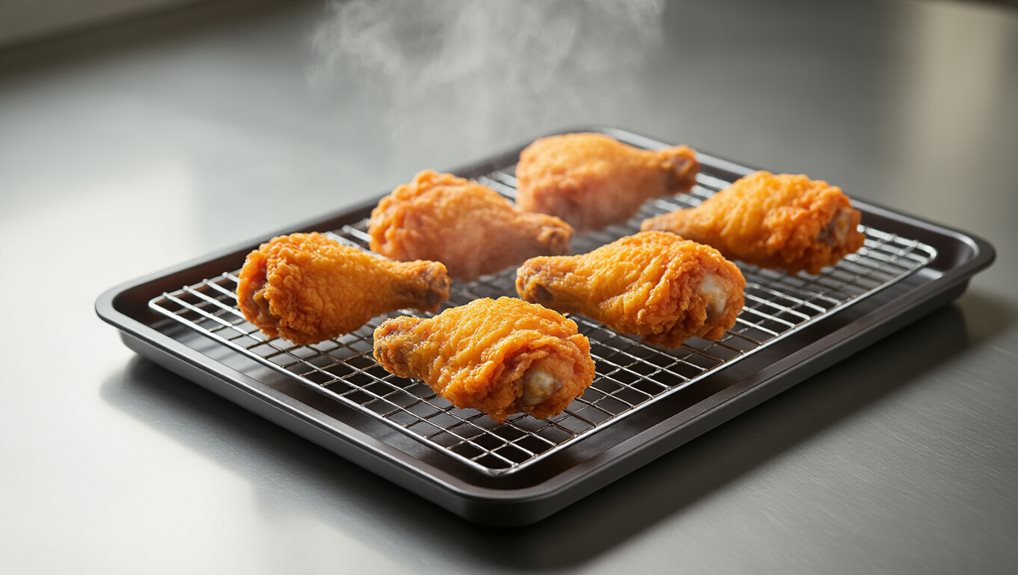
Drain and cool your fried foods promptly to keep them crisp, because the moment you lift them out of the oil they start to lose heat and the crust becomes a gateway for moisture to re‑enter.
Pat them dry, let them sit on a rack, and avoid covering them while they cool. This prevents steam from condensing, limits oil re‑absorption, and preserves the crunchy texture. Choose a cool, dry spot away from heat and sunlight to reduce moisture loss while they cool.
Hold & Store Fried Foods to Preserve Crunch
You’ll keep the crunch by storing fried foods in perforated containers that let steam escape, and you should let them cool completely before refrigerating. This prevents moisture from getting trapped and turning the coating soggy.
When you’re ready to serve, a quick reheat in a hot oven will restore the original crispness. Just like with tofu, keeping food refrigerated helps prevent spoilage and texture loss.
Use Perforated Storage
Ever wondered why some fried foods stay crisp while others turn soggy after a short wait? Use perforated storage containers to let steam escape. Their vented lids and raised airflow channels keep moisture from pooling on the surface, preserving the crunchy crust. Polypropylene construction resists grease, stays hot, and stays stackable, so fries, wings, and onion rings stay crisp longer.
Cool Before Refrigerating
Why cool your fried foods before putting them in the fridge? Let them drop from 140°F to 70°F within two hours, then to 41°F by four hours.
Use shallow containers or an ice‑water bath, stir frequently, and portion into smaller pieces.
Keep air circulating, monitor with a sanitized thermometer, and avoid the 40‑140°F danger zone to preserve crunch.
Use Air‑Circulation Holders for Longer Crispness
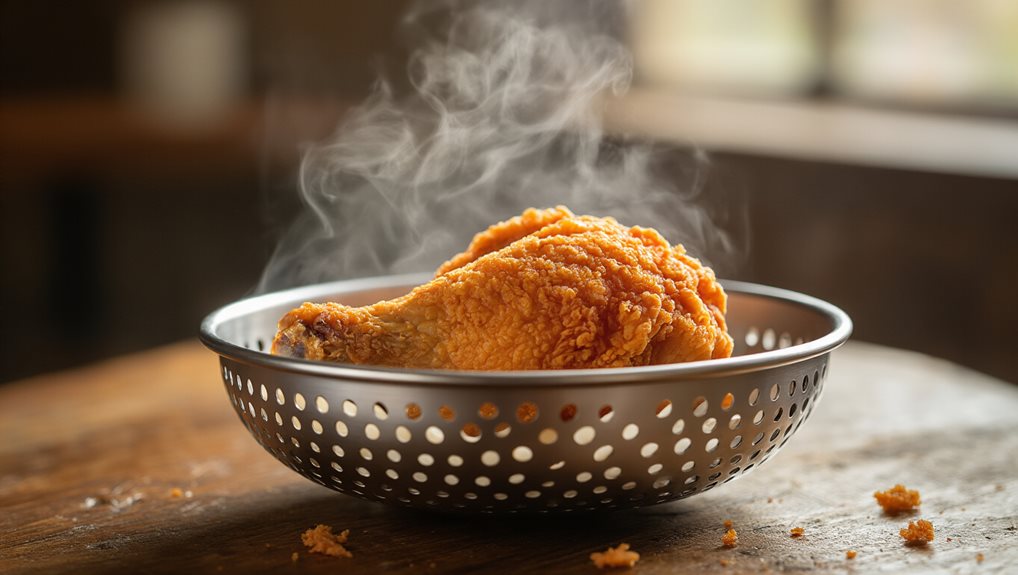
How does gentle air circulation keep fried foods crisp? A hot‑air blanket halts cooking, brings food to a safe 140‑160 °F hold, and pulls excess steam away, preventing moisture from soaking the crust.
The forced‑air system distributes temperature evenly, reduces oil re‑absorption, and keeps the exterior crunchy up to four times longer than a heat lamp. This preserves texture, safety, and profit.
Reheat Like a Pro: 350 °F (175 °C) for Restoring Crunchy Texture
What’s the secret to bringing back that satisfying crunch without drying out the meat?
Preheat the oven to 350 °F (175 °C) and place frozen fried chicken on a wire rack set over a baking sheet, spacing pieces two inches apart.
Heat for 25‑30 minutes until the interior reaches 150 °F, then raise the temperature to 400 °F for 10‑15 minutes to restore crispness while keeping the inside moist.
Fix Sogginess, Burnt Edges, and Stale Oil in Fried Foods
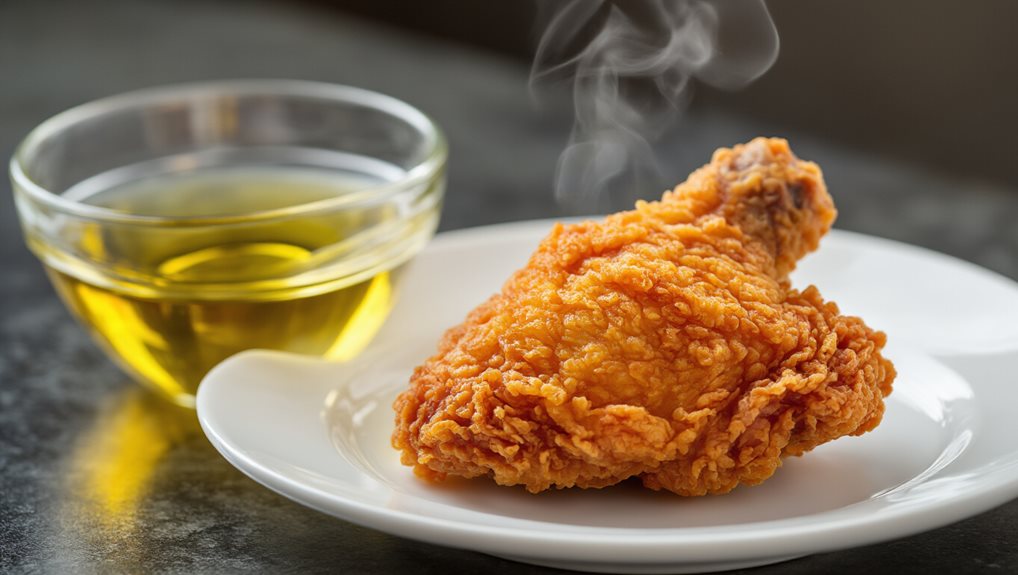
After restoring crunch with a quick oven reheat, the next challenge is keeping fried foods from turning soggy, developing burnt edges, or tasting stale from old oil.
Use wire racks or perforated sheets for airflow, avoid stacking, and line containers with butcher paper or fries to absorb moisture.
Drain items well, maintain proper oil temperature, change oil regularly, and employ low‑water glazes or starch dustings to lock in crispness.
Why Smoke Point Matters for Crunchy Results
If you let the oil get too hot, it will reach its smoke point and start breaking down, which can ruin the crunch you’re after.
Smoke point signals when free fatty acids form, causing off‑flavors and a soggy crust.
Choose refined, high‑smoke‑point oils (400‑500 °F) and keep temperature below that limit to preserve crispness and flavor.
Wrapping Up
By picking the right oil, keeping it at 170‑180 °C, and using a double‑fry, you lock in crunch before moisture seeps back in. Drain quickly, let foods cool on a rack, and store them in a breathable container or an air‑circulation holder. When you’re ready to eat, reheat at 350 °F (175 °C) for a quick revive. Remember, a high smoke point prevents sogginess and burnt edges, ensuring your fried foods stay crispy longer.


