
Properly stored honey doesn't go bad and can last indefinitely due to its unique chemical composition. The combination of low moisture content, natural acidity, and high sugar concentration creates an environment where bacteria can't survive. You'll want to store your honey in an airtight glass container at room temperature, away from direct sunlight and moisture. While honey can naturally crystallize or darken over time, these changes don't affect its safety. However, if you notice signs of fermentation like bubbles, foam, or a sour smell, it's time to discard it. Understanding proper storage techniques will help you maintain your honey's quality for years to come.
Quick Guide
- Properly stored honey never spoils due to its low moisture content, natural acidity, and antimicrobial properties from hydrogen peroxide.
- Signs of spoiled honey include visible mold, bubbles, foam, or a sour smell, typically caused by improper storage or contamination.
- Store honey in airtight glass containers at room temperature, away from direct sunlight and moisture to maintain quality indefinitely.
- Natural crystallization is normal and doesn't indicate spoilage; honey can be reliquefied by gently warming in warm water.
- Use clean utensils when handling honey and avoid refrigeration, which accelerates crystallization and can compromise quality.
The Science Behind Honey's Longevity
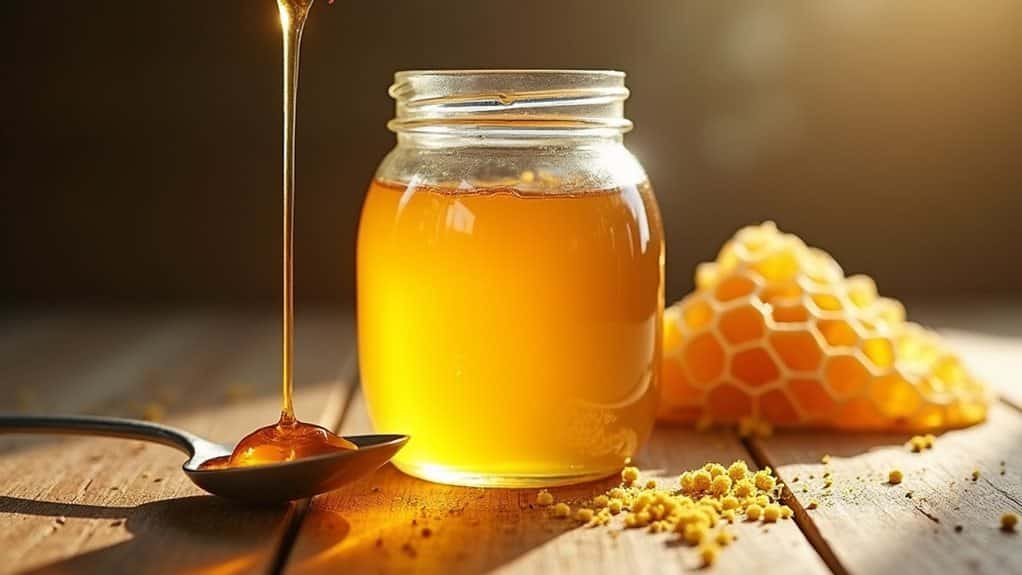
The extraordinary preservation abilities of honey stem from its unique chemical composition.
You'll find it's primarily made up of sugars (about 82%), creating an environment where bacteria simply can't thrive. The honey's sugars are hygroscopic molecules, continuously drawing moisture away from bacteria. Additionally, honey can last indefinitely if stored properly in a cool, dark place, which preserves its quality over time.
The combination of low water content and natural acidity (pH 3-4.5) makes it inhospitable to microorganisms, while enzymes from bees produce hydrogen peroxide, acting as a natural preservative.
Proper Storage Methods
Storing your honey properly can mean the difference between enjoying its natural sweetness for years or dealing with unwanted changes in texture and flavor.
Keep your honey in an airtight glass container at room temperature, between 64-75°F, away from direct sunlight and moisture. Glass jars are ideal because they don't react with the honey like some other materials can. Additionally, proper storage prevents spoilage signs that can affect the quality of your honey over time.
Don't use metal containers, and always use a dry spoon to prevent fermentation.
You'll also want to avoid refrigeration, which speeds up crystallization.
Natural Changes Over Time
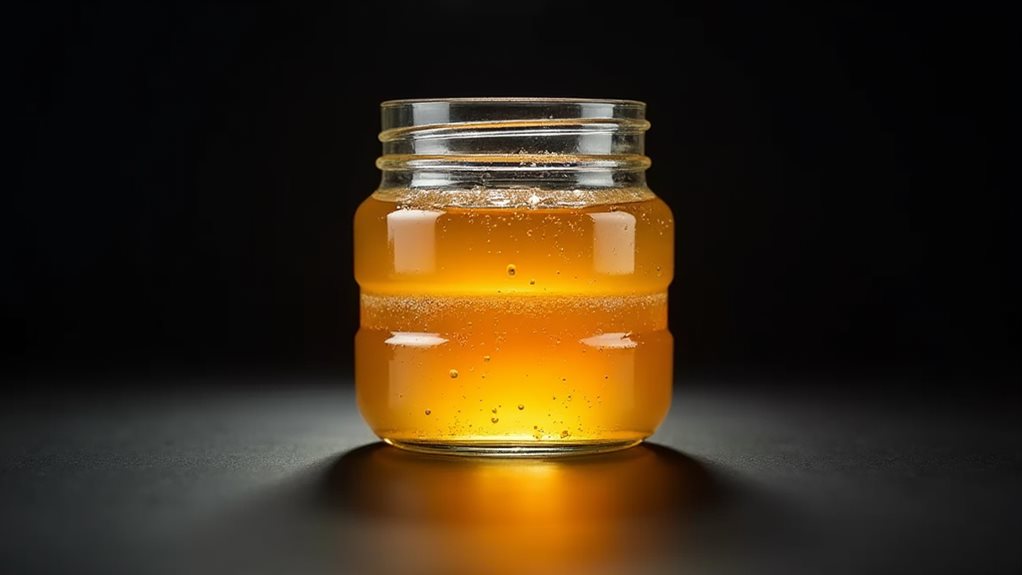
Over the course of time, honey naturally undergoes several changes that don't necessarily mean it's spoiled.
You'll notice crystallization, especially in raw honey, which happens when glucose and fructose bind together, making the honey harder. Proper handling of honey during storage can also help maintain its quality.
The color may darken, and you might observe some loss of aroma and flavor. Thanks to its low moisture content, properly stored honey can maintain its edibility indefinitely. These changes, influenced by temperature and honey type, don't affect your honey's safety or nutritional value.
When Honey Actually Spoils
While pure honey rarely spoils due to its natural antibacterial properties, certain conditions can cause your honey to become unsafe for consumption.
Watch for visible mold, which indicates contamination from unclean utensils or improper storage. If you notice bubbles, foam, or a sour smell, your honey has likely fermented. Regular checks for spoilage signs can help ensure your honey remains safe to eat.
Additionally, honey from specific plants can contain toxic compounds like grayanotoxins, making it dangerous to consume. The best way to prevent spoilage is to store honey in airtight containers away from moisture.
Best Practices For Honey Use
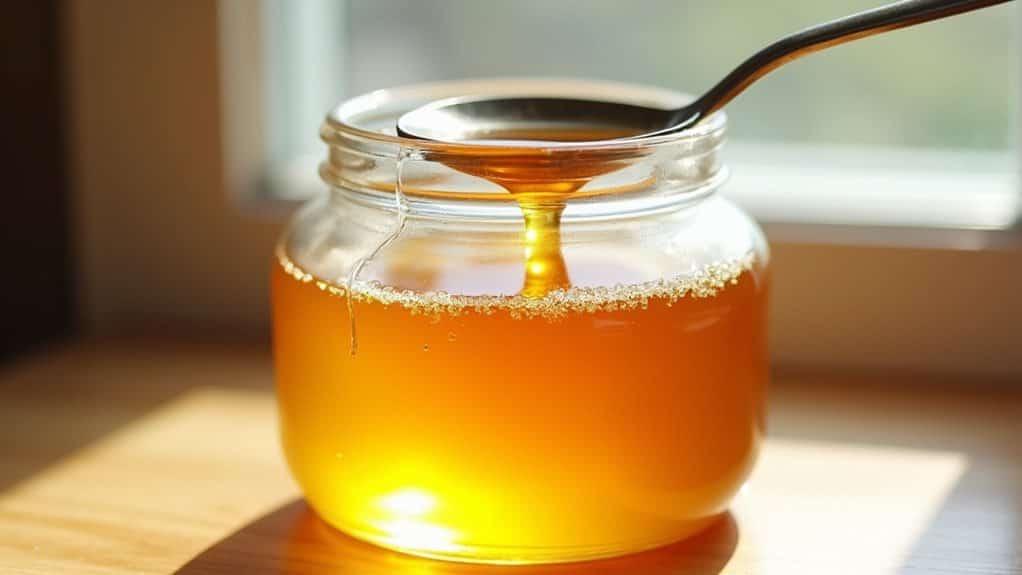
Proper honey storage is essential for maintaining its quality and preventing spoilage. Keep your honey in a clean glass jar or stainless steel container with a tight-fitting lid, and store it in a cool, dark cupboard away from heat sources. Frozen foods are designed to prevent oxygen, light, and moisture exposure, similar to how honey should be stored to maintain its properties. Don't refrigerate it, as this causes crystallization. If your honey does crystallize, simply place the container in warm water and stir until it reliquefies. Honey is unique because it has an indefinite shelf life when stored correctly.
Wrapping Up
You'll find that honey's extraordinary shelf life makes it one of nature's most stable foods. While proper storage in a sealed container at room temperature will help maintain its quality, you don't need to worry about your honey going bad under normal circumstances. If you notice crystallization or slight color changes, these are natural processes that don't affect safety. Just remember to keep moisture out, and your honey will remain wholesome for years to come.


