
Yes, oatmeal can go bad, but you can keep it fresh for months or even years with the right storage. Store uncooked oats in an airtight container in a cool, dark place to prevent moisture and heat damage. Cooked oatmeal lasts 3–5 days in the fridge or up to 6 months frozen. Watch for off smells, mold, or slimy texture—these mean it’s time to toss it. You’ll learn smarter ways to preserve quality and save money with a few simple steps.
Quick Guide
- Uncooked oats can last up to 2 years if stored in an airtight container in a cool, dark place.
- Cooked oatmeal stays safe for 3 to 5 days in the refrigerator when stored within 2 hours of cooking.
- Signs of spoilage include sour smell, mold, discoloration, slimy texture, or unpleasant taste.
- Use airtight glass jars or vacuum-sealed containers with oxygen absorbers for long-term dry oat storage.
- Freeze cooked oatmeal in portioned, airtight containers to extend freshness up to 6 months.
Understanding the Shelf Life of Uncooked Oats
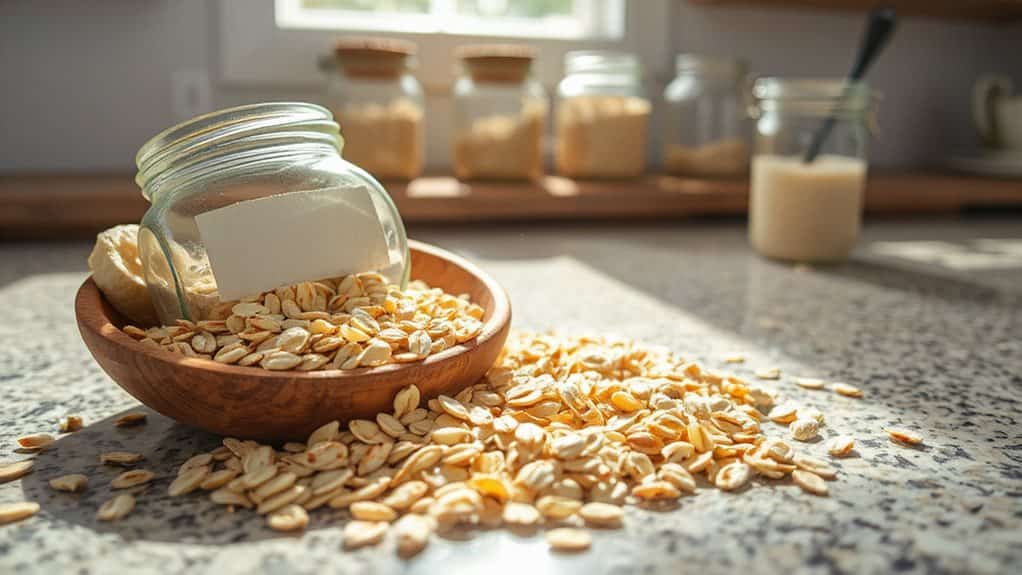
While you might assume oatmeal lasts forever in your pantry, uncooked oats do have a shelf life that depends on the type and how they’re stored.
Rolled oats last up to 2 years in an airtight container, while steel-cut oats last 18 months. To maintain freshness, keep dry oats in a cool, dark pantry and avoid heat and moisture.
Unstabilized oats spoil faster, lasting only 6 months at room temperature.
Best by dates indicate peak quality, not safety, so always inspect oats for off smells or flavors before use.
How Long Cooked Oatmeal Stays Safe to Eat
You can keep cooked oatmeal fresh in the fridge for 3 to 5 days, but it’s safest to eat it within 5 days to avoid any bacteria risk.
If you want to store it longer, freezing works well for up to 6 months—just use airtight bags and reheat with a little liquid. Keeping it at or below 40°F helps slow bacterial growth.
Watch for off smells, mold, or strange texture, especially if it’s been sitting past 5 days or wasn’t cooled quickly. Refrigerate within two hours to minimize bacterial growth and maintain freshness.
Refrigeration Extends Freshness
When stored correctly, your cooked oatmeal can stay fresh and safe to eat in the refrigerator for 3 to 5 days, with some sources extending that window to 6 days under ideal conditions.
Cool it completely within 2 hours, then transfer to an airtight container.
Keep it in the main fridge compartment, not the door, and reheat with a splash of liquid to restore texture.
Freezing Preserves Portions
Since cooked oatmeal doesn’t last long in the fridge, freezing is your best bet for keeping it fresh beyond a few days.
Cool it first, then portion into airtight containers or bags.
Label with dates, and freeze up to three months for best quality.
Thaw overnight in the fridge or use the microwave.
Reheat with a splash of water to restore texture.
Signs of Spoilage Appear
Cooked oatmeal stays fresh in the fridge for 3 to 5 days, but its safety depends on how it’s stored and handled.
Check for mold, odd smells, or a slimy texture—these mean it’s time to toss it.
If it looks dull, feels overly soft, or smells sour, don’t risk eating it.
Always trust your senses; they’ll warn you before illness strikes.
Recognizing Signs Your Oats Have Spoiled
How can you tell if your oats have gone bad? Look for off colors like green or blue, dark spots, or clumps, which signal moisture or mold.
Sniff for rancid or odd smells, especially if they’ve absorbed nearby odors.
If they feel sticky, hard, or stale, or taste unpleasant, toss them.
When in doubt, check for multiple signs—trust your senses to keep your oats safe.
A quick visual inspection is often more reliable than relying on printed expiration dates to judge freshness.
Best Containers for Storing Oatmeal Long-Term
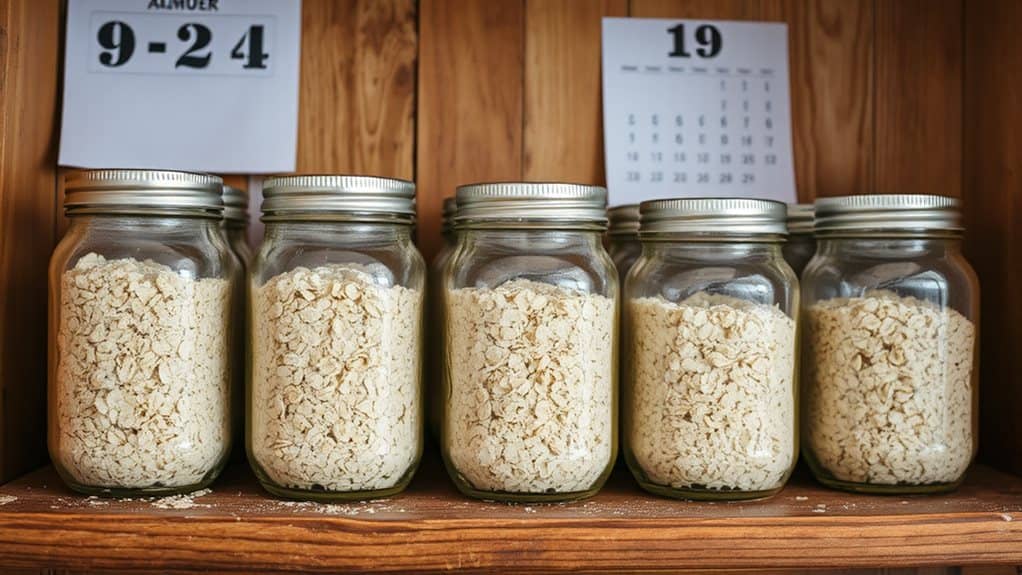
For long-term oatmeal storage, choosing the right container makes all the difference in preserving freshness and preventing spoilage.
Use airtight glass jars or Mylar bags with oxygen absorbers to keep dried oats fresh up to 30 years.
Place them in food-grade 5-gallon buckets for extra protection.
Store in a cool, dark place like a basement, and avoid moisture and light exposure.
For even better protection from air exposure, a handheld sealer can pull up to 60 kPa suction to help keep stored oats fresher longer.
Ideal Conditions for Maximizing Oatmeal Freshness
While the right container plays a crucial role in preserving oatmeal, storing it under ideal conditions is just as important for maintaining freshness over time.
Keep oats in a cool, dark pantry or cupboard at 75°F or lower to slow nutrient loss and oxidation.
Avoid moisture, sunlight, and strong odors—they cause spoilage, rancidity, and off-flavors.
A dry, consistent environment extends shelf life up to two years.
For extra moisture control, consider adding silica gel packs to help keep humidity in check and preserve freshness longer.
Using Oxygen Absorbers to Extend Shelf Life
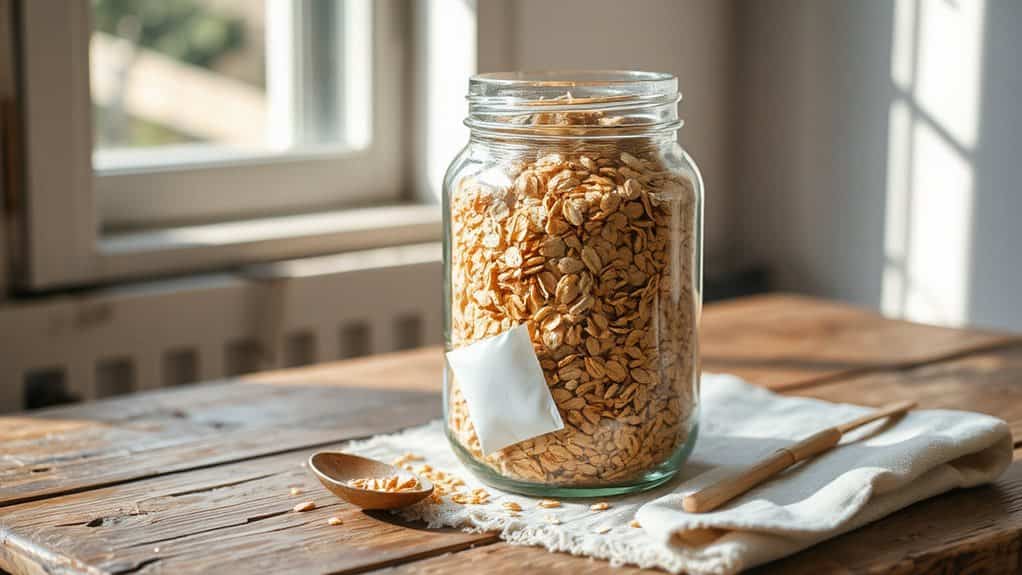
You can keep your oatmeal fresh much longer by using oxygen absorbers, which trap oxygen and stop fats from turning rancid. Just seal them in an airtight container like a Mylar bag, and they’ll remove nearly all the oxygen in about four hours.
This simple step helps preserve flavor, color, and nutrients for years—especially when combined with dry storage and vacuum sealing.
Oxygen Absorbers Prevent Rancidity
Since oxygen is one of the main culprits behind food spoilage, removing it from storage containers can dramatically slow down rancidity and decay.
You can use oxygen absorbers to stop fats in oatmeal from turning rancid by eliminating oxygen.
They prevent off-flavors, preserve nutrients like vitamin E, and keep your oats tasting fresh much longer.
Proper Use for Maximum Shelf Life
Oxygen absorbers do more than just slow spoilage—they release the full potential of long-term oat storage when used correctly.
Place them on top of oats just before sealing airtight containers like Mylar bags or #10 cans.
Keep everything in a cool, dark, dry place below 70°F.
Seal fast, check seals occasionally, and enjoy oats safely for up to 30 years.
Long-Term Storage Methods for Bulk Oats
When storing bulk oats for the long haul, choosing the right container makes all the difference in preserving freshness and nutritional value. Use Mylar bags with oxygen absorbers or #10 cans for up to 30 years of shelf life.
Opt for 5-gallon food-grade buckets with gaskets in cool, dry places. Add oxygen absorbers before sealing, keep containers away from light and heat, and avoid oat bran for long-term storage.
Freezing Cooked Oatmeal for Future Meals
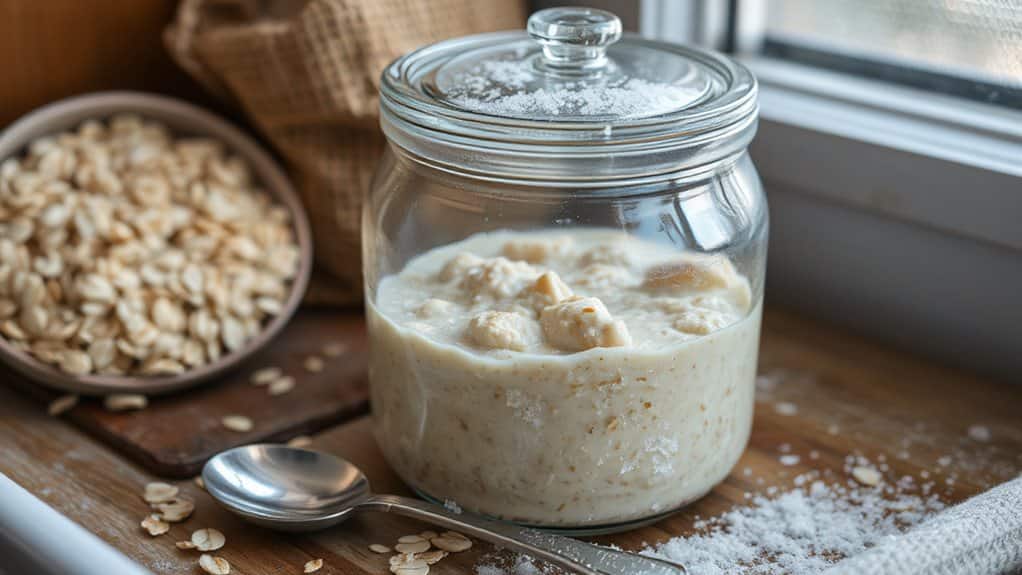
You’ve stored your bulk oats for the long term—now let’s talk about making the most of them with smart, meal-ready prep.
Cool cooked oatmeal for 20 minutes, then portion into greased muffin tins or freezer bags.
Freeze solid, transfer to airtight containers, and store below 0°F.
Thaw overnight or reheat from frozen with a splash of milk for quick, creamy meals.
Avoiding Common Oatmeal Storage Mistakes
Ever wonder why your oats go stale or develop a rancid taste even when stored in the pantry? You might be making common mistakes.
Skip paper bags—they let in moisture and yeast.
Use airtight containers like mason jars or Mylar bags with oxygen absorbers.
Keep them in a cool, dark place below 70°F.
Always seal opened oats quickly, and never store damp ones.
Tips for Preserving Flavor and Nutritional Value
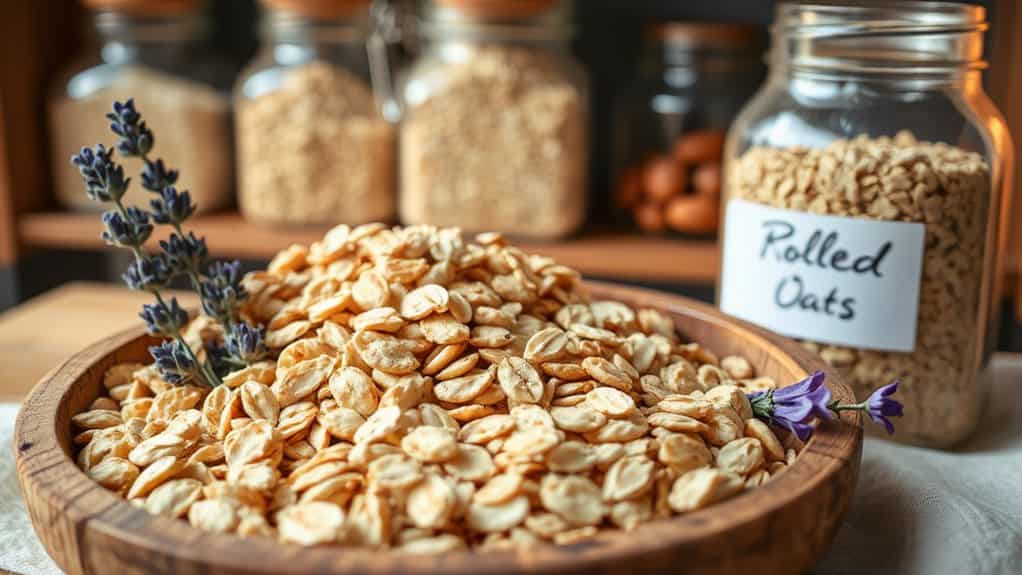
Though oats seem sturdy, their flavor and nutrients can degrade quickly without proper care. Store them in airtight containers like OXO or Mylar bags with oxygen absorbers to block air and moisture.
Keep them in a cool, dark place below 70°F—ideally a basement or pantry.
This simple routine locks in freshness, prevents rancidity, and preserves vitamins, so your oatmeal stays tasty and nutritious for months or even years.
Wrapping Up
You now know how to keep your oatmeal fresh and safe. Store uncooked oats in a cool, dry place using airtight containers to block moisture and pests. Cooked oatmeal lasts 3–5 days in the fridge or months in the freezer. Watch for off smells, discoloration, or bugs—these mean it’s time to toss them. Avoid common mistakes like leaving oats in paper bags. With the right care, you’ll preserve flavor, texture, and nutrients every time.


