
Cornstarch doesn’t go bad easily, but it can if exposed to moisture, air, or pests. Keep it sealed in an airtight, BPA-free container in a cool, dry place below 75°F—never near the stove or sink. When stored right, it lasts indefinitely, though peak quality is best within 18 months of opening. Toss it if you spot clumps, mold, bugs, or odd smells. You can quickly test its power by mixing a pinch with water to check for smooth thickening—there’s more to know about keeping it fresh long-term.
Quick Guide
- Cornstarch doesn’t spoil easily but can go bad if exposed to moisture, leading to clumps or mold.
- Store in a cool, dry place below 75°F in an airtight, BPA-free container to maximize shelf life.
- Unopened cornstarch lasts indefinitely; opened containers are best within 18 months for optimal quality.
- Discard if you notice bugs, musty odors, discoloration, or a wet, lumpy texture.
- Properly stored cornstarch retains thickening power even past its printed expiration date.
Does Cornstarch Go Bad?
Cornstarch doesn’t go bad easily, but it can turn if moisture gets in. Keep it sealed in a cool, dry spot to prevent clumps and mold. If it smells musty, looks discolored, or tastes sour, toss it out. Bugs? Definitely discard. But if it’s dry and clump-free, you’re good to use it—even years past the date. Visual checks like a quick sniff and look are often more reliable than printed expiration dates. Its shelf life is effectively indefinite when stored properly, thanks to its stable shelf life.
How Long Does Cornstarch Last?
You can expect unopened cornstarch to stay good for 2–3 years, but it often lasts much longer when stored properly.
Keep it in a cool, dry place away from moisture and heat, and it’ll remain effective for years—even indefinitely in ideal conditions. For longer storage, consider using oxygen absorbers to reduce air exposure.
Once opened, sealing it tightly in an airtight container helps maintain its quality and thickening power over time.
Indefinite shelf life is possible if protected from moisture, air, and temperature fluctuations.
Shelf Life Overview
While it won’t go bad in the traditional sense, cornstarch can lose its effectiveness over time—especially if not stored properly.
Unopened, it lasts indefinitely and stays safe forever, though it’s best within three years.
Once opened, use it within 18 months for peak quality.
Keep it dry and sealed to maintain its thickening power and prevent clumping or spoilage.
Storage Impact On Longevity
When stored the right way, your cornstarch can stay effective for years—no matter what the expiration date says.
Keep it in a cool, dry place below 75°F, away from heat and moisture.
Use airtight containers to prevent clumping and maintain quality.
Properly sealed, it lasts indefinitely, whether in the original package or repackaged for long-term storage.
Can You Use Expired Cornstarch Safely?
As long as it’s been stored properly, expired cornstarch is usually safe to use, even years past its printed date. Check for lumps, off smells, or bugs—signs of moisture exposure.
If it looks fine, smells neutral, and stays powdery, it’s good. No sour taste or discoloration? You’re set. Properly kept, cornstarch doesn’t spoil and keeps thickening just as well. Like powdered sugar, keep it in an airtight container in a cool, dry place to support a 2-year shelf life.
Why Cornstarch Clumps: And How to Fix It
You’ve probably stirred cornstarch into a simmering sauce only to find stubborn lumps floating like tiny landmines in your soup—and you’re not alone. That happens because heat makes starch granules bind fast, forming clumps.
To prevent this, mix cornstarch with cold water first. Stir well into a smooth slurry, then add it gradually to hot liquids while stirring. This keeps your sauce silky and lump-free.
If your cornstarch has picked up moisture in storage, keep it in an airtight container with moisture absorbers to reduce clumping.
Best Containers for Cornstarch Storage
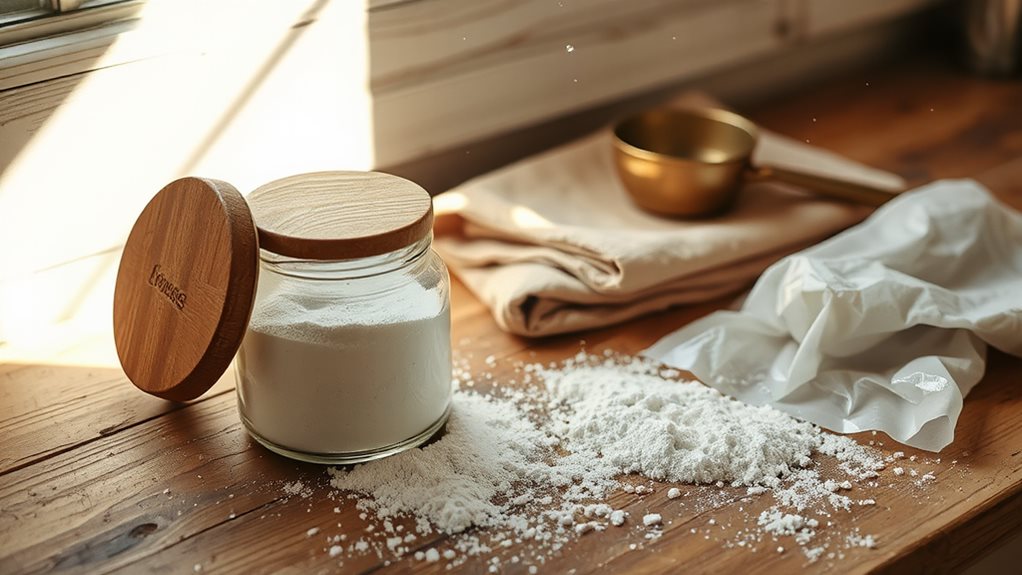
A good container keeps your cornstarch dry, clump-free, and ready to thicken sauces for years.
Choose airtight, BPA-free containers with snap-on lids to block moisture and air.
Opt for 6-quart, stackable designs that fit 5-pound bags and save space.
For added protection, prioritize containers with airtight seals to help prevent odor transfer and keep pantry staples fresher longer.
Non-stick interiors prevent residue, while side markings help track levels.
These durable, dishwasher-safe bins handle bulk storage and keep your cornstarch fresh, safe, and easy to use.
Where to Store Cornstarch (And What to Avoid)
Keep your cornstarch in a cool, dry spot like a pantry or dark cabinet to maintain its quality.
Stay away from heat sources and direct light, since warmth and sun can ruin its thickening power over time.
Make sure the area stays dry—moisture leads to clumping, so avoid humid spots near the sink or stove.
Ideal Storage Locations
Storing your cornstarch the right way pays off in both longevity and performance.
Keep it in a cool, dark cupboard away from heat and moisture.
Use airtight containers like glass jars or plastic with tight lids to block humidity.
Avoid refrigeration—it can cause clumping.
A basement or climate-controlled space works well for long-term storage.
Avoid Heat And Light
Since light and heat can quietly ruin your cornstarch over time, it’s smart to store it where the temperature stays steady and the sun doesn’t reach.
Keep it in a dark, airtight container away from stoves, ovens, and windows. Basements, interior closets, or cool pantries work best.
Avoid attics, garages, or spots near radiators—these places speed up degradation and weaken thickening power.
Prevent Moisture Exposure
Don’t let moisture sneak into your cornstarch and turn it into a clumpy mess—this powdery thickener thrives only when kept bone dry.
Store it in airtight containers like glass jars or sealed plastic to block humidity. Avoid cardboard or flimsy bags. Keep it in a cool, dry spot away from sinks or steam. Use desiccants to absorb excess moisture and always scoop with dry hands or utensils.
Can You Freeze or Refrigerate Cornstarch?
You can keep cornstarch in the fridge or freezer, but it’s usually not worth the trouble.
Cold storage risks clumping and texture changes, especially if moisture gets in. Freezing may ruin its thickening power.
Instead, store it in a cool, dry pantry below 75°F in an airtight container. That way, it lasts indefinitely without fuss or quality loss.
How to Test If Cornstarch Is Still Good
Storing cornstarch properly helps maintain its quality, but even well-kept containers can degrade over time if exposed to moisture or contaminants.
Check for discoloration, clumps, or mold, and give it a sniff—sour or rancid smells mean it’s done.
Feel the texture; it should be powdery, not lumpy.
Taste a pinch; if it’s sour, toss it.
Finally, mix a little with water—good cornstarch thickens smoothly.
Pro Tips to Maximize Cornstarch Shelf Life
Typically, keeping cornstarch in top condition comes down to smart storage choices. Use airtight containers like glass jars or sealed plastic to block moisture and air.
Store in a cool, dry pantry away from heat and sunlight. Always use dry utensils, seal tightly after use, and avoid cardboard packaging.
Label with dates, and skip freezing unless necessary.
Wrapping Up
You can keep cornstarch for years if you store it properly. Keep it in an airtight container in a cool, dry place away from heat and moisture. It won’t spoil, but it can clump or absorb odors if exposed. Check for bugs, off smells, or discoloration before using. If it looks and smells fine, it’s likely safe. Avoid freezing or refrigerating—it can introduce moisture. With simple care, your cornstarch stays effective and ready whenever you need it.


