
Keep lemons fresh longer by freezing juice in ice cube trays—pop them out and store in airtight bags. Preserve rinds with salt for bold flavor in cooking, or dry peels into a fine powder for zest on demand. Refrigerate juice with pickling salt for up to 90 days, or can slices in syrup for shelf-stable use. Always keep preserved lemons submerged in brine to prevent mold. There’s a best method for every kitchen goal.
Quick Guide
- Store whole lemons in the refrigerator crisper drawer to extend freshness up to a month.
- Freeze lemon juice in ice cube trays, then transfer to airtight bags for storage up to 6 months.
- Preserve lemons long-term by fermenting in salt brine and storing submerged in the fridge for up to a year.
- Dry lemon peels until crisp, then grind into powder and store in a cool, dark place for up to two years.
- Keep preserved lemons mold-free by ensuring they remain fully submerged in brine with occasional shaking or flipping.
Preserve Lemon Juice by Freezing in Portions
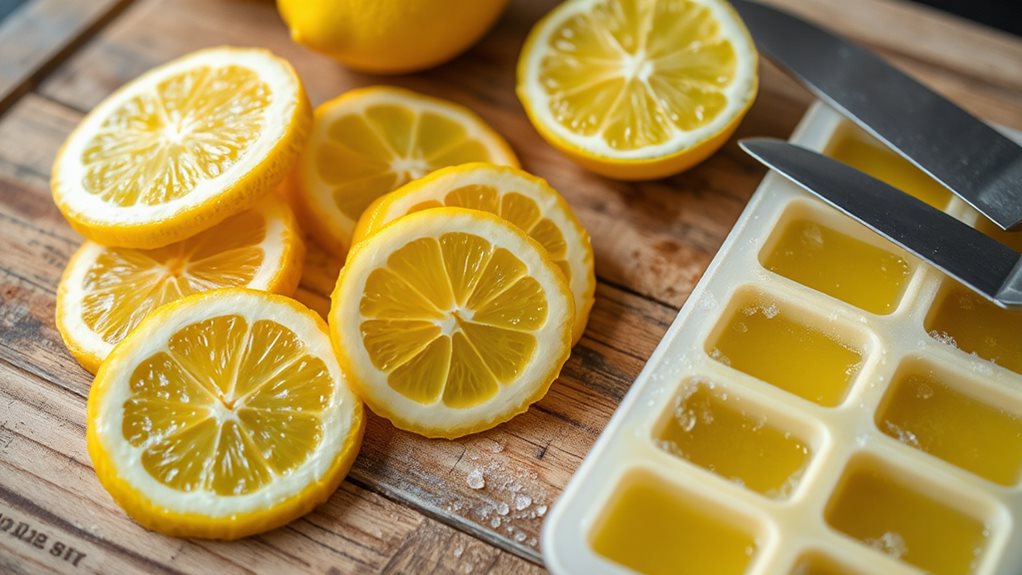
Get the most out of your lemons by freezing the juice in handy portions you can use anytime. Wash, roll, and juice the lemons, then strain to remove seeds.
Pour into silicone ice cube trays and freeze overnight. For faster freezing, use shallow trays and keep a consistent freezer temperature since juice can take anywhere from 2 to 12 hours to freeze fully depending on conditions like freezer temperature. Transfer cubes to airtight bags, removing excess air. Each two cubes equal about a quarter cup—perfect for recipes or drinks. This method helps preserve lemon juice for up to 3 months without losing its fresh flavor or nutritional benefits.
Make Bold Preserved Lemons With Salt and Brine
You can make bold preserved lemons by packing them tightly in salt and letting them ferment at room temperature. The salt draws out juice to create a natural brine, while time softens the rind and deepens the flavor over several weeks. Texture becomes softened and gently deflated over time.
Once fermented, store the jar in the fridge for long-term use, making sure the lemons stay fully submerged. For best quality, keep your refrigerator set to 35-45°F so the preserved lemons hold their flavor longer.
Salt-Brine Fermentation Basics
Preserving lemons through salt-brine fermentation converts their sharp citrus bite into a complex, tangy delicacy perfect for bold flavoring in savory dishes.
You’ll pack cut lemons with salt—about a teaspoon per fruit—and layer them tightly in a jar. As they rest for four weeks at room temperature, natural juices mix with salt to form a brine.
Keep the lemons submerged, flip occasionally, and let time work.
The result? Soft, deeply flavored preserved lemons ready to enhance your cooking.
Room Temperature Fermentation Phase
After packing the lemons tightly with salt and sealing them in the jar, the real metamorphosis begins at room temperature. Keep the jar in a dark, warm spot (65–70°F) for 7–30 days. Shake or flip it daily to distribute brine and guarantee submersion.
Bubbles within five days mean fermentation is active. The peel softens over time, developing a tangy, complex flavor perfect for bold preserved lemons.
Long-Term Brine Storage Tips
Once the initial fermentation phase wraps up, it’s time to shift gears and set your preserved lemons up for long-term success in the fridge.
Pack them in a sterilized glass jar, keep them fully submerged in brine and fresh lemon juice, and seal tightly.
Use kosher salt, avoid iodized types, and store at a consistently cool temperature to prevent spoilage and maintain quality for up to a year.
Dry Lemon Peels Into Long-Lasting Zest Powder
Start by washing lemons well, then peel off the bright yellow rind with a zester or peeler, making sure to skip the bitter white part underneath.
You can dry the peels in your oven, dehydrator, or just on the counter until they’re crisp, which usually takes a few hours to a few days depending on the method.
Once fully dry, grind them into a fine powder and store it in a sealed jar in your pantry for a bright, lemony lift in recipes anytime. For best results, keep your finished zest powder in an airtight container and store it somewhere cool and dry, similar to using airtight containers to preserve pomegranate seeds.
Drying Lemon Peels
Turning your leftover lemon peels into a versatile, shelf-stable zest powder is a smart way to capture their bright flavor for months.
Wash lemons well, then peel thinly, avoiding the bitter pith.
Dry peels in the oven, dehydrator, air, or sun until crisp.
Once fully dry, store them in an airtight container for long-lasting zest.
Storing Zest Powder
Keeping your homemade lemon zest powder lively and flavorful starts with smart storage.
Store it in a cool, dry place away from sunlight, using airtight containers to block moisture. For longer freshness, keep it refrigerated at 4°C—this slows enzyme loss and extends shelf life up to two years.
Always use sealed, moisture-resistant packaging like laminated pouches or jars.
Using Powdered Zest
Convert your kitchen with the bright, concentrated punch of homemade lemon zest powder—compact, shelf-stable, and packed with flavor. Use it in baking, marinades, or spice blends for a citrus kick.
A teaspoon equals one fresh lemon’s zest. Store in a cool, dark place, and shake out clumps before use.
It’s easy, waste-free, and always ready when inspiration strikes.
Refrigerate Lemon Juice for 90-Day Freshness
While fresh lemon juice won’t actually last 90 days in the fridge under normal conditions, you can come close with the right method. Add ½ teaspoon of pickling salt per ¼ cup of juice, stir until dissolved, then seal in a glass jar.
Let it sit out a few hours to ferment slightly, then refrigerate. Shake before using—it’ll stay good for up to two months. For even longer storage, try freezing lemon juice in ice cube trays for up to 6 months.
Can Lemon Slices for Shelf-Stable Use
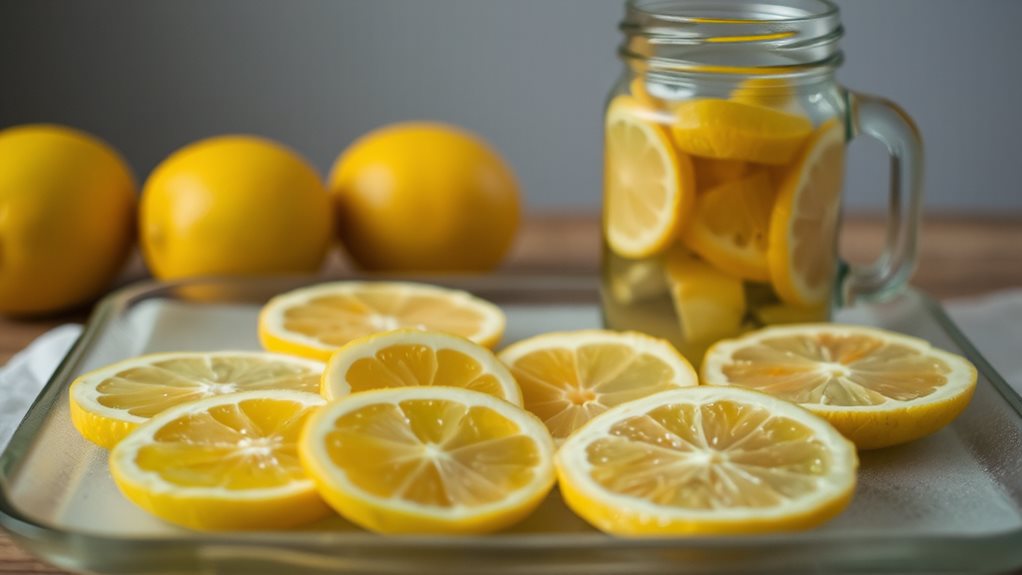
To preserve lemon slices for long-term use without refrigeration, canning is one of the most reliable methods you can try at home.
Simmer lemon sections in hot syrup, then pack them into jars with 1/2-inch headspace.
Process in a water bath canner for 10 minutes.
Store jars in a cool, dark place for shelf-stable results up to a year.
Just like with vinegar, keeping your sealed jars in cool, dark storage helps preserve quality by limiting exposure to heat and light.
Prevent Mold: Keep Preserved Lemons Fully Submerged
Since mold can’t grow without exposure to air, keeping your preserved lemons fully submerged in brine is the simplest and most effective way to prevent spoilage.
Pack them tightly, press down to release juices, and top with lemon juice or brine as needed.
Use a weight if necessary, and always make certain the liquid covers the lemons completely to block air exposure.
Wrapping Up
Now you’ve got smart ways to store lemons and make them last. Freeze juice in portions, preserve with salt, dry the peels, or refrigerate for months. Keep everything submerged to prevent mold, and can slices for shelf stability. Each method saves time and reduces waste. Use these tips, and you’ll always have lemon flavor on hand—bright, fresh, and ready when you are.


