
Use sifted all‑purpose flour, aluminum‑free baking powder (2–4 tsp per batch), a pinch of salt, milk, a room‑temperature egg, and melted butter. Whisk the dry ingredients together, then fold them into the wet mix just until lumps disappear—no more than ten strokes. Let the batter rest about ten minutes so the flour hydrates and gluten relaxes. Heat a non‑stick 10‑12‑inch pan over medium‑low, pour a modest portion, and flip when bubbles form and edges set. Follow these steps and you’ll get consistently fluffy pancakes, and the next sections reveal even finer tweaks.
Quick Guide
- Sift flour and combine dry ingredients separately; fold gently into wet mix, stopping at the first lumps.
- Use 2–4 teaspoons of aluminum‑free baking powder per batch and keep it stored cool and dry for maximum leavening.
- Rest the batter 5–10 minutes at room temperature to let flour hydrate and gluten relax before cooking.
- Cook on medium‑low heat in a 10–12‑inch non‑stick pan; flip when bubbles form and edges set, about two minutes.
- Avoid overmixing and keep batter low; reheating leftovers on low‑medium heat preserves fluff and flavor.
What Makes Pancakes Fluffy? The Key Ingredients
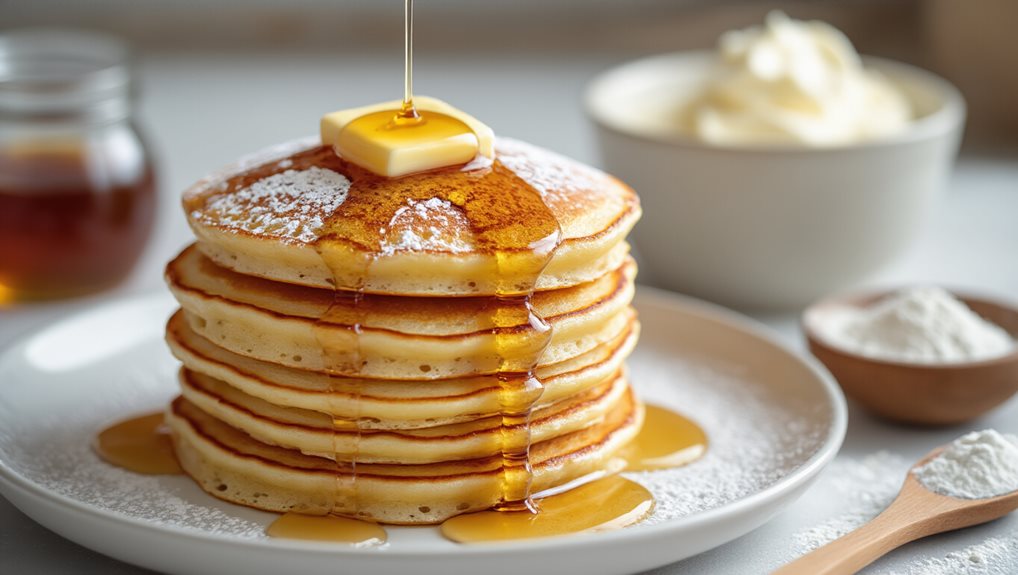
A fluffy pancake starts with the right mix of ingredients, and each one plays a specific role in creating that light texture. You need all‑purpose flour for structure without heaviness, sifted for a lighter crumb. Baking powder, preferably aluminum‑free, supplies the rise; 2‑4 teaspoons per batch works. Milk adds moisture, while a room‑temperature egg and melted butter bind and tenderize, giving the batter its airy, tender finish. For best results, store baking powder in a cool, dry place away from sunlight to preserve its potency, similar to cool, dry storage practices that help maintain quality over time. Adding a pinch of salt for flavor enhances the overall taste without affecting fluffiness.
Mixing Method: Prevent Over‑Mixing for Fluffy Pancakes
How can you keep your pancake batter light and airy? Combine wet and dry ingredients separately, then gently fold dry into wet, stopping at the first lumps. Limit stirring to about ten strokes or use a fork to break clumps without overworking. This preserves air bubbles, limits gluten formation, and prevents the batter from deflating, resulting in fluffy, tender pancakes. For make-ahead prep, you can portion dry mix into bags and use a countertop vacuum sealer with double heat seal technology to keep it moisture-free and pantry-fresh longer. Allow the batter to rest briefly so any over‑mixed gluten can relax before cooking.
Why a Short Rest Matters & How Long to Rest Pancake Batter?
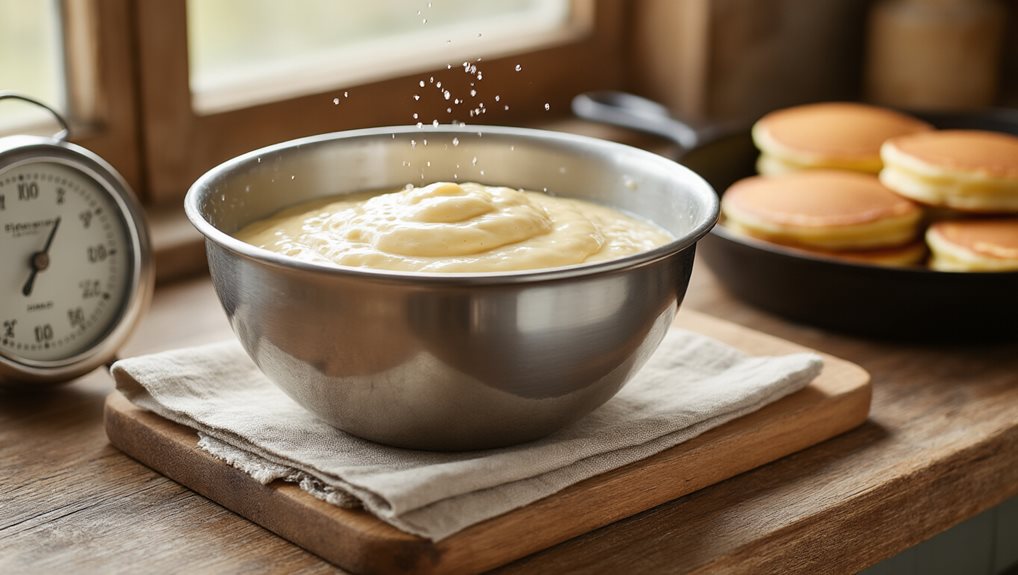
Ever wonder why a brief pause before cooking makes a big difference? Let the batter rest 5‑30 minutes, ideally about 10, so flour fully absorbs liquid, gluten relaxes, and leavening spreads evenly.
This yields thicker, lighter pancakes with consistent texture and better rise.
Use the batter within an hour, or refrigerate overnight for same results, then mix gently before cooking.
Like reheating leftovers, keeping things on low to medium heat helps prevent scorching and preserves flavor.
How to Set the Right Heat and Choose a Pan for Fluffy Pancakes
Where does the perfect heat and pan choice fit into making pancakes fluffy? You want medium‑low to medium heat, which prevents burning while letting batter rise evenly. Choose a 10‑12‑inch non‑stick pan—ceramic or hard‑anodized aluminum—so it heats uniformly in two minutes, and a lightweight handle helps balance. If you’re warming almond milk for the batter, aim for the 140-150°F range to avoid scorching.
Cast‑iron works too, retaining steady temperature and avoiding hot spots. Use a pan size that fits your batch without crowding.
Flipping & Serving: Timing, Portion Size, Height Retention
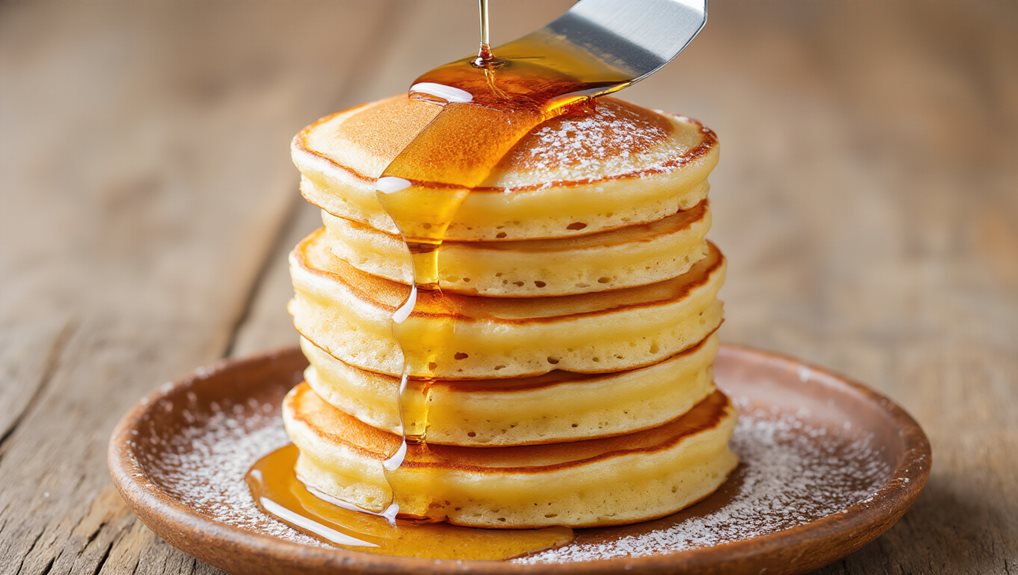
When the bubbles on the surface start to pop and the edges look set, it’s time to flip, and getting the timing right is key to keeping the pancakes fluffy. Flip after about two minutes, sliding the spatula under a fully formed bubble edge, then lift half the pancake and turn smoothly.
Use a ¼‑cup batter for uniform height, and stack minimally to preserve warmth and lift. If you’re adding dairy at the table, keep half-and-half in the coldest part of the fridge (32°F to 40°F) and use it within 7-10 days after opening for best quality.
Wrapping Up
By achieving mastery of the key ingredients, gentle mixing, a brief rest, proper heat, and timely flips, you’ll consistently produce pancakes that rise and stay fluffy. Keep the batter smooth but not over‑worked, let it settle for a few minutes, and cook on medium heat with a lightly greased pan. Flip when bubbles surface and edges set, then serve immediately. Follow these steps, and every stack will be light, airy, and ready to enjoy.


