
You get rubbery pancakes when you over‑mix the batter, because the extra stirring creates a strong gluten network that makes the texture tough and dense. Using high‑protein bread flour or whole‑wheat instead of all‑purpose or cake flour adds more gluten, while packing flour into a measuring cup adds 20‑30 % extra dry weight, thickening the mix. An off wet‑to‑dry ratio—too much liquid or too little flour—prevents proper air‑bubble formation and leaves the interior gummy. Finally, a pan that’s too hot or too cold, or using butter that burns, cooks the outside too fast and leaves a rubbery crust. Adjust these factors, and you’ll see a lighter, fluffier stack.
Quick Guide
- Overmixing the batter activates gluten and bursts air bubbles, producing a dense, rubbery texture.
- Using high‑protein flour (bread or whole‑wheat) creates excess gluten; all‑purpose or cake flour yields tender pancakes.
- Measuring flour by packing the cup adds 20‑30% more dry weight, thickening batter and making it rubbery.
- An incorrect wet‑to‑dry ratio (too much liquid or too little flour) prevents proper bubble formation and traps moisture.
- Cooking on excessively high heat or with butter that burns creates a tough crust and rubbery interior; medium heat with high‑smoke‑point oil is optimal.
Why Overmixing Causes Rubbery Pancakes
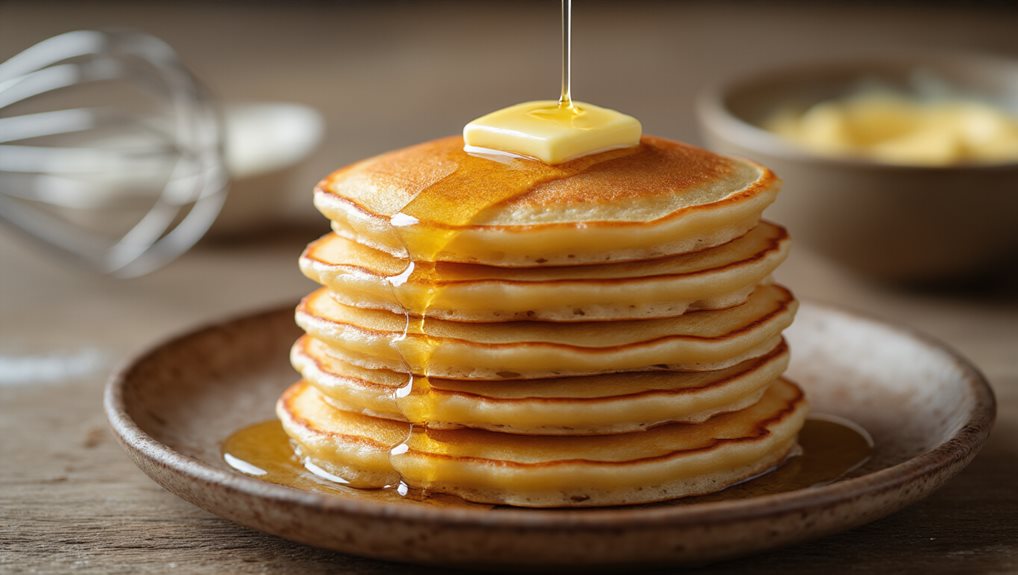
Why does overmixing turn pancakes rubbery? When you stir too long, you activate gluten proteins in the flour, creating a stretchy network that toughens the batter. At the same time, vigorous mixing pops the air bubbles that give pancakes lift. The result is a flat, dense, rubbery texture rather than a light, tender stack. Proper storage in a sealed container helps keep popcorn fresh by preventing moisture, which can lead to staleness or mold.
Mix gently, about ten strokes, and stop when lumps remain. Overmixing also reduces the space for air to occupy, making the batter too dense.
Why Using the Wrong Flour Type Leads to Tough Pancakes
Ever wondered how the flour you pick can turn a fluffy stack into a dense, rubbery slab? If you use high‑protein bread or whole‑wheat flour, the batter forms excess gluten, making pancakes chewy and tough. Like choosing male eggplants for fewer seeds and less bitterness, selecting all‑purpose flour helps balance structure and tenderness. Cake flour’s low protein keeps gluten minimal, giving a light texture. All‑purpose flour balances structure and tenderness, so choose it unless you specifically want a delicate, airy result. Overmixing can also cause the batter to become dense and rubbery.
Why Incorrect Flour Measurements Make Pancakes Dense
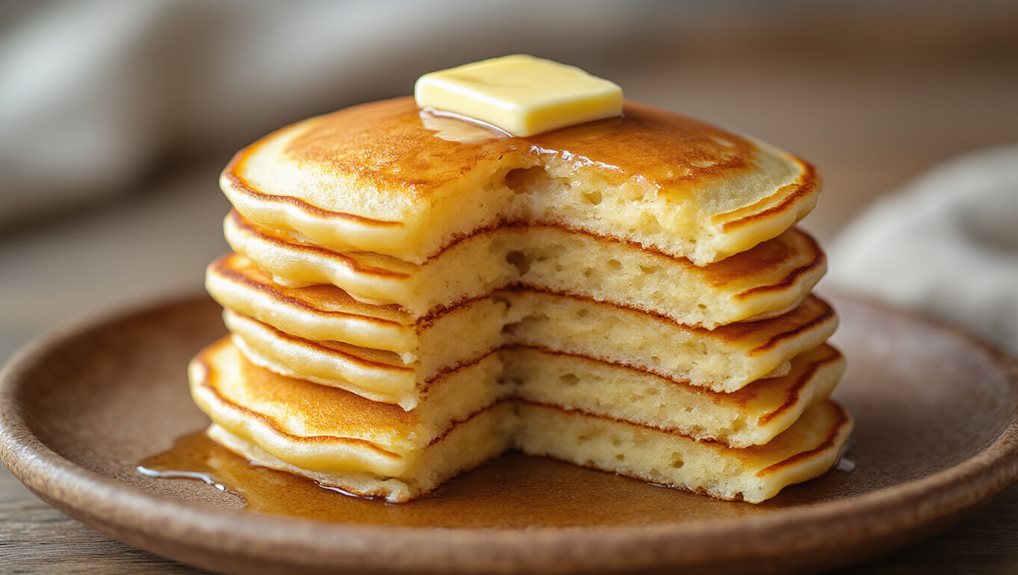
Choosing the right flour type helps, but how you measure it can ruin even the best recipe. When you pack flour into a cup or dip the cup straight into the bag, you add 20‑30 % more dry weight, making the batter thick and dense. Lightly spoon flour, level it, and if you over‑measure, add a couple of tablespoons liquid and a pinch of baking powder to restore balance. Just as four pounds of raw potatoes are needed to make one pound of potato chips, small measurement differences can have an outsized effect on your final texture.
Why a Bad Wet‑to‑Dry Ratio Yields Gummy Pancake Crumbs
Ever wondered why your pancakes turn into sticky, gummy crumbs instead of light, fluffy circles?
Adding too much milk or water thins the batter, preventing it from holding the air bubbles that leaveners create.
The excess liquid also over‑develops gluten when you stir vigorously, trapping moisture unevenly.
With insufficient flour, the batter can’t absorb the liquid, so the interior stays wet and collapses into gummy, crumbly bits.
Just like keeping food in airtight containers helps protect it from excess moisture, using the right wet‑to‑dry ratio prevents pancakes from retaining too much liquid and turning rubbery.
Why Pan Temperature & Grease Mistakes Produce Rubbery Pancakes
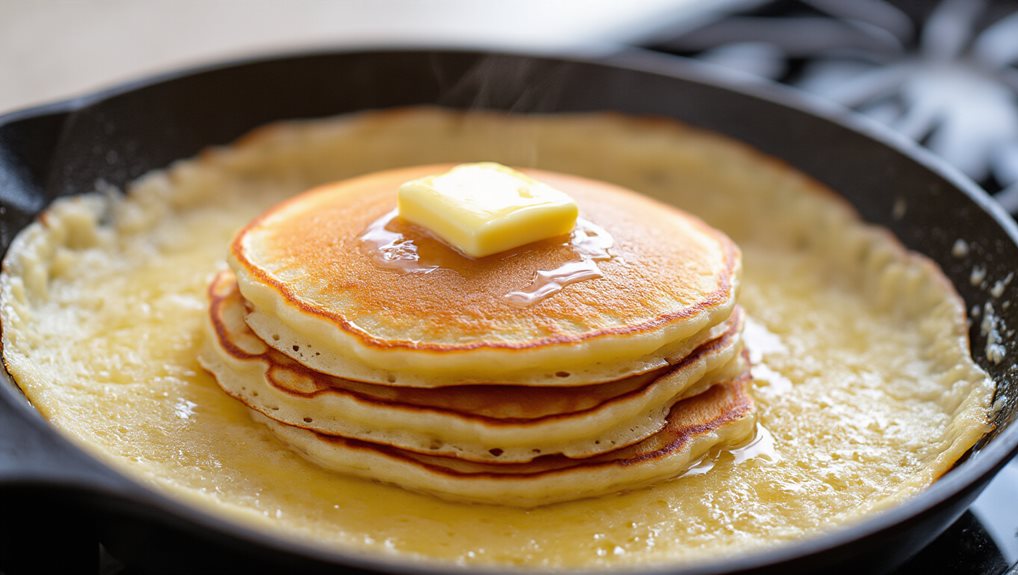
Why does a pancake turn rubbery instead of fluffy? If your pan’s too hot, the outside burns before the inside sets, creating a tough crust. If it’s too cold, batter soaks up oil and fails to form bubbles, yielding a dense, chewy bite. Skipping a three‑minute medium preheat spreads heat unevenly, while butter on high heat burns. Use medium heat, preheat properly, and choose high‑smoke‑point oil for tender pancakes.
Wrapping Up
By checking your mixing technique, flour choice, measurements, wet‑to‑dry ratio, and pan temperature, you can eliminate the common causes of rubbery pancakes. Keep the batter just combined, use all‑purpose flour, measure accurately, balance liquids and dry ingredients, and preheat a lightly greased pan. These simple adjustments will give you light, fluffy pancakes every time, without the tough, gummy texture that ruins the breakfast experience.


