
Pat your ingredients dry with paper towels before they hit the oil, and sprinkle a little salt or a pinch of cinnamon to soak up any remaining moisture. Lower the heat to 360‑380°F and keep it steady; a cooler oil reduces steam bursts that cause splatters. Use tongs to lower food gently, and fit a funnel‑shaped frywall guard or a 13‑inch mesh splatter screen to catch stray drops. Keep the pan sized right and avoid overcrowding, then you’ll see far fewer pops and splashes—more tips await if you keep going.
Quick Guide
- Pat all ingredients dry with a lint‑free paper towel before adding them to hot oil.
- Keep oil temperature between 360 °F and 380 °F; lower heat if steam bursts appear.
- Sprinkle a pinch of salt (or cinnamon) on the food after drying to absorb residual moisture.
- Use a splatter guard or mesh screen and avoid overcrowding the pan to limit oil displacement.
- Place food gently with tongs, lowering it slowly into the oil to reduce sudden moisture contact.
Dry Your Food Before It Hits the Oil
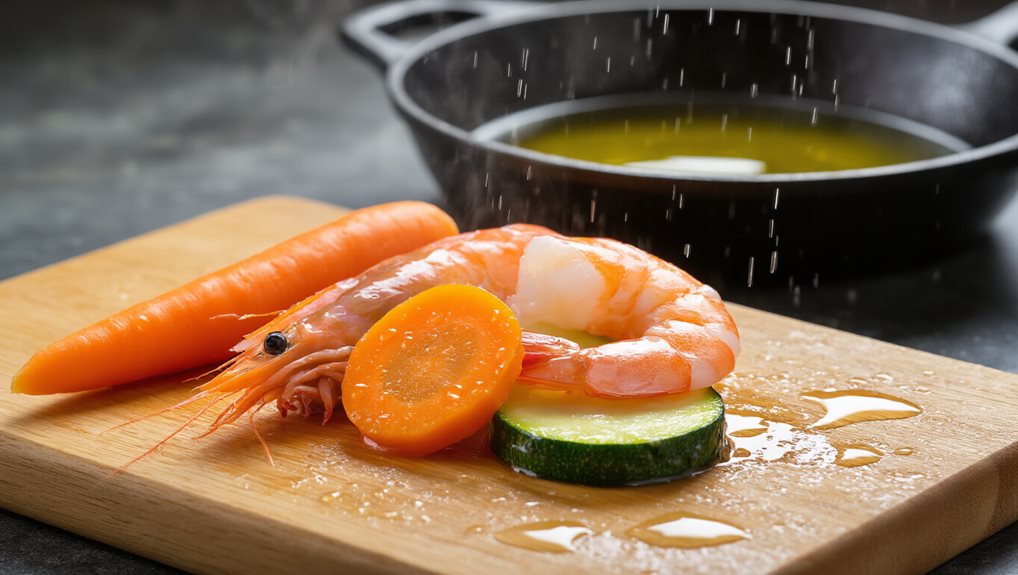
Ever wondered why a single droplet of water can turn a calm pan into a fireworks show?
You must dry food completely before it meets hot oil. Even tiny moisture creates steam that expands, pushes oil up, and splatters. Pat vegetables, meats, and herbs with paper towels, let rinsed items air‑dry, and avoid adding wet marinades. Drier ingredients keep oil calm and cooking safe. The water‑oil separation causes rapid steam formation that displaces oil. Store paper towels in an airtight container so they stay dry and effective when you need to blot off surface moisture fast.
Pat Ingredients Dry to Cut Oil Splatter
You’ll notice that even a tiny film of water can send oil splattering, so patting your ingredients dry with paper towels before they hit the pan is essential.
By pressing firmly you remove excess moisture, which stops sudden steam bursts that would otherwise fling hot oil around. For easier cleanup afterward, use a dishwasher-safe reusable silicone bag to hold any prepped, patted-dry ingredients until you’re ready to cook.
This simple step, combined with keeping any wet additions out of the oil, dramatically reduces splatter and makes cleanup easier. Adding a pinch of salt to the pan before oil further absorbs moisture and cuts splatter.
Pat Ingredients Thoroughly
How can you keep oil from erupting when you toss vegetables into a hot pan? Pat each piece dry with a paper towel or clean cloth before it hits the heat. Remove surface water, especially from high‑moisture veggies and marinated meat. A dry, even coating—cornstarch for meat or a light oil toss for veggies—limits steam bursts, keeping splatter to a minimum.
Use Paper Towels
Why let oil splatter ruin your stovetop when a simple paper towel can keep the mess in check? Fold a lint‑free, single‑ply towel into quarters, then lightly coat it with a stable oil like grapeseed. The thin layer drops the contact angle to about 22°, letting capillary wicking pull splatter into micro‑crevices. Stay below 104 °F to avoid carbonizing the cellulose, and you’ll cut cleanup time dramatically.
Avoid Wet Additions
Paper towels can keep splatter in check, but they only address droplets that already escape the pan; the real source of most mess is moisture clinging to the food itself. Pat your ingredients dry with paper towels, a clean cloth, or a brief fridge rest.
Salt or pre‑salt them hours before cooking to draw out water. A dry surface stops steam explosions, so oil stays in the pan and your kitchen stays cleaner.
Lower the Heat: Why Cooler Temperatures Reduce Pops
When you lower the oil temperature, steam forms more slowly, so the sudden bursts that fling oil are reduced.
Cooler heat also keeps the oil from churning violently, which means the surface stays calmer and the temperature stays steadier.
Similarly, just as freezing can make chocolate become crunchy while the filling turns cold and dense, lowering heat changes how moisture behaves so it’s less likely to burst and splatter.
Reduce Steam Formation
Ever notice how a sudden burst of steam can turn a calm fry into a splattering mess?
Lower the heat to keep oil between 360°F and 380°F; cooler temperatures produce less moisture evaporation.
Dry food thoroughly before it hits the pan, and use a thermometer or bubble test to stay in the sweet spot.
Minimize Oil Agitation
Steam bursts are the main culprit behind splattering, so keeping the oil cooler is a simple way to curb those pops. Lowering the flame slows steam formation, which reduces the force that launches oil droplets upward. Use medium heat instead of high, and dry food before it hits the pan. Thick‑base cookware holds a steadier temperature, preventing hot spots that cause violent agitation. This approach minimizes pops without sacrificing cooking speed.
Maintain Consistent Temperature
Keeping the heat at a moderate level is the simplest way to curb oil splatter, because cooler temperatures slow the molecules’ frantic motion and let moisture evaporate gradually. When you lower the flame, oil stays stable, steam forms slowly, and hot spots disappear. Medium heat lets food release water without explosive steam bursts, keeping the cooking surface even and the splatter minimal.
Add Salt or Cinnamon to Reduce Oil Splatter
Why does oil splash when you fry? Water droplets from the food vaporize, explode, and throw oil out.
Sprinkle a little salt into the pan before adding food, or dust the food after patting it dry. Salt absorbs moisture, cutting steam bursts and keeping the crust crisp.
If you lack salt, a pinch of cinnamon works similarly, soaking up excess moisture in shallow‑oil frying.
If you’re frying eggplant, keep in mind that its eggplant seeds are edible and cooking them with the flesh can help mellow any bitterness.
Adjust Flame and Pan Position for Steady Oil
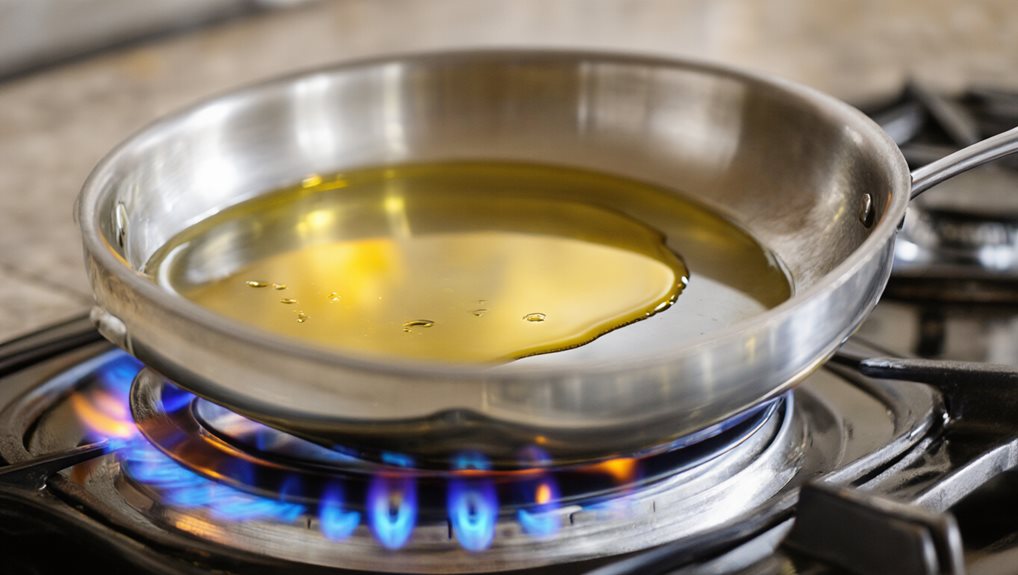
After sprinkling salt or cinnamon to mop up excess moisture, the next step is to control the flame and pan placement. Keep the burner at a steady low‑to‑medium setting; this prevents sudden spikes that vaporize moisture and launch oil droplets. Store your cooking oil in a cool, dark place to help maintain quality and reduce issues that can worsen splattering.
Center the pan so the flame aligns under its base, ensuring even heating. If splatter starts, lower the heat or shift the pan slightly to stabilize the oil.
Use a Funnel‑Shaped Frywall Guard and Keep It Clean
Ever wondered how a simple kitchen gadget can keep your stovetop spotless while you fry? A funnel‑shaped frywall guard drops into the pan, its high silicone walls catching splatters from burgers, tofu, or kale—up to 3.5 × more greens without spillover.
It stays firm, lets steam escape, and fits 8‑12‑inch pans.
Dishwasher‑safe, it rolls into a storage sleeve, keeping your surface clean and your cleanup quick.
Place Food Gently With Tongs to Avoid Splash‑Inducing Drops
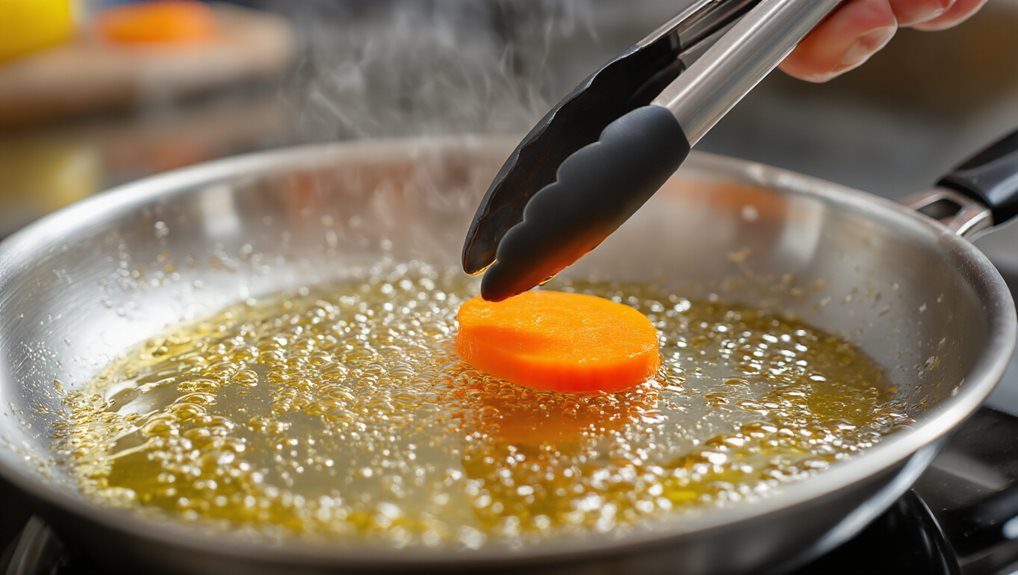
A simple way to keep oil from splattering is to use tongs when you place food into the pan. Grip the food gently, lower it slowly, and keep your hands away from the hot surface. Silicone‑tipped tongs protect nonstick pans, while stainless steel tongs work for cast‑iron. This controlled drop reduces splash velocity, keeps countertops clean, and minimizes burn risk.
Choose a Mesh Splatter Screen for Easy Ventilation
Why not let steam escape while you keep oil in check? Choose a 13‑inch stainless steel mesh screen that fits most pans, rests securely on the rim, and lets vapor flow freely.
The fine weave captures oil droplets, blocks splashes, and prevents moisture buildup.
It’s lightweight, dishwasher‑safe, and non‑reactive, so you maintain flavor while reducing cleanup and injury risk.
Fix Frequent Oil‑Splatter Problems (Sticking, Popping, Smoke)
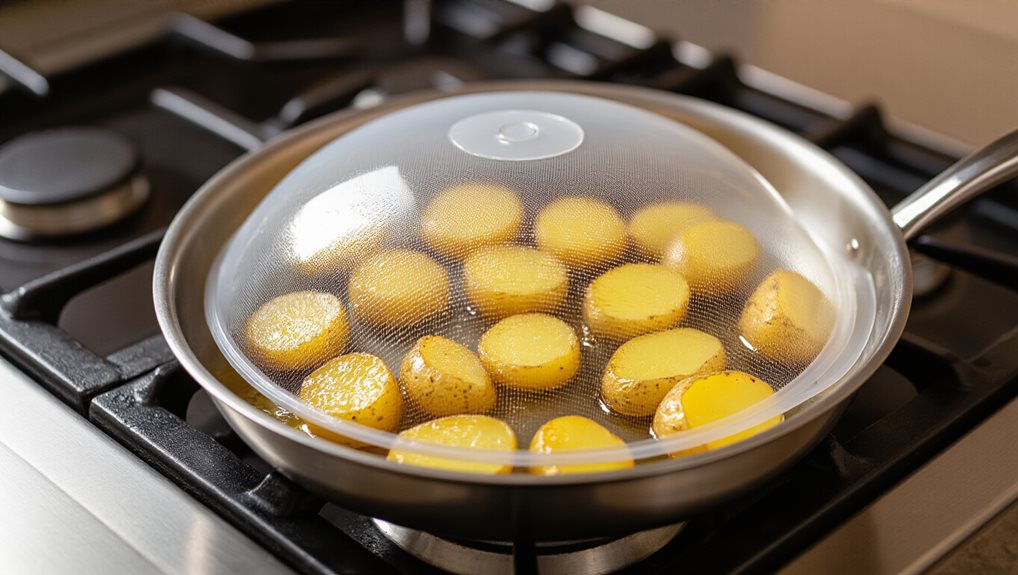
How can you keep oil from splattering, smoking, and sticking while you fry?
Pat food dry, toss it with oil, and use a dry, correctly sized pan with high sides.
Sprinkle salt or cinnamon on the pan bottom to absorb moisture.
Gently lower food with tongs or a drop technique, and avoid overcrowding.
These steps reduce sticking, popping, and smoke, keeping your fry session clean and safe.
Wrapping Up
By drying food, using a lower heat, and adding a pinch of salt or cinnamon, you’ll cut most splatter. Position the pan and flame steadily, then place ingredients gently with tongs. A funnel‑shaped guard or mesh screen keeps oil contained while letting steam escape. Keep the guard clean and adjust the pan as needed to prevent sticking and smoking. Follow these steps, and you’ll fry safely and efficiently without messy splashes.


