Yes, fudge does go bad, though proper storage can keep it fresh for weeks or even months. Homemade fudge lasts 1–2 weeks at room temperature in an airtight container, while store-bought varieties with preservatives can last several months. You’ll know it’s spoiled if you spot mold, detect sour odors, or notice texture changes like excessive dryness or unusual stickiness. Refrigeration extends shelf life to about a month, and freezing preserves it for up to three months when wrapped properly. The specifics depend on your fudge type and storage conditions.
Quick Guide
- Yes, fudge goes bad; homemade lasts 1–2 weeks at room temperature while store-bought lasts several months due to preservatives.
- Spoilage signs include visible mold, sour or rancid odors, excessive dryness or stickiness, and off flavors from rancid butter.
- Store fudge in airtight containers away from sunlight and heat; use waxed paper between layers to prevent sticking.
- Refrigerate cream cheese fudge immediately and nut-based varieties to prevent rancidity; they stay fresh 5–7 days and 2 weeks respectively.
- Freeze fudge for extended storage up to several months by wrapping in plastic then foil; thaw gradually in refrigerator.
Understanding Fudge Shelf Life: Homemade vs. Store-Bought

The shelf life of fudge comes down to how it’s made and packaged.
Homemade fudge typically lasts one to two weeks at room temperature because it lacks preservatives. Store-bought varieties often contain stabilizers and are vacuum-sealed, extending their shelf life to several months. For best results, keep fudge in an airtight container and layer with waxed paper to prevent it from drying out or sticking. You’ll find that commercial fudge maintains its quality longer, but homemade versions offer fresher taste despite their shorter lifespan.
Signs Your Fudge Has Gone Bad
Recognizing spoiled fudge isn’t difficult once you know what to look for. Check for visible mold growth, which appears as fuzzy spots in various colors.
Notice any off-putting odors that smell sour or rancid instead of sweet. Examine the texture for excessive dryness, crumbling, or unusual stickiness.
If you spot any of these warning signs, it’s time to discard your fudge. To help prevent rancid flavors from ingredients like butter, store fudge in an airtight container so it doesn’t absorb odors and stays fresher longer.
How Long Does Fudge Last at Room Temperature?

Fudge kept at room temperature typically lasts between one to two weeks when stored properly.
The exact duration depends on factors like humidity levels, temperature fluctuations, and whether you’ve wrapped it correctly.
Store your fudge in an airtight container away from direct sunlight and heat sources.
Just like sugar—which can be stored indefinitely because its natural properties prevent bacterial growth through osmosis—keeping fudge sealed and protected from moisture helps it stay fresh longer.
If your kitchen runs particularly warm, consider refrigerating it to extend its shelf life markedly.
Refrigerating Fudge: When and How to Do It Right
When temperatures climb or you want to maximize your fudge’s lifespan, refrigeration becomes your best storage option.
Wrap individual pieces tightly in wax paper, then place them in an airtight container to prevent moisture absorption and odor transfer.
For best results, keep it at 35-40F in the refrigerator to extend freshness.
Before eating, let the fudge sit at room temperature for 15-20 minutes to restore its smooth texture and rich flavor.
Freezing Fudge for Long-Term Storage
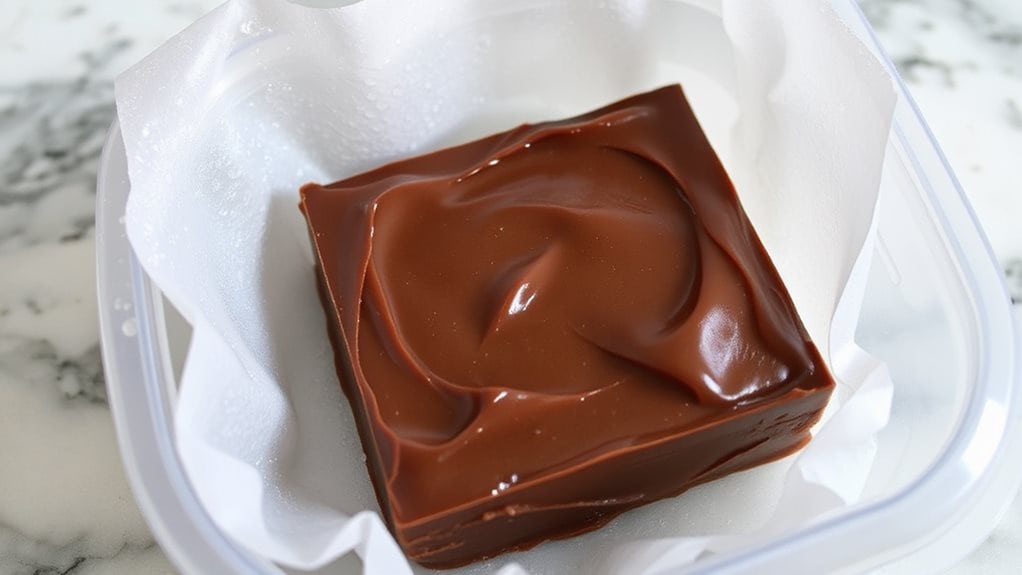
If you’ve made a large batch of fudge or want to save some for later, freezing is your best option for long-term storage that can extend its life up to several months.
The key to success lies in wrapping your fudge properly to prevent freezer burn and moisture loss, which means using multiple layers of plastic wrap followed by aluminum foil or an airtight freezer bag.
For best results, store it at 0°F or below to maintain quality and prevent freezer burn.
When you’re ready to enjoy your frozen fudge, you’ll need to thaw it gradually in the refrigerator to maintain its texture and prevent condensation from making it soggy.
Proper Freezing Techniques
For extended preservation beyond a few weeks, freezing stands as your most reliable method to maintain fudge’s quality for up to six months or even a year.
Wrap individual pieces tightly in plastic wrap, then place them in freezer-safe containers or heavy-duty freezer bags. Remove excess air to prevent freezer burn, and label containers with the date.
This double-layer protection guarantees peak freshness.
Thawing Frozen Fudge Safely
Once you’ve successfully frozen your fudge, you’ll need to thaw it properly to preserve its texture and flavor.
Transfer the wrapped fudge from the freezer to your refrigerator and let it thaw overnight. This gradual temperature change prevents condensation from forming on the surface.
Before serving, allow the fudge to reach room temperature for about 30 minutes to restore its ideal consistency.
Best Practices for Storing Different Types of Fudge
Not all fudge is created equal when it comes to storage, and you’ll need to adjust your approach based on the specific type you’re working with.
Classic chocolate fudge has different preservation needs than varieties packed with nuts or made with cream cheese, which means understanding these distinctions can prevent premature spoilage.
Classic Chocolate Fudge Storage
Classic chocolate fudge demands careful storage to maintain its smooth texture and rich flavor.
You’ll want to wrap it tightly in wax paper or plastic wrap, then place it in an airtight container.
Store it at room temperature for up to two weeks, or refrigerate it for a month.
Keep it away from direct sunlight and heat sources to prevent melting and texture changes.
Nut-Based Fudge Preservation
Due to their higher oil content, nut-based fudges require slightly different storage methods than their plain chocolate counterparts.
You’ll want to keep them refrigerated rather than at room temperature, as the oils from nuts can become rancid more quickly.
Store your nut fudge in an airtight container for up to two weeks in the fridge, or freeze it for three months maximum.
Cream Cheese Fudge Care
Because cream cheese fudge contains dairy as its primary ingredient, it’s the most perishable variety you’ll encounter.
You should always refrigerate it immediately after making or purchasing, and it’ll stay fresh for only five to seven days.
Store it in an airtight container to prevent moisture loss and absorption of refrigerator odors.
Never leave cream cheese fudge at room temperature for extended periods.
Tips to Maximize Freshness and Flavor
Keeping your fudge in peak condition doesn’t require fancy equipment or complicated techniques.
You’ll want to let it cool completely before wrapping, as trapped moisture promotes spoilage.
Cut pieces should be wrapped individually to prevent drying out.
Store fudge away from strong-smelling foods, since it absorbs odors easily.
Finally, bring refrigerated fudge to room temperature before serving to restore its creamy texture.
Wrapping Up
You’ve learned that fudge doesn’t last forever, but proper storage can markedly extend its life. Whether you’re keeping it at room temperature for a week, refrigerating it for up to three weeks, or freezing it for several months, the key is airtight packaging and protection from moisture and heat. By following these storage guidelines and watching for spoilage signs, you’ll enjoy fresh, delicious fudge every time.