
Your sugar won't spoil or go bad, thanks to its natural properties that prevent bacterial growth through osmosis. While manufacturers suggest using sugar within 2-3 years for ideal quality, properly stored sugar remains safe to consume indefinitely. You'll want to keep white sugar in airtight containers in cool, dry places to prevent clumping and moisture absorption. Different types of sugar have specific storage needs – white sugar requires dry conditions, while brown sugar needs some moisture to stay soft. Following proper storage methods helps maintain your sugar's quality, and there's plenty more to know about keeping your sweet staples fresh.
Quick Guide
- Sugar doesn't spoil and can be stored indefinitely due to its natural properties that prevent bacterial growth through osmosis.
- While sugar remains safe indefinitely, manufacturers recommend using it within 2-3 years for optimal quality and performance.
- Moisture is sugar's main enemy, causing clumping in powdered sugar and hardening in brown sugar.
- Signs of compromised sugar include unusual odors, discoloration, mold growth, or presence of insects.
- Proper storage in airtight, moisture-proof containers helps maintain sugar's quality and prevents deterioration issues.
Understanding Sugar's Shelf Life
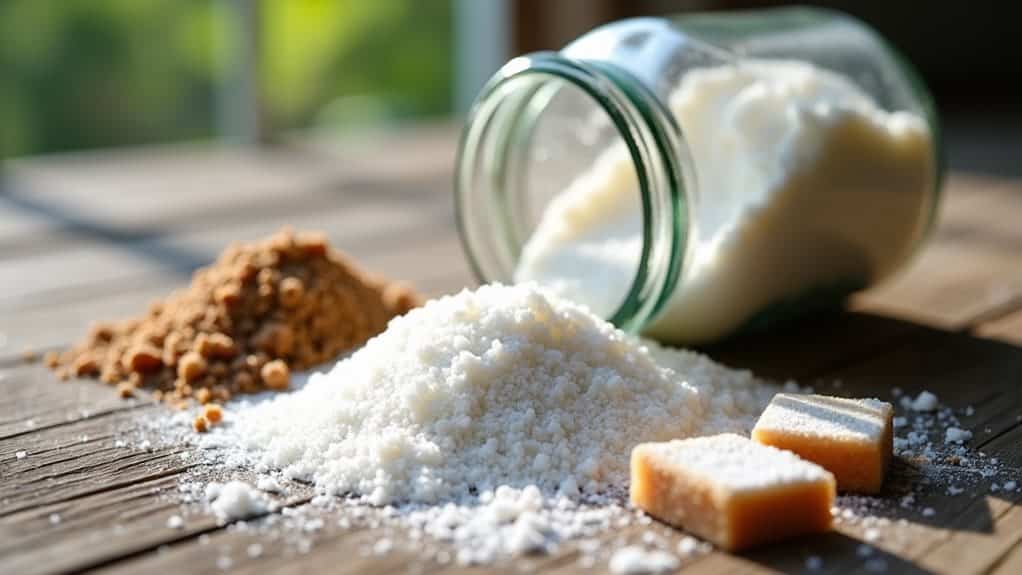
Sugar's shelf life is remarkably unique among food products, as it never truly spoils.
You can store sugar indefinitely because it naturally prevents bacterial growth through osmosis, which dehydrates any potential microbial colonies. Additionally, uncooked oatmeal has a long shelf life due to low moisture content, making it a reliable pantry staple. While manufacturers recommend using sugar within 2-3 years for the best quality, properly stored sugar maintains its safety and taste indefinitely, though its texture may change over time. For optimal preservation, store sugar in an airtight, moisture-proof container.
Storage Tips for Sugar
Storing sugar properly can greatly impact its quality and longevity, even though it doesn't technically spoil. Proper storage techniques can help maintain its freshness for years. You'll want to keep your sugar in airtight containers like mason jars or food-grade buckets, placed in a cool, dry area away from moisture and extreme temperatures.
For brown sugar, add a terracotta disk or bread slice to prevent hardening, while powdered sugar needs complete protection from humidity to avoid clumping. Using specialized containers like Tightvac or Minivac can provide optimal protection for your sugar and ensure maximum freshness.
Signs Your Sugar Needs Help
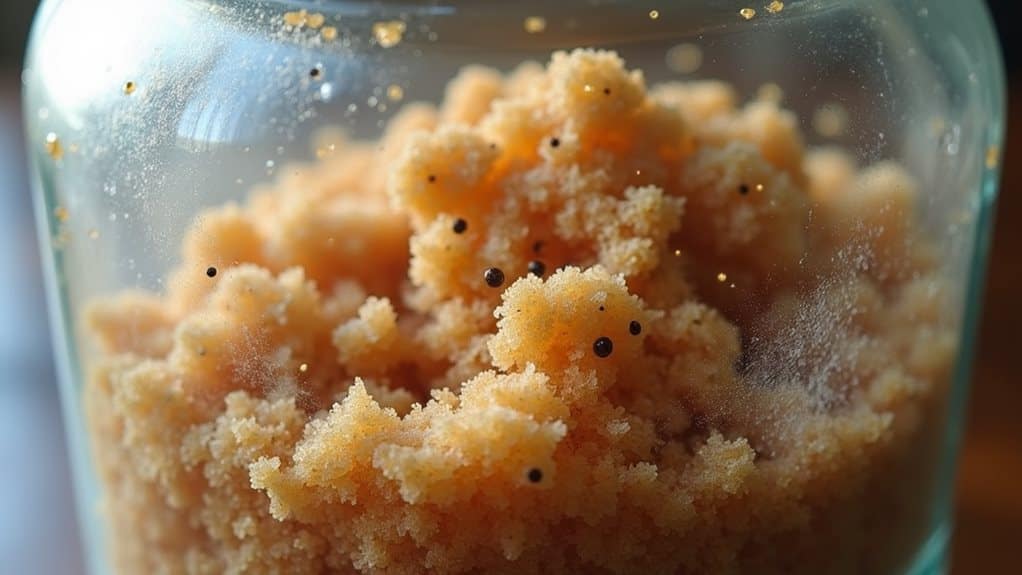
Over time, even properly stored sugar can show signs of deterioration that warrant attention.
While sugar has a remarkably long lifespan, proper storage plays a crucial role in maintaining its quality. Properly stored powdered sugar can last about 2 years if kept in an airtight container.
Watch for clumping from moisture absorption, which isn't harmful but needs breaking up before use.
You'll know there's trouble if you spot discoloration, mold, or detect unusual odors.
If you find insects or larvae in your sugar, don't take chances – discard it immediately.
Fixing Problem Sugar
A pinch of quick thinking can rescue problematic sugar in your pantry.
For white sugar that's turned clumpy, pulse it in a food processor or heat it at 150°F for 15 minutes. Storing sugar in cool, dry locations can help prevent clumping.
When brown sugar hardens, add bread slices or marshmallows to restore moisture, or microwave it with a damp paper towel. For best results, store brown sugar in rustproof containers to prevent hardening in the first place.
You'll find powdered sugar responds well to airtight storage with moisture absorbers.
Different Sugars, Different Rules
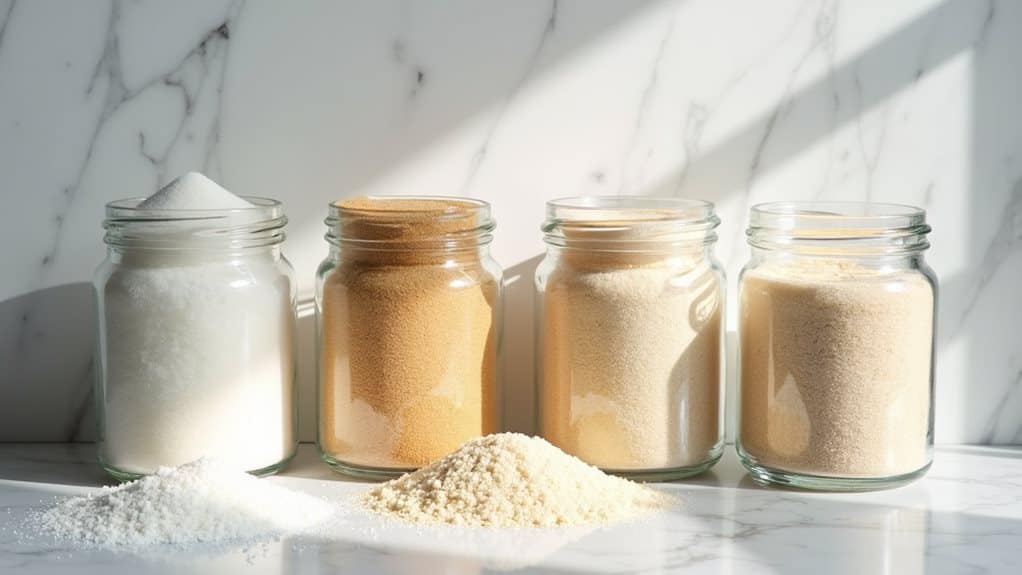
Different Sugars, Different Rules
While fixing sugar problems is helpful, knowing how different types of sugar behave can prevent issues in the first place.
Each variety has unique storage needs: white sugar craves dryness, brown sugar needs moisture, powdered sugar demands airtight protection from odors, and raw sugar follows rules similar to white sugar. Proper storage methods are essential to maximize shelf life and maintain quality. All types last indefinitely but perform best within 2-3 years. Using food grade containers for storage provides the best protection against moisture and external contaminants.
Wrapping Up
Sugar's a remarkably stable ingredient that won't technically spoil, but you'll still need to store it properly to maintain its quality. Whether you're working with granulated, brown, or powdered sugar, keeping moisture out and following proper storage guidelines will guarantee your sugar stays fresh and clump-free for years. With the right care and quick fixes for common issues, you'll always have good sugar ready for your cooking and baking needs.


