
You’re probably frying at the wrong temperature, using a heavy coating, or mishandling the dredge. Keep the oil steady at 325°F with a deep‑fry thermometer; small batches prevent drops. Mix equal parts flour and cornstarch, add a teaspoon of baking powder per two cups, and dip the meat in a cold buttermilk‑egg wash right before frying. Pat the chicken dry, season after dredging, and finish with a brief oven bake to lock in crunch. Keep going to discover more tips.
Quick Guide
- Oil temperature drops below 325‑350°F due to overcrowding or insufficient pre‑heating, preventing proper crust formation.
- Coating lacks a flour‑cornstarch‑baking powder blend, so gluten absorbs moisture and the crust stays soggy.
- Meat isn’t patted dry or is over‑marinated, leaving excess surface moisture that hinders crispness.
- Using low smoke‑point oil or reusing oil too long creates burnt or greasy coating instead of a light crunch.
- Skipping the double dredge or not resting coated pieces on a rack before frying reduces layer adhesion and uniform browning.
Set the Perfect 325°F Oil Temperature for Crispy Fried Chicken
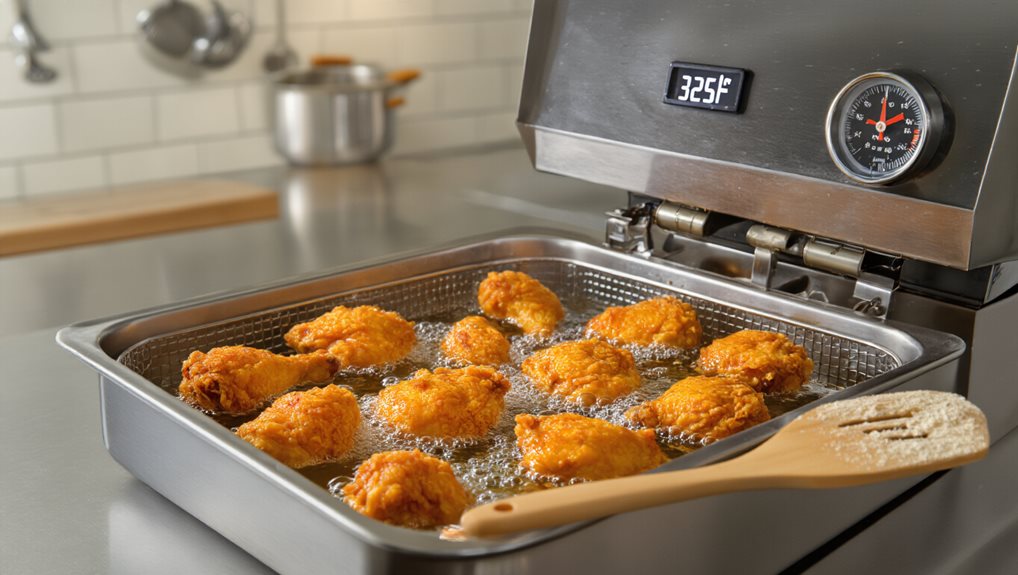
If you keep the oil at a steady 325 °F, the coating will crisp up quickly while the meat stays juicy. Use a deep‑fry thermometer to confirm the temperature before adding chicken, then fry in small batches to avoid drops. Choose a high smoke‑point oil like peanut, and reheat between batches. Drain on racks to preserve the crunch. Store any leftover seasoning blends in airtight spice jars with silicone gaskets to keep moisture out so your next batch’s coating stays crisp. A high smoke‑point oil prevents burning and off‑flavors.
How a Flour‑Cornstarch‑Baking‑Powder Blend Makes Crispy Fried Chicken Crunchy
Why does a simple blend of flour, cornstarch, and baking powder turn ordinary fried chicken into a crunchy masterpiece?
You whisk equal parts flour and cornstarch, then add a tablespoon of baking powder per two‑cup mix.
The cornstarch blocks gluten, keeping the coating light, while baking powder creates tiny air bubbles that lift and brown the crust.
Combine with cold liquid, dip the chicken, and fry immediately for an airy, crisp result. For make-ahead prep, using a vacuum sealer with dry and wet modes can help keep coated pieces ready to fry without introducing extra moisture.
Using a milk brine helps keep the meat juicy before coating.
Avoid Over‑Marinating or Under‑Seasoning to Preserve Crust Integrity
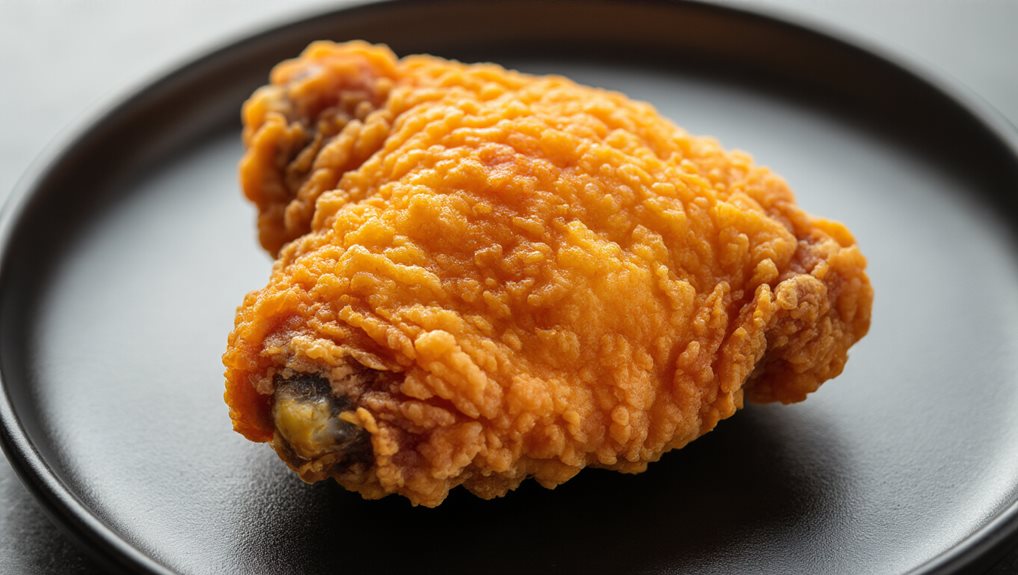
The flour‑cornstarch‑baking‑powder mix gives you a light, airy crust, but even the best coating can fall apart if the chicken’s moisture balance is off.
Limit buttermilk marinades to one or two days; longer makes the meat too tender and soggy. Aim for 1‑8 hours, then season after dredging. Proper salt draws out surface moisture, ensuring the crust adheres and stays crisp.
If you’re seasoning with a wet topping, keep it minimal because raw eggplant seeds can add extra moisture and bitterness unless cooked first.
Fix Common Dredging Errors That Cause Doughy or Soggy Coatings
Ever notice how a soggy, doughy coating ruins an otherwise perfect fried chicken? Pat the meat bone‑dry before the first flour dusting; moisture pushes the crust away.
Mix potato starch with flour 1:1 to limit gluten absorption. Use a buttermilk‑egg wash for better layer adhesion.
For a double dredge, add a cold wet batter, then a final flour coat with a pinch of cornstarch and baking powder. This prevents sogginess and builds a crisp, flaky shell. Just as high salt content helps preserve soy sauce by slowing deterioration, keeping excess moisture out of your dredge helps your crust stay crisp instead of turning soggy.
Finish Crispy Fried Chicken With Resting, Flipping, and Oven‑Bake
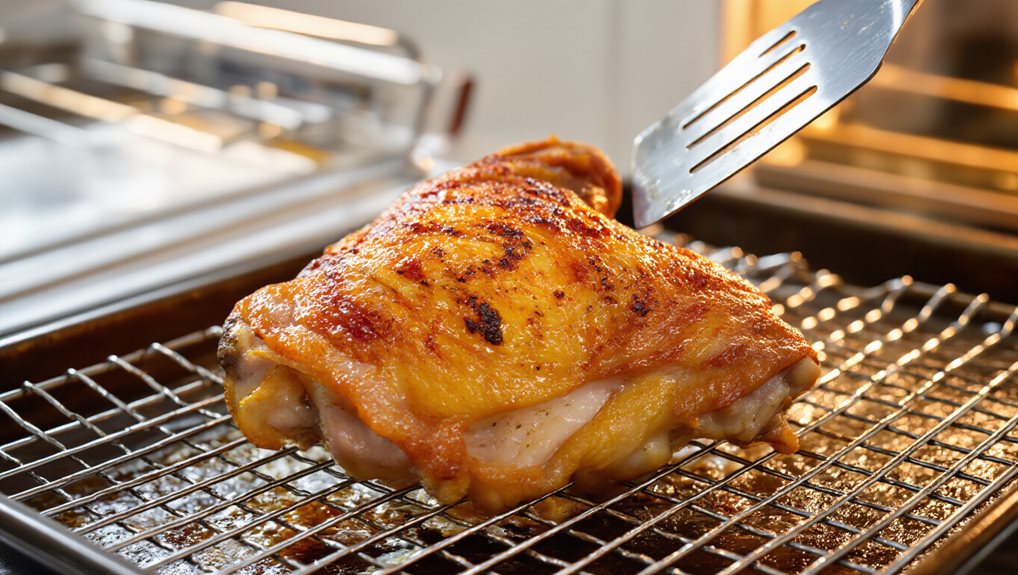
After you’ve nailed the dredging, the next step is to let the chicken rest, flip it strategically, and finish it in the oven. Rest the coated pieces on a rack for about 15 minutes to let surface moisture evaporate, then fry at 350°F, flipping every two minutes to build a uniform crust. Finally, bake on an oven‑safe rack at 250°F for five minutes to lock in crispness without drying the interior. Use 30-second bursts to avoid overheating, which can dry out the coating and compromise crispness.
Wrapping Up
By keeping your oil at a steady 325 °F, using a flour‑cornstarch‑baking‑powder mix, and seasoning just enough, you’ll get a golden, crunchy crust. Avoid soaking the chicken too long or skimping on the dredge, and don’t overload the pan, which drops the temperature. After frying, let the pieces rest briefly, flip once, and finish them in a hot oven if needed. Follow these steps, and your fried chicken will stay crisp, not soggy.


