
Chill the onion for at least fifteen minutes, then slice it with a sharp, razor‑thin knife while keeping the root end intact until the last cut. Work over a fan or near a stove exhaust to pull the tear‑inducing gas away, and place a damp paper towel under the board to absorb any lingering vapor. Chew a piece of bread or lettuce to create a mouth‑nose airflow, and trim the root first to release gas early. Follow these steps and you’ll cut onions without tears, and the next section shows how to combine them into a seamless routine.
Quick Guide
- Chill the whole onion at 4 °C for 30 min (or freeze 10‑15 min) to slow enzyme activity and cut tear‑inducing gas by up to 80 %.
- Use a razor‑sharp knife and keep the root end intact until the final cut to limit cell rupture and gas release.
- Slice on a damp, paper‑towel‑covered surface and work near a fan or stove exhaust to draw volatile compounds away from your eyes.
- Wear goggles or glasses and chew a piece of bread or lettuce to create a mouth‑nose airflow that diverts irritant vapors.
- Store spices and cutting tools in airtight, silicone‑gasket containers to prevent lingering odors and moisture transfer.
How to Stop Crying When Chopping Onions: Quick‑Fix Hacks
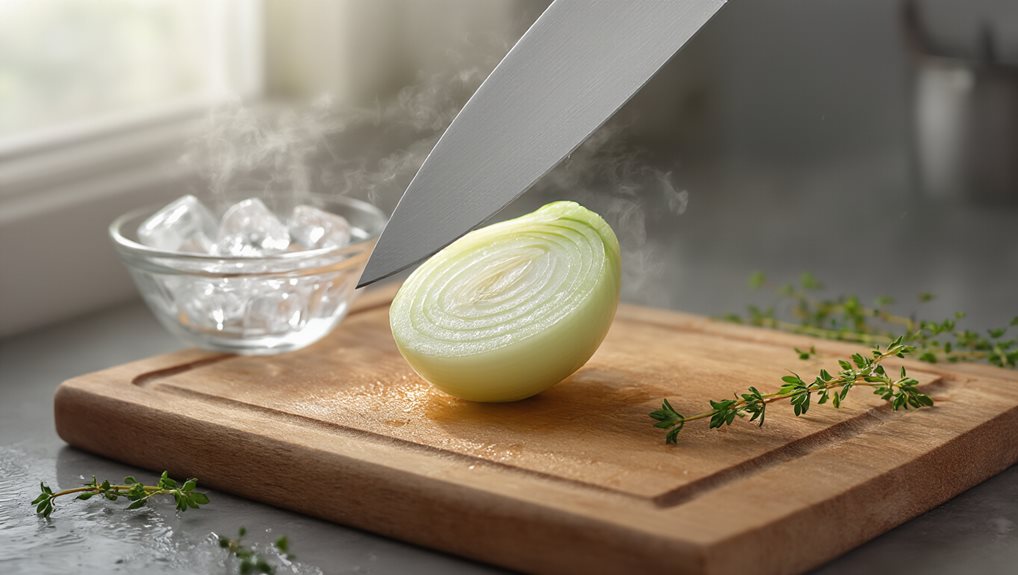
Ever wonder why a simple onion can turn your eyes into waterfalls? Chill the onion for at least fifteen minutes, then slice with a razor‑sharp knife to keep cells intact and limit syn‑propanethial‑S‑oxide release. Keep the root end intact until the last cut, and work quickly. A damp paper towel under the board absorbs lingering gases, reducing irritation. Food-grade, BPA-free materials like odor-resistant silicone help prevent smells from transferring between stored foods. Use a stable surface to prevent the knife from slipping and causing accidental cuts.
How to Stop Crying When Chopping Onions: Ventilate the Workspace
Why not let fresh airflow do the heavy lifting while you slice? Place a fan behind the onions, angled so the breeze carries volatile compounds away from your eyes. Position your cutting board near the stove exhaust and turn the hood on; the vent pulls the irritants upward. A small candle or portable fan can supplement airflow, ensuring the gases never reach your face. Store your spices in airtight jars with silicone gaskets to prevent moisture and odor transfer in a steamy kitchen. Use a sharp knife to cut quickly and reduce the time chemicals are released.
How to Stop Crying When Chopping Onions: Chill the Bulb Before Cutting
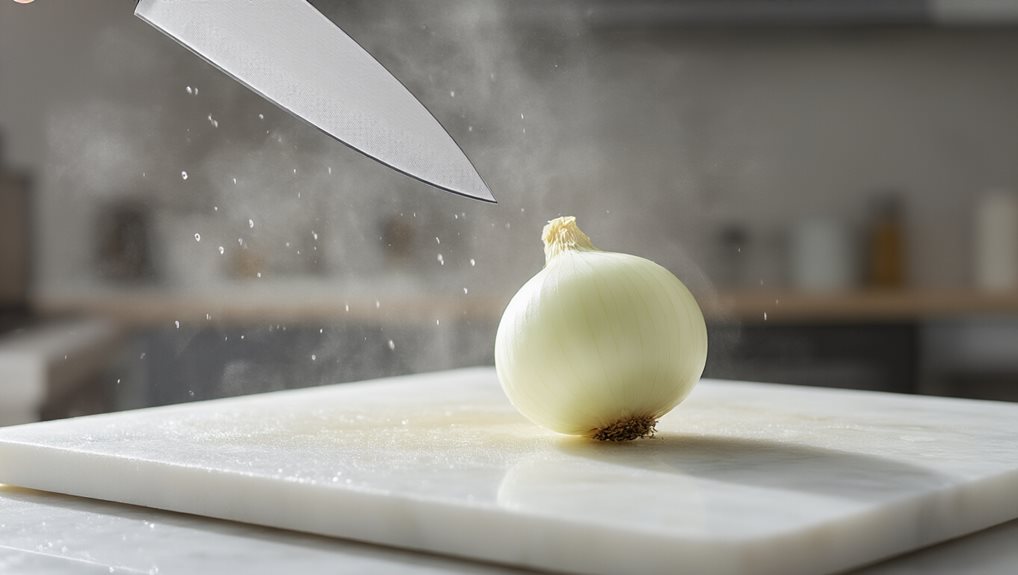
A few minutes in the fridge can make a big difference when you slice an onion, because chilling slows the chemical reaction that creates the tear‑inducing gas.
Place the whole bulb in the refrigerator at 4 °C for about 30 minutes, or freeze it for 10‑15 minutes if you’re short on time.
The cold lowers enzyme activity, reducing syn‑propanethial‑S‑oxide production and cutting tears by up to 80 %.
Keep the onion sealed and avoid partial thawing to maintain the effect.
For other high‑oil foods like nuts, using an airtight container helps slow spoilage by limiting air and moisture exposure.
How to Stop Crying When Chopping Onions: Sharpen Your Knife for Clean Cuts
When your knife is sharp, it slices through onion cells cleanly, keeping the cell walls intact and cutting the amount of tear‑inducing gas that escapes.
A well‑maintained edge also lets you cut faster with less pressure, which means fewer droplets are released into the air.
Top models offer 60–95 kPa suction power and seal in 8–20 seconds to remove air quickly and extend freshness 5–7× longer.
Maximize Cell Integrity
Ever wondered why a razor‑sharp knife makes onion chopping less tear‑inducing? A sharp blade slices cells cleanly, preserving their walls and limiting the release of irritant gases.
Grip the knife with a pinch, keep the wrist steady, and use the chopping technique on a flat, peeled half. By minimizing crush and tearing, you keep cell integrity high, reducing tears.
Reduce Gas Release
Keeping cells intact helps, but the next step is cutting them cleanly to keep the irritating gas from escaping. When your knife is sharp, it glides, producing fewer, low‑energy droplets and reducing aerosol spray. Slow, gentle strokes further limit mist, while regular honing or whetstone sharpening keeps the edge aligned, preventing layer bending and excessive juice ejection that triggers tears.
Boost Cutting Efficiency
A sharp knife lets the slice through an onion with minimal cell rupture, which means far less alliinase and sulfur compounds are released into the air. When you keep the edge honed, the blade glides, reducing pressure on juice‑filled cells and limiting spray. Test sharpness with paper—if it tears unevenly, sharpen. Quick, clean cuts lower droplet height, keep irritation down, and make chopping faster.
How to Stop Crying When Chopping Onions: Trim the Root First to Release Gas Early
You start by cutting the onion’s root end off, which lets the tear‑inducing gas escape before you slice the rest. This early release reduces the amount of irritant that builds up in the air, so the mist stays lower and less likely to hit your eyes. By trimming the root first, you control the gas flow and keep the chopping process much more comfortable. Pepperoni is a cured sausage and safe to eat without cooking.
Root End First Cut
When you start chopping an onion, trim the top stem first and leave the root end intact, because the root holds the highest concentration of tear‑inducing sulfur compounds and acts as a natural handle. The intact root keeps the layers together, lets you grip safely, and limits sulfur vapor early. Cutting proceeds around the root until the final discard, reducing tears and ensuring uniform dice.
Control Gas Release Early
Leaving the root end intact keeps the onion’s layers together while you slice, but cutting off that root first changes the game.
Trimming the root releases the sulfur‑rich gas before you start bulk chopping, shifting the peak aerosol burst to an early step. This lets you finish most cuts with fewer tear‑inducing droplets, especially if you use a sharp knife and gentle strokes.
How to Stop Crying When Chopping Onions: Chew Bread (or Lettuce) While Cutting
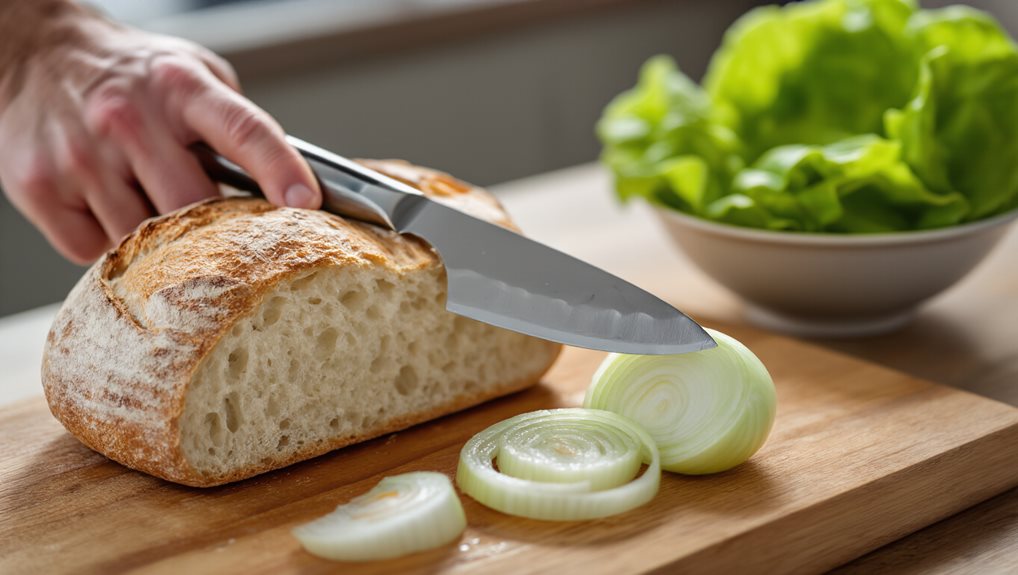
Ever wonder why a simple slice of bread can keep your eyes dry while you dice onions? Chewing bread (or lettuce) creates a mild mouth‑to‑nose airflow that draws irritant vapor away from your eyes. The food’s texture also distracts your sensory receptors, reducing the reflexive tear response.
Keep a bite in your mouth, and you’ll notice fewer tears without altering cutting technique.
5‑Step Cry‑Free Routine: Combine All Techniques for Tear‑Free Chopping
Why not blend the best tear‑prevention tricks into a single, streamlined routine? First, chill the onion in cold water for ten minutes, then slice under a running stream to keep temperature low. Freeze it briefly before cutting, keep the root intact, and use a sharp knife for clean cuts. Position yourself near a vent or open window, and wear sealed goggles to block any lingering gas.
Wrapping Up
By combining ventilation, chilling, a sharp knife, root trimming, and a bite of bread or lettuce, you can slash onion tears efficiently. Each technique tackles the irritant at a different stage, so using them together creates a reliable, tear‑free routine. Keep your workspace cool, your tools sharp, and your mouth occupied, and you’ll slice onions without the usual sting. This practical approach lets you focus on flavor, not on wiping away tears.


