
If your gravy is too thin, it’s usually because it wasn’t thickened properly or not enough liquid was reduced. Using improper techniques like adding thickener directly into hot gravy can cause lumps, or relying solely on reducing without monitoring can leave it too watery. To fix this, try adding a slurry or roux and simmering until it thickens. Keep in mind, perfecting proper techniques helps avoid these issues, and you’ll find more tips if you keep exploring further.
Quick Guide
- Insufficient reduction or simmering leaves excess liquid, preventing proper thickening.
- Adding thickening agents directly into hot gravy without pre-mixing causes uneven results.
- Using a spoon instead of a whisk during thickening leads to uneven flour or cornstarch distribution.
- Over-reliance on reducing alone can result in overly thin gravy if not monitored carefully.
- Excess liquid or improper storage can dilute gravy, making it thinner when reheated.
Why Is My Gravy Too Thin? Common Causes Explained
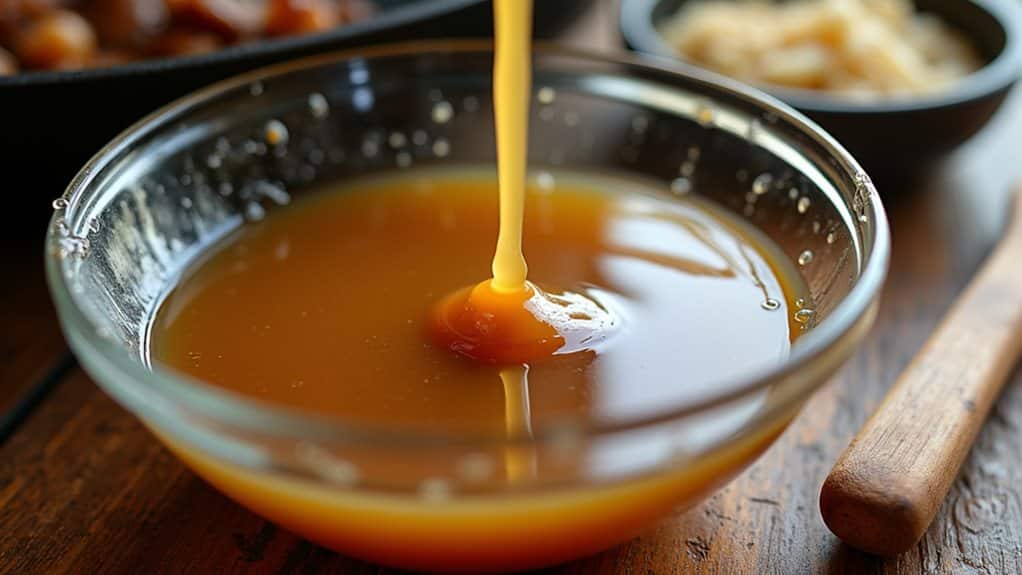
One common reason your gravy turns out too thin is due to how you mix thickening agents. Using a spoon instead of a whisk can cause uneven distribution of flour or cornstarch, resulting in a watery gravy.
Also, adding thickener directly into hot gravy without pre-mixing can prevent proper thickening, affecting the gravy’s consistency.
If you store leftover gravy with added fat, keep it in a cool, dark place because heat and light can accelerate oxidation and degrade oils over time.
What’s the Best Way to Thicken Your Gravy? Techniques Compared
When it comes to thickening gravy, you have several options, each with its own advantages.
A roux made from butter and flour offers gradual, controlled thickening.
A slurry of cornstarch or arrowroot provides quick, smooth results.
Choosing the right method depends on your desired consistency and the ingredients you prefer to use.
If your gravy scorches while reducing, let the pan cool completely before cleaning and consider a baking-soda paste to help lift stubborn residue.
Roux vs. Slurry
Choosing the right thickening method depends on how quickly you need results and the texture you prefer.
A roux, made from cooked flour and fat, thickens gravy through simmering and provides a velvety texture.
A slurry, mixed with starch and cold water, thickens rapidly without full cooking.
Both methods require gradual addition and proper simmering to avoid lumps.
Choosing the Right Thickener
The best way to thicken your gravy depends on how quickly you want results and the look you’re aiming for.
To thicken the gravy, you can use a cornstarch slurry for a glossy finish or a flour-based roux for a smooth, gradual thickening.
Wondra flour works well for lump-free thickening, while arrowroot or tapioca starch are good gluten-free options.
How to Properly Add and Cook Thickening Agents
When adding thickening agents like slurry or roux, pour them gradually into the hot gravy while whisking constantly to avoid lumps.
Make sure to cook the gravy for a few minutes after adding the thickener, keeping the temperature steady around 180-200°F to activate the thickening process fully.
Stir continuously and allow enough simmering time—about 1 to 3 minutes—to achieve a smooth, glossy consistency.
Just as with dairy-based sauces, maintaining gentle, controlled heat helps prevent separation and keeps the texture smooth.
Gradual Addition Technique
Have you ever added thickening agents all at once and ended up with lumps or a gravy that’s too thick? The gradual addition technique helps prevent this.
Whisk small amounts into the hot liquid while simmering, stirring constantly for even distribution.
Add in small amounts, wait 1-2 minutes, and monitor the texture to maintain control and achieve the desired consistency.
Proper Cooking Time
Adding thickening agents like slurry or roux requires careful timing and patience to achieve the perfect consistency.
You should simmer the gravy for at least 1-2 minutes after adding the thickener to activate it.
Maintain a gentle simmer around 180-200°F, allowing enough time for the gravy to reach your desired consistency without overcooking or breaking down.
How to Reduce Thin Gravy by Simmering and Adjusting Liquid
Simmering is an effective way to thicken thin gravy by allowing excess liquid to evaporate gradually.
Keep the gravy uncovered or partially uncovered to promote evaporation and speed up the reduction process.
Stir frequently to prevent sticking, and monitor the consistency closely.
Once the gravy reaches your desired thickness, remove it from heat to avoid over-reduction.
If you finish with a splash of soy sauce, keep in mind that oxidation can alter its taste when it’s left exposed to air for too long.
How to Fix Overly Watery or Thick Gravy Quickly
When your gravy turns out too watery or thick, quick fixes help you achieve the right consistency without altering flavor.
To thicken, whisk a cornstarch slurry or a roux into the hot gravy and simmer for a few minutes.
For rapid thickening, knead beurre manié into the gravy, whisk, and simmer until it reaches your preferred thickness.
If you want to save leftovers, use double heat seal vacuum sealing to help maintain freezer storage integrity and reduce freezer burn.
Troubleshooting and Quick Fixes for Thin or Gummy Gravy
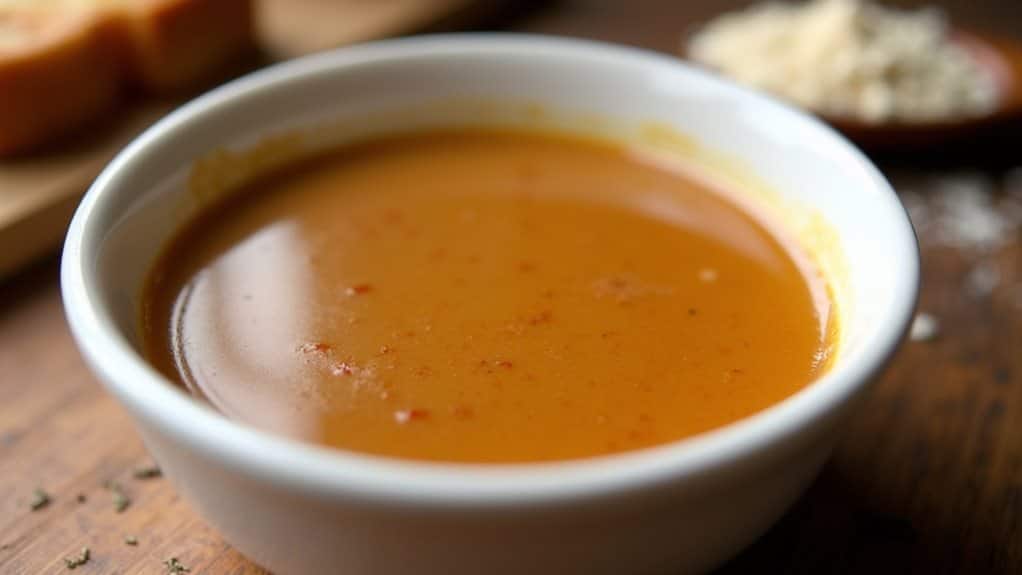
If your gravy is too thin or has a gummy texture, there are quick fixes to improve its consistency. Simmer the gravy uncovered to evaporate excess water, naturally thickening it.
Whisk in a slurry of cornstarch or Wondra flour gradually, avoiding lumps.
For rapid thickening, add beurre manié or incorporate small amounts of Wondra flour, but don’t boil vigorously to prevent Gummy textures.
Wrapping Up
Knowing how to fix thin gravy quickly can save your meal. Whether you need to thicken it with a slurry, reduce excess liquid through simmering, or adjust ingredients, understanding these methods helps you achieve the perfect consistency. Keep in mind that patience and proper technique are key. With practice, you’ll be able to troubleshoot and correct issues efficiently, ensuring your gravy complements your dish without being too watery or overly thick.


