
If you don’t have breadcrumbs for your meatballs, consider pantry staples like rolled oats, crushed crackers, ground nuts, or grated Parmesan cheese. These options give good binding, texture, and flavor; for example, oats add fiber, while nuts or cheese bring richness. Toasting bread ends and crushing them also works well. Using these substitutes can make your meatballs healthier and budget-friendly. Keep exploring these options to find the perfect fit for your recipe.
Quick Guide
- Rolled oats are a high-fiber, gluten-free alternative that bind meatballs well and add nutritional value.
- Crushed crackers or cereal offer flavor and crunch, enhancing texture and taste.
- Ground nuts like almonds provide richness and moisture, acting as a flavorful binder.
- Parmesan cheese adds a cheesy crust and helps hold ingredients together.
- Stale bread processed into crumbs creates a traditional, effective binding agent.
What Are the Best Breadcrumb Substitutes for Meatballs?
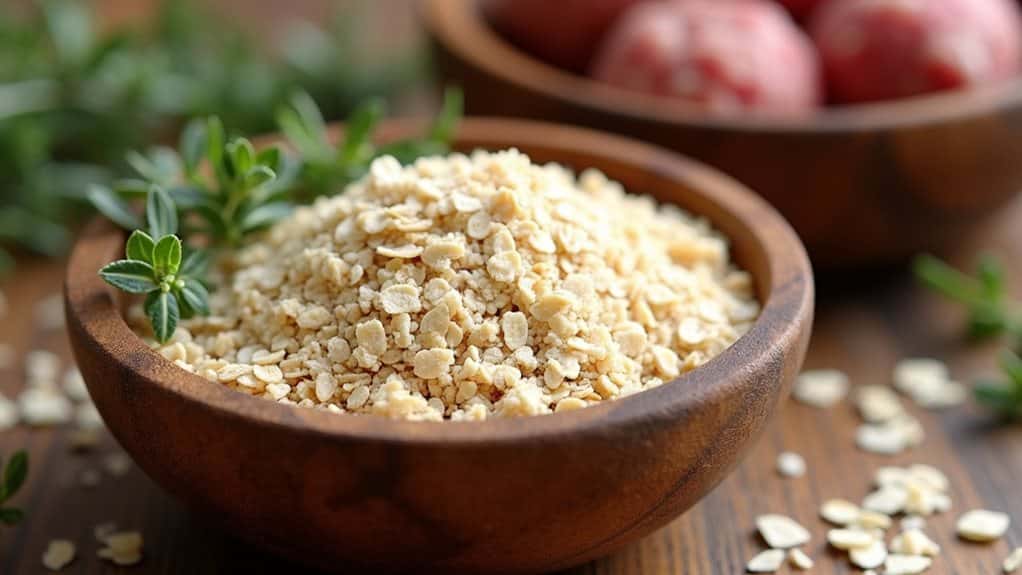
When it comes to making meatballs, traditional breadcrumbs aren’t the only option. You can use rolled oats for a high-fiber binder, crushed crackers or cereal for flavor and crunch, ground nuts like almonds for texture and richness, Parmesan cheese for a cheesy crust, or stale bread processed into crumbs.
These substitutes offer variety and help achieve the desired consistency. If you’re using stale bread crumbs you’ve made yourself, store them in an airtight container to help preserve their best quality over time.
How to Prepare and Incorporate Breadcrumb Alternatives
To prepare breadcrumb alternatives, start by toasting bread ends or slices to add flavor and texture, then process them into fine crumbs.
You can also use a food processor or blender to turn rolled oats or nuts into a binding consistency.
Alternatively, crumble crackers and cereal by hand or with a rolling pin.
When incorporating these substitutes, mix them thoroughly to achieve an even texture and flavor, ensuring they blend well into your meatball mixture.
Just as maintaining an emulsion keeps Alfredo sauce smooth and creamy, mixing your binder evenly helps prevent the meatball mixture from separating or turning greasy.
Preparing Crumb Substitutes
Preparing breadcrumb substitutes involves creating textures that can effectively replace traditional bread crumbs in meatballs.
You can make toasted bread crumbs by drying bread ends or slices at 300°F for 15 minutes, then crumbling or processing them in a food processor.
For oatmeal, pulse it in a blender until finely textured.
Combining cracker crumbs and oats helps adjust moisture and texture, ensuring the mixture binds well.
Incorporating Alternatives Effectively
Incorporating breadcrumb alternatives into your meatball mixture requires a careful approach to guarantee proper binding and texture. Use a suitable substitute, like processed oats or toasted bread ends, combined with moist ingredients like eggs or milk to improve binding.
Adjust the amount for desired firmness, and gently mix to maintain tenderness and even distribution in your meatball mixture.
Why Using Pantry Staples for Meatballs Is a Smart Choice
Using pantry staples like oats, crushed crackers, or nuts in meatballs is a smart choice because it can help you create healthier and more affordable meals. These ingredients are cost-effective, easy to prepare, and enhance nutritional value by adding fiber, protein, or healthy fats. Their versatility allows for flavor and texture adjustments, making your meatballs adaptable to different tastes and dietary needs. You can also keep these mix-ins fresh longer by using a vacuum sealer with 60–95 kPa suction power to help prevent moisture and air exposure during storage.
Top Variations for Different Textures and Flavors
Different substitutes can change the texture and flavor of your meatballs, giving you options to suit your preferences.
For example, crushed crackers or cereal add crunch and a savory taste.
Nuts and seeds provide a richer flavor and extra texture.
You can also enhance flavor and nutrition by using ingredients like Parmesan cheese or seasoned potato chips, making your meatballs both tasty and customizable.
If you mix in avocado oil for moisture, store it properly and watch for signs of rancidity like a crayon-like smell or bitter taste.
Textural Differences and Crunch
When choosing a substitute for breadcrumbs in meatballs, the texture and crunch of the final product are heavily influenced by your choice.
Crushed pretzels or potato chips create a crust with a crunchy texture, ideal for coatings.
Toasted bread ends or crackers yield a crisp, substantial crumb, enhancing the crust and providing a satisfying crunch without sacrificing binding.
Flavor Enhancements and Variations
To enhance the flavor and add variety to your meatballs, incorporating different seasonings and ingredients can make a noticeable difference.
Adding Parmesan cheese provides a savory, cheesy taste, while toasted nuts like almonds or pecans add richness and crunch.
Seasoned crackers or herbs such as parsley or oregano amplify aroma, and flavor-enhancing ingredients like garlic powder deepen the overall savory profile.
Dietary and Nutritional Benefits
Choosing the right substitute for breadcrumbs in meatballs can improve both their texture and nutritional profile.
Oatmeal adds fiber and moisture, while crushed nuts like almonds provide healthy fats and crunch.
Seeds such as sesame enhance protein and healthy fats, and Parmesan cheese adds flavor and a crunchy crust.
These options enhance nutritional benefits without greatly increasing calorie counts.
Tips for Achieving Perfect Texture and Binding Without Breadcrumbs

Achieving the perfect texture and binding in meatballs without breadcrumbs relies on selecting the right substitutes and preparing them properly. Using toasted bread ends, oats, or crushed nuts can mimic traditional binding and texture.
Moist ingredients like eggs help retain moisture. Combining substitutes, like crackers with Parmesan, enhances both binding and flavor, ensuring well-structured, moist meatballs. Eggplant is rich in antioxidants like anthocyanins, which provide anti-inflammatory benefits.
How to Store and Reheat Meatballs Made With Substitutes
Proper storage and reheating are essential to keep meatballs made with substitutes fresh, flavorful, and safe to eat.
Store cooked meatballs in an airtight container in the refrigerator for up to 3 days.
Alternatively, you can freeze them in a single layer in freezer bags for up to 3 months.
Reheat in the microwave or oven, ensuring the temperature reaches 160°F or 165°F for safety.
Troubleshooting Common Issues When Making Meatballs Without Breadcrumbs
When making meatballs without breadcrumbs, it’s common to encounter issues like meatballs falling apart or becoming too dense.
To improve meatball texture, use binder alternatives like oats or crushed crackers for stability.
Adjust mixture consistency by adding moisture from broth or eggs.
Guarantee ingredient substitution maintains moisture retention without overworking the mixture, which can lead to toughness.
Which Breadcrumb Substitute Is Right for Your Recipe?
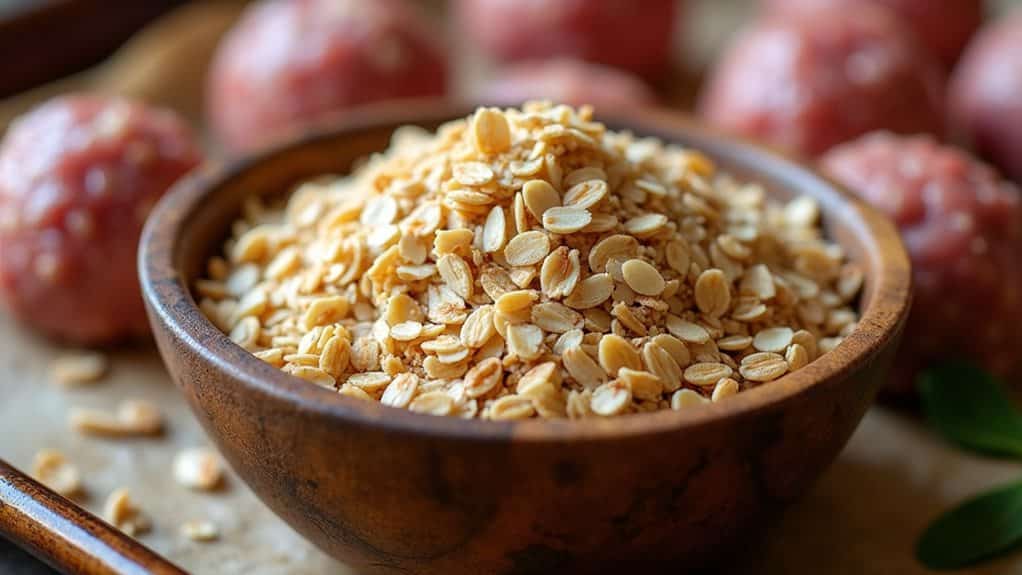
Choosing the right breadcrumb substitute depends on your recipe’s specific needs and your dietary preferences.
For gluten-free binders, options like crushed nuts, seeds, or gluten-free crackers work well.
Low-carb options include rolled oats or crushed pork rinds.
For flavor enhancers, Parmesan or seeds add richness, while tortilla or potato chips provide crunch.
Making these dietary substitutions versatile for any meatball recipe.
Wrapping Up
Choosing the right breadcrumb substitute depends on your dietary needs and desired texture. Items like oats, crushed crackers, or grated vegetables can work well, providing binding and moisture without sacrificing flavor. Experiment with different options to find what best fits your recipe. Proper preparation and understanding of each substitute will help you make delicious, well-textured meatballs every time. With these tips, you can confidently create tasty meatballs, even without traditional breadcrumbs.


