
Yes, pepperoni can go bad even though it’s cured. Unopened packages last several weeks in the pantry or fridge, but once you open them, refrigerate promptly and use within 2–3 weeks. Watch for signs of spoilage like slimy texture, sour smell, mold beyond natural white coating, or gray-green discoloration. You’ll extend its life greatly by freezing it in airtight packaging for up to six months. Understanding proper storage techniques and the differences between pepperoni types will help you maximize freshness and avoid waste.
Quick Guide
- Pepperoni does spoil; signs include slimy texture, sour smell, mold beyond white coating, gray or green patches, and unusual taste.
- Unopened pepperoni lasts several weeks in pantry; opened packages last two to three weeks refrigerated in sealed containers.
- Store pepperoni at 40°F or below in original packaging or plastic wrap, preferably in meat drawer or back of fridge.
- Freeze pepperoni in airtight, freezer-safe bags at 0°F for up to six months to extend shelf life substantially.
- Sliced pepperoni spoils faster than sticks; cured varieties last longer than uncured due to nitrates and nitrites preservatives.
Understanding Pepperoni’s Shelf Life

Like most cured meats, pepperoni doesn’t last forever, though its shelf life varies considerably depending on how it’s processed and stored.
Unopened pepperoni typically stays fresh in your pantry for several weeks, while refrigerated varieties last even longer.
Once you’ve opened the package, you’ll need to consume it more quickly.
The curing process helps preserve pepperoni, but it won’t prevent spoilage indefinitely.
After opening, refrigerated pepperoni typically lasts 2-3 weeks when stored in a sealed container or bag.
How to Tell If Pepperoni Has Spoiled
Spotting spoiled pepperoni doesn’t require a food science degree—your senses will give you most of the clues you need.
Check for a slimy texture, off-putting sour smell, or visible mold growth beyond the natural white coating.
Color changes like gray or green patches indicate spoilage.
If the pepperoni feels excessively hard or tastes unusual, it’s best to discard it immediately for safety.
Even though pepperoni is a cured sausage, it can still spoil if it’s past its expiration date or stored improperly.
Unopened vs. Opened Pepperoni: What’s the Difference?
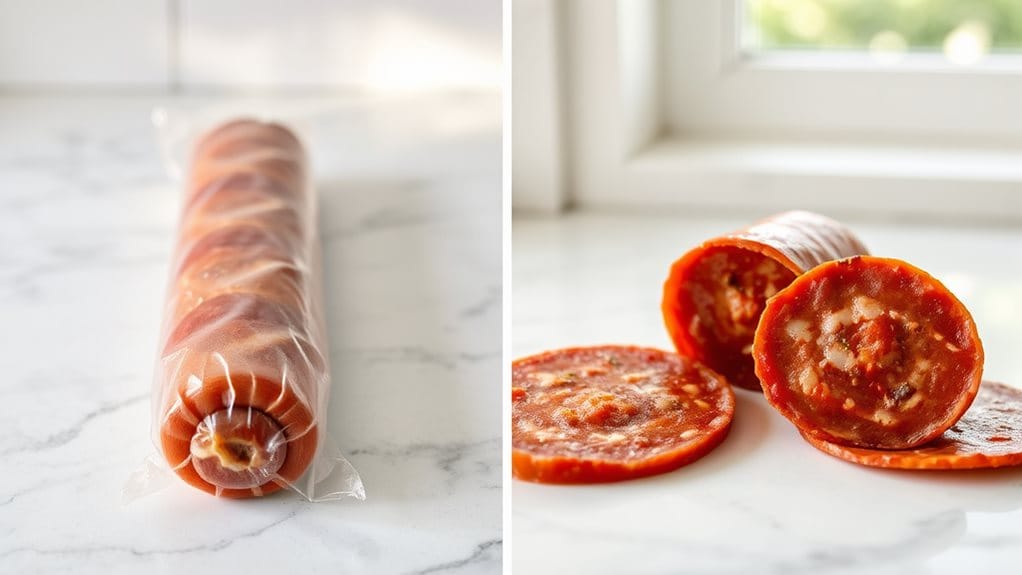
Opening a package of pepperoni sets off a countdown that markedly shortens its shelf life compared to its unopened counterpart.
Unopened pepperoni stays fresh in your refrigerator for several weeks beyond its printed date, protected by factory sealing.
Once you break that seal, however, exposure to air and bacteria reduces storage time to about three weeks refrigerated.
For best safety and quality, keep it refrigerated at 40°F or below to slow bacterial growth and extend freshness.
Freezing extends both versions’ longevity substantially.
Proper Refrigeration Techniques for Pepperoni
Becoming proficient in proper refrigeration begins with maintaining your fridge temperature between 35°F and 40°F, which slows bacterial growth without freezing the meat.
Store your pepperoni in its original packaging or wrap it tightly in plastic wrap to prevent moisture loss and odor absorption.
Place it in your refrigerator’s meat drawer, where temperature stays most consistent.
Store it at the back of the bottom shelf for optimal cooling and check for spoilage signs like sour odors or a slimy texture.
Once opened, rewrap the pepperoni securely and use within three weeks for peak quality.
Can You Freeze Pepperoni for Long-Term Storage?
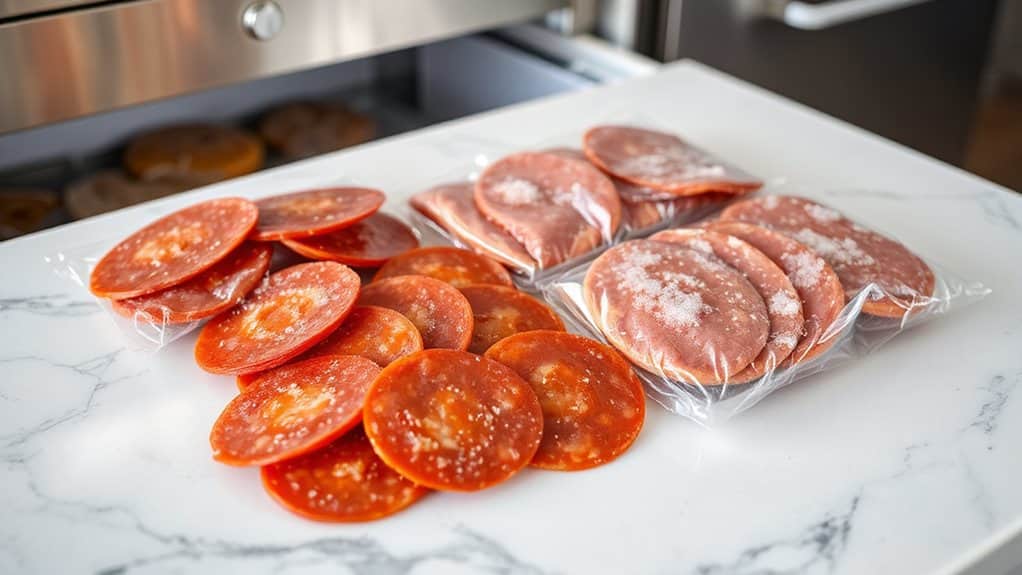
Freezing pepperoni is an excellent way to extend its shelf life well beyond refrigeration, often keeping it fresh for several months when done correctly.
You’ll need to follow proper freezing methods to prevent freezer burn and maintain the meat’s quality, which includes using airtight packaging and removing as much air as possible before sealing.
For best quality, keep your freezer at 0°F (-18°C) or lower.
When you’re ready to use your frozen pepperoni, you’ll want to know the best thawing techniques to preserve its texture and flavor.
Proper Freezing Methods
You can absolutely freeze pepperoni to extend its shelf life well beyond refrigeration alone.
Wrap individual portions tightly in plastic wrap or aluminum foil, then place them in freezer-safe bags to prevent freezer burn. Remove as much air as possible before sealing.
Label each package with the freezing date, and store pepperoni in your freezer for up to six months while maintaining quality.
Thawing Frozen Pepperoni
When it comes to thawing frozen pepperoni, the safest method involves transferring it from the freezer to your refrigerator and letting it defrost slowly overnight.
This gradual approach prevents bacterial growth while maintaining the meat’s quality and texture.
If you’re short on time, you can submerge the sealed package in cold water, changing the water every thirty minutes until thawed.
Avoid using hot water or microwaving, as these methods can compromise texture.
Different Types of Pepperoni and Their Storage Needs
You’ll find that not all pepperoni is created equal, and understanding the differences between types can help you store them properly.
Sliced pepperoni typically has more surface area exposed to air, which means it’s more vulnerable to drying out and spoiling faster than stick pepperoni that remains intact.
Additionally, cured pepperoni contains preservatives like nitrates that extend its shelf life markedly, while uncured varieties rely on natural preservation methods and generally need to be consumed more quickly.
Sliced vs. Stick Pepperoni
Pepperoni breaks down into two main categories at the grocery store: pre-sliced rounds packaged in vacuum-sealed pouches or deli containers, and whole sticks wrapped in their casings.
Each format has different storage requirements and shelf life expectations. Sliced pepperoni exposes more surface area to air and bacteria, which shortens its lifespan compared to stick pepperoni. The intact casing on whole sticks provides extra protection against contamination and moisture loss.
Cured vs. Uncured Varieties
Beyond the physical format, the curing method markedly impacts how long your pepperoni stays fresh and where you should store it.
Cured pepperoni contains nitrates and nitrites that preserve the meat, allowing it to last longer at room temperature before opening.
Uncured varieties use natural preservatives like celery powder, making them more perishable.
You’ll need to refrigerate uncured pepperoni more consistently to prevent spoilage.
Common Storage Mistakes That Shorten Freshness
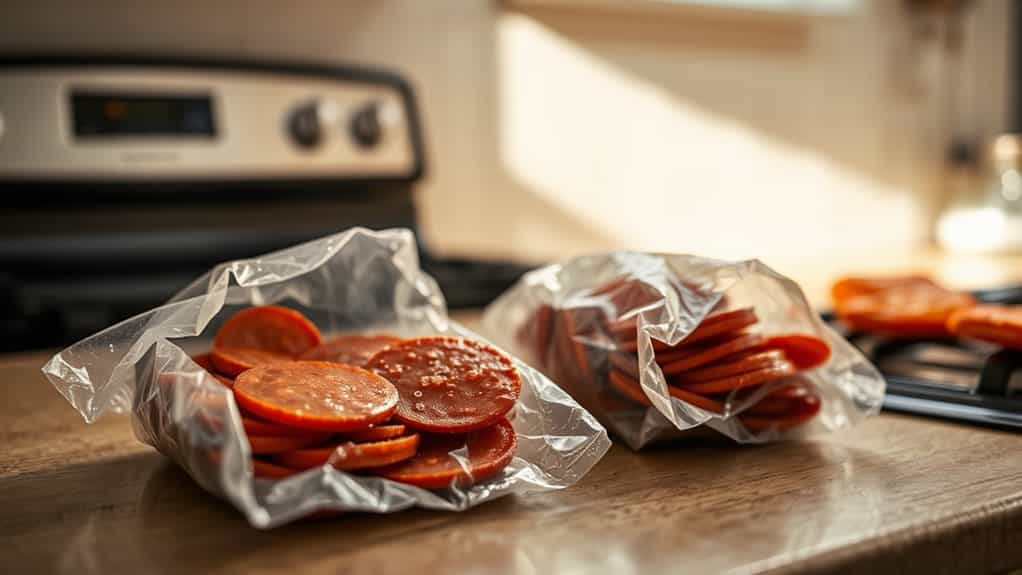
Many well-intentioned home cooks inadvertently reduce their pepperoni’s shelf life through a handful of preventable errors.
Leaving opened packages unsealed exposes the meat to air and bacteria. Storing pepperoni at room temperature when refrigeration is required accelerates spoilage. Placing it near strong-smelling foods causes flavor contamination. Using dirty utensils introduces harmful microorganisms. Cross-contamination from raw meats creates food safety risks that compromise freshness and quality.
Food Safety Guidelines for Cured Meats
Understanding proper handling practices becomes even more important when you consider the specific safety standards that apply to all cured meats, including pepperoni.
You should always refrigerate opened packages promptly and maintain temperatures below 40°F.
Cross-contamination prevention matters too, so use separate cutting boards for cured meats.
When you notice any off-odors, sliminess, or discoloration, discard the product immediately to avoid foodborne illness.
Maximizing Freshness: Best Practices and Pro Tips
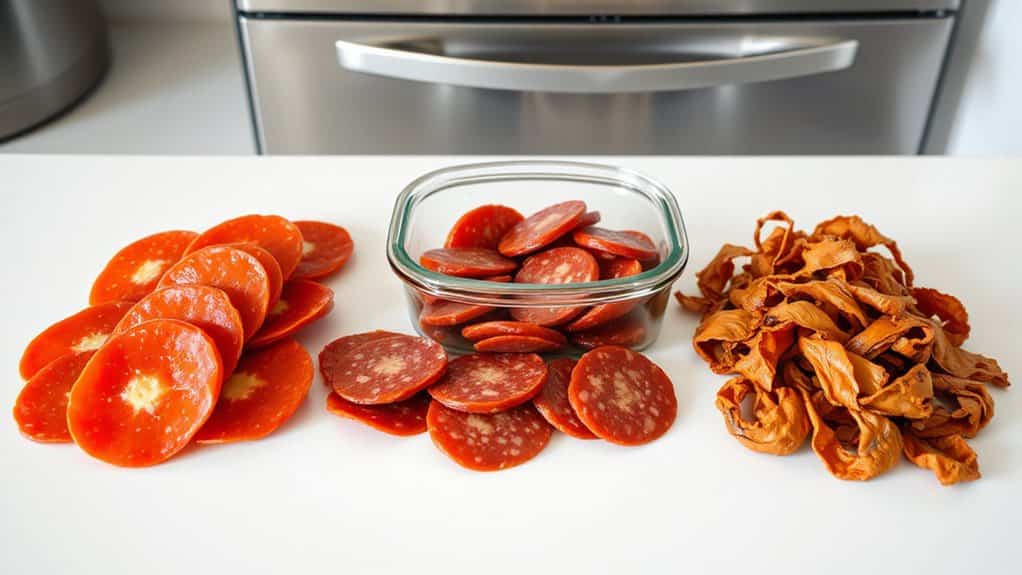
To get the most out of your pepperoni’s shelf life, you’ll want to implement a few strategic storage methods that go beyond basic refrigeration.
Keep unopened packages in the coldest part of your fridge, typically the back of the bottom shelf.
Once opened, wrap slices tightly in parchment paper before placing them in an airtight container to prevent moisture buildup and oxidation.
Wrapping Up
You’ve learned that pepperoni’s shelf life depends on proper storage and whether it’s opened or unopened. By recognizing spoilage signs like off-smells, discoloration, and sliminess, you’ll keep yourself safe from foodborne illness. Remember to refrigerate opened packages promptly, freeze portions you won’t use soon, and follow the guidelines for different pepperoni types. These simple practices will help you maximize freshness, reduce waste, and enjoy your cured meats safely every time.

