
Yes, walnuts go bad when exposed to air, light, or heat, turning rancid with a bitter taste or musty smell. You’ll know they’re spoiled if they look dark, feel sticky, or smell off. Keep them fresh by storing in airtight, opaque containers in a cool, dry place for up to six months. For longer life, refrigerate up to 18 months or freeze for a year. Vacuum sealing with oxygen absorbers extends shelf life. There’s more to learn about keeping them at their best.
Quick Guide
- Yes, walnuts can go bad due to rancidity from oxidation, showing signs like mold, off smells, or bitter taste.
- Store unshelled walnuts in a cool, dark, airtight container to extend freshness up to six months at room temperature.
- Refrigerate shelled or in-shell walnuts below 35°F to preserve quality for 12–24 months, depending on packaging.
- Freeze walnuts at 0°F in airtight bags or containers to maintain freshness for up to one year.
- Use vacuum sealing with oxygen absorbers and cold storage to maximize shelf life and prevent spoilage.
Do Walnuts Go Bad? Here’s How to Tell
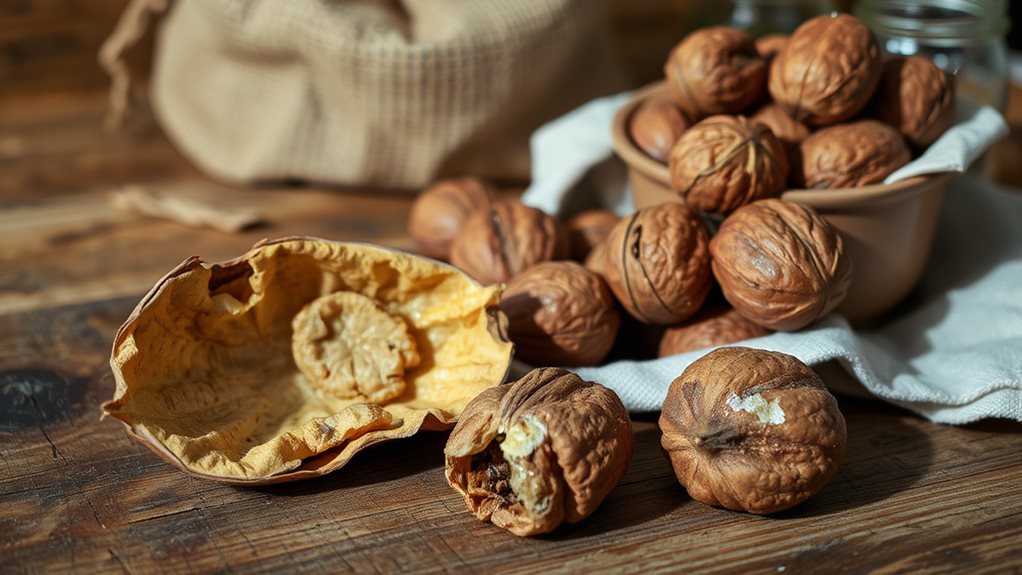
Spotting bad walnuts isn’t always obvious, but a few key signs can save you from an unpleasant bite.
Look for darker color, shrinking, or mold. Smell for oiliness, alcohol, mustiness, or paint thinner. Bad ones taste bitter, sour, or flat, and feel soft or floury. If the husk sticks or texture’s off, it’s best to toss them.
If you’re freezing nuts for longer storage, keep the freezer at 0°F or below to help prevent rancidity and preserve freshness.
When in doubt, check smell and taste a small piece first.
What Makes Walnuts Go Rancid?
You expose walnuts to air, and oxidation starts breaking down their oils, leading to rancidity.
Heat and light speed up this process, especially since walnuts have lots of unsaturated fats that go bad easily. Keeping them in a cool, dark place around 50°F to 64°F helps slow oxidation and preserve freshness.
Even their wrinkled surface gives oxygen more spots to attack, making freshness harder to keep.
Volatile compounds like hexanal and pentanal increase as oxidation progresses, signaling rancidity development (E)-2-pentenal, hexanal.
Oxidation From Air Exposure
When walnuts are exposed to air after shelling, their high oil content quickly begins to react with oxygen—a process that sets off a chain reaction known as oxidation.
This reaction forms free radicals, especially in their unsaturated fats, which break down into smelly aldehydes and ketones. Light, heat, and trace metals speed it up, causing rancidity.
You’ll notice off-flavors and odors fast—so keep them sealed and limit air contact.
Heat And Light Damage
Walnuts’ high oil content doesn’t just react with air—it also responds strongly to heat and light, two forces that can quickly degrade their quality.
High temperatures speed up rancidity, while light exposure promotes oxidation.
Store walnuts in a cool, dark place to slow spoilage.
Even brief warmth after freezing can trigger oily changes, so keep them consistently cold and shielded from sunlight to preserve freshness and flavor.
Store Walnuts at Room Temperature the Right Way
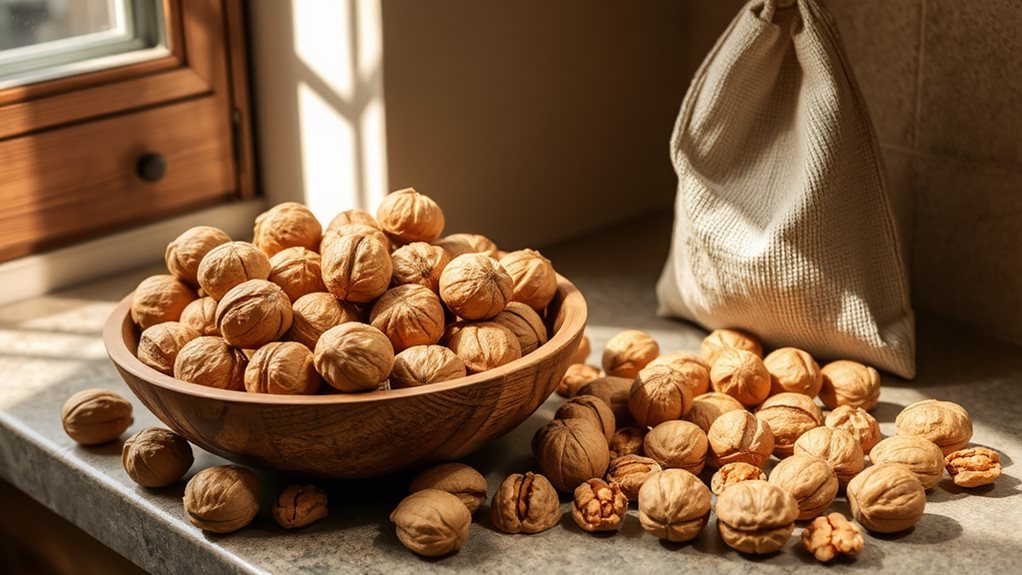
Keep your walnuts in a cool, dry spot away from heat and sunlight to slow spoilage.
Use airtight, opaque containers to block light and air, which helps preserve freshness and flavor.
For longer shelf life at room temperature, choose unshelled walnuts—they last much longer than shelled ones.
For even longer storage, consider refrigeration or freezing in sealed containers to help prevent fat oxidation and preserve quality.
Cool, Dry Location
For best results, store your walnuts in a cool, dry spot away from sunlight and heat sources.
Keep them in a sealed container to block moisture and odors.
A pantry shelf works well, as long as the temperature stays below 50°F.
This helps prevent oil from turning rancid and keeps walnuts fresh for up to six months.
Airtight Opaque Containers
Storing walnuts the right way starts with choosing a container that fights spoilage on two fronts: air and light.
Use airtight, opaque containers like glass jars with rubber seals or metal cans to block oxygen and UV rays.
This slows fat breakdown, preserves flavor, and prevents odor absorption.
For best results, pair with cool, dry storage—your walnuts stay fresh and nutritious for up to 12 months.
Unshelled For Longevity
When it comes to shelf life, the shell makes all the difference.
Keep unshelled walnuts in a cool, dry, dark place like your pantry, and they’ll stay fresh for up to 3 months. The shell protects them from air, light, and moisture, slowing oil oxidation.
For best results, store them away from heat sources and direct sunlight to maintain quality longer.
How Long Do Walnuts Last in the Fridge?
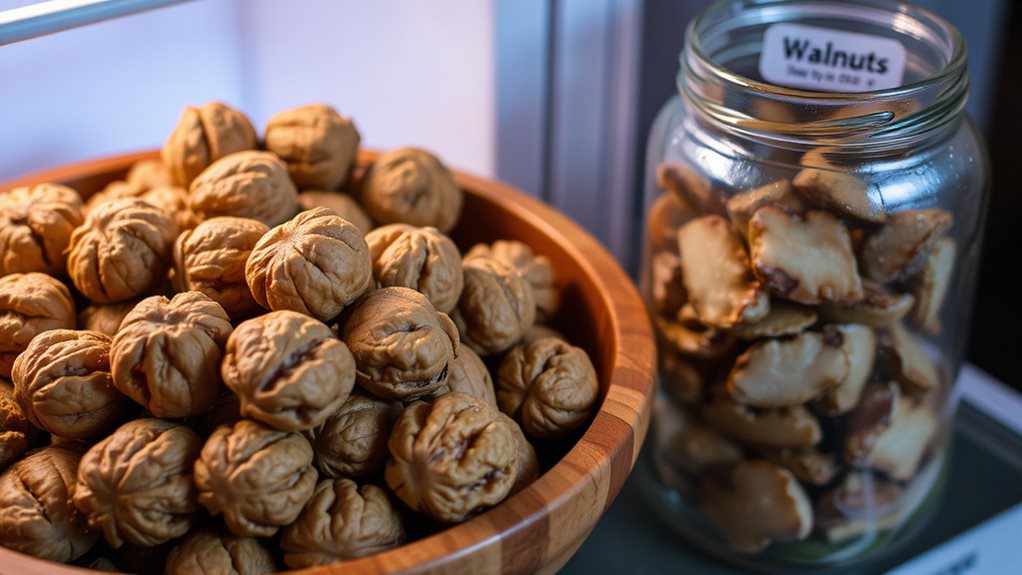
You’ll typically get the best shelf life from walnuts by keeping them in the fridge, where cool, stable conditions slow down spoilage.
Unopened shelled or in-shell walnuts last up to 24 months, while opened ones stay fresh for 12 and 18 months, respectively.
Store them in airtight containers, keep the fridge below 35°F, and avoid strong-smelling foods to preserve quality.
As with properly stored bacon grease, using an airtight container and checking for signs of spoilage can help you catch rancidity early.
Freeze Walnuts to Prevent Rancidity (Up to 1 Year)
Keeping walnuts in the fridge buys you extra time, but if you’re looking to lock in freshness for even longer, freezing is your best bet.
Freeze them whole or crushed in airtight bags, and they’ll stay fresh and nutrient-rich for up to a year. The cold stops oils from going rancid, so your walnuts won’t taste like paint thinner later. For best results, use airtight containers and label them with the freezing date so you can track storage time.
Use Vacuum Sealing and Oxygen Absorbers for Longer Freshness
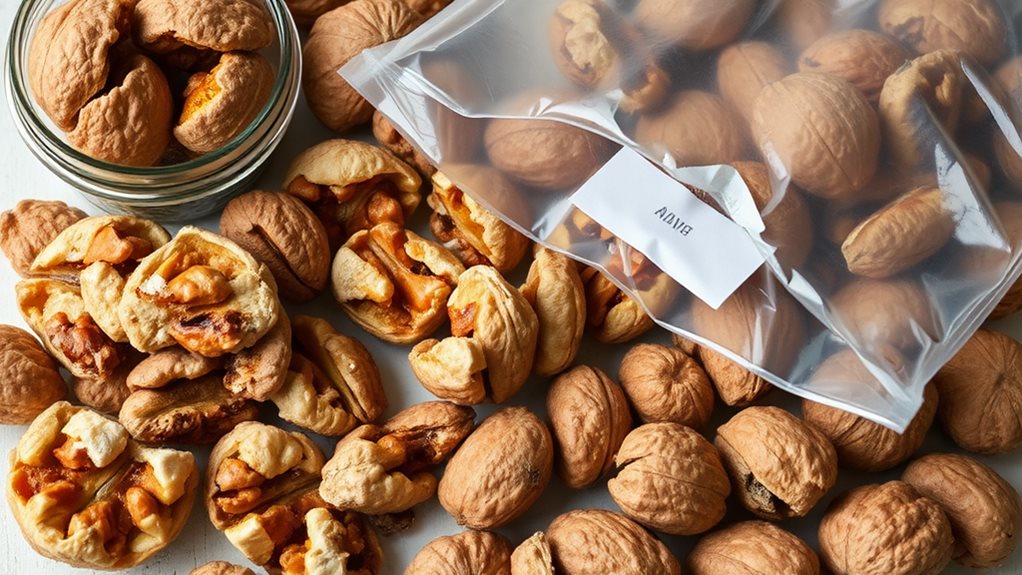
Sealing walnuts in airtight protection gives them a fighting chance against spoilage.
Use a vacuum sealer to remove air and slow rancidity by limiting oxygen.
Add oxygen absorbers to trap any leftover air and preserve freshness longer.
Store sealed bags in a cool, dark place or refrigerate them.
This combo keeps walnuts flavorful, nutritious, and mold-free for months or even years.
Wrapping Up
You can keep walnuts fresh longer by storing them properly. At room temperature, they last a few weeks, but in the fridge, they stay good for up to six months. For best results, freeze them in an airtight container or vacuum-seal with oxygen absorbers—they’ll last up to a year. Check for rancidity by smelling for a sour or paint-like odor. When in doubt, toss them out.

