
Cereal won’t spoil quickly, but it can lose crunch and flavor over time, especially if stored improperly. The “best by” date marks peak freshness, not safety—unopened boxes often stay good 6–12 months past that date. Keep your cereal in a cool, dry place, sealed tight to block air and moisture. If it smells sour, feels damp, or has bugs, toss it. Stale but safe cereal can still be used in recipes—there’s more to know about keeping it fresh longer.
Quick Guide
- Cereal doesn’t typically spoil quickly but can lose freshness, flavor, and crunch over time.
- Unopened cereal stays good 6–12 months past the “best by” date if stored properly.
- Once opened, dry cereal stays fresh for 4–6 weeks in a cool, dry place.
- Store cereal in airtight containers to protect from moisture, pests, and rancidity.
- Discard cereal if it has off smells, mold, bugs, or clumping to avoid health risks.
Does Cereal Expire? What the Dates Really Mean
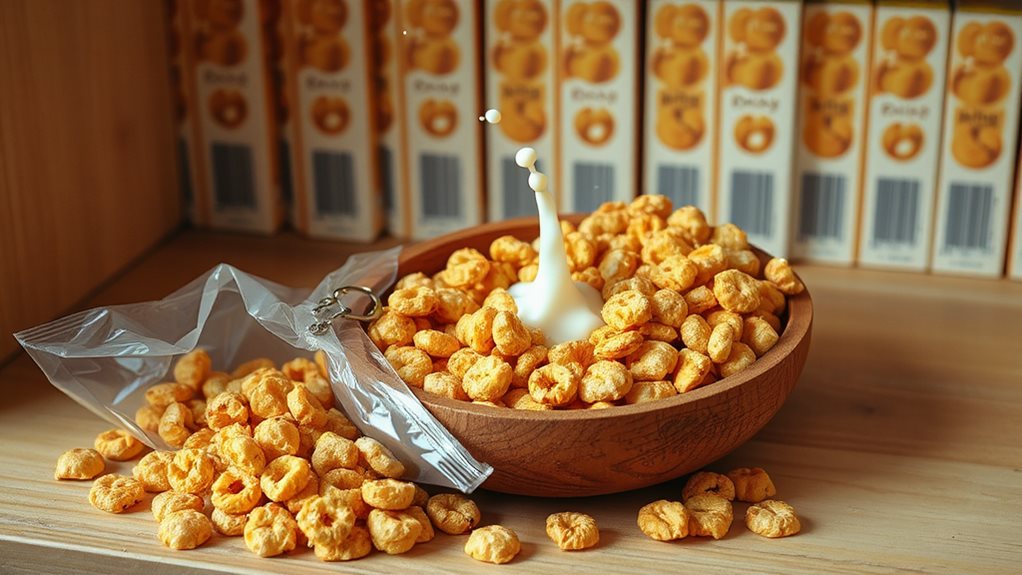
Ever wonder what that “best by” date on your cereal box really means? It’s not an expiration date—it shows peak freshness, not safety. Cereal stays safe to eat well past this date if stored properly. Stored in cool, dry places, cereal can remain enjoyable for months beyond the printed date.
Most dry cereals use “best before” to guarantee flavor and texture. True expiration dates are rare and usually only on items like baby formula. Your cereal won’t suddenly spoil afterward.
Whole-grain and nut-containing cereals are more prone to quality loss over time due to natural fats that can oxidize and become rancid.
How Long Does Unopened Cereal Last?
You can usually keep unopened cereal fresh for 6 to 12 months past the best-by date, depending on the type and storage.
That date isn’t about safety—it’s when the flavor and crunch are at their peak. Store it in a cool, dry place, away from heat and sunlight, and keep it sealed in its original packaging to get the most out of its shelf life. Storing it in airtight containers can also help limit air and humidity exposure that can dull texture and flavor over time. Proper storage helps prevent exposure to moisture and pests, which can compromise quality even before the expiration date.
Best By Date Explained
Most of the time, the “best by” date on your cereal box isn’t about safety—it’s about quality. It tells you when the flavor and texture are at their peak.
Unlike expiration dates, it doesn’t mean your cereal is bad afterward. As long as it’s sealed, smells normal, and looks fine, you’re safe to eat it well past the date.
Proper Storage Matters
When stored correctly, unopened cereal can stay fresh and flavorful far beyond the best-by date, often lasting 6 to 12 months longer in a cool, dry place.
Keep it in your pantry, away from heat and humidity. Use airtight, opaque containers to block light and moisture. Avoid garages or basements. Proper storage keeps your cereal crisp and safe.
How Long Is Opened Cereal Good For?
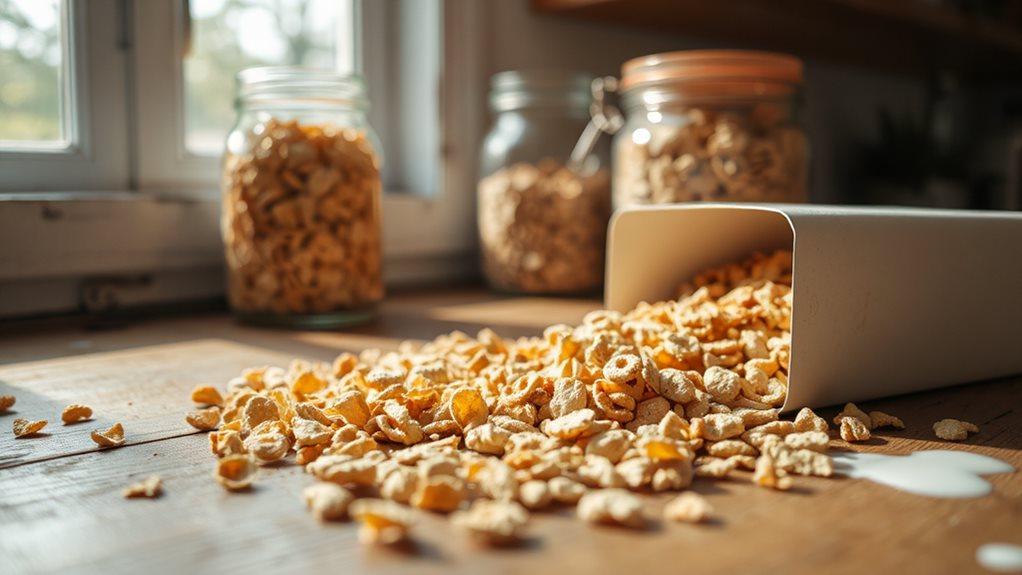
Once you crack open a box of cereal, the clock starts ticking on its freshness.
Standard dry cereals stay crunchy and flavorful for 4–6 weeks if stored in a cool, dry place.
Nutty or fruity varieties last only 3–4 weeks due to oils that turn rancid.
Use airtight containers to extend quality up to 6 months and avoid moisture, heat, or pests.
As with bread, do a quick smell test and toss cereal if it develops a sour or musty odor.
How Long Does Cooked Cereal Last in the Fridge?
Usually, you’ll want to refrigerate cooked cereal right after making it to keep it safe and fresh. When stored in an airtight container at 35–40°F, it lasts 4–5 days.
Cool it to room temperature first, then seal tightly. To avoid bacterial growth in the 40–140°F danger zone, refrigerate it within two hours of cooking. Avoid contamination by using clean utensils, and check for off-odors, mold, or texture changes before eating.
Can You Eat Cereal After the Best-By Date?
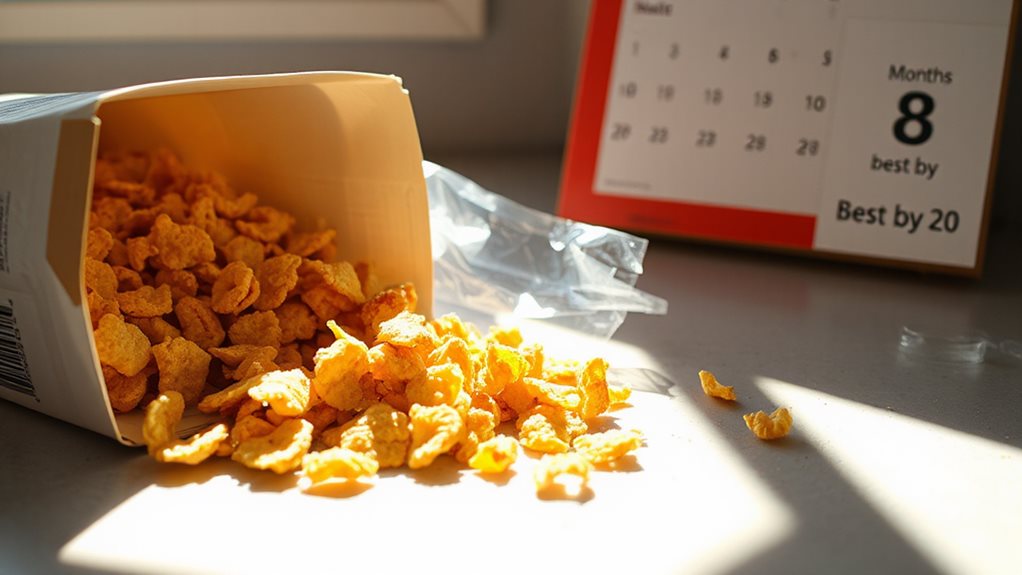
You can usually eat cereal after the best-by date as long as it smells, looks, and tastes normal.
That date marks peak quality, not when it goes bad, so unopened boxes often stay safe and tasty for 6 to 12 months past the label.
Store it in a cool, dry place to help prevent moisture that can lead to mold growth and staleness.
Toss it if you notice off smells, bugs, mold, or damaged packaging—otherwise, go ahead and enjoy your bowl.
Best-By Date Meaning
Ever wonder what that “Best By” date on your cereal box really means? It’s not about safety—it’s when the cereal tastes its best, set by the manufacturer.
Think of it as a freshness guide, not an expiration. After that date, your cereal might lose crunch or flavor, but it’s still safe to eat if stored properly.
Safety Beyond The Date
That best-by date isn’t a hard stop for safety—it’s more like a flavor checkpoint.
You can safely eat unopened cereal for 6–12 months past the date if stored properly.
Opened boxes stay good for 1–3 months.
Just check for odd smells, mold, or bugs.
If it looks, smells, and tastes fine, it’s likely safe.
Proper storage keeps it edible longer.
When To Toss Cereal
Don’t toss your cereal just because the best-by date has come and gone—those printed numbers aren’t a countdown to danger.
Check for rancid smells, off flavors, or a soggy texture. If you spot mold, bugs, or the cereal tastes stale, then it’s time to throw it out.
When stored well and it passes sensory tests, your cereal is likely still safe and satisfying to eat.
Signs Your Cereal Has Gone Bad
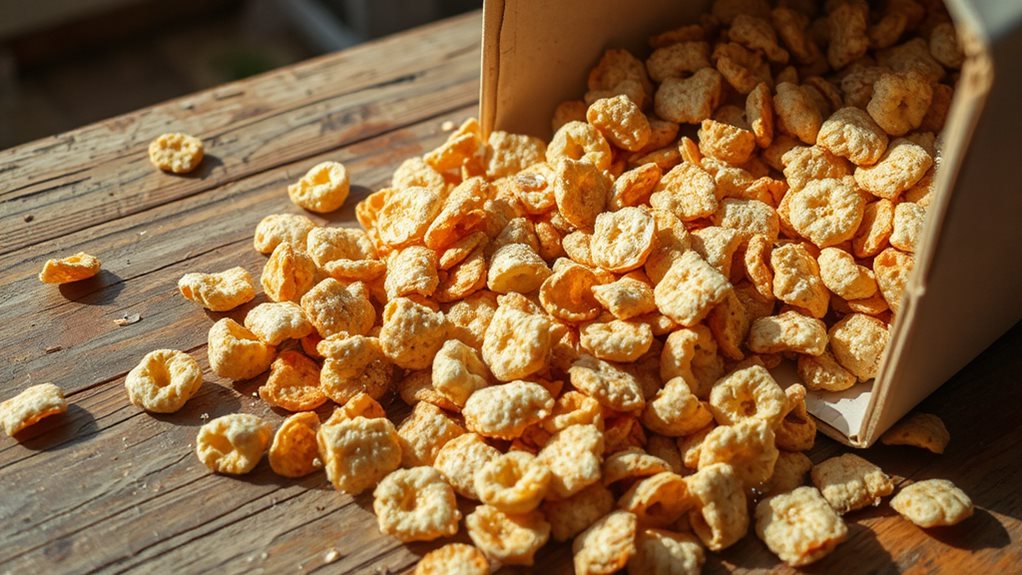
While your cereal might look fine at first glance, closer inspection can reveal clear signs it’s no longer good to eat.
Check for a strong, sour smell or a rancid taste—especially in high-fat cereals.
Clumps, dampness, or visible mold mean spoilage.
If you spot bugs or dark spots, toss it immediately.
Trust your senses: off smells, textures, or flavors mean it’s time to let it go.
Why Some Cereals Go Stale Faster (And How to Prevent It)
Because cereal stales faster than you might expect, understanding the science behind it can help you keep your breakfast crisp longer.
Starch retrogradation is the main culprit—especially amylopectin recrystallizing over days.
Higher protein content slows this down, while cold storage speeds it up.
Keep cereal airtight at room temperature to minimize moisture loss and delay firming.
How to Keep Cereal Crunchy and Fresh
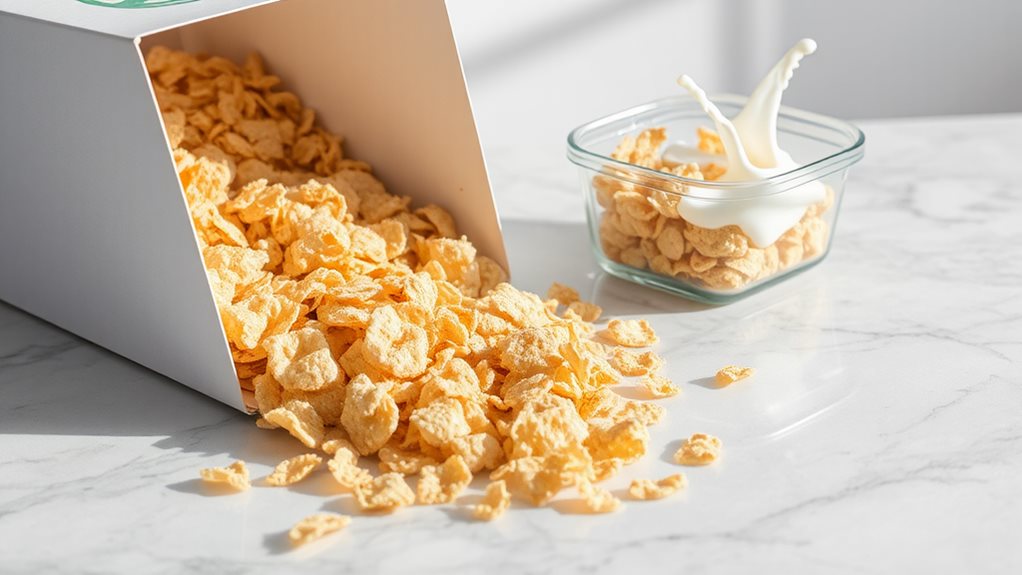
Keeping your cereal crunchy starts the moment you open the box. Use airtight containers like OXO or Rubbermaid to block moisture and air. Transfer cereal immediately to prevent staleness.
Store in a cool, dry pantry away from heat and sunlight. Mylar bags are great for bulk storage, while bag clips work short-term. Repurpose mason jars for a clean, dry option.
Can You Still Use Stale Cereal? Smart Ways to Repurpose It
You might be surprised to learn that stale cereal isn’t a lost cause—far from it.
If it smells fine and shows no mold or bugs, it’s safe to eat.
Use it in baking, blend into smoothies, or crush for pie crusts.
You can even mix it into yogurt or grind it to thicken soups.
Staleness just means lost crunch, not danger—so get creative and put it to good use.
Wrapping Up
You can keep cereal fresh longer by storing it properly in a cool, dry place. While it doesn’t spoil quickly, it loses crunch over time. Check for off smells, discoloration, or bugs to know when it’s gone bad. Eating cereal past its best-by date is usually safe if it looks and smells fine. If it’s stale, don’t toss it—use it in recipes like cookies or granola. Smart storage and quick checks help you enjoy cereal at its best.


