
Warm butter can’t trap air, so the dough spreads quickly; inaccurate flour measurements make the batter too thin; stale baking soda or powder loses leavening power, letting the cookies flatten; over‑mixing creates excess air and over‑develops gluten, weakening the structure; insufficient chilling lets butter melt early, causing rapid spread; hot greasy sheets add extra heat and fat, and a low oven temperature doesn’t set the edges fast enough. Keep reading to see how to fix each issue.
Quick Guide
- Using melted or overly warm butter prevents proper creaming, causing dough to spread quickly and bake flat.
- Measuring flour by volume instead of weight adds excess flour, stiffening dough and reducing lift.
- Stale baking soda or powder loses leavening power, resulting in weak rise and thin cookies.
- Over‑mixing creates excess air and over‑develops gluten, which expands and collapses during baking.
- Baking on a hot, greasy sheet or skipping chilling lets butter melt too fast, leading to rapid spread and flat cookies.
Why Warm Butter Leads to Flat Cookies?
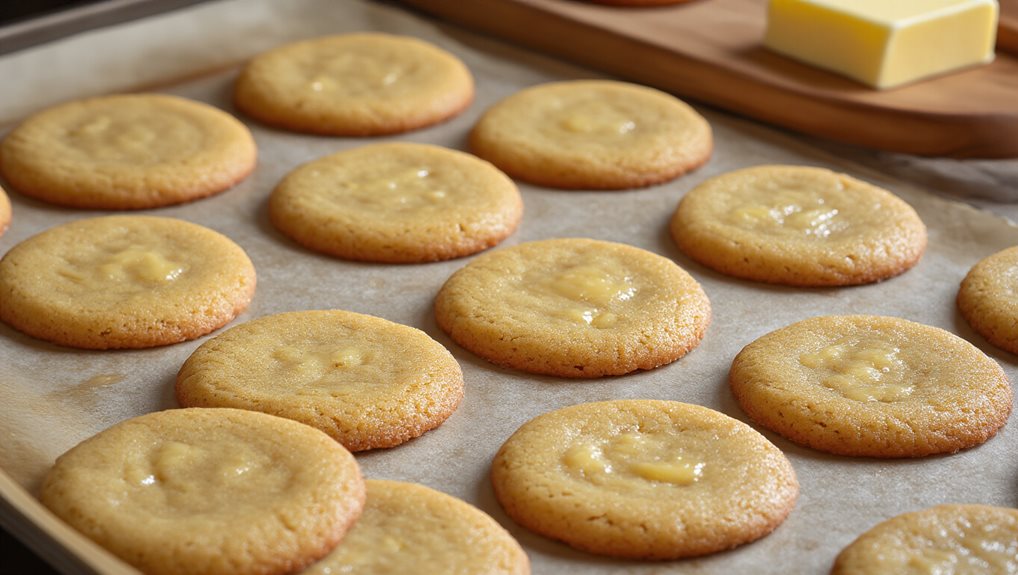
Warm butter can’t trap air during creaming, so you lose the physical lift that helps dough rise. It also thins the batter, letting gravity pull the dough outward quickly. Using standardized portion sizes when scooping dough helps each cookie bake at the same rate and reduces spreading differences. Without those air bubbles, chemical leaveners alone can’t support height, and the dough collapses as it cools, leaving dense, flat cookies. This also reduces structure because the butter melts faster, preventing the dough from holding its shape.
How Accurate Flour Measurements Prevent Flat Cookies?
Ever wondered why some batches turn out flat while others hold their shape? Accurate flour measurement keeps the dough’s structure balanced. Like keeping vacuum-sealed salmon at 34-40°F to maintain safety and quality, consistent measuring conditions help your dough perform predictably. Weighing flour on a digital scale gives 120 g per cup, eliminating the 30‑gram excess that makes cookies stiff and prevents spreading. The “spoon and sweep” method approximates this weight, but a scale removes packing errors and guarantees repeatable results, preserving proper texture. Using a digital scale is the most accurate way to measure flour.
Why Fresh Baking Soda & Powder Keep Cookies Thick?
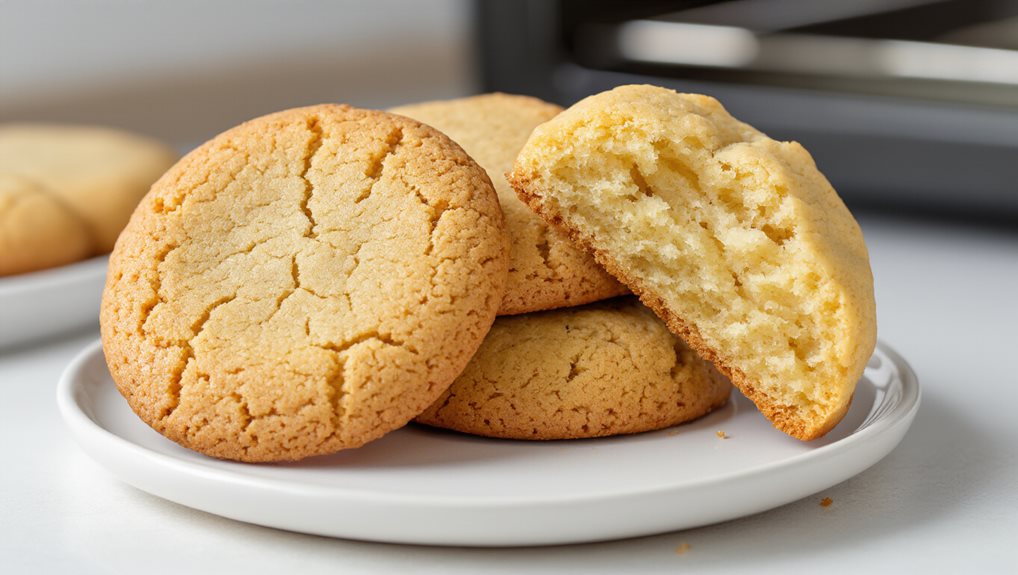
When you use fresh baking soda or powder, their leavening power stays strong, so the dough traps air early and holds its height. The fresh agents also prevent the proteins from setting too quickly, which means the butter can melt without causing the cookies to spread flat. As a result, the cookies keep a thick, sturdy shape instead of flattening out. Just as choosing high-carbon stainless steel supports better edge retention in everyday kitchen tasks, using fresh leaveners helps your cookie dough maintain structure instead of spreading too thin.
Leavening Power Retains Height
A few teaspoons of fresh baking soda or powder can make all the difference between a puffed, chewy cookie and a flat, dense one.
Fresh leavening releases carbon dioxide at mixing and again in the oven, inflating pre‑existing air pockets. This double boost keeps bubbles stable, prevents premature collapse, and maintains height.
Using the right amount preserves texture, flavor, and a desirable golden‑brown finish.
Freshness Prevents Flat Spread
Seal your baking soda or powder is fresh, and you’ll notice your cookies keep their height instead of spreading flat. Fresh leaveners release twice as much carbon dioxide, giving dough a sturdy lift. Stale powder clumps, absorbs moisture, and loses acidity, so bubbles form unevenly, causing a 20‑30% wider spread. Test freshness with vinegar or hot‑water bubbles, and store in airtight jars to preserve potency.
Why Over‑Mixing the Dough Causes Excessive Spread?
When you over‑mix the dough, you introduce too much air and push the gluten into over‑development, both of which make the batter spread quickly on the sheet.
The excess air bubbles expand in the oven, while the elastic gluten network loses its ability to hold the dough together, resulting in flat, wide cookies.
Resting the dough briefly can relax the gluten and let the air settle, helping you regain some thickness.
Just as you should watch for signs of spoilage like off smells or unusual texture changes in salad dressing, you can also “check” dough consistency—if it looks overly aerated and slack, it’s more likely to bake up thin.
Gluten Development Overload
Why does a cookie that looks perfect on the counter turn into a flat, spread‑out disc in the oven?
When you over‑mix, you stretch gluten strands into an elastic matrix that traps moisture and steam.
The butter coating breaks, letting the dough melt quickly and flow.
The result is a weak, over‑stretched dough that spreads uncontrollably, producing a flat, dense cookie.
Excess Air Incorporation
Ever wondered why a dough that seems perfectly mixed suddenly flattens into a thin disc once it hits the oven?
Over‑mixing traps air bubbles that expand as the oven heats, thinning the dough before the gluten sets.
This extra air weakens the structure, causing rapid spread, a dry, crunchy texture, and a larger, flatter cookie.
Why Chilling Dough Stops Cookies From Flattening?
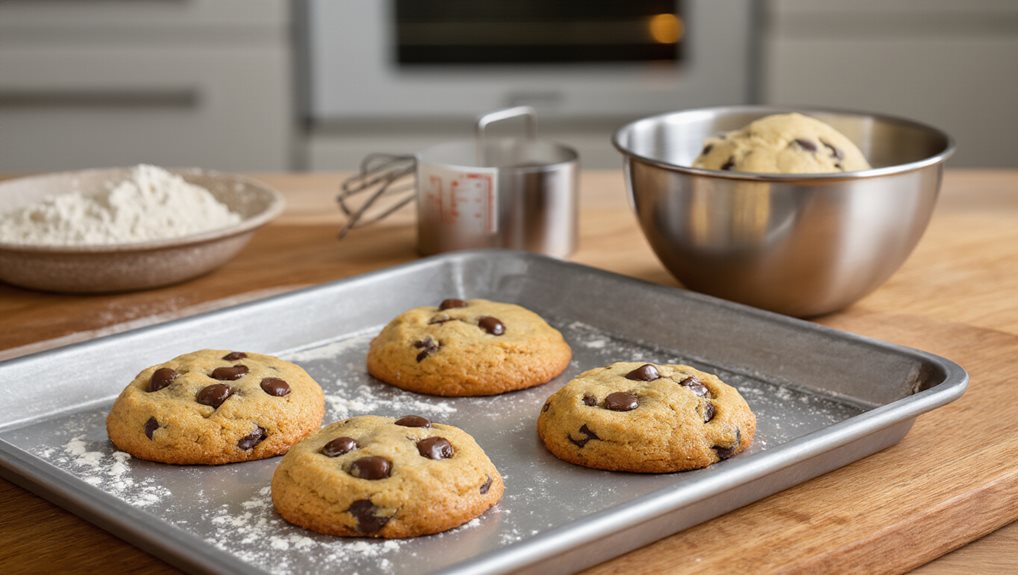
Ever wonder why a chilled dough slice of like a firm dough loaf instead of spreading into a thin disc? Chilling keeps butter solid, so it needs more heat to melt, slowing the initial spread. The dough’s edges set first, trapping air pockets and preserving shape. Cold dough also supports gluten and balances leaveners, preventing excessive softening. The result is thicker, rounder cookies that hold their form. For consistent results, store your leaveners and spices in containers with airtight silicone gaskets so moisture doesn’t weaken their performance.
Why Hot Greasy Sheets Make Cookies Spread?
When you pull a chilled dough straight onto a hot, greased baking sheet, the butter inside the cookies melts almost instantly, well before the oven’s ambient heat can set the dough’s structure.
The excess fat from the sheet seeps in, weakening the dough’s stability and causing it to spread before it can firm up.
Grease also burns quickly, creating soggy bottoms that further flatten the cookies.
Use parchment or a non‑stick mat to avoid added fat and keep the sheet cool.
Why Low Oven Temperature Flattens Cookies?
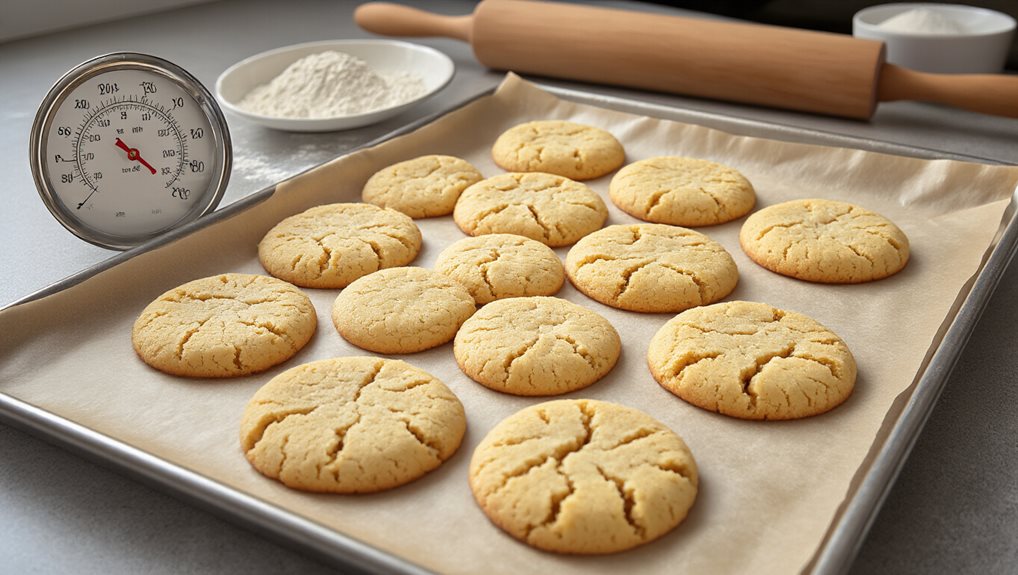
Why does a low oven temperature make your cookies spread into flat discs?
At 325°F or lower, the dough heats slowly, so butter melts before the exterior firms. The liquid fat lets the dough flow outward, preventing a quick crust that would hold shape. Consequently, you get wider, thinner cookies with a softer edge, whereas higher heat sets the edges first, keeping them puffier.
Wrapping Up
By mastering butter temperature, measuring flour accurately, using fresh leavening agents, avoiding over‑mixing, chilling the dough, greasing sheets properly, and setting the right oven heat, you’ll keep your cookies from spreading too much. These simple adjustments give you better control over texture and rise, so each batch turns out thick, tender, and perfectly shaped without the frustration of flat results.


