
When you boil pasta, the granules release starch that swells, gelatinizes, and coats the water. This starch film lowers surface tension, letting tiny bubbles form easily, while its elastic network traps steam and creates a foamy barrier. The foam acts like a lid, building pressure that pushes it upward until it spills over the pot’s rim. Adding a wooden spoon, a splash of oil, or stirring breaks the film, letting steam escape and preventing boil‑over; keep reading to discover more tricks.
Quick Guide
- Starch granules gelatinize around 60 °C, releasing soluble starch that acts as a surfactant and lowers water’s surface tension.
- The starch‑rich liquid forms an elastic network that coats bubbles, allowing them to expand and merge into a stable foam.
- The foam creates a lid that traps steam, increasing pressure beneath it and pushing the foam upward toward the pot rim.
- When the foam reaches the rim, it bursts, causing the liquid to spill over the pot’s edge.
- Disrupting the foam with a wooden spoon, stirring, or adding oil/butter reduces surface tension and prevents boil‑over.
Why Starch Causes Pasta Water to Foam
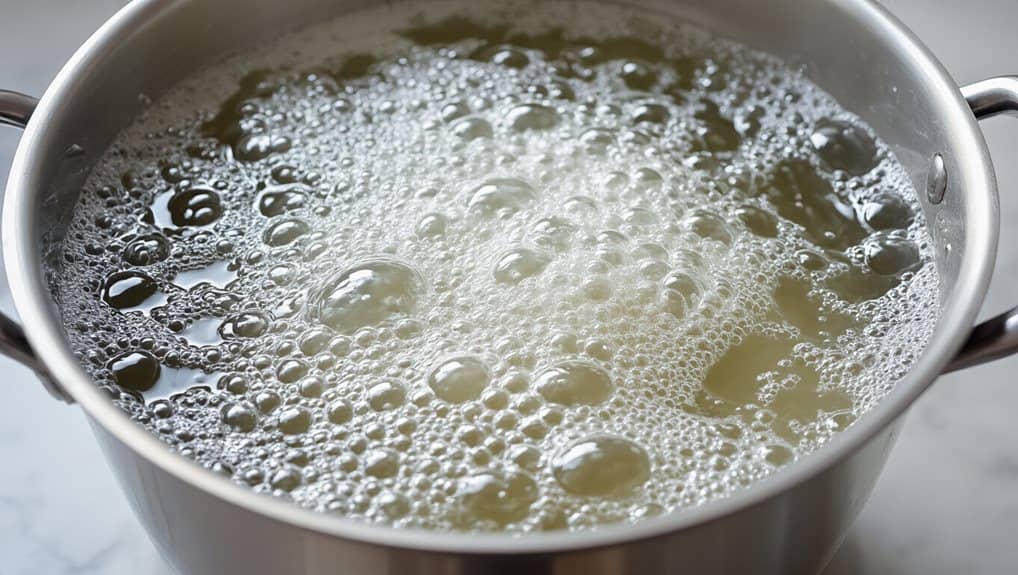
When you drop pasta into boiling water, the granules start soaking up moisture above about 60 °C, swell, and their starch gelatinizes, spilling soluble starch into the pot. That starch acts like a surfactant, lowering surface tension so bubbles can form easily. It thickens the liquid, creating a stretchy network that traps air and holds foam together, especially when you keep the boil vigorous. The protein matrix at the bubble interface further stabilizes the foam, increasing its persistence. Store sauces in a cool, dark place away from sunlight to reduce oxidation effects.
How Starch Molecules Turn Pasta Water Into a Foamy Barrier
When you boil pasta, the starch granules absorb water and swell, turning into spongy particles that expand several times their size. As they keep heating, the granules rupture and release adhesive starch molecules that coat the liquid, lowering its surface tension and letting bubbles stick together. This creates a thick, elastic foam that traps steam and can quickly rise to the pot’s rim if you don’t lower the heat. Like using an airtight container to minimize air exposure when storing desserts, reducing exposure to excess heat and agitation helps keep that foam from rapidly building and spilling over. The foam and cloudiness indicate that starch dispersal is occurring, signaling that the cooking process is proceeding as planned.
Starch Absorption and Expansion
Ever wonder why the water bubbles up into a frothy layer as your pasta cooks? As heat hits the pasta, gelatinized starch granules swell and pull in water, becoming superheated. This rapid absorption expands the starch matrix, trapping steam and creating a lightweight foam.
Damaged starch and amylase activity speed the process, so the foam barrier forms quickly, causing the water to rise and sometimes overflow.
Adhesive Starch Release
A handful of starch molecules burst out of the pasta’s outer granules the moment the water hits a rolling boil, and they instantly start turning the clear liquid into a light, foamy barrier. As the granules gelatinize, amylose and amylopectin dissolve, forming a thin, sticky film that clings to noodles. This adhesive layer lowers surface tension, traps bubbles, and creates the foamy barrier you see before overflow.
Foam Formation and Overflow
The starch that leached from the pasta’s outer granules immediately begins to change the water’s properties, turning a clear broth into a frothy layer that can quickly rise to the rim of the pot.
As granules swell and rupture, tiny starch molecules lower surface tension, making bubbles elastic and long‑lasting. These bubbles trap steam, building pressure that pushes the foam upward until it spills over unless you stir or skim it.
Why the Foam Traps Steam and Leads to Boil‑Over
When the foam forms on top of the pasta water, it acts like a lid that traps steam beneath it, so the vapor can’t escape.
The trapped steam presses on the bubbles inside the foam, causing them to expand and push the foam upward.
As the pressure builds, the foam eventually overflows the pot’s edge, creating the classic boil‑over you see.
Just as proper storage affects how long rice milk stays fresh by limiting exposure to air and temperature swings, controlling how much foam forms (and how much steam it traps) can reduce boil-over.
Steam Trapped Beneath Foam
Ever wonder why a pot of pasta suddenly erupts into a frothy boil‑over? The foam acts like a lid, insulating the water and trapping steam beneath it. Starch and protein molecules create a sticky network that holds vapor, raising pressure quickly. When the pressure exceeds the foam’s weak spots, it bursts, sending the frothy water over the rim.
Bubbles Grow Within Barrier
Why does the foam seem to hold steam like a lid?
As bubbles rise, starch coats their walls, letting them expand instead of bursting. The amylose network traps air and steam, while gluten reinforces the bubble walls. Hard‑water minerals and vigorous stirring thicken the layer, so bubbles merge into larger cells that hold more steam, pushing the foam upward and setting the stage for a boil‑over.
Overflow Triggered by Pressure
How does the foam on boiling pasta turn into a pressure‑building lid that forces a boil‑over? The starch‑rich foam seals the surface, trapping steam that keeps heating. As steam accumulates, bubbles expand and push the foam upward. When the foam reaches the pot rim, the pressure differential forces a rapid burst, spilling water. Faster boiling, thick foam, and high heat all amplify this pressure‑driven overflow.
How Proteins and Starch Stabilize Pasta Bubbles
What happens when pasta boils isn’t just steam and heat; the proteins and starch in the noodles work together to keep the bubbles from popping. Starch granules swell, rupture, and release amylose, which forms a thin film around steam bubbles, lowering surface tension. Unfolded proteins bind to that film, strengthening it. Minerals in the water can further tighten the film, making the foam more durable. This is similar to how silicone gaskets maintain a tighter seal by reinforcing a barrier against leaks and airflow.
How a Wooden Spoon Breaks Pasta Foam
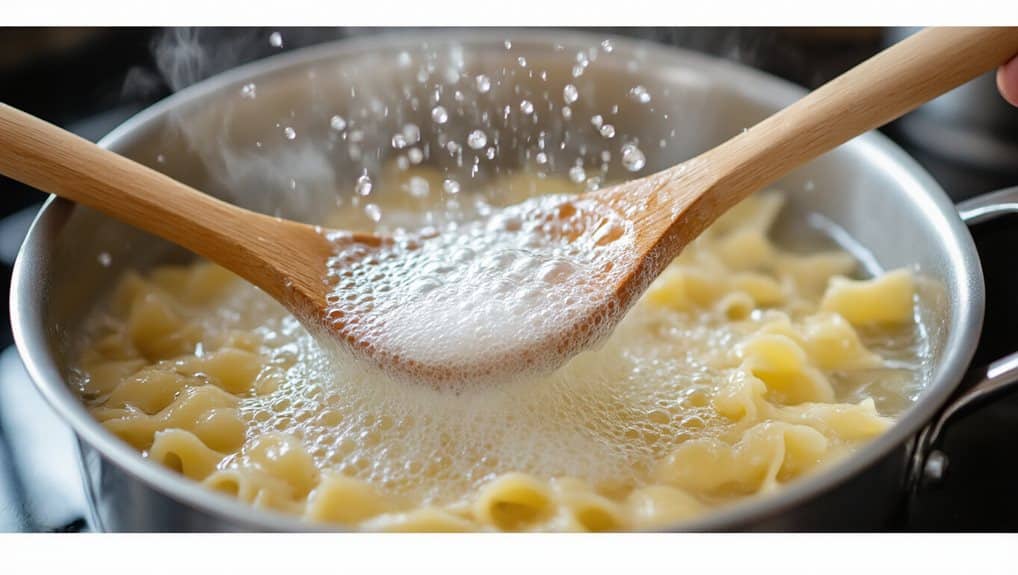
When the foam rises, you can drop a wooden spoon across the pot’s rim to keep it from spilling over.
The porous wood wicks moisture, breaking starch‑stabilized bubbles as they hit its cooler, rough surface. This disrupts bubble walls, causing a chain‑reaction collapse that releases steam.
Unlike metal, wood stays cooler longer and absorbs steam, maintaining foam control until it becomes saturated.
For longer-term storage after cooking, removing air with a vacuum sealer can help prevent freezer burn and keep food fresh longer.
How Adding Oil or Butter Reduces Surface Tension to Stop Boil‑Over
Ever wondered why a splash of oil or a pat of butter can rescue a pot from boiling over?
The fat creates a hydrophobic layer that pops the starch‑laden bubbles forming on the surface. Oil or butter reduces surface tension, making bubbles slide down the rim instead of clinging and expanding. A thin butter coating or a drizzle of oil instantly breaks foam, preventing the water from spilling over.
How to Adjust Heat, Water, and Stirring to Prevent Pasta Boil‑Over
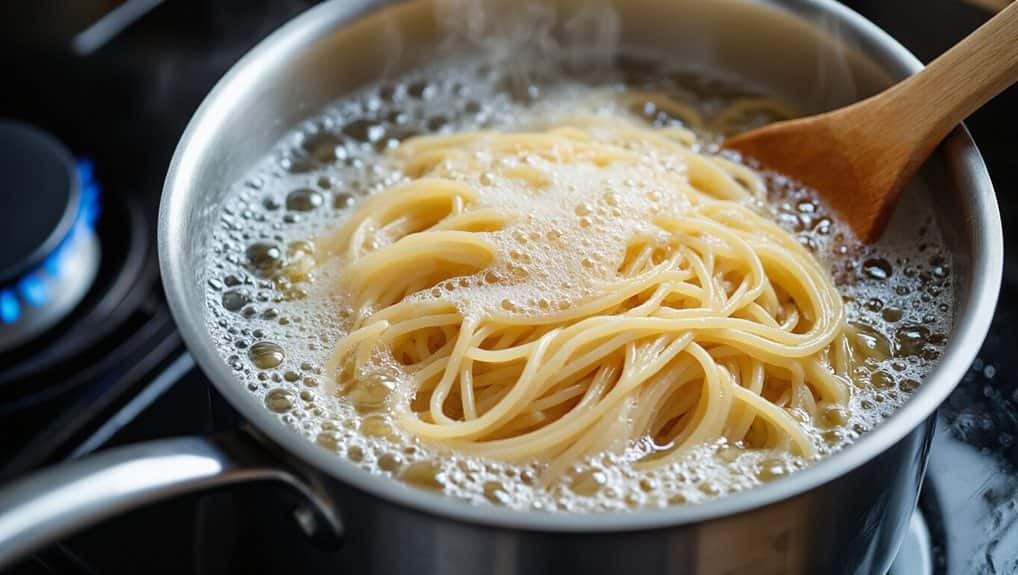
Why does pasta foam up and threaten to overflow your pot?
Lower the heat as soon as foam appears, especially on a gas stove where the flame drops instantly.
Use a larger pot with extra water to dilute starch and give foam room.
Stir every few minutes to pop bubbles, and add a wooden spoon or ice cubes if needed.
These simple steps keep the boil under control.
How Starch Foam Improves Pasta Sauce Emulsification
You’ve already seen how lowering the heat and stirring can keep pasta from boiling over, but the foam that forms isn’t just a nuisance—it’s a source of starch that can dramatically improve sauce emulsification.
When you add that starchy foam to cheese, the starch binds proteins, preventing clumps and creating a smooth, glossy coat.
Keep starch between 1‑4 % of cheese weight; higher amounts make the sauce gloopy, while lower levels cause separation.
This balance yields a velvety, stable sauce.
Wrapping Up
Now’ve learned that pasta’s starch releases molecules that lower surface tension, letting bubbles form and trap steam. Those bubbles create a foamy layer that can spill over if you don’t control heat, stir, or add a splash of oil. A wooden spoon can break the foam, and adjusting temperature and water volume keeps the pot calm. Understanding this simple chemistry helps you prevent boil‑overs and even improve sauce emulsification.
