
Wrap the cooked pasta tightly in aluminum foil, shiny side facing the noodles, then layer two thick towels around the bundle to create a thermos‑like blanket that holds heat for hours. If you have a chafing dish, set a water reservoir underneath and keep the pasta in a shallow pan, adjusting the flame to maintain a gentle simmer. For indoor venues, place the foil‑wrapped pasta in a 350°F oven, covered, and stir halfway through to avoid drying. Add a splash of sauce or olive oil before serving for moisture and flavor, and you’ll uncover even more tricks ahead.
Quick Guide
- Use a slow‑cooker on warm mode, coating pasta with sauce and greasing the insert to prevent sticking.
- Wrap pasta tightly in foil, shiny side inward, then layer with at least two towels for a portable, thermos‑like heat blanket.
- Keep pasta in an oven‑safe dish at 350°F, covered with foil, stirring halfway; ensure internal temperature reaches 165°F.
- Set up a double‑boiler: simmering water in a large pot with a smaller pan of pasta on top, lid on, stirring occasionally.
- Maintain sauce in a hot‑water bath, adjust to low heat, and stir regularly; finish with fresh herbs, olive oil, and Parmesan.
Pick the Best Warming Method for Your Party
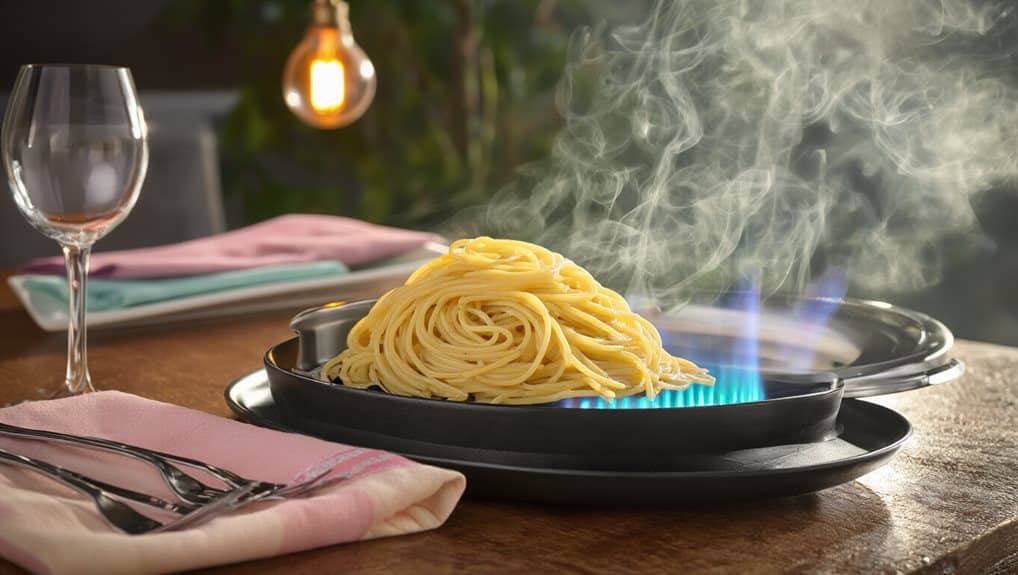
Which warming method fits your party’s size, venue, and timeline? If you need hands‑off heat for hours, a slow cooker on warm mode works, but coat the pasta and grease the insert. For moisture, a double‑boiler steams noodles, though you must stir. A chafing dish offers professional consistency with a water reservoir but needs power. Choose the one that matches your event’s demands. For seasonings you’ll sprinkle at the end, keep them in airtight jars with silicone gaskets so humidity doesn’t dull their flavor. Adding a preheated insulated cooler can keep large batches of spaghetti warm for outdoor picnics.
Insulate Pasta Quickly With Foil and Towels
Often the quickest way to keep pasta warm is to wrap it tightly in aluminum foil and then swaddle the whole package in thick towels. Use the shiny side of foil toward the pasta to reflect heat inward, seal every edge, and add at least two towel layers. This creates a radiant barrier and a thermos‑like blanket, keeping the dish above 140°F for hours. Eggplants are rich in antioxidants like anthocyanins, which provide anti-inflammatory benefits for arthritis. Snug wrapping ensures steam is trapped, further preserving temperature.
Set Up a Chafing Dish for Continuous Pasta Warming
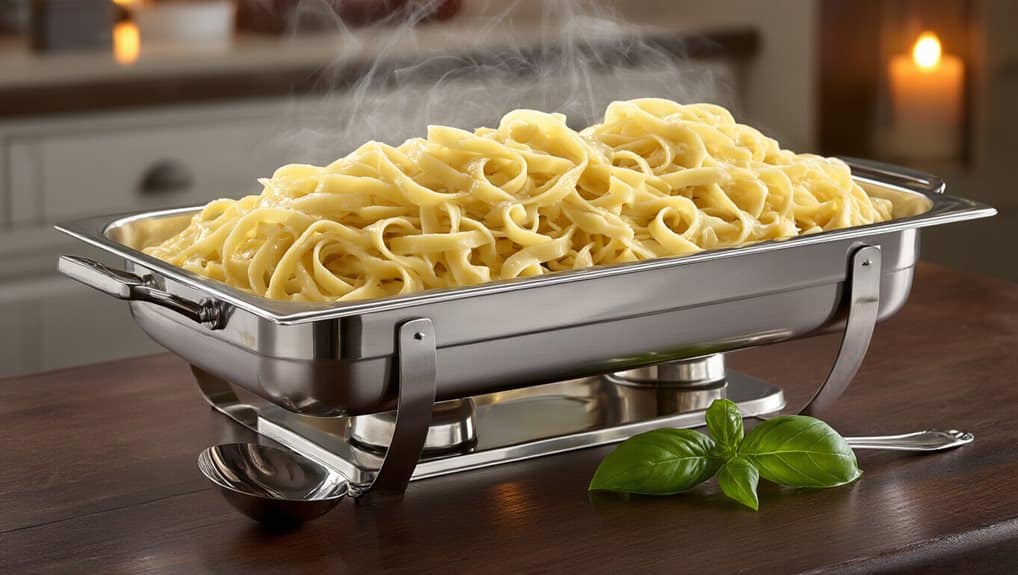
Wrapping pasta in foil and towels works for a short burst, but a chafing dish lets you keep a large batch warm for hours without constant attention.
First, assemble the frame on a stable surface, then secure fuel canisters and ignite them from a distance.
Fill the water pan with an inch of boiling water, nest the food pan above it, and preheat the pasta.
Keep the lid on, monitor water, and replace fuel as needed.
Use non-slip grips when handling lids, pans, or utensils around steam and condensation to reduce fatigue and improve control.
Warm Pasta in an Oven‑Safe Dish on Low Heat
Want to keep your pasta warm without drying it out? Preheat the oven to 350°F (175°C) and place the noodles in an oven‑safe dish. Cover tightly with foil to trap steam, and drizzle a little sauce if you like. Heat for 20 minutes for plain pasta, or 25‑30 minutes with sauce, stirring halfway. Check that the interior reaches 165°F before serving. If you’re serving prosciutto alongside it, keep it refrigerated at 34–40°F until it’s time to plate to maintain quality.
Use a Double‑Boiler to Keep Pasta Warm Without Overcooking
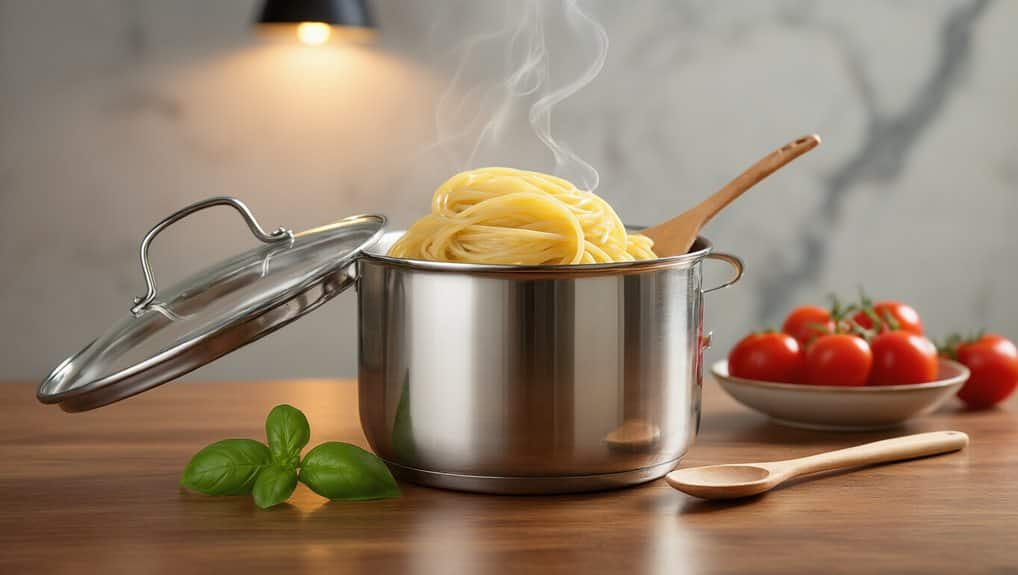
You’ll set a larger pot with simmering water and place a smaller pan of pasta on top, so the steam supplies gentle, indirect heat.
This method lets you keep the noodles at a steady temperature without the risk of over‑cooking, because the water’s vapor prevents direct flame contact.
Just stir occasionally and keep the lid on, and the pasta stays moist and ready for the party.
For leftovers, portion the pasta into platinum-cured silicone food bags that are freezer-tolerant for easy storage and reheating later.
Gentle Heat Control
Ever wonder how to keep pasta warm without turning it into mush? Set a double‑boiler on low‑medium and keep the water at a gentle simmer. Place the cooked, drained pasta in the upper pot, cover it, and stir occasionally.
This indirect heat preserves texture, while the steam and a light oil coating lock in moisture, preventing over‑cooking.
Prevent Over‑cooking Risks
When you set up a double‑boiler for pasta, the gentle steam it creates keeps the noodles warm without the risk of overcooking.
Fill the bottom pot with a couple of inches of water, bring it to a simmer, then place a heat‑proof bowl with parboiled pasta on top.
The steam supplies even, indirect heat, so the pasta stays hot but doesn’t continue cooking.
Stir occasionally, keep the water level steady, and lift the bowl if the steam gets too vigorous.
This method holds pasta at serving temperature safely.
Create a Hot‑Water Bath to Keep Sauce and Pasta Together
If you set up a hot‑water bath correctly, the sauce and pasta stay warm together without drying out. Fill a large pot with a few inches of water, bring it to a gentle simmer, then nest a slightly larger, heat‑proof bowl of pasta and sauce inside.
Cover the bowl, stir occasionally, and keep the water level steady, adjusting heat to low once stable. This indirect heat maintains 140‑165 °F, preventing scorching and keeping the dish cohesive.
Troubleshoot Common Pasta‑Warming Problems (Dry, Soggy, Uneven)
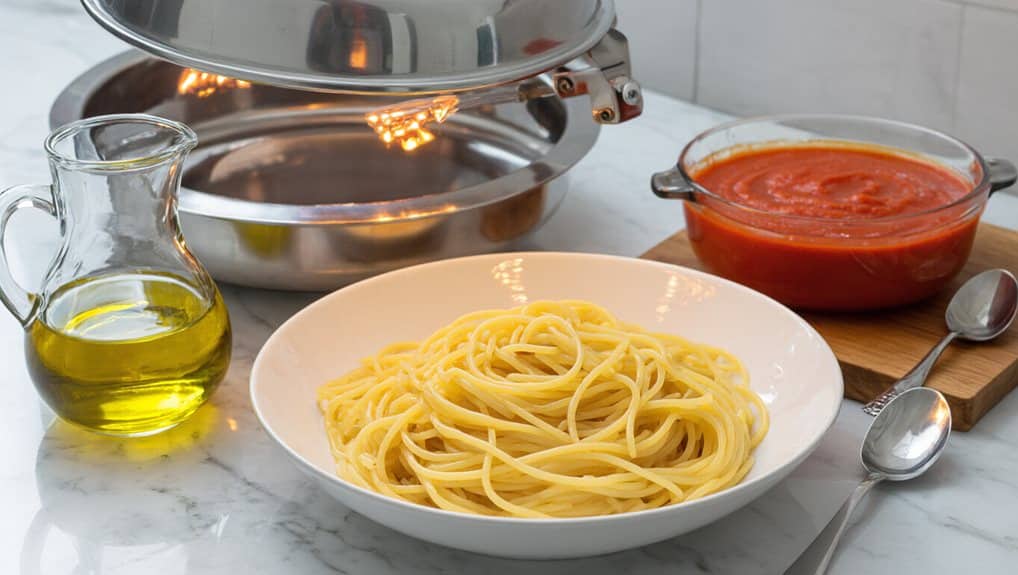
Why does pasta sometimes end up dry, soggy, or unevenly heated at a party? You’re dry if the sauce or oil coating evaporates, if excess water isn’t drained, or if heat isn’t distributed evenly. Coat the noodles, cover the dish, stir regularly, and use a single‑layer tray or a water‑bath. Keep temperature low, monitor for hot spots, and add a splash of sauce or cooking water when needed.
Finish Pasta With Flavor‑Boosting Tips Before Serving
You can brighten the dish by tossing in fresh herbs like basil or parsley, which add a bright, aromatic note.
A quick drizzle of good olive oil brings richness and helps the sauce cling to every strand.
Finally, sprinkle grated Parmesan over the top for a salty, melty finish that ties all the flavors together.
Season With Fresh Herbs
Ever wonder how a handful of fresh herbs can turn a simple pasta dish into a standout party centerpiece? Toss chopped basil, parsley, or chives just before serving for brightness and aroma.
Drop whole thyme leaves or oregano sprigs into the sauce a minute before heat removal, letting their flavors meld.
Sprinkle parsley over seafood pasta or basil on tomato sauce, then gently toss to distribute evenly.
Add a Splash of Olive Oil
After the fresh herbs have brightened the dish, a quick drizzle of olive oil locks in flavor and keeps the noodles from sticking together.
Toss the drained pasta with a generous splash of olive oil, preferably right after rinsing, to coat each strand evenly.
Add a spoonful of reserved starchy water for moisture, then gently mix.
This creates a glossy barrier, prevents clumping, and lets sauce cling without making the pasta mushy.
Finish With Grated Parmesan
Why settle for bland pasta when a simple sprinkle of grated Parmesan can lift the whole dish?
After you’ve tossed the pasta with sauce, turn off the heat and fold in a generous handful of fresh Parmesan. Stir until it melts, preserving the cheese’s creamy texture. This final step adds protein, calcium, and a savory depth, keeping the dish flavorful and inviting.
Reheat Pasta on Service Using the Pasta‑Water Trick
When you need to bring refrigerated pasta back to service quickly, the pasta‑water trick lets you rehydrate noodles in just 30‑60 seconds without turning them mushy.
Use a fine‑mesh sieve or spider basket to dip the cold pasta into boiling water, then pull it out the moment bubbles appear.
Drain instantly, add a splash of saved starchy water if you have frozen cubes, and toss with sauce.
This flash‑boil restores texture, avoids microwave chewiness, and keeps the dish ready for guests.
Wrapping Up
Pick the method that fits your setup, keep the pasta covered, and monitor the temperature to avoid over‑cooking. A foil‑and‑towel wrap works for short gatherings, while a chafing dish or low‑heat oven maintains warmth for longer events. If you need a quick fix, the pasta‑water trick can revive leftovers during service. By staying attentive and adding a splash of sauce or olive oil at the end, you’ll serve consistently hot, tasty pasta without soggy or dry spots.

