
Pick a pan that matches your batter—aluminum for quick heat, stainless for acidic mixes, or silicone for natural non‑stick. Grease the pan with room‑temperature butter, spread it fingertip‑wise, then chill; or spray it for even coverage, especially in crevices. Dust the greased surface with flour to form a barrier, and line the bottom with parchment to prevent hot spots and aid lift. Cool the cake ten minutes before in, tap the edges, and use a spatula if needed. Follow these steps, and you’ll uncover even more tricks.
Quick Guide
- Choose a non‑stick pan material (silicone, non‑stick coated, or well‑seasoned aluminized steel) to reduce adhesion.
- Grease the pan thoroughly with softened butter or cooking spray, then dust with flour or cocoa powder for a barrier.
- Line the pan with parchment paper, cutting it to fit the bottom and sides for an extra non‑stick surface.
- For stubborn batters, apply a thin “cake‑goop” paste (flour‑oil‑shortening) to coat corners and edges evenly.
- Cool the cake in the pan for exactly 10 minutes, then loosen edges and invert; tap or briefly warm the pan bottom if needed.
Select the Optimal Cake Pan for a Flawless Cake Pan Release
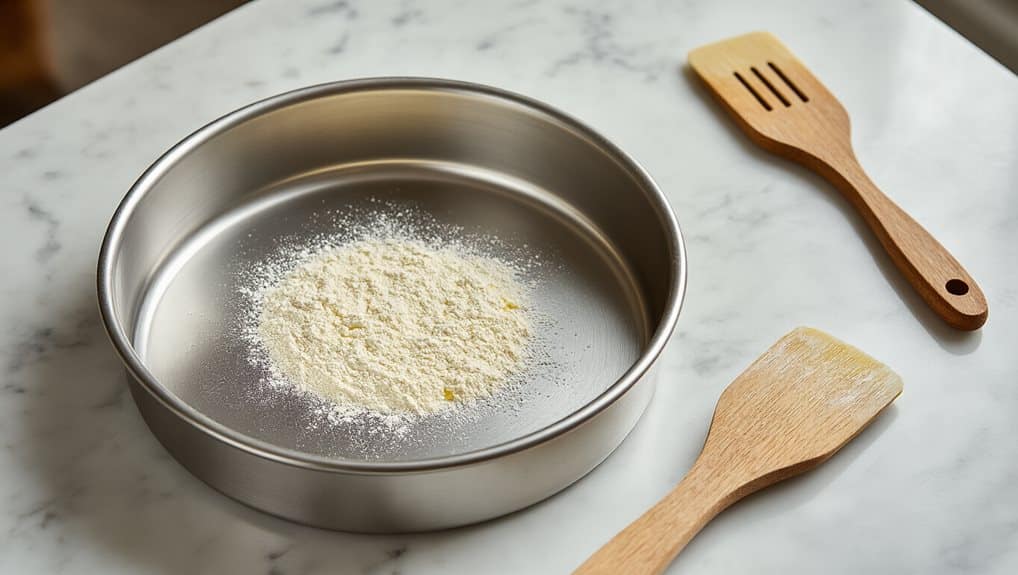
Where should you start when choosing a cake pan that won’t cling to your bake? Pick a pan that matches your bake schedule and budget.
Aluminum pans heat fast and stay light, while aluminized steel adds durability and high‑heat safety.
Stainless steel resists warping and reacts well with acidic batters.
Silicone offers natural non‑stick release without greasing.
Non‑stick coated pans, like USA Pan or Fat Daddio, provide reliable release when you grease or flour first. Keep any oil-based greasing product in a cool, dark place to avoid rancid oil that can ruin flavor and performance.
Choose size and brand that fit your recipe’s volume for consistent results.
The winner method is parchment + nonstick spray.
Line the Pan With Parchment to Guarantee a Reliable Cake Pan Release
Ever wonder how a simple sheet of paper can turn a stubborn cake into a flawless magnum opus? Line the pan with parchment, and you’ll get a naturally non‑stick surface that releases cleanly, preserving shape and delicate details.
The paper creates a thin, heat‑regulating barrier, preventing hot spots and over‑browning. It resists up to 420°F, simplifies cleanup, and lets you lift cakes effortlessly without damage. Just like borosilicate glass is prized for handling higher oven temperatures, parchment adds a dependable buffer between cake batter and metal for cleaner release. Silicone coating gives the paper its non‑stick, heat‑resistant properties.
Grease, Flour, or Spray the Sides for Full‑Coverage Non‑Stick Protection
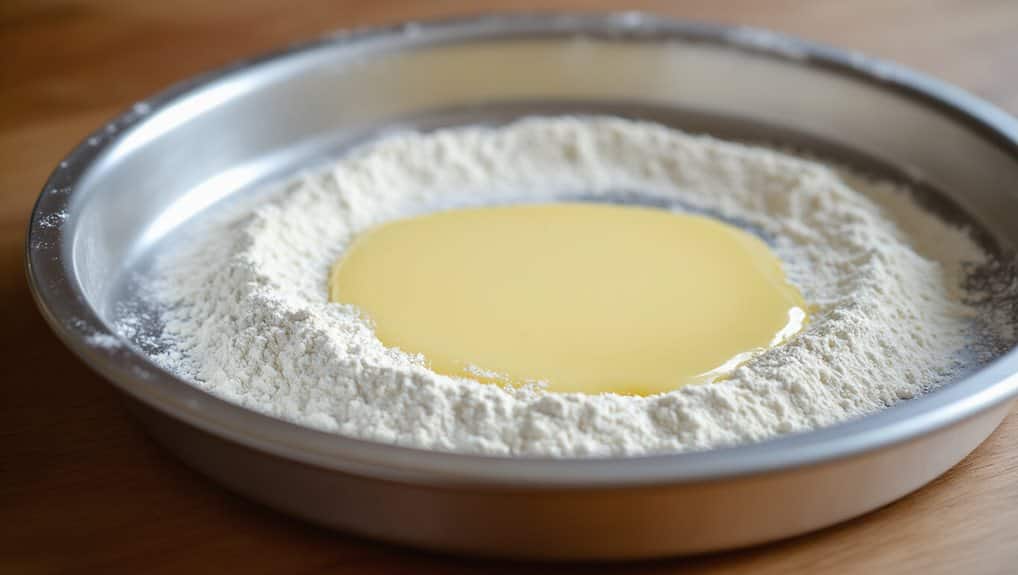
After parchment lines the pan, you still need to protect the sides, and the most reliable way is to coat them with butter, spray, or flour. Use room‑temperature butter and spread it fingertip‑wise, about a tablespoon, then chill for a solid layer.
Cooking spray offers even coverage, especially in crevices, while a flour dust over a greased pan adds a barrier that prevents high‑sugar cakes from sticking. For the most consistent release, aim for full coverage so no dry spots form on the pan’s sides.
Explore Alternative Coatings for Stubborn Batter (e.g., Cake‑Goop Paste)
Why settle for butter or spray when a simple paste can tackle the most stubborn batter? Mix equal parts flour, oil, and shortening into a smooth, creamy cake‑goop, heat briefly, then cool.
Brush a thin, even layer onto the pan—one tablespoon coats a 9‑inch pan.
The paste fills corners, prevents sticking, and stores in an airtight container for months.
Like eggplant, which contains potassium and vitamin C, a well-prepped pan helps your final bake turn out at its best.
Test Release and Troubleshoot Sticking Before Serving
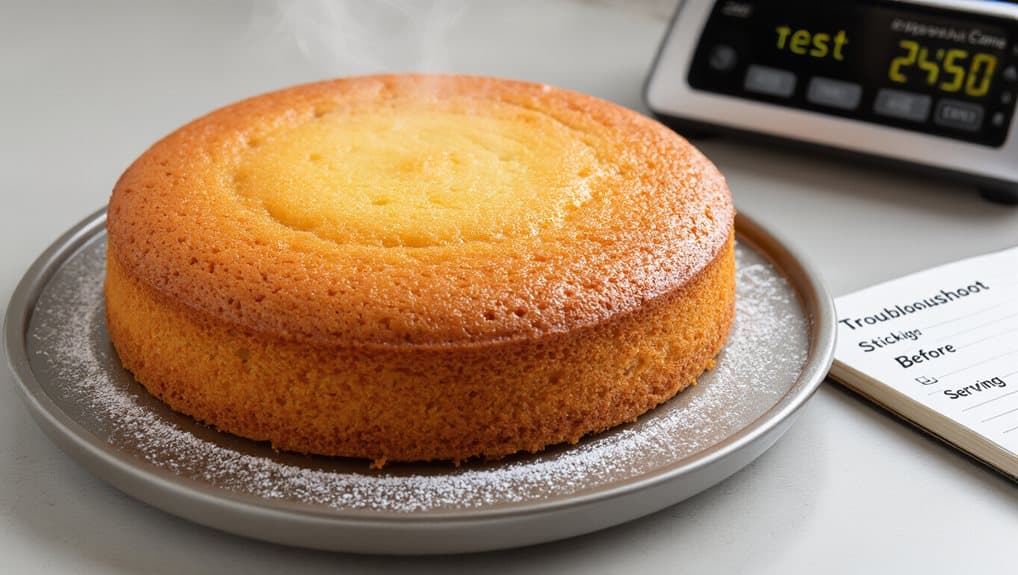
How can you be sure your cake will release cleanly before it hits the table? Cool the cake in the pan exactly ten minutes, then invert it onto a rack and lift straight up. If resistance occurs, gently tap or jiggle, or briefly dip the pan bottom in hot water. Use parchment or spray for extra insurance, and loosen edges with a spatula if needed. Let the cake cool gradually and avoid drastic temperature changes, similar to following food safety regulations when cooling sauces.
Wrapping Up
By choosing the right pan, greasing it properly, and adding parchment or a reliable coating, you’ll consistently release cakes without a mess. Test the release before serving, and adjust the grease‑flour ratio or try a specialty paste if the batter sticks. These simple steps keep your cakes intact, save time, and make cleanup easier, ensuring every bake turns out as intended.


