
To fix bland soup, start by adjusting the seasoning with salt, adding it gradually and tasting throughout to avoid over-salting. Brighten the flavor by adding a splash of acidity, like lemon juice or vinegar. Incorporate umami-rich ingredients such as soy sauce or miso to deepen the broth’s richness. For added texture and visual appeal, consider crunchy toppings or whole herbs. These simple tweaks can change your soup, and if you keep exploring, you’ll uncover even more ways to enhance flavor.
Quick Guide
- Gradually add salt, tasting warm soup to enhance natural flavors without over-salting.
- Incorporate acidity like lemon juice to brighten dull flavors and add freshness.
- Use fermented ingredients such as sauerkraut brine or beet kvass for added depth and complexity.
- Boost umami with small amounts of soy sauce, miso, or browned mushrooms and onions.
- Improve texture with crunchy toppings or roasted vegetables to enhance flavor and visual appeal.
Why Is Your Soup Bland and How to Diagnose It
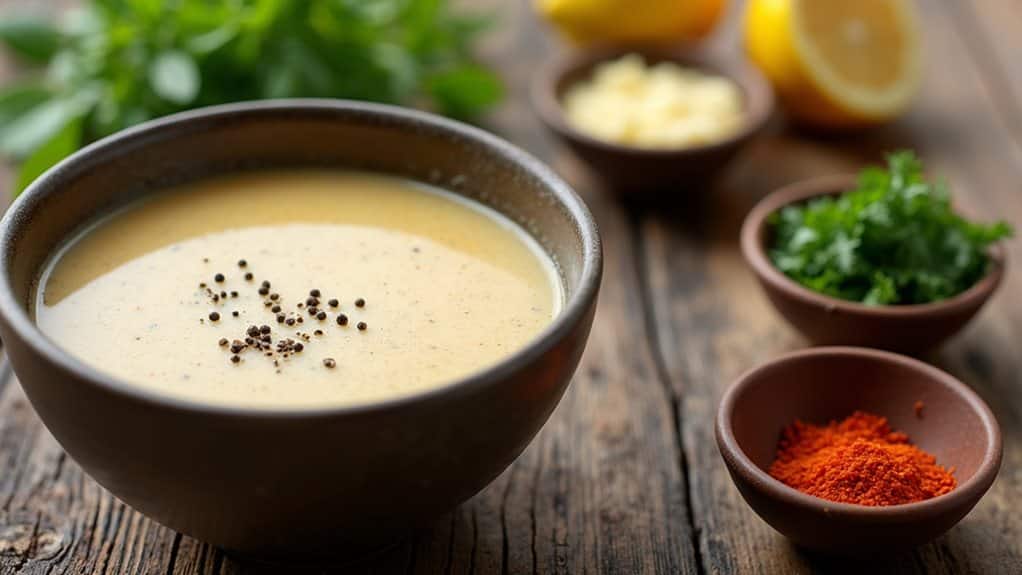
If your soup tastes bland, the first step is to figure out why it lacks flavor.
Salting is essential, as insufficient salt during cooking can leave your soup tasting flat. Check if you’ve added enough, since under-salting prevents the flavors from developing fully.
Proper salting enhances ingredients and helps reveal the soup’s true taste, making it more satisfying.
Just as cooking can tame bitterness in foods like eggplant seeds, giving your soup enough time to simmer can help its flavors meld and taste fuller.
How to Use Salt to Fix Underseasoned Soup
When adding salt to your soup, do so gradually and taste frequently to avoid over-salting.
It’s best to season while the soup is warm, as cold liquids can hide the true salt level, leading to under-seasoning.
Using fine salts and incorporating them during cooking helps build depth and guarantees even distribution of flavor.
For make-ahead batches, you can portion and protect leftovers with a double heat seal to help maintain freshness during freezer storage.
Add Salt Gradually
Adding salt to bland soup requires a careful hand to avoid overdoing it. You should add salt gradually, tasting after each addition, since even a small amount can substantially improve the flavor.
Heating helps the salt dissolve evenly. Let the soup simmer briefly after seasoning to allow the flavors to meld before tasting again.
Taste While Warm
Tasting your soup while it’s still warm is one of the best ways to guarantee your seasoning is spot-on. Warm soup releases flavors more readily, making it easier to taste while warm and judge if it needs more salt.
Always add salt gradually, taste frequently, and re-taste after adjustments to make sure the flavor improves before serving.
Use Fine Salts
Using fine salts like table salt or fine sea salt is the most effective way to quickly and evenly season your soup. These salts dissolve easily, helping you add flavor gradually without clumping.
Start with small amounts, taste frequently, and season while the soup is warm.
Fine salts guarantee consistent seasoning, preventing over-salting and enhancing natural flavors.
Add Acidity to Brighten Flat Flavors
When a soup tastes flat or dull, introducing acidity can quickly restore its vibrancy. Adding lemon juice in small spritzes or drops refreshes the flavor without overpowering it.
Warm the soup slightly after, to evenly distribute the acid and better assess the taste. This simple step balances sweetness and enhances brightness, making your soup more lively and appealing. Just as airtight containers help preserve freshness by sealing in quality, a small splash of acid can lock in a brighter, more balanced flavor.
Use Fermented Ingredients for Depth and Sourness

Adding fermented ingredients can give your bland soup more complexity and tang.
Using fermented liquids like rye or wheat bran introduces a sharp, sour flavor that enhances the overall taste.
Incorporating items like sauerkraut, beet kvass, or cultured dairy adds layers of umami and acidity, making your soup richer and more satisfying.
To keep leftover soup safe and tasty, refrigerate any cooked rice you add and use it within up to 6 days.
Fermented Liquids as Flavor Enhancers
Have you ever considered that fermented liquids can do more than just preserve food? These liquids, like sauerkraut brine, beet kvass, or fermented rye, add complex sourness and depth to bland soups.
Incorporating fermented liquids during cooking helps flavors meld, creating a more lively, layered taste while also adding beneficial probiotics and umami.
Incorporating Sauerkraut or Beet Kvass
Incorporating sauerkraut or beet kvass into your soup adds more than just a tangy flavor; it introduces depth and complexity that can convert a bland dish. These fermented ingredients enhance umami and add a subtle, acidic brightness.
Using small amounts during cooking enhances layered flavors and richness, making your soup more lively without overpowering its natural taste.
Using Fermented Yogurt and Dairy
Fermented yogurt and dairy products can markedly deepen the flavor of your soup by introducing a pleasant tang and creamy richness.
Using fermented yogurt adds natural sourness and complex flavors that meld during cooking, enhancing the overall taste.
It also enhances probiotics, making your soup both flavorful and healthier.
Incorporate fermented yogurt toward the end for best results.
Boost Umami to Deepen and Richen the Flavor
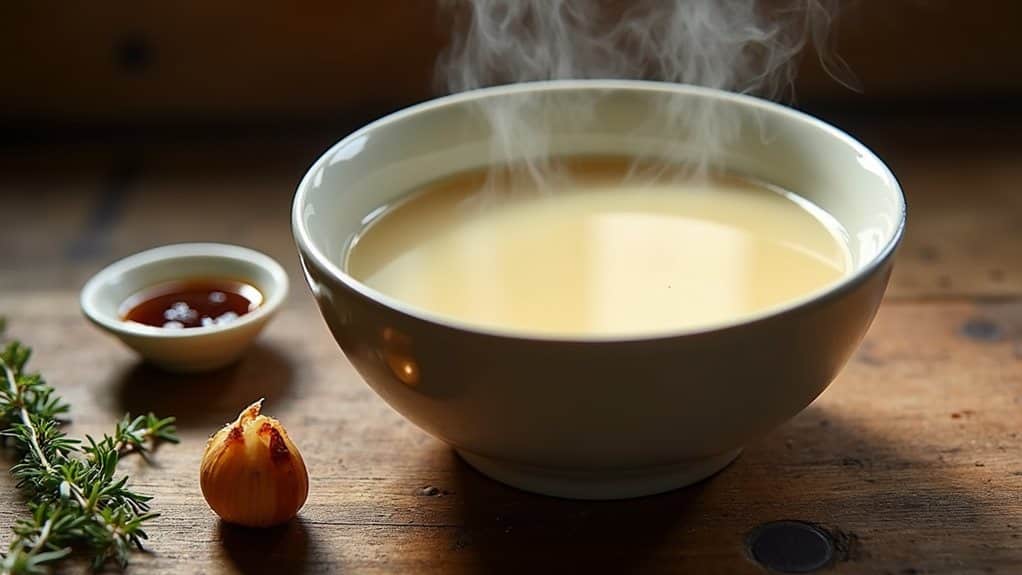
To deepen and enhance the flavor of bland soup, adding ingredients rich in umami is one of the most effective strategies.
You can incorporate umami flavor by using soy sauce, miso, or fish sauce in small amounts.
Browning mushrooms, onions, or meats before adding them also elevates natural umami compounds, creating a richer, more savory broth.
If you’re stirring in leftover baked beans for added body and savoriness, follow proper storage techniques like refrigerating opened beans in an airtight container and using them within 3-4 days.
Improve Texture and Presentation for Better Taste
Enhancing the texture and presentation of your homemade soup can considerably improve its taste and appearance. Adding crunchy toppings like toasted nuts or croutons adds satisfying contrast.
While roasted vegetables or crispy garnishes boost mouthfeel. Using large vegetable chunks or whole herbs encourages interaction.
Finishing with flavored oil or cheese layers creates a more appealing, flavorful dish.
Quick Last-Minute Fixes to Perfect Your Soup

When your soup tastes dull and needs a quick uplift, there are simple ingredients and techniques you can use to enhance its flavor instantly.
A squeeze of lemon can brighten the dish and add freshness. You can also try a splash of vinegar, soy sauce, or stir in cheese or butter.
These quick fixes improve taste without much effort or time.
Wrapping Up
Fixing bland soup involves understanding its flavor profile and making targeted adjustments. By diagnosing the issue—whether it’s missing seasoning, acidity, or depth—you can enhance the taste effectively. Simple steps like adding salt, a splash of vinegar, or a touch of soy sauce can make a noticeable difference. Improving texture and presentation also enhances flavor perception. With these practical tips, you’ll turn a dull soup into a flavorful, satisfying dish in no time.


