
To prevent chicken breast from drying out, start by marinating or brining it to enhance moisture and tenderness. Use skin-on, bone-in cuts if possible, as they help retain juices. Cook at moderate temperatures—about 375-400°F—and remove the chicken once it reaches 160-165°F internally. Rest the cooked meat for a few minutes, cover with foil, and consider basting or pressing it down for extra moisture. Perfecting these techniques will help you keep chicken succulent every time.
Quick Guide
- Marinate or brine chicken breasts to enhance moisture and tenderness before cooking.
- Pound or flatten chicken to an even thickness for uniform doneness and prevent dry edges.
- Cook at moderate temperatures and monitor internal temperature to avoid overcooking.
- Rest the chicken for at least five minutes post-cooking to allow juices to redistribute.
- Baste with butter or oil during cooking and cover loosely with foil to retain moisture.
How to Marinate and Brine for Juicy Chicken
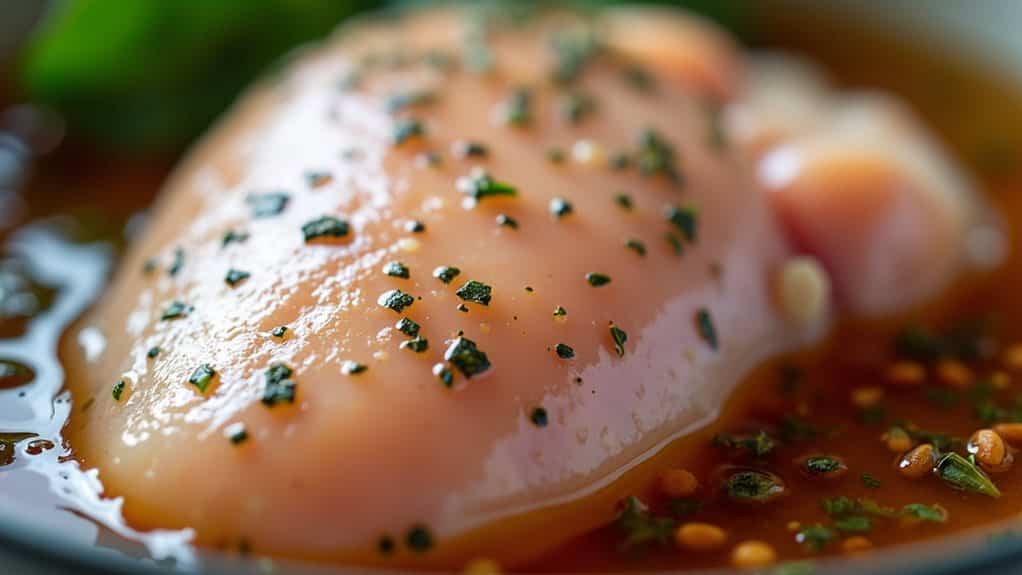
To keep chicken breast juicy and tender, marinating and brining are effective techniques that you should consider.
Marinate the chicken in acidic liquids like lemon juice or vinegar to tenderize and enhance moisture.
Brining in a solution of water, salt, and sugar allows the meat to absorb extra moisture.
Both methods help guarantee your chicken stays juicy during cooking.
For make-ahead prep, vacuum-seal the marinated chicken using a unit with Dry and Wet modes to keep moisture where it belongs and help prevent leaks during storage.
Prepare Your Chicken Properly to Prevent Dryness
Properly preparing your chicken breast before cooking can make a significant difference in preventing dryness. Marinate or brine the chicken to enhance moisture.
Guarantee it’s fully thawed for even cooking. Pounding or flattening the chicken to an even thickness helps it cook uniformly, reducing dry edges and maintaining juiciness throughout. Just as eggplant seeds can taste bitter when raw but improve when cooked, careful prep and proper cooking help chicken breast stay tender and juicy.
Control Temperature for Maximum Juiciness
Controlling the cooking temperature is essential for keeping chicken breasts juicy and tender. By regulating temperature and monitoring internal temperature closely, you’ll guarantee the chicken is fully cooked without drying out.
Cooking at moderate temperatures, around 375-400°F, helps retain moisture.
Removing the chicken at 160-165°F guarantees a juicy chicken that’s safe to eat and perfectly cooked.
Just as with frying oil where each reuse lowers the smoke point by about 10–15%, letting chicken cook too hot for too long increases moisture loss and dryness.
Use Skin-On, Bone-In Cuts for Better Moisture
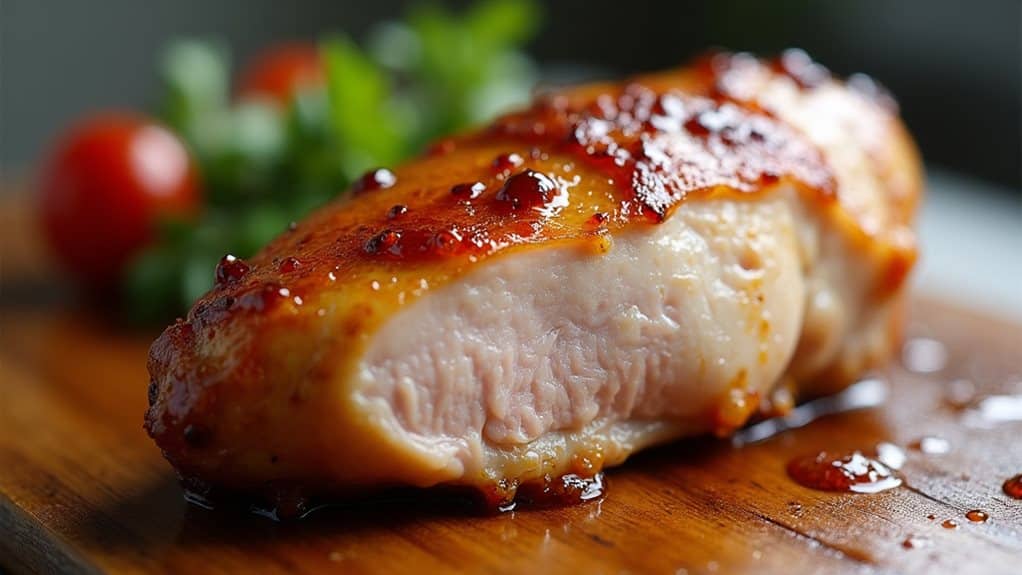
Using skin-on, bone-in chicken breasts can make a noticeable difference in moisture retention during cooking. The skin acts as a natural barrier, preventing heat loss.
The bone and marrow release moisture, keeping the meat juicy. The fat from the skin also adds flavor and helps maintain moisture, resulting in tender, flavorful chicken compared to skinless, boneless cuts. Like using oven and pan tricks to get closer to pizzeria-style pizza crust without special equipment, small technique tweaks can make a big difference in your results.
Finish With Resting to Lock in Juices
After you finish cooking your chicken breast, letting it rest for at least five minutes is essential to keeping it juicy. Resting allows juices to redistribute, making the meat tender and preventing dry spots. Much like maintaining proper ingredient temperatures helps batters aerate and stay light, a short rest helps prevent moisture loss and uneven texture.
Cover loosely with foil to help juice retention. This simple step guarantees your chicken stays moist, juicy, and flavorful, avoiding the common mistake of slicing too soon.
Baste and Weigh Down to Keep Chicken Moist
Basting and burdening chicken during cooking are effective techniques for keeping it moist and flavorful. By regularly basting with hot oil or butter, you create a barrier that locks in juices.
Pressing down the chicken, using a heavy object wrapped in foil, guarantees even contact with heat. This helps retain moisture and promotes tender, juicy results.
Tips for Consistently Juicy Chicken in Any Cooking Method
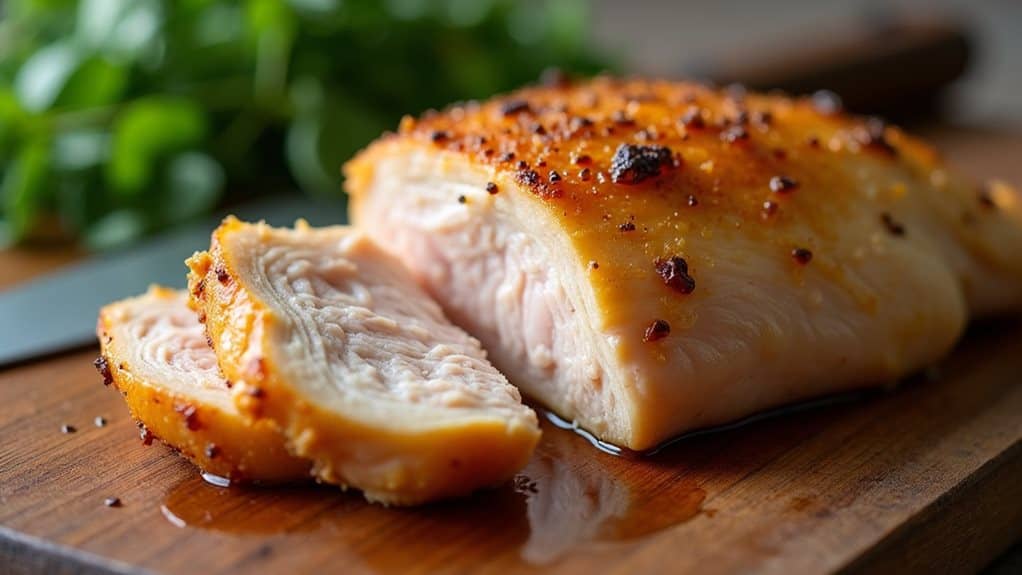
To keep chicken breast consistently juicy, it’s important to pay attention to the cooking process itself. Use a meat thermometer to monitor internal temperature, aiming for 160-162°F.
Additionally, marinate or brine beforehand, pound to even thickness, and let the chicken rest after cooking. These steps help keep chicken moist and prevent overcooking or drying out.
Wrapping Up
To keep your chicken breast moist and flavorful, follow these tips carefully. Marinate or brine to enhance juiciness, cook at the right temperature, and choose skin-on, bone-in cuts for better moisture retention. Rest the meat before slicing, and consider basting or pressing it down during cooking. With consistent practice and attention to these details, you’ll achieve tender, juicy chicken every time, no matter which cooking method you prefer.


